




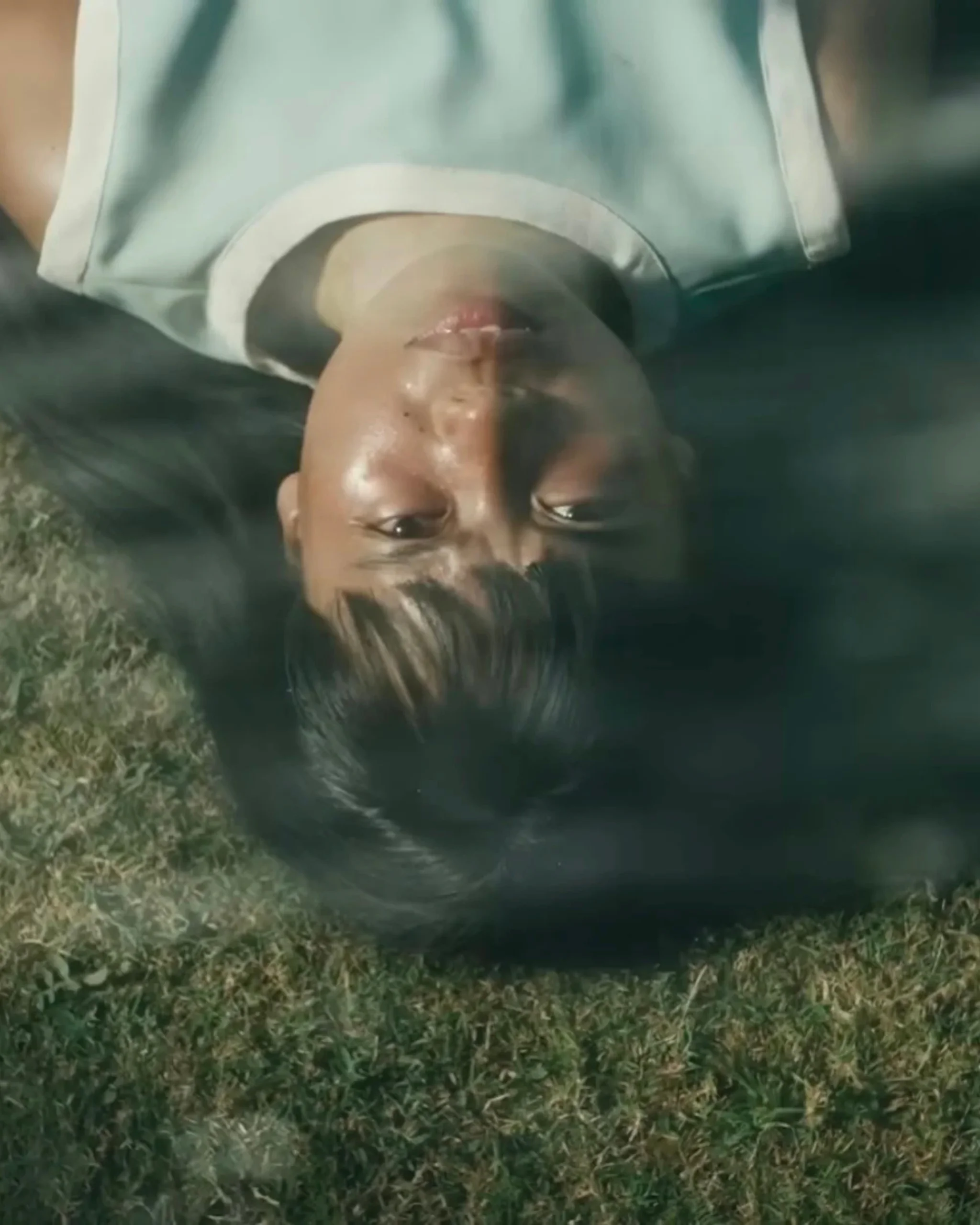
Filipiñana isn’t a dialogue-heavy film. But it doesn’t need to say much to express itself. Its opening scene is evidence of this. A bus is driving through city streets as residents in a slum neighborhood line up to get water from a truck during a heat wave. Inside, Chinese tourists enjoy the air conditioning as they make their way to a golf country club.
When the movie shows regular Filipinos struggling to get water, then cuts to the country’s club sprinklers watering the green, it makes for a strong case for what Filipiñana is all about. This not-so-subtle exploration of corruption and abuse of power set in a members-only country club trades in bombast for intentional visuals. It may not be everyone’s cup of tea with its slow pacing, but the award-winning movie doesn’t hold the viewer’s hand in realizing how a country club makes for an ideal stand-in for the underlying problems plaguing the Philippines.
Slight spoilers for Filipiñana ahead.
RELATED: Here’s What You Should Know About Filipiñana, One Of The Most Anticipated Filipino Movies Of 2026
A Filipino Story Through a Country Club Lens
Many characters make up the world of Filipiñana, but it’s the two women at the center of the plot who not only drive the story but also serve as embodiments of the film’s themes. First, there’s Isabel (Jorrybel Agoto), a 17-year-old girl from Ilocos who starts a job as a tee girl at the country club. Then, we have Clara (Carmen Castellanos), the niece of country club member Renato, wrestling with whether to return to the US or stay in the Philippines to help with her family’s business over a game of golf. The two couldn’t be any more different, but it’s that divide where Filipiñana makes its case.
Isabel is quickly exposed to life as a country club employee, one who is reduced to nameless hired help in pastel uniforms. With her uniformity with other employees and memorized routine, Isabel is practically invisible to the members, only there to tee up golf balls, wait in the hot sun, and be of service to guests who don’t bother to learn their names. Even among the employees, there are those who are seen as having higher status, such as the pink-clad caddies who are allowed on the golf course and interact with the golfers.
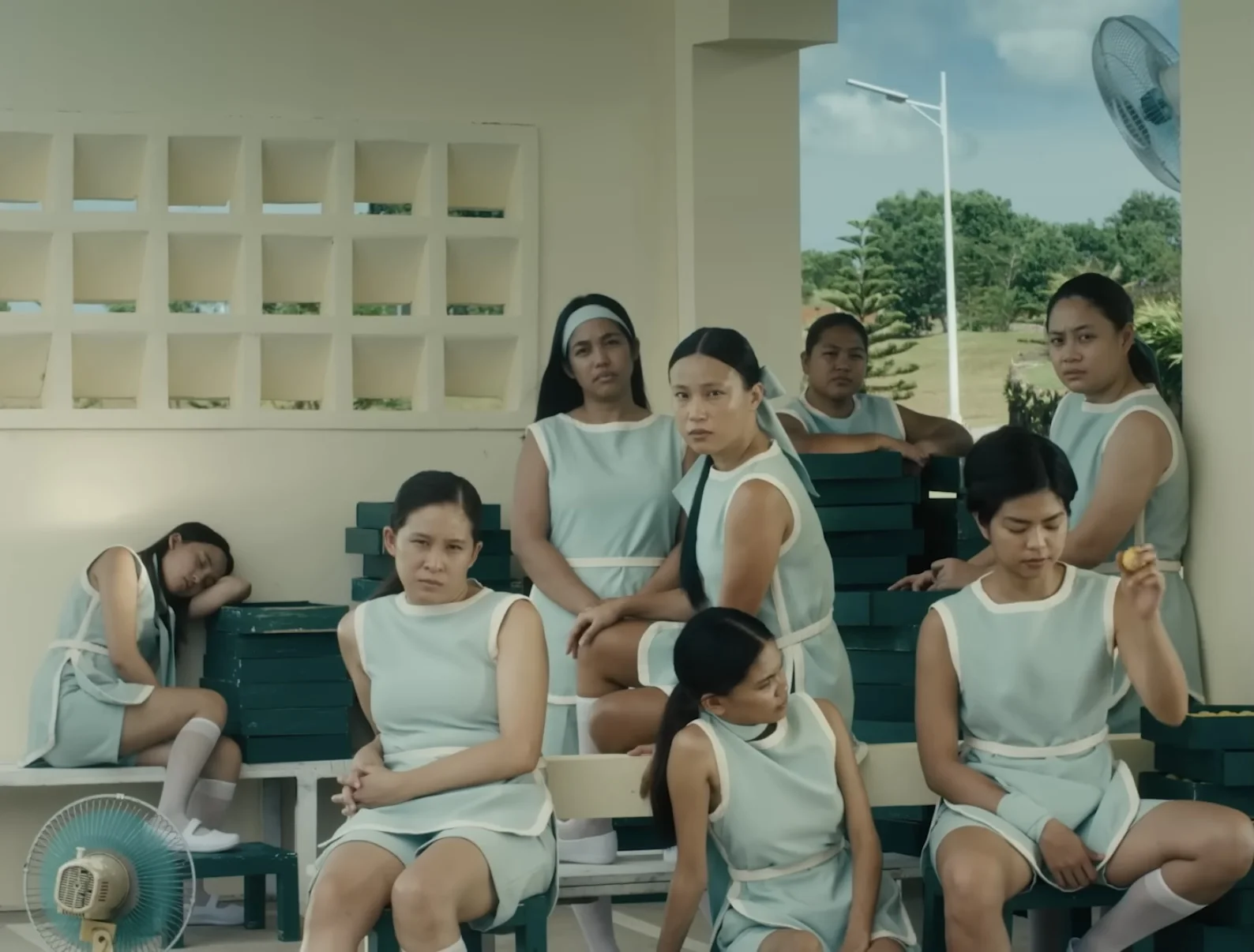
When Isabel is addressed, the movie frames it such that she is being looked down upon by the guests. In an early pivotal scene, Isabel meets Dr. Palanca, the country club’s owner, on the course. The two strike up a conversation due to their shared Ilocos heritage. But what should be a moment of connection turns into a shot of Isabel between Dr. Palanca’s legs. It doesn’t take a PhD to understand what the shot means. It’s this unsubtle display of power dynamics that establishes Isabel’s unusual connection to Dr. Palanca, one that quickly spirals as Isabel learns how their connection is rooted in a dark past and how the country club’s members misuse their privilege.
This is where Clara comes in as a New York transplant navigating a crossroads in her life. As much as her uncle assures Clara a comfortable life if she returns home, she feels a sense of unease at the privilege around her. But Clara is no saint, or at least the movie’s hero who calls out the gross privilege on display. When faced with a life-changing decision, Clara goes the easy way out, using her family’s power and status to deflect responsibility.
If Isabel represents the bottom of the social hierarchy who tries to live an honest life in the face of the country’s persistent issues, Clara is at the upper half of the totem pole who, like many Filipinos, are aware and generally don’t agree with what’s happening in the country, but when push comes to shove, they retreat into their sheltered lives. The two protagonists don’t even speak to each other in the movie, but their narrative arcs and actions say as much. As Isabel slowly opens her eyes to the misdeeds done on the club’s grounds, Clara doesn’t act on her discomfort, ultimately contributing to the status quo of a rotten system by her inaction.
A Slow-Burner With Something to Say
The divide isn’t hard to miss, but there’s a third character witness to all of this, which is the country club itself. Director Rafael Manuel, with the help of cinematographer Xenia Patricia, production designer Tatjana Honegger, and colorist Vlad Barin, turns the unnamed Manila country club into a microcosm of the country’s many problems. It feels equal parts busy and barren, as the country club’s many employees work to keep the establishment pristine and running, only for the elite to enjoy its amenities.
As gorgeous as the movie’s stunning cinematography makes the country club look, it also highlights the inherent imbalance that can be found there. Notably, the movie, in lieu of dynamic camera angles, is entirely presented in a fixed, 4:3 aspect ratio where every shot is static yet intentional. Many compared Filipiñana’s direction and style to that of a Wes Anderson movie, which honestly does not capture Filipiñana’s full visual identity.
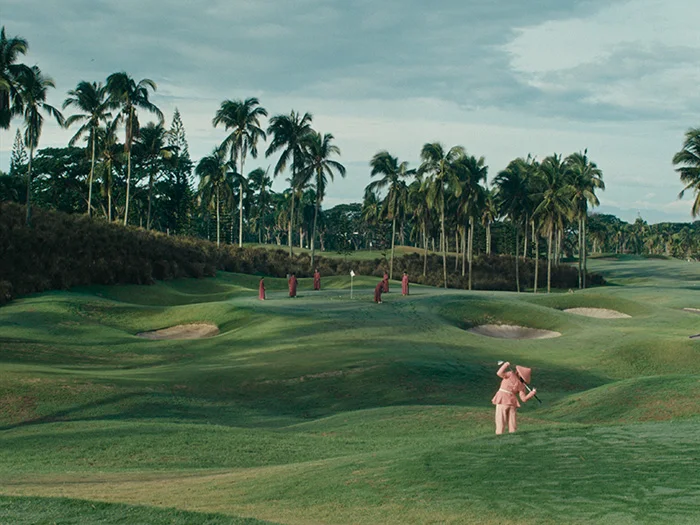
Yes, there are some similarities in terms of composition and lush color grading, but Filipiñana is its own movie where an underlying sense of dread and malice is felt throughout. If Anderson is driven by whimsy, Manuel is focused on commentary on Philippine corruption in his debut feature.
It’s almost uncomfortable at times as the beautiful scenery makes way for power imbalance and lifeless conversations between employees and club members who would rather do anything than interact with staff. It’s not just an aesthetic tale set in a country club, but a reflection of the privileged few living their best lives at the expense of many regular Filipinos who break their backs for the wealthy who most likely do not care about them.
With that being said, Filipiñana requires a bit of patience with its viewing experience in how it’s an openly slow-burn film. It’s a black comedy that’s a lot more straightforward with its satire. If you’re coming into the movie thinking it’s going to jump at you with a bang as a fast-paced dramatic thriller, it’s best to temper expectations. From the dialogue to the music, the film is quite understated.
To casual viewers, some might call it boring and unengaging, but we’d argue Filipiñana’s lack of overt action doesn’t necessarily make the movie bad. It avoids becoming a one-hour and 40-minute collection of screenshots by not beating around the bush with what it wants to say. Getting there will take some time, though. Regardless, like with any good piece of art, Filipiñana will most likely inspire debate with its themes and execution. Either way, it will get you talking.
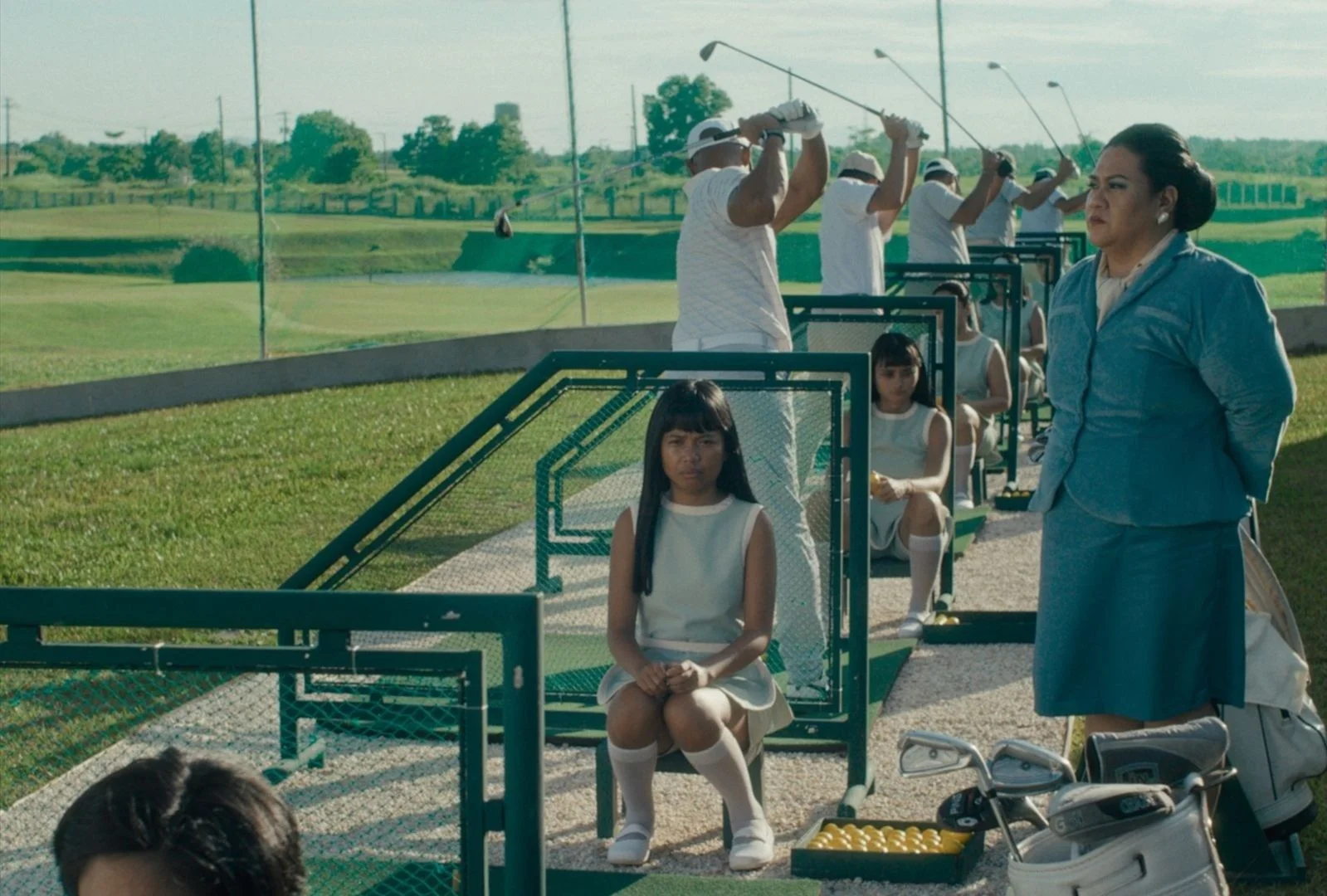
Meticulous and slow-paced, Filipiñana is still worth a watch for how it turns well-maintained green into a setting for creeping malevolence, backed by sharp technical execution. Its plot may require a dose of investment to see its potential, but stay with the movie, and you’ll be met with a visually striking full-length feature debut that understands how the country’s many problems aren’t just caused by the 0.1%, but also a general population who, whether due to apathy or being demoralized by an unfair system, are paralyzed into inaction and just waiting for change.
Filipiñana is currently showing in select SM Cinemas.
Featured Image and Photos: Epicmedia Productions (via Instagram), Kino Lorber (via YouTube), IMDB (via Website)
Frequently Asked Questions
Filipiñana is a Filipino film set in an unnamed Manila country club, exploring corruption and abuse of power through the contrasting stories of Isabel, a tee girl from Ilocos, and Clara, a Filipino-American niece of a club member.
Filipiñana is the debut feature of director Rafael Manuel, made with cinematographer Xenia Patricia, production designer Tatjana Honegger, and colorist Vlad Barin, known for its fixed 4:3 aspect ratio and static, intentional cinematography.
Filipiñana has drawn comparisons to Wes Anderson for its composition and lush color grading, but the film distinguishes itself with an underlying sense of dread and malice, focused on Philippine corruption rather than whimsy.
Jorrybel Agoto plays Isabel, a 17-year-old tee girl from Ilocos, and Carmen Castellanos plays Clara, the niece of country club member Renato, weighing whether to stay in the Philippines or return to the US.
Filipiñana is currently showing in select SM Cinemas, following its release as one of the most anticipated Filipino films of 2026.

Recommended Video
Latest Posts




Latest Issue