




At Maison Margiela’s Fall/Winter 2025 haute coutureHaute CoutureCustom-fitted, handmade high fashion created for individual clients in a Paris atelier. The term is legally protected and awarded by a French governing body, requiring strict standards of craftsmanship andGo to Haute Couture Glossary show, Glenn Martens didn’t enter quietly. He charged in like the first note of a discordant symphony—loud, fragmented, and unflinching. The Le Centquatre venue throbbed with remembrance but Martens pushed through it with force, transforming the iconic house‘s Artisanal collection into a place where silhouettes speak in riddles and fabric acts like steel.
RELATED: Blooming Hearts: Couture’s Newest Front-Row Friendship
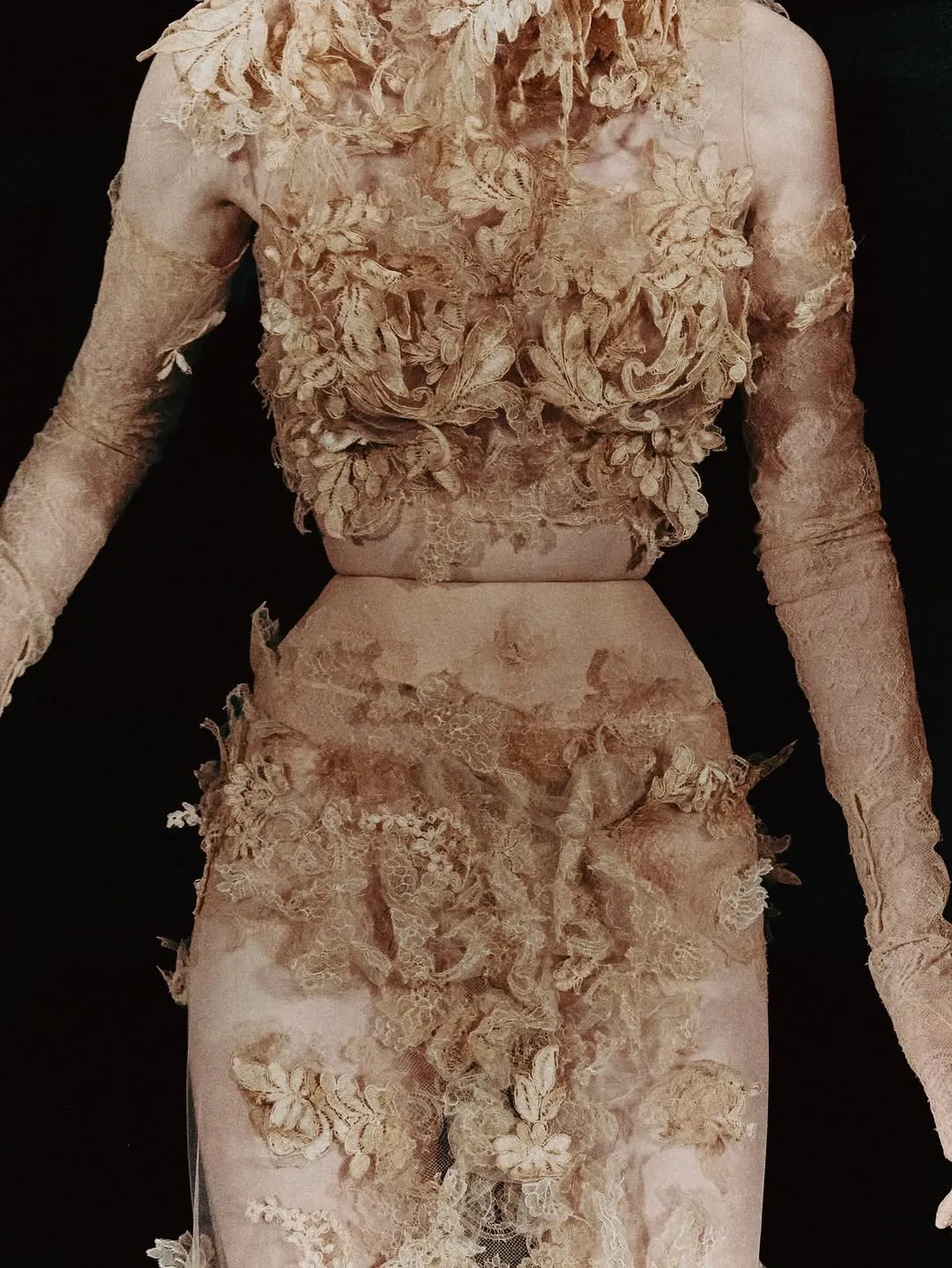
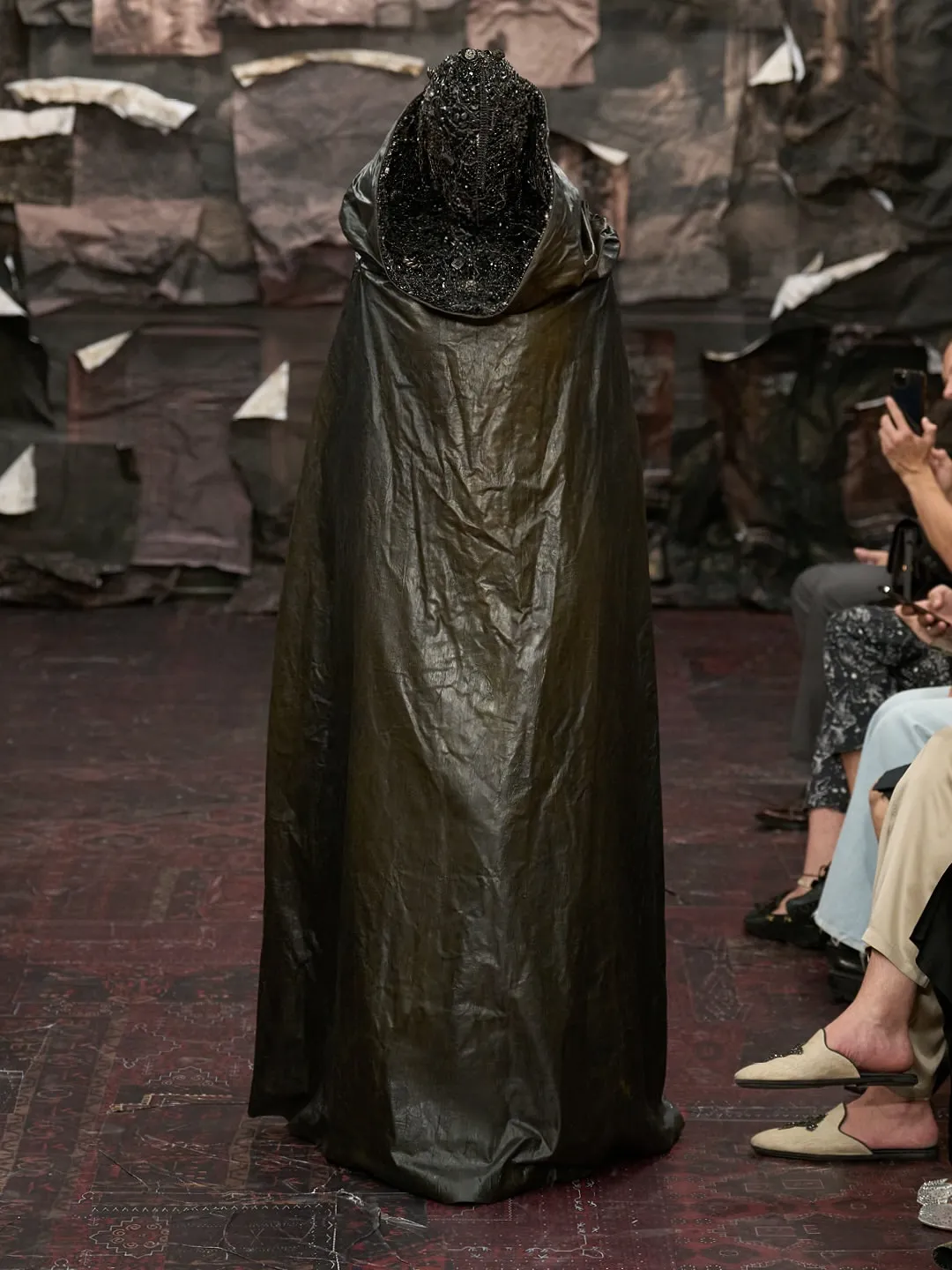
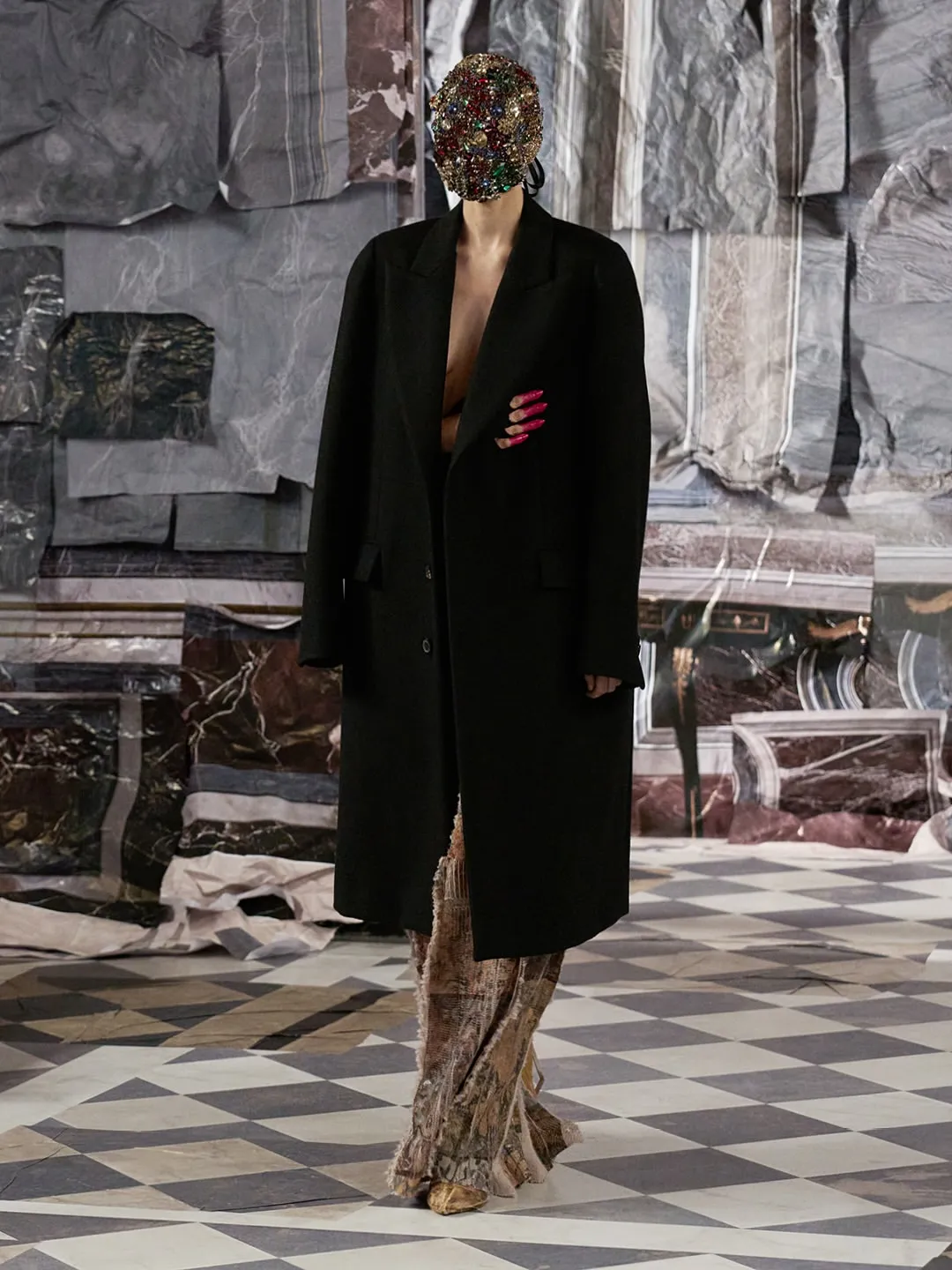
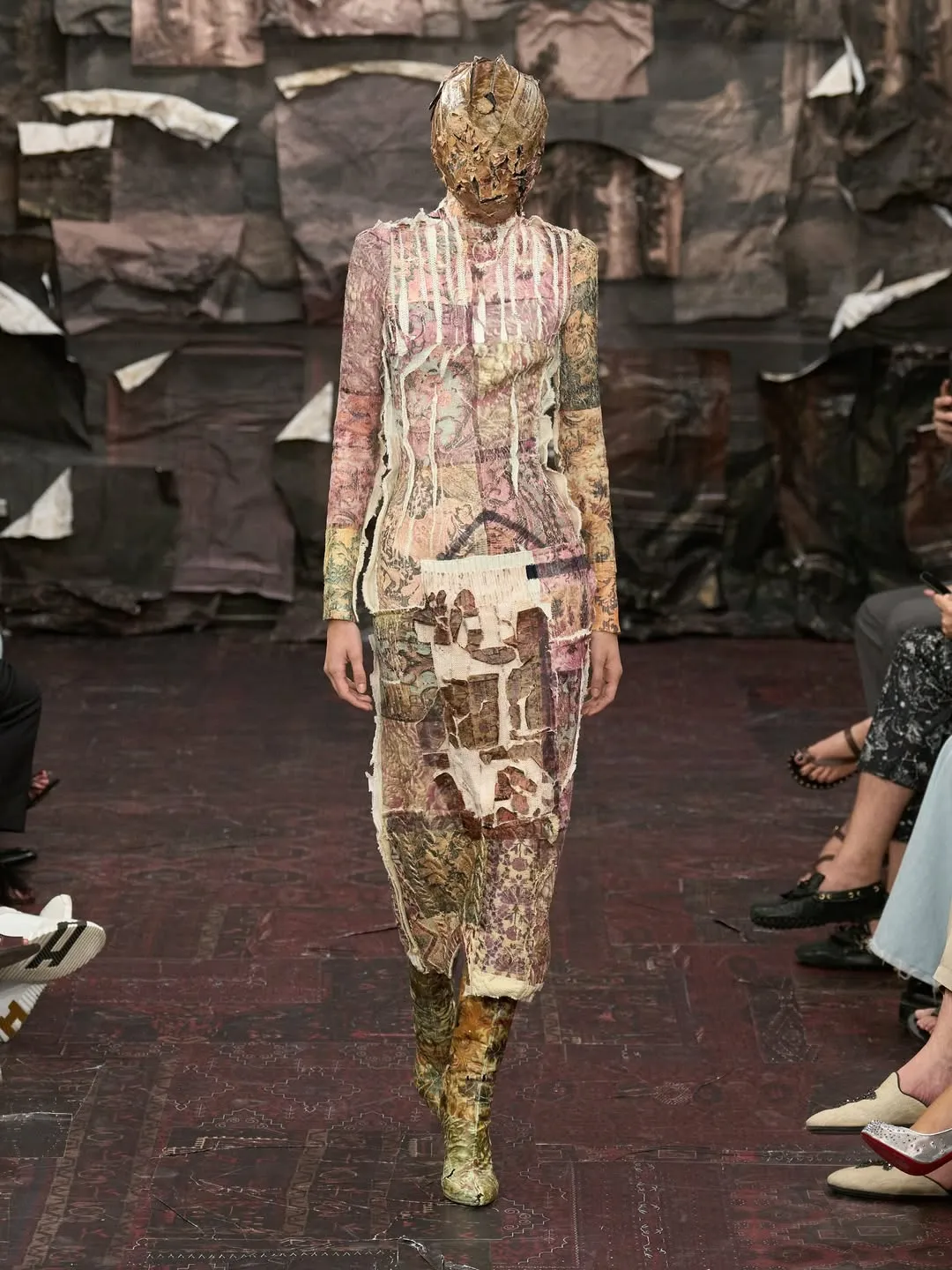
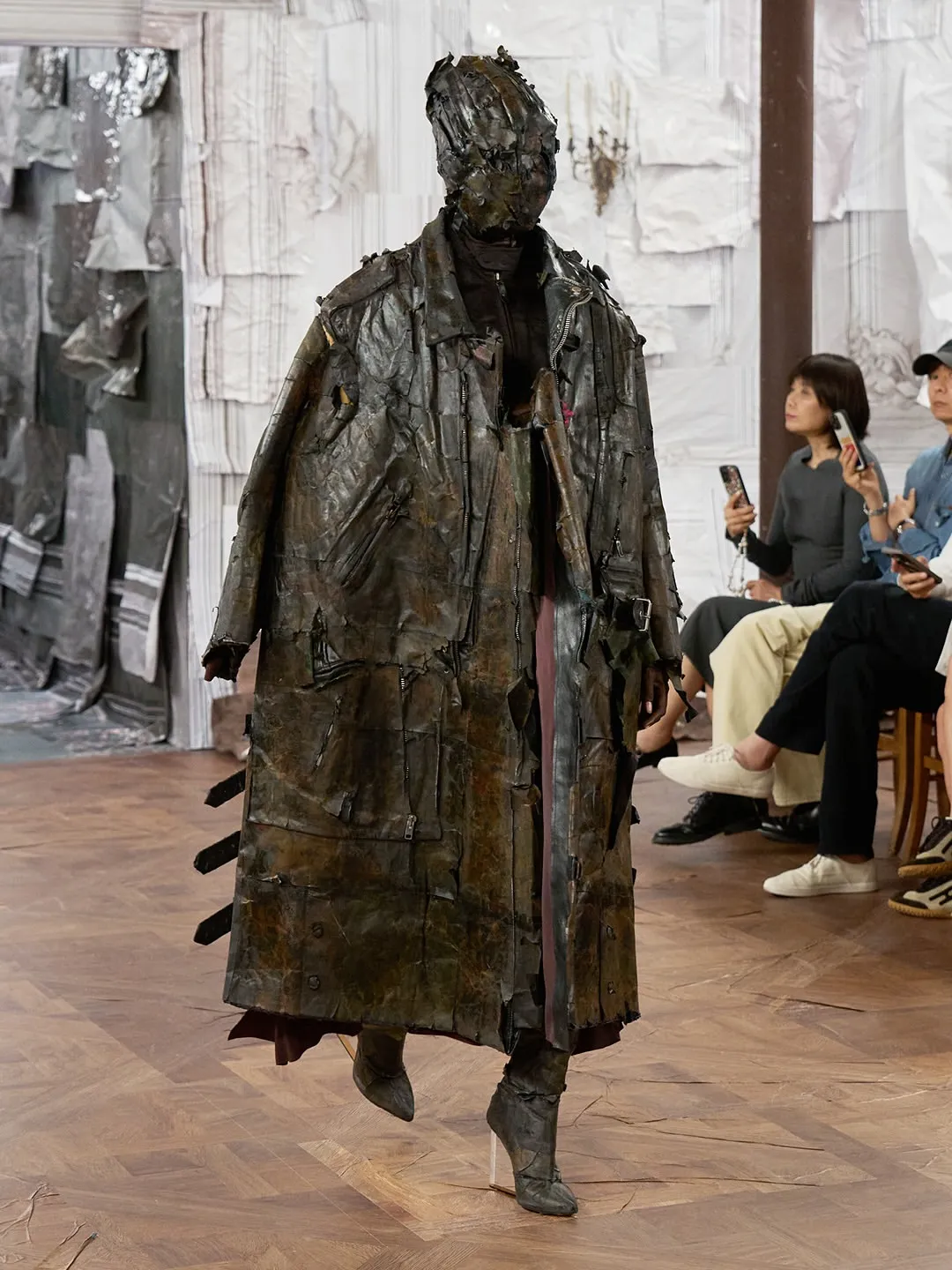
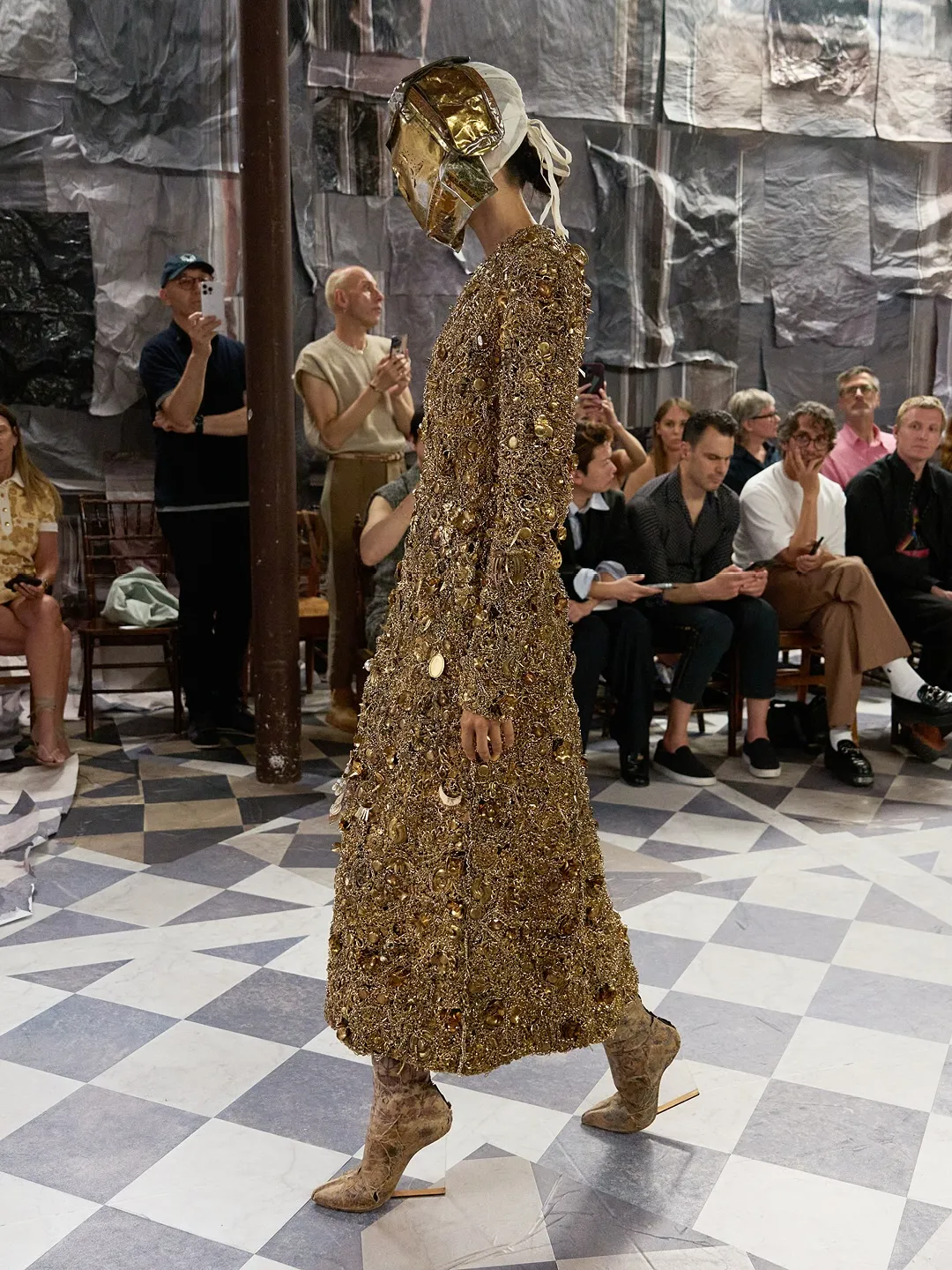
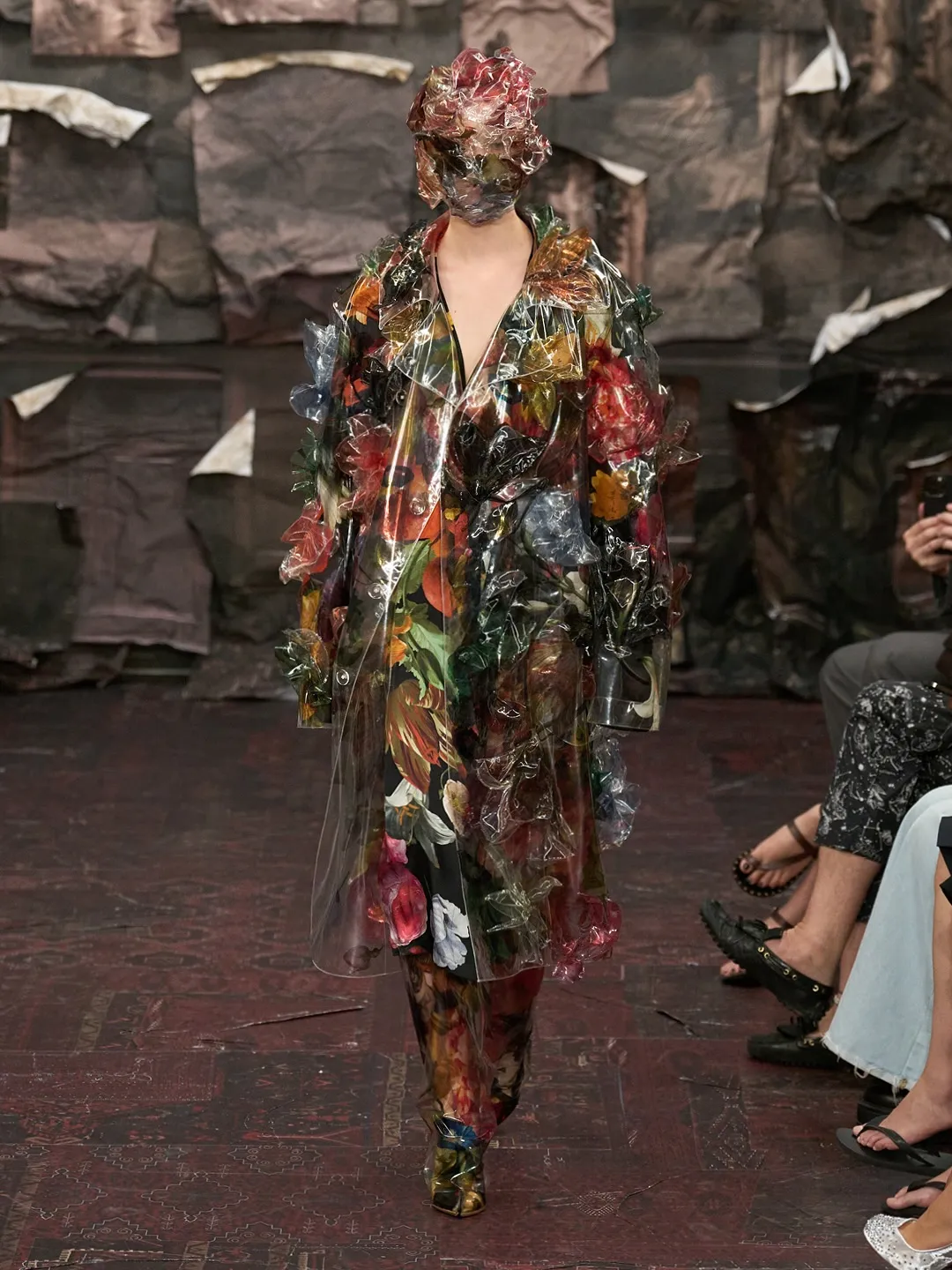
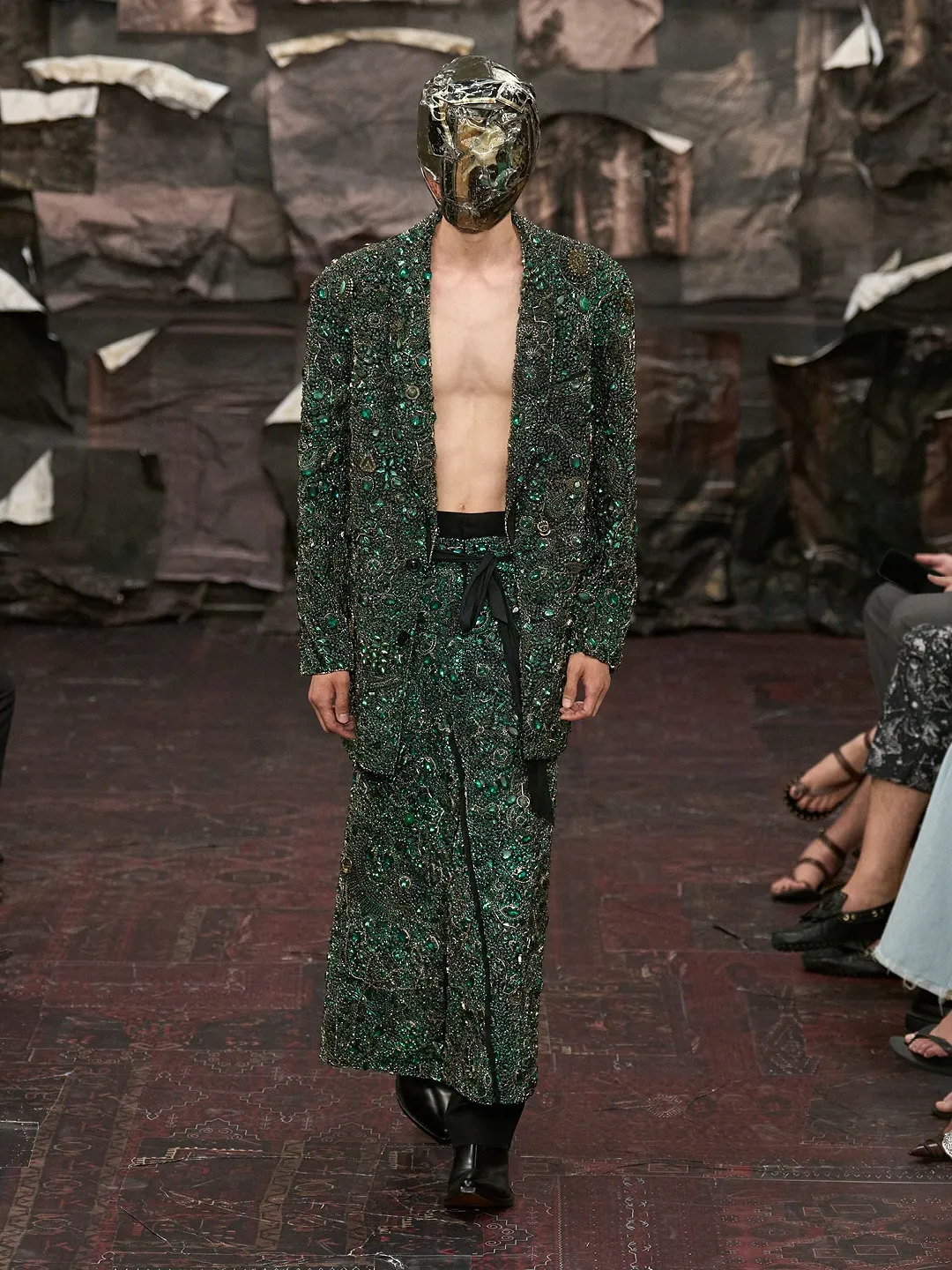
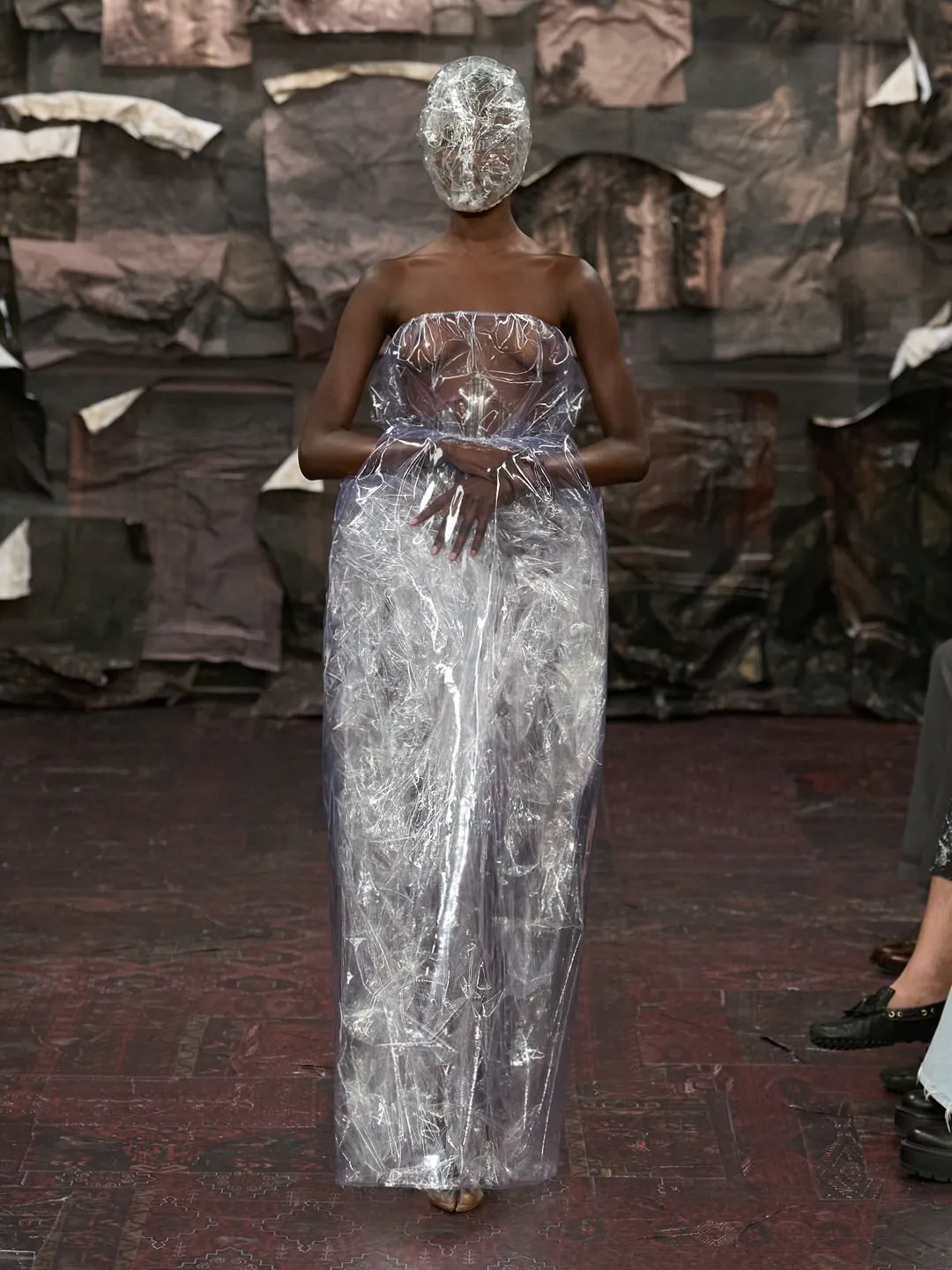
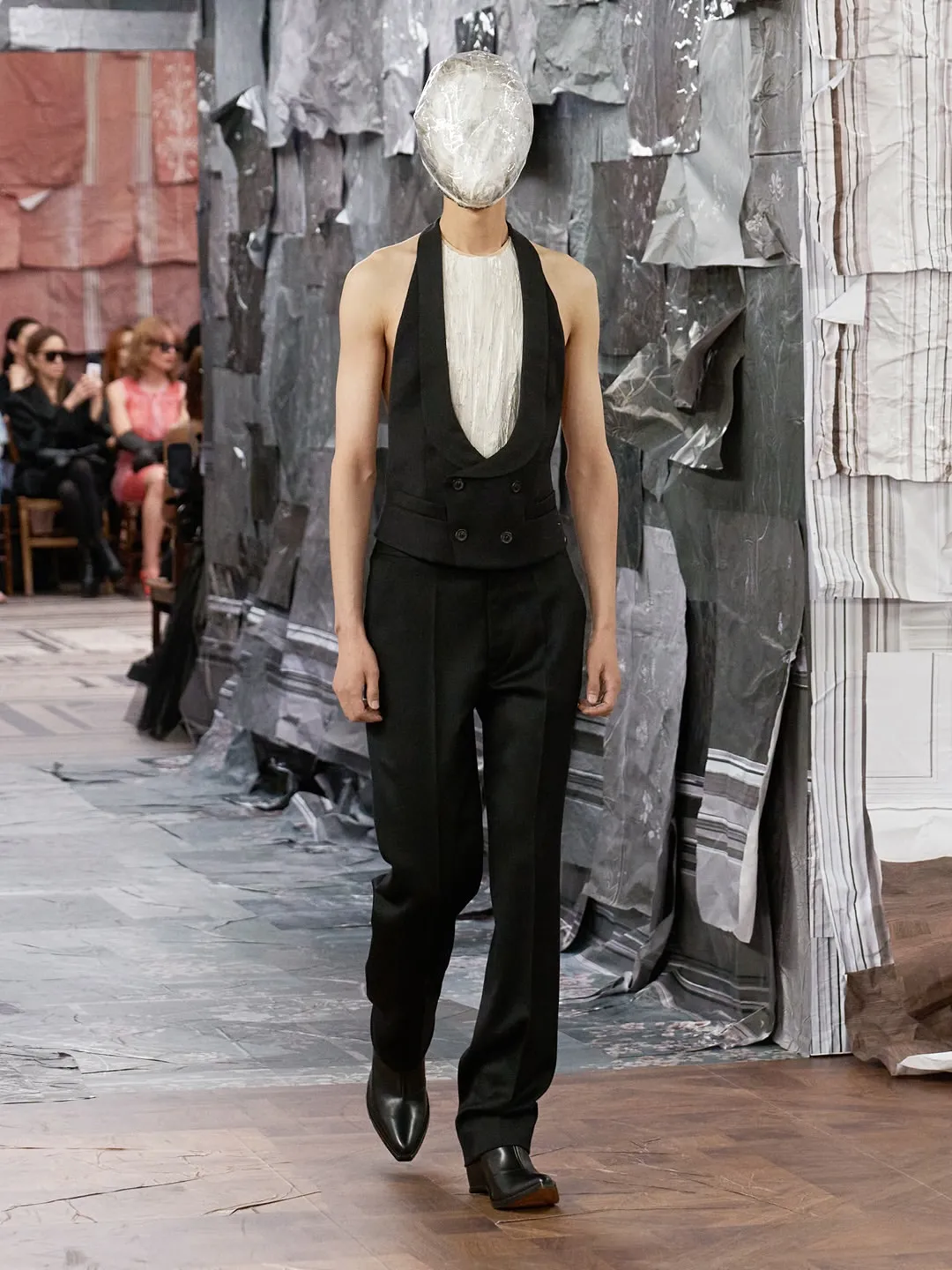
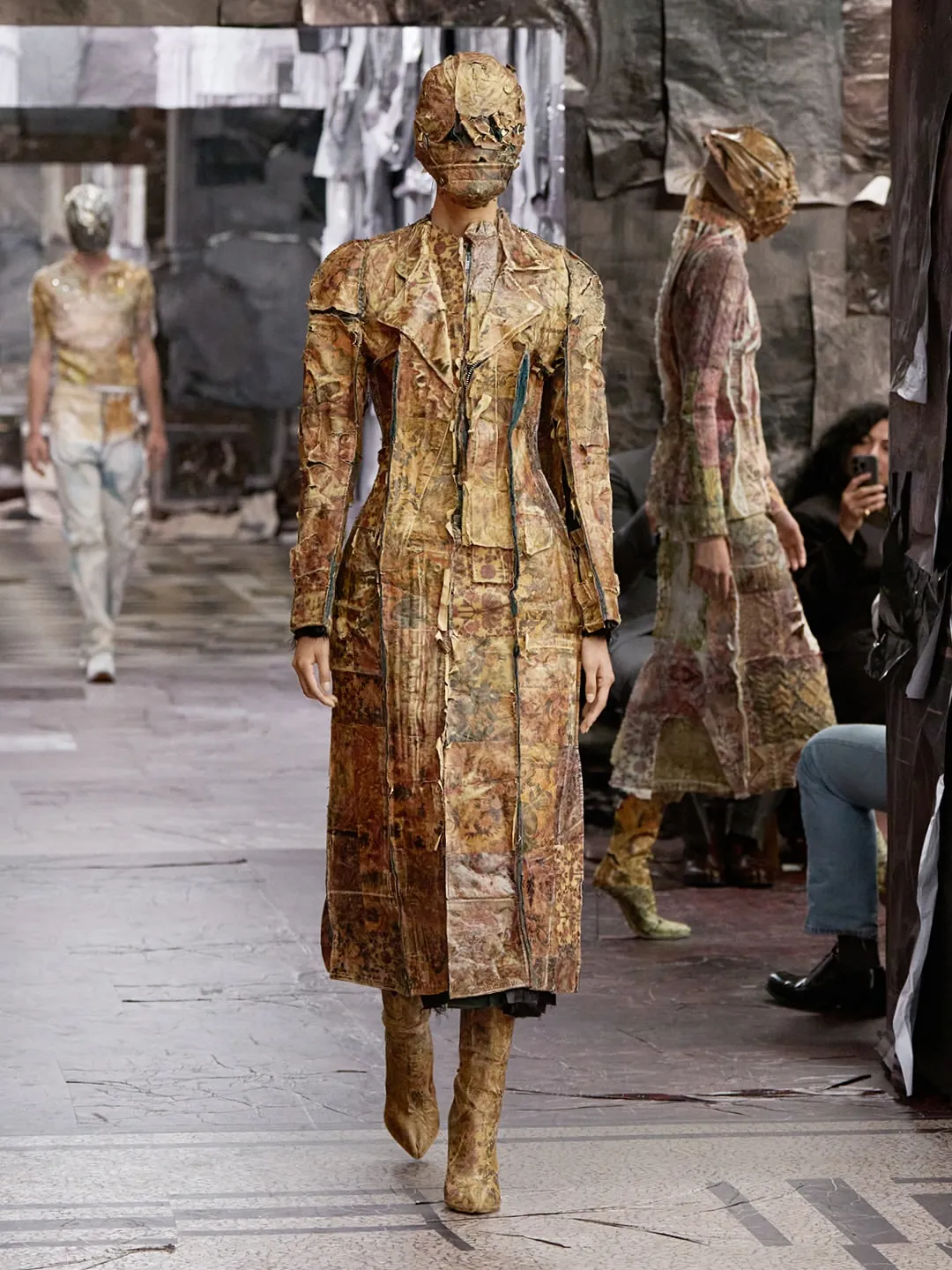
Gold thread, harvested from the guts of discarded machines, wove through gowns like circuitry in celebration. Draped looks were vacuum-sealed in clear plastic, less to preserve than to provoke. Paint clung to garments like dried plaster, and paper sheeting layered across coats and dresses felt like insulation from the outside world.
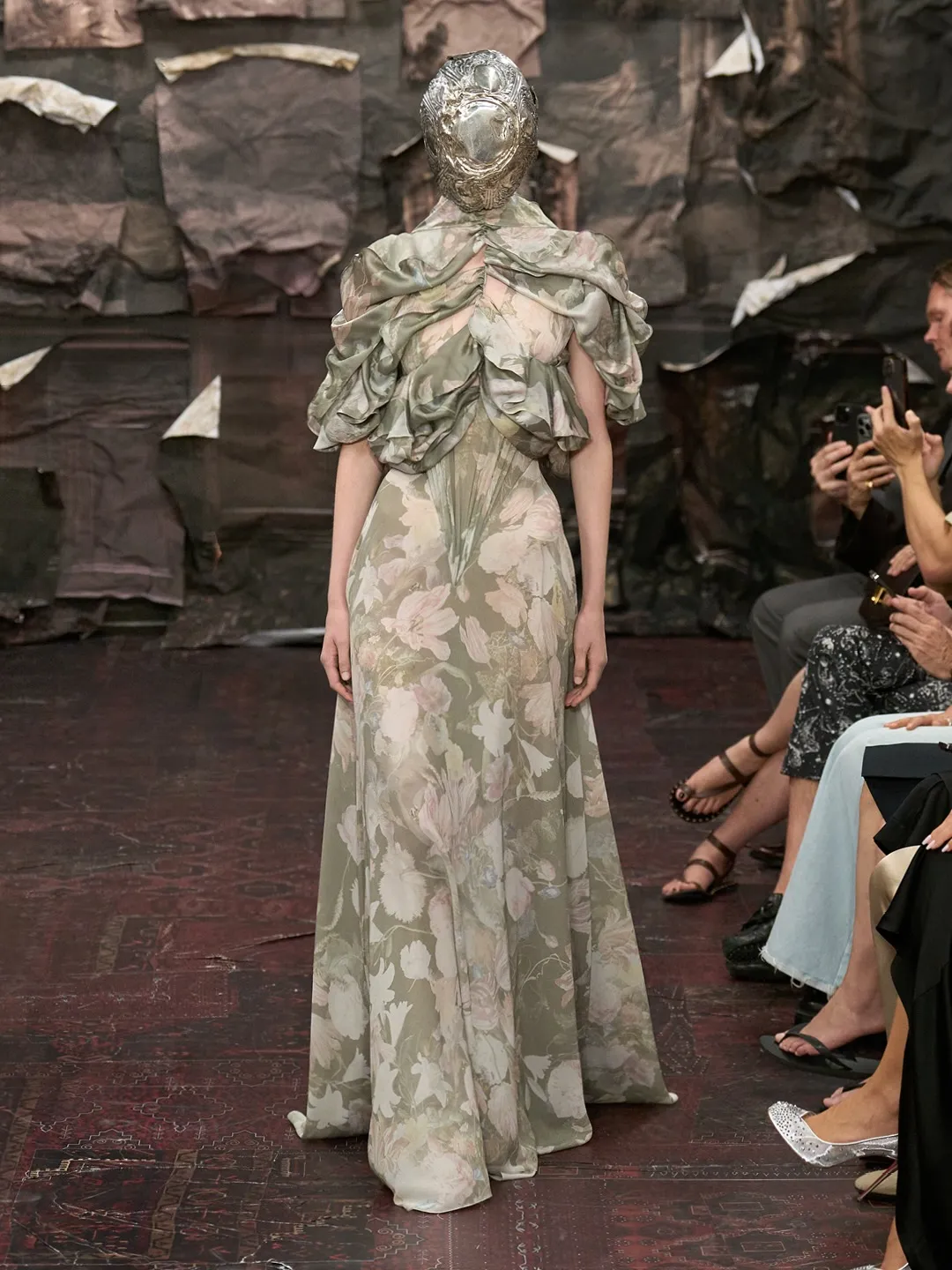
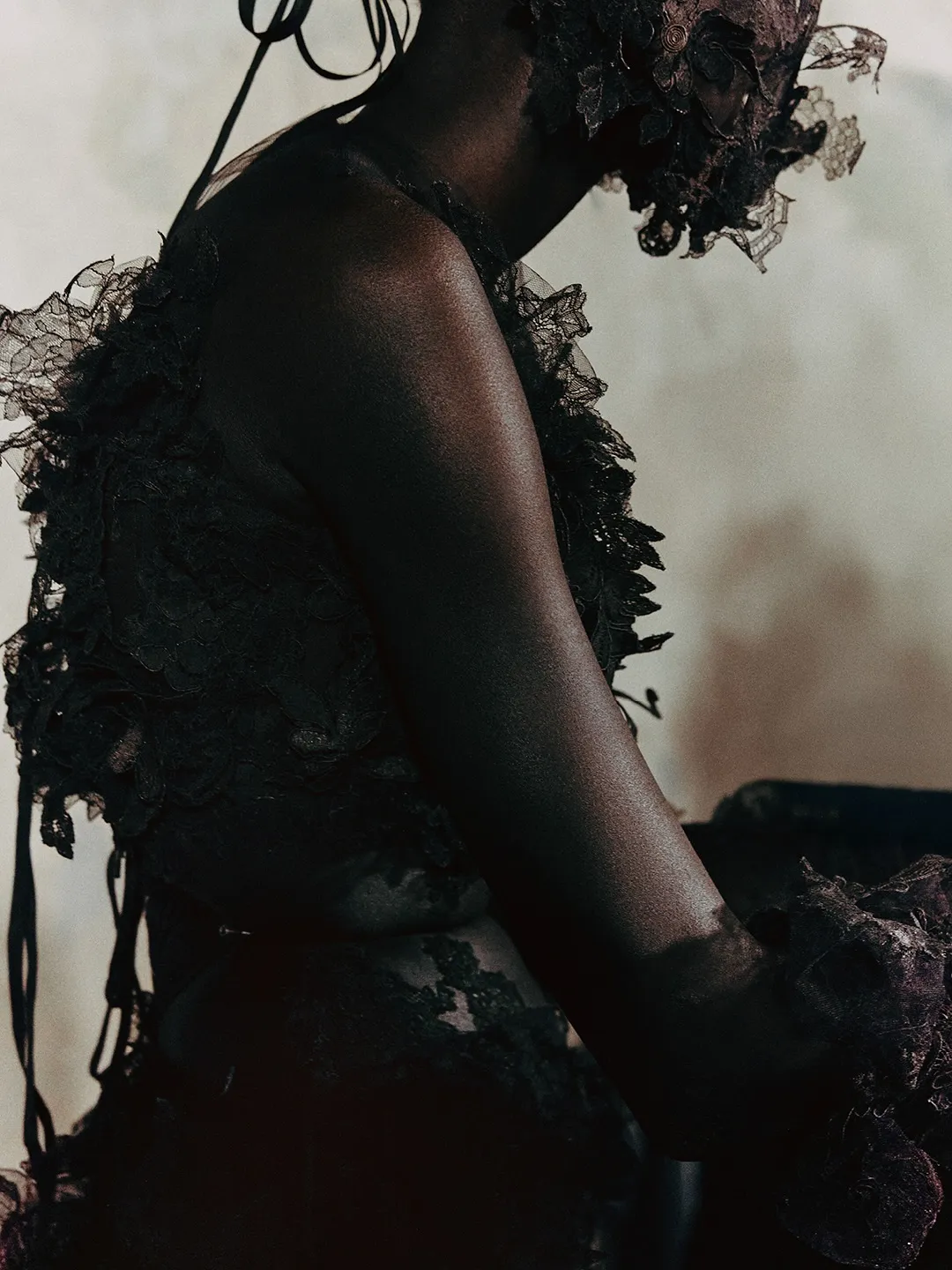
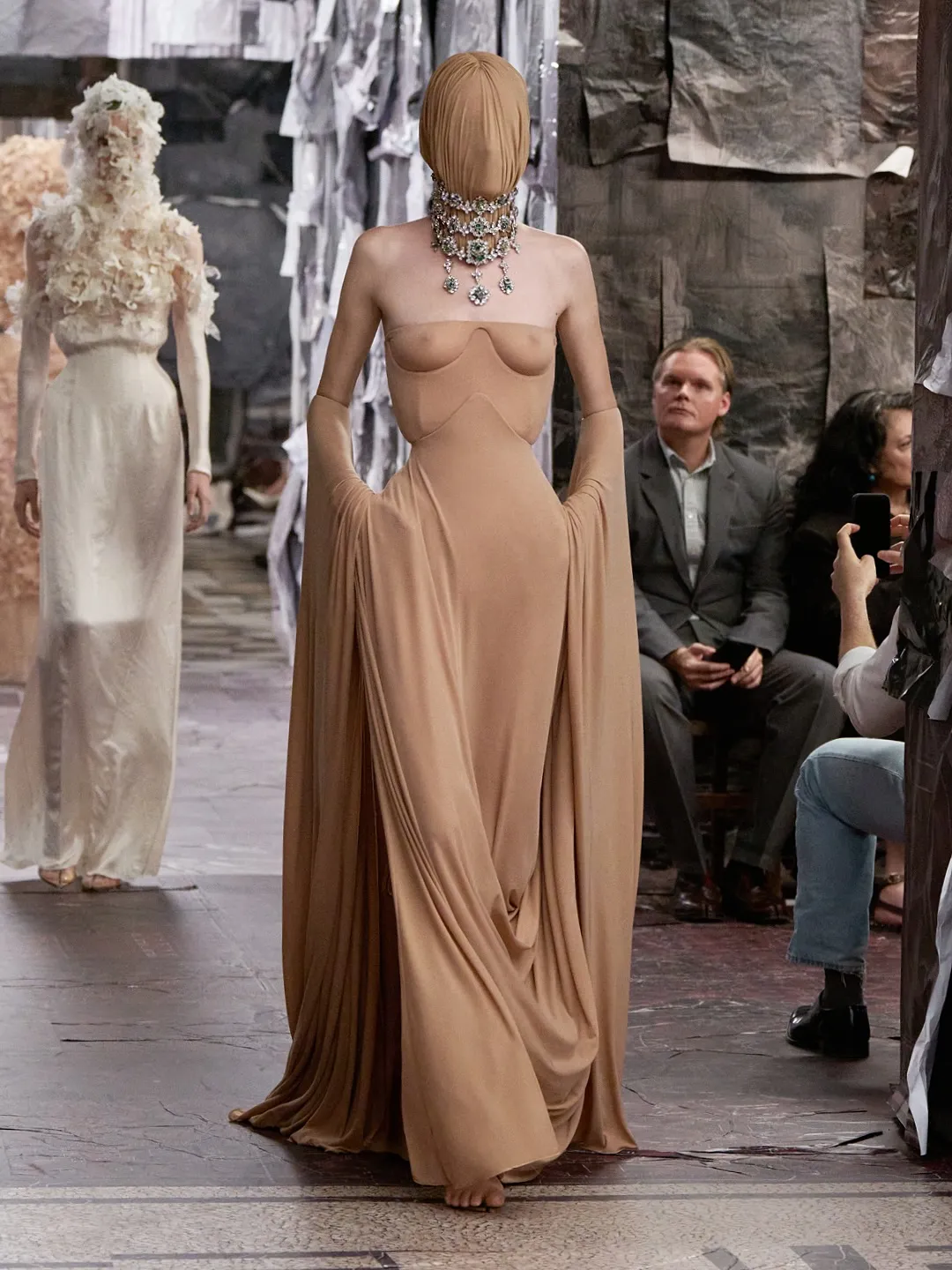
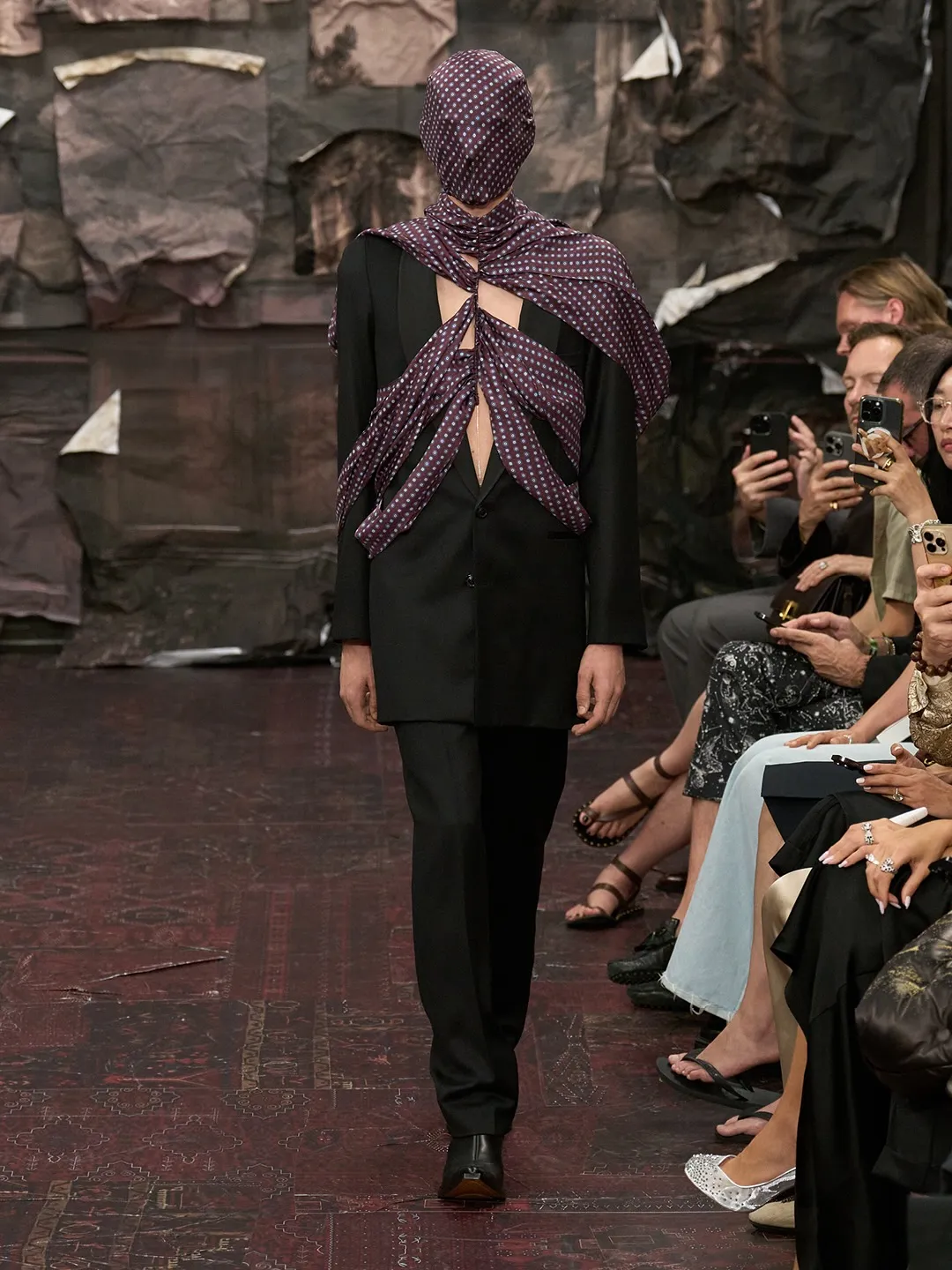
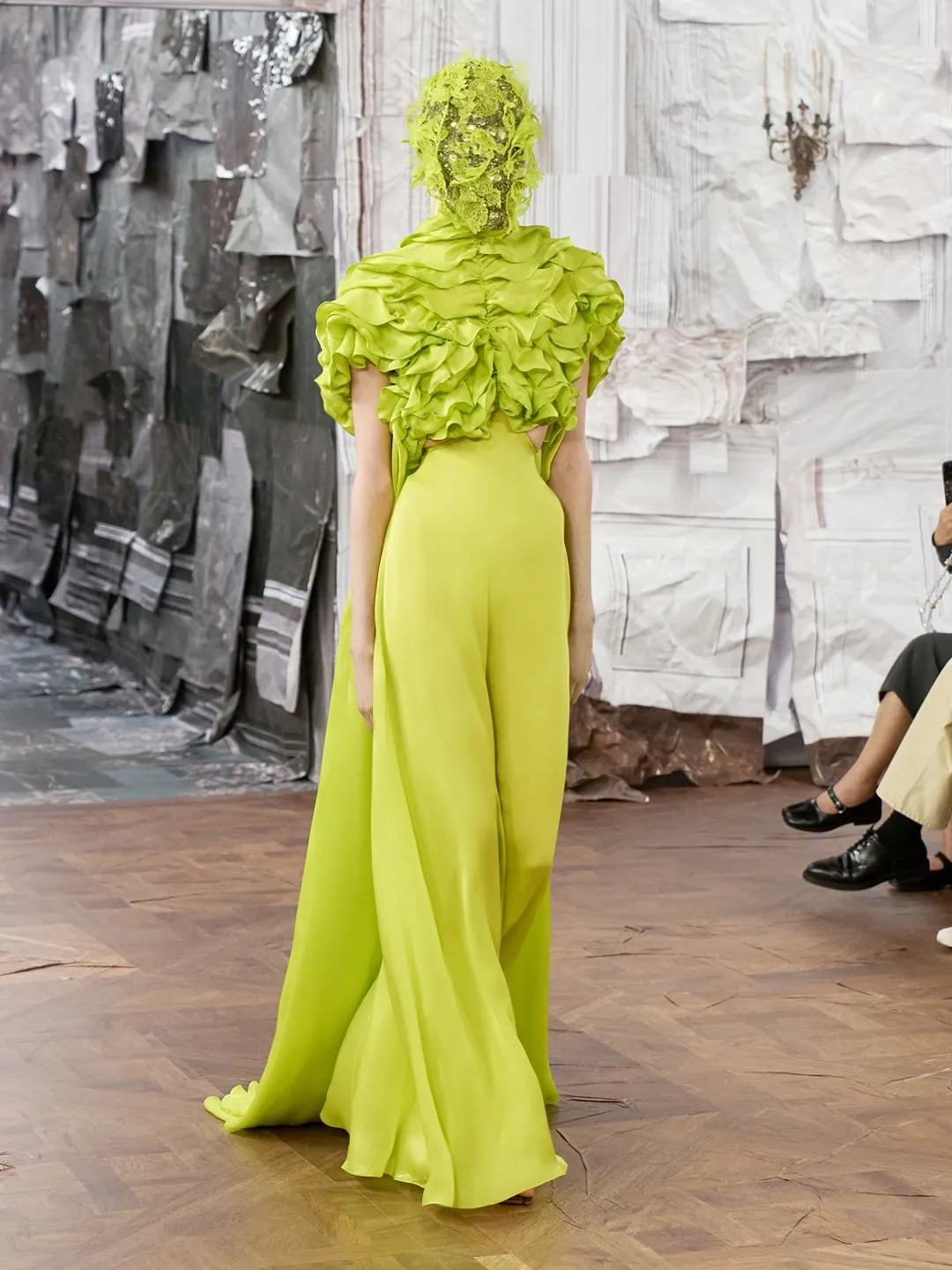
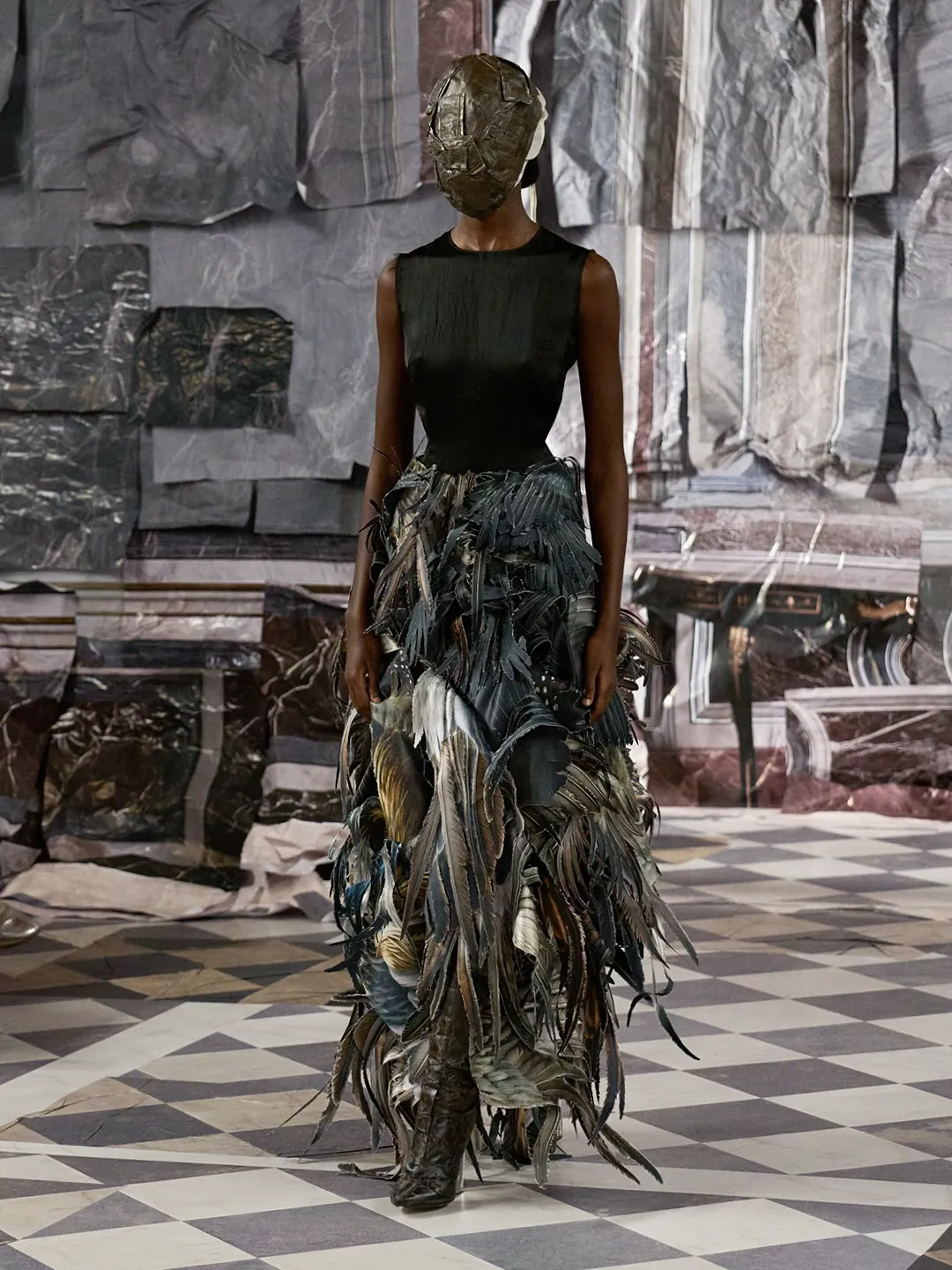
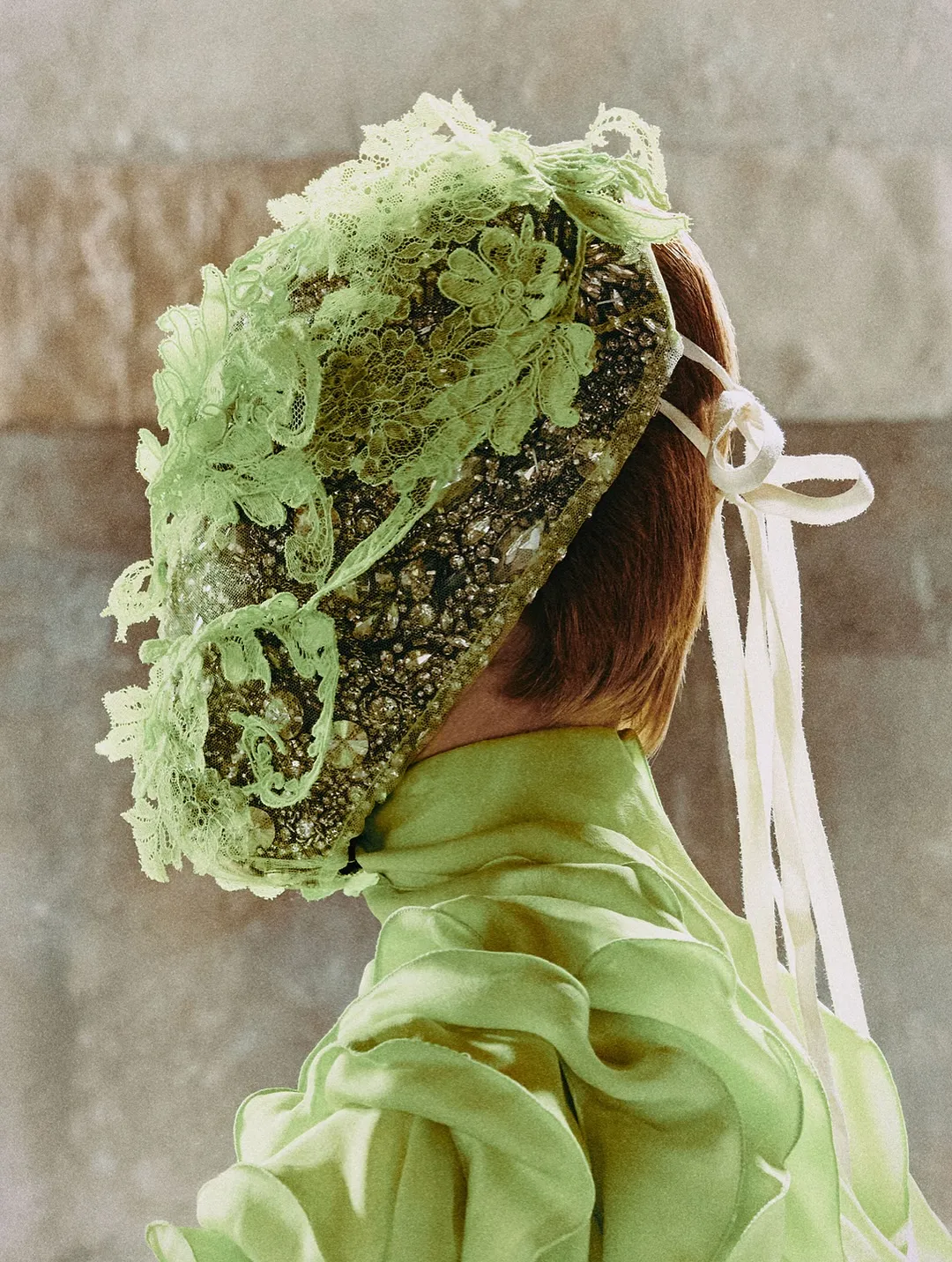
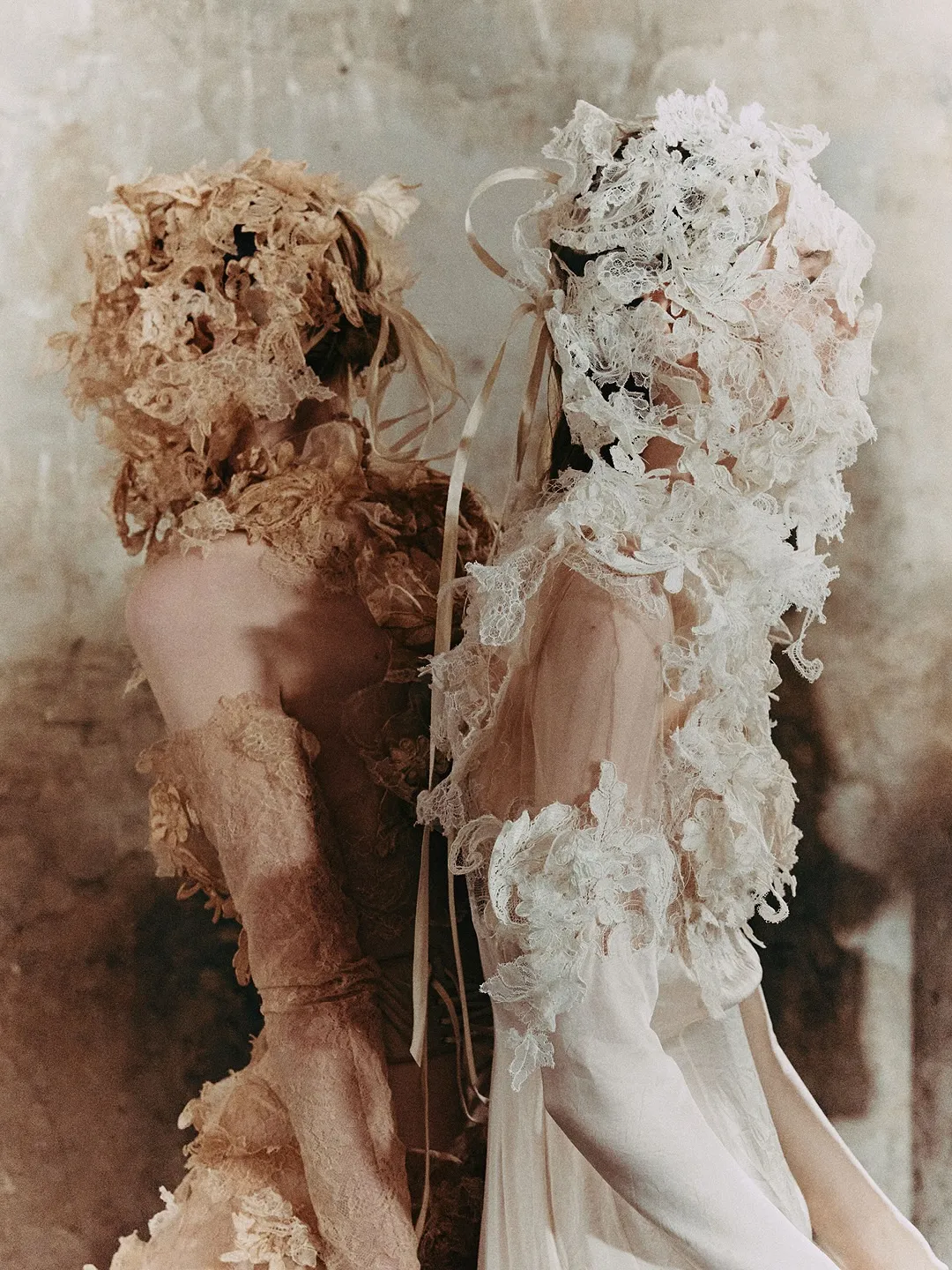
Martens pulled the maison’s codes through a cerebral maze—disruption made deliberate, disorder staged with near-mathematical balance. Baroque spirals collided with street-born silhouettes. Coats folded into themselves, gowns flowed then fractured, and flowers bloomed in crushed foil and sequins. A feathered skirt composed of denim scraps floated by, a reminder that the discarded carries more meaning than the fixed.

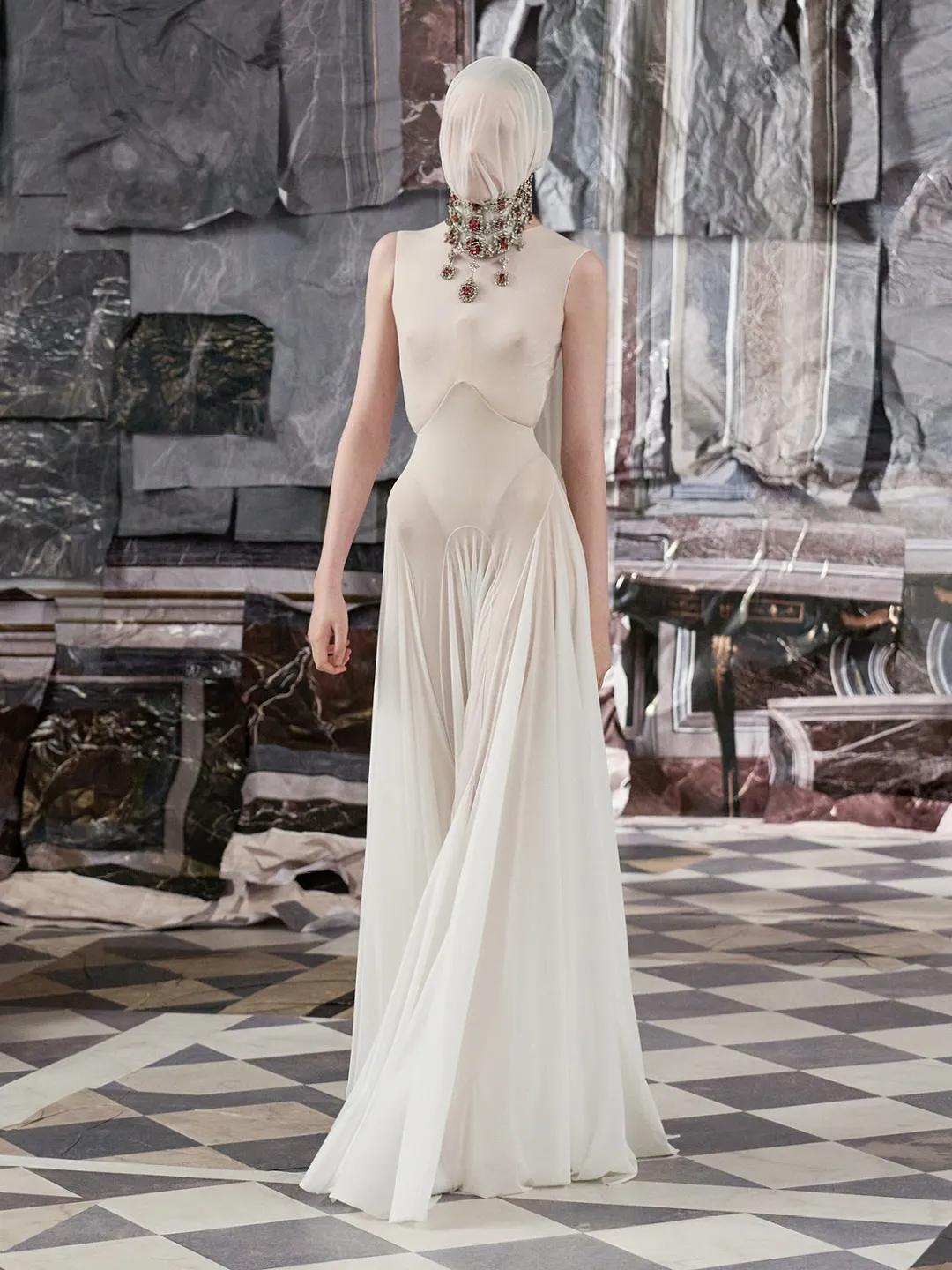
One look stood out: a luminous gown with a sheer, sculpted hood that neither concealed nor revealed, instead flickering between presence and absence like a glitch in fabric form. In its defense or detachment. It introduces a psychological layer: protection, isolation, maybe even numbness. If that’s not the avant-gardeAvant-GardeExperimental fashion that pushes boundaries and challenges conventional ideas of shape, material, and beauty. Avant-garde designers treat clothing as art, presenting sculptural silhouettes and unexpected textures on runways, and theirGo to Avant-Garde Glossary, it’s something colder, like brutalist shelter.
In fashion’s ongoing game of musical chairs, designers have long circled the same few seats. But the music has shifted, and Martens is one of the few standing upright, prize in hand. With this debut, he doesn’t just take Margiela’s avant-gardeAvant-GardeExperimental fashion that pushes boundaries and challenges conventional ideas of shape, material, and beauty. Avant-garde designers treat clothing as art, presenting sculptural silhouettes and unexpected textures on runways, and theirGo to Avant-Garde Glossary mantle—he sets it on fire.
Photos: MAISON MARGIELA
Recommended Video
Latest Posts


Latest Issue