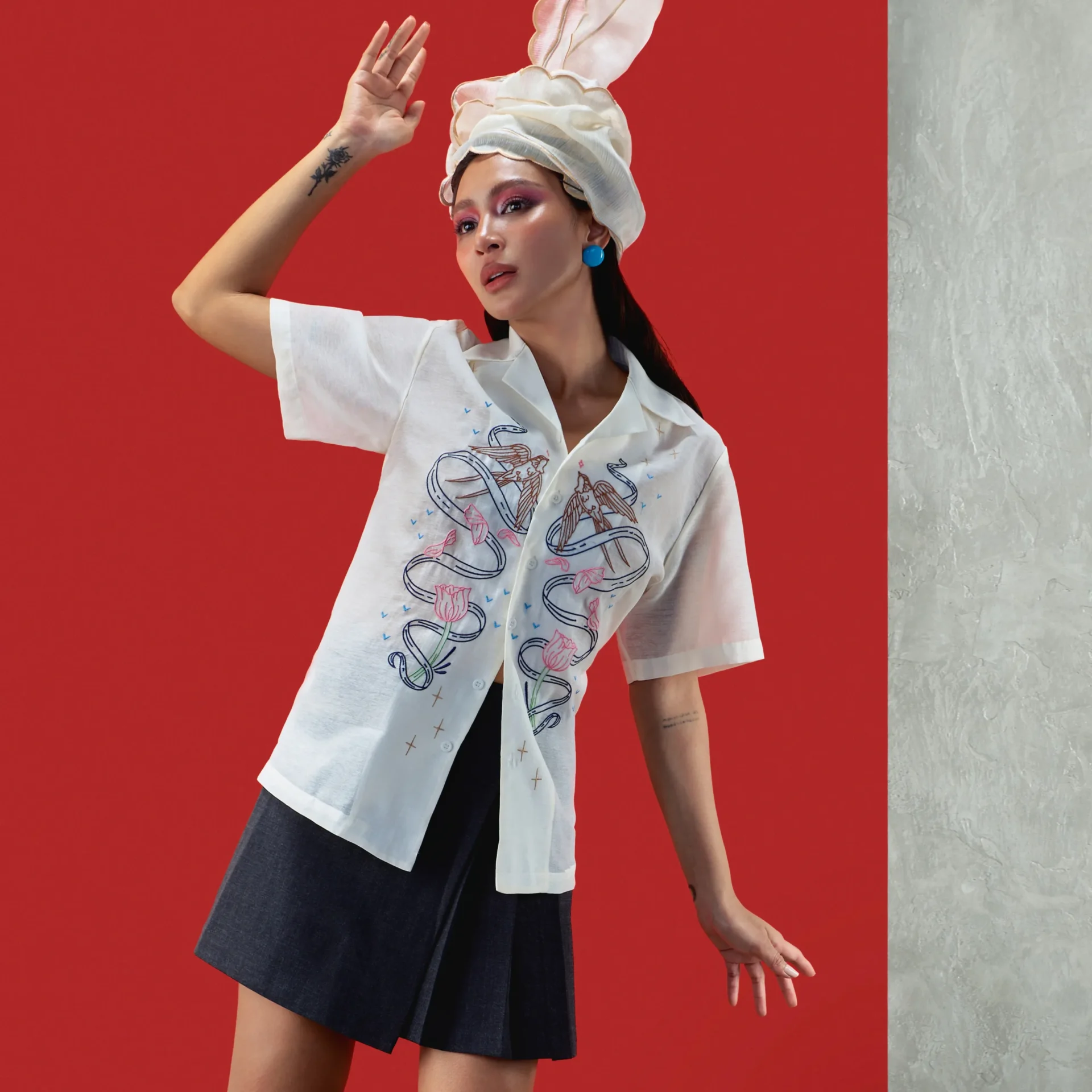




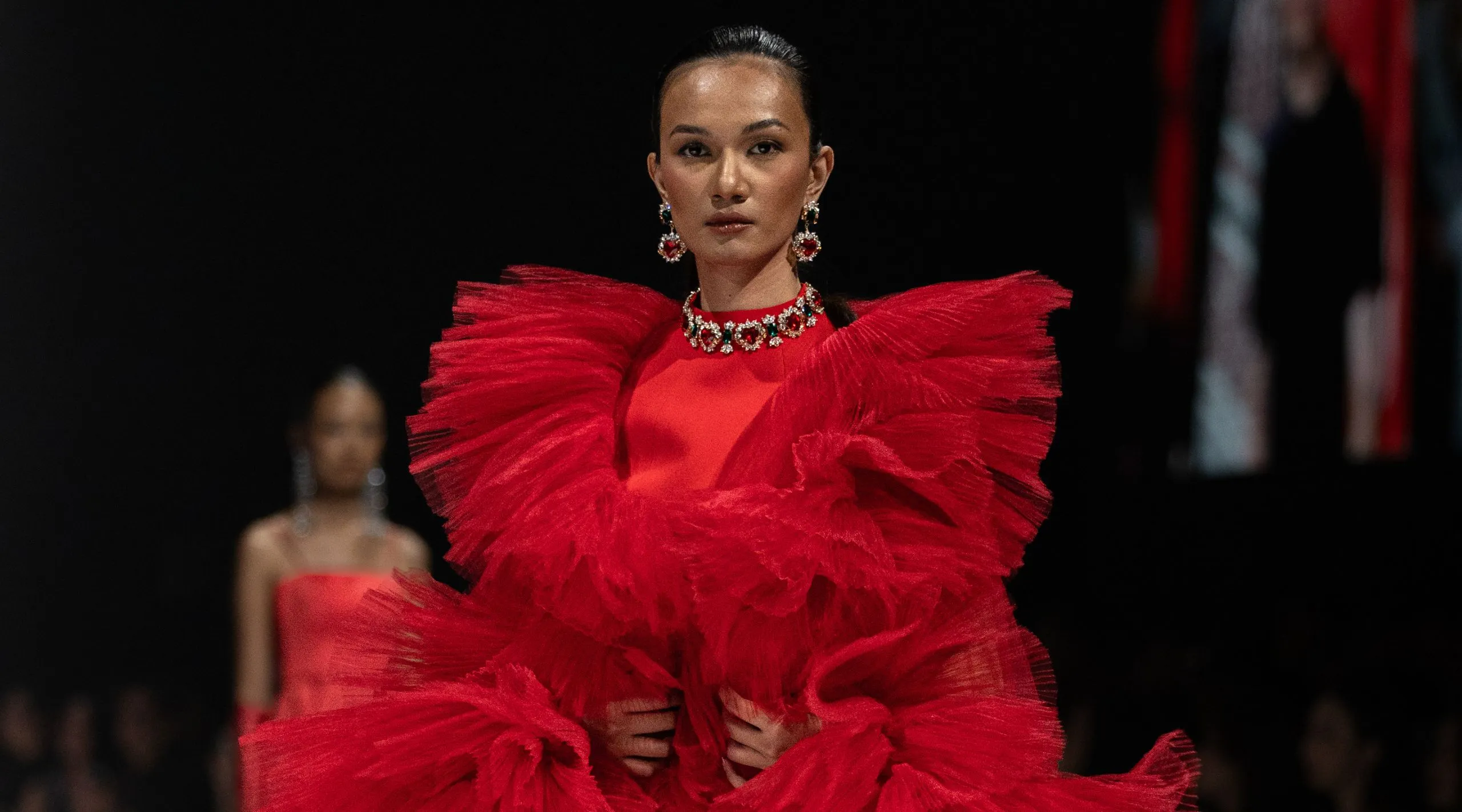
Ask someone to define Southeast Asian fashion, and they’ll likely hesitate. That’s precisely its advantage. There isn’t one silhouette, one textile, or one cultural reference that binds the region together. At the ASEAN Fashion Designers Showcase (AFDS) during JF3 Fashion Festival 2026 with the theme “Re-Crafted: Shaping the Future”, the answer came not through consensus, but through contrast. The AFDS suggests a way forward—one where collaboration doesn’t flatten identities but gives them a larger stage.
RELATED: How Indonesia Is Preparing Its Designers for the World
Now in its third year of partnership with JF3, the showcase brought together designers from Laos, Singapore, and the Philippines. For AFDS Chairman Hayden Ng, the showcase is built on a simple belief: fashion moves further when distinct perspectives move together.
“We are building a family of designers that could coexist and work together. People are amazed because we don’t speak the same language, but we work together because we are ASEAN.”
Hayden Ng, President and Founder of AFDS
It is an ambitious proposition in an industry made to compete. Rather than positioning neighboring countries against one another, AFDS encourages designers to see each other’s success as shared momentum. Every new city and every new collection becomes another point of exchange, expanding not only where Southeast Asian fashion is seen, but how it is understood.
“We have to go out,” Ng says. “When you go out, you see more, you learn more, you introduce your brand to people across the world. New inspirations come to you as a creator.”
Laos: Crafting Continuity
Laos opened the show through a designer who believes the future begins by understanding where you come from. Thoulany Chanthalangsy, founder of KINNALY—his label named after his daughter—revisited traditional Lao dress through contemporary silhouettes, treating cultural attire not as something preserved in time, but as a living practice that continues to evolve.
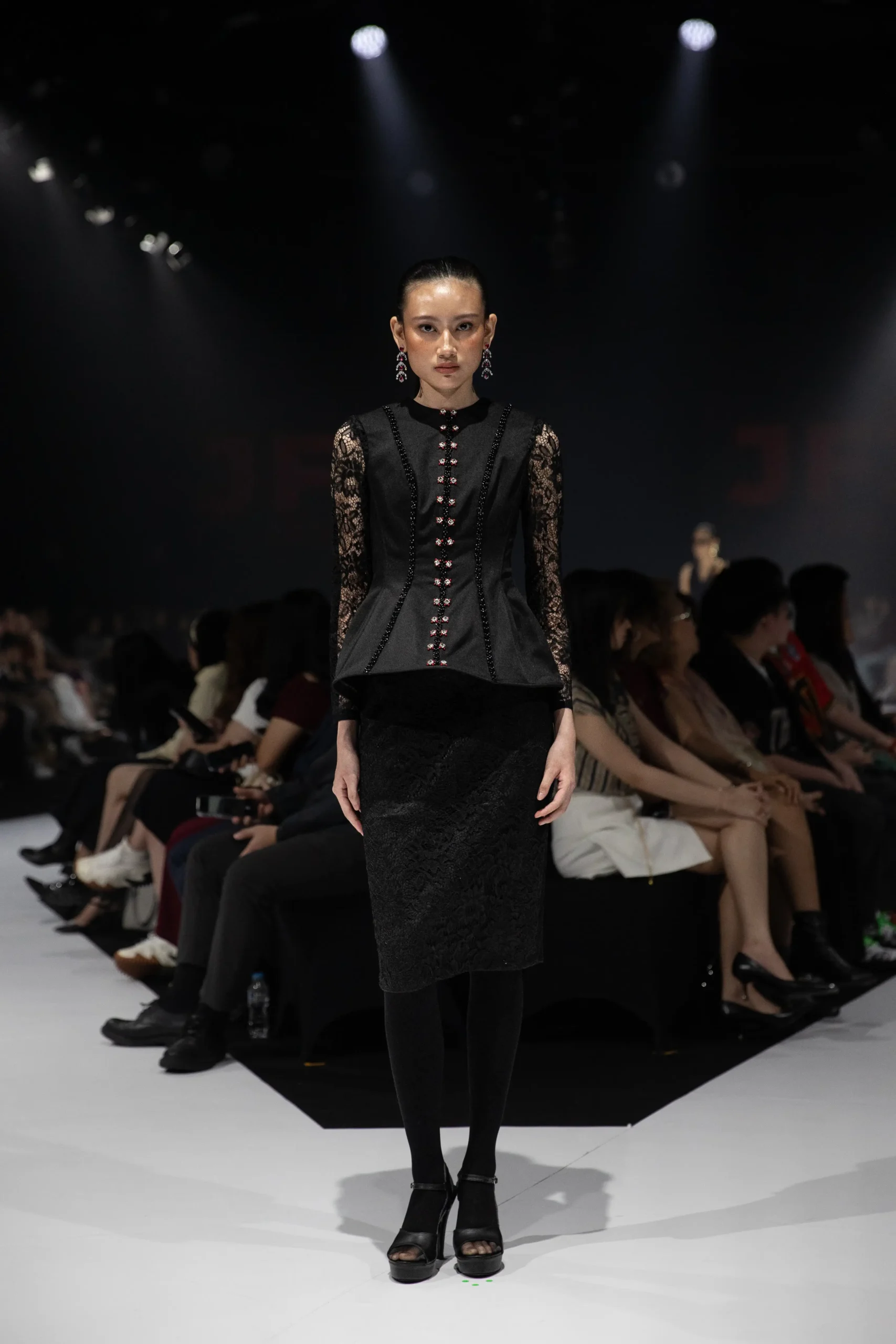
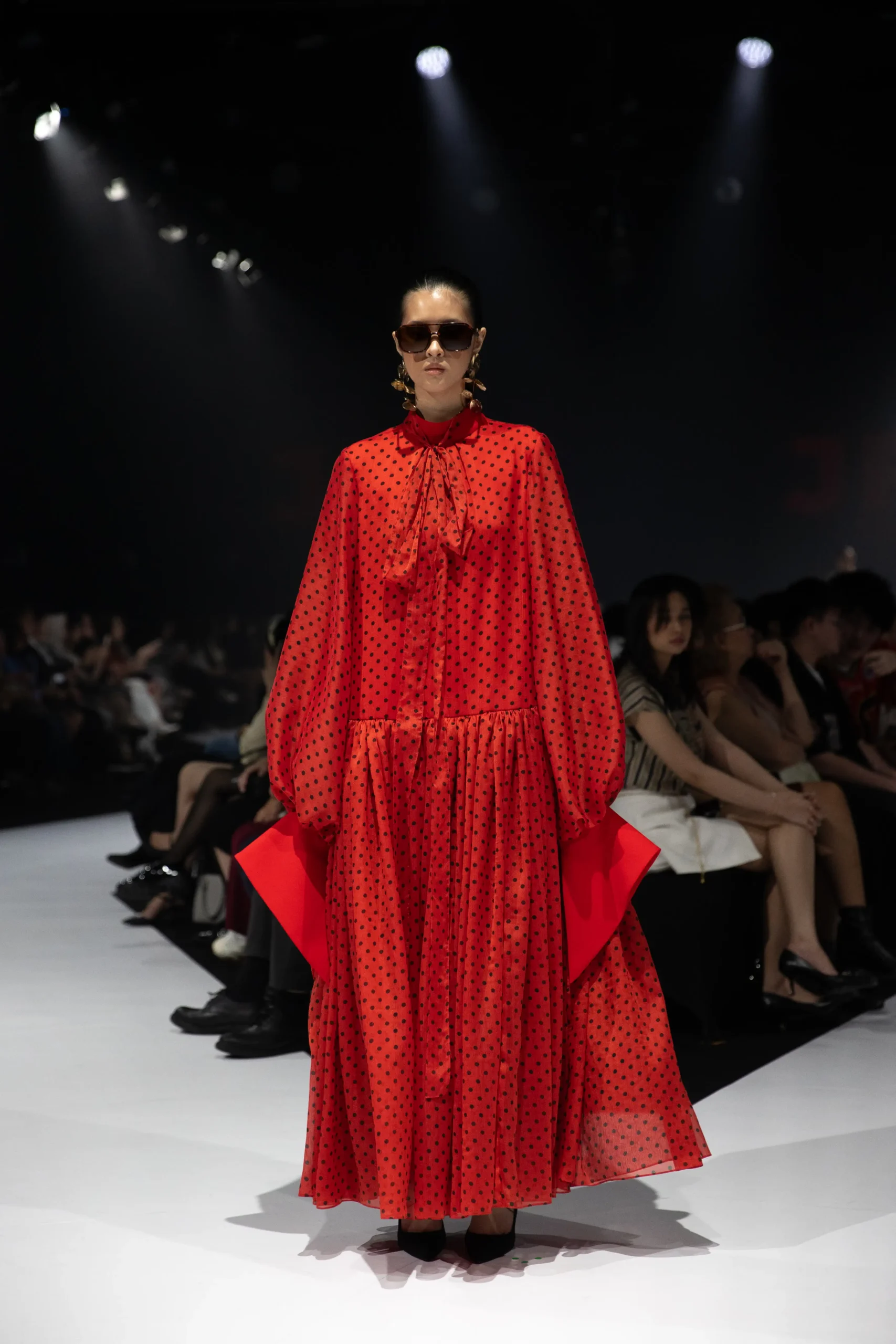
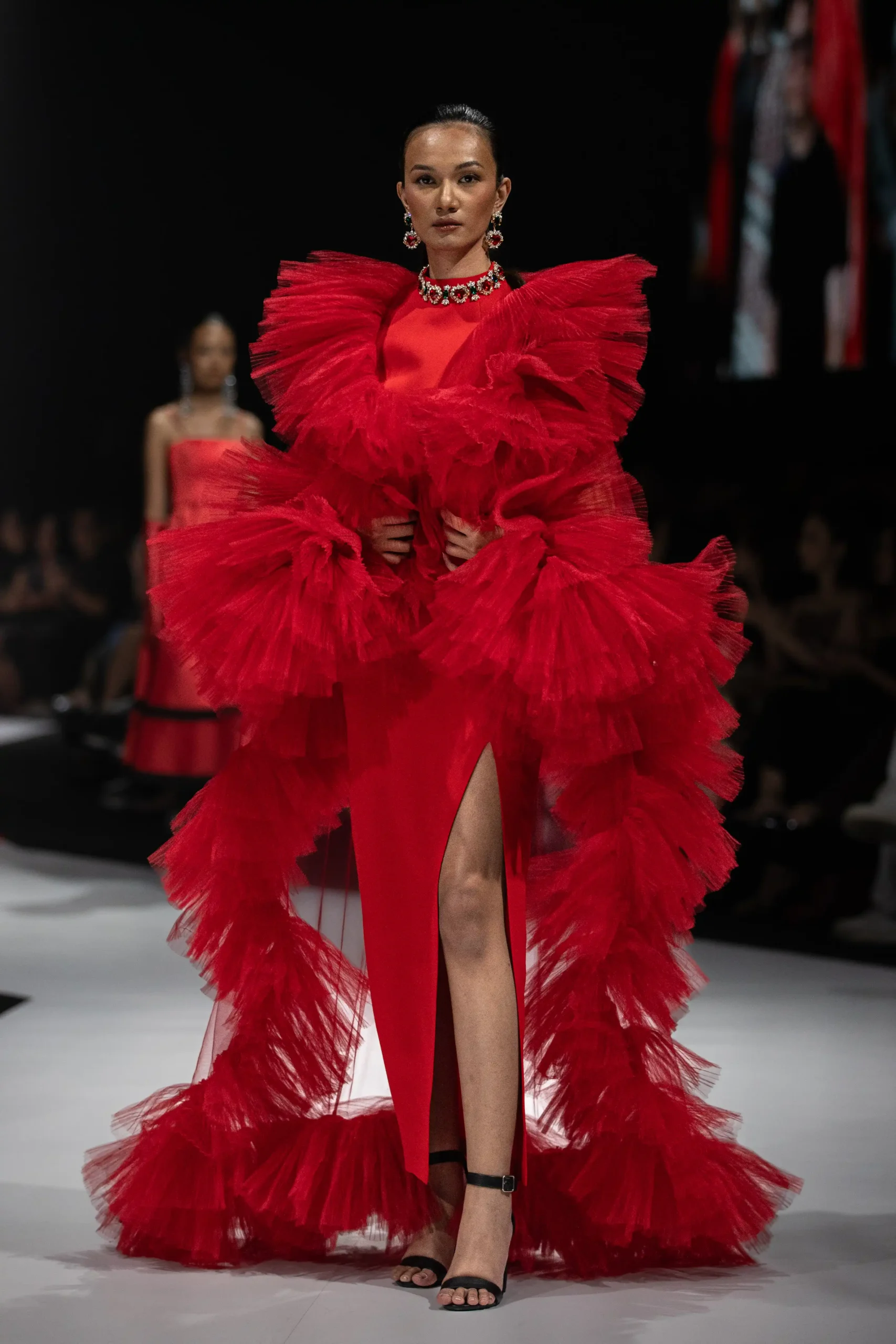
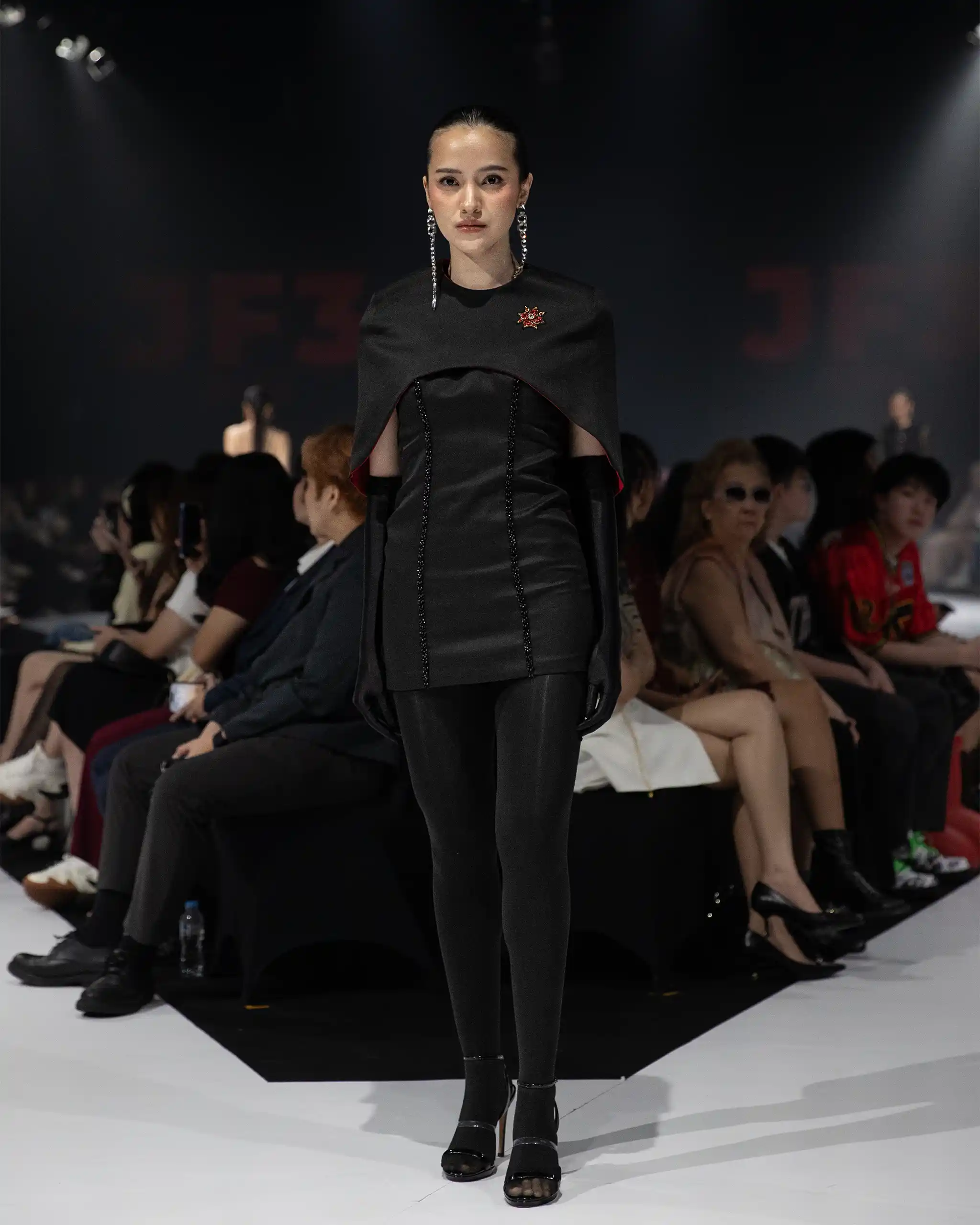
“Traditional design is not forgetting tradition,” he says. “Tradition is a new way to be seen.” His perspective has been shaped through persistence as much as practice.
In a country without a dedicated fashion school, Chanthalangsy built his foundation through online resources, short courses abroad, and close collaboration with artisans across different provinces. Every collection becomes an exchange between generations of craft and contemporary design, suggesting that knowledge is sometimes gathered rather than formally taught.
Singapore: Dream Logic
Singapore offered a different point of view, one where nature becomes a source of imagination rather than observation. Indra Murak looked beyond postcard landscapes, finding inspiration in the more mysterious corners of the natural world.
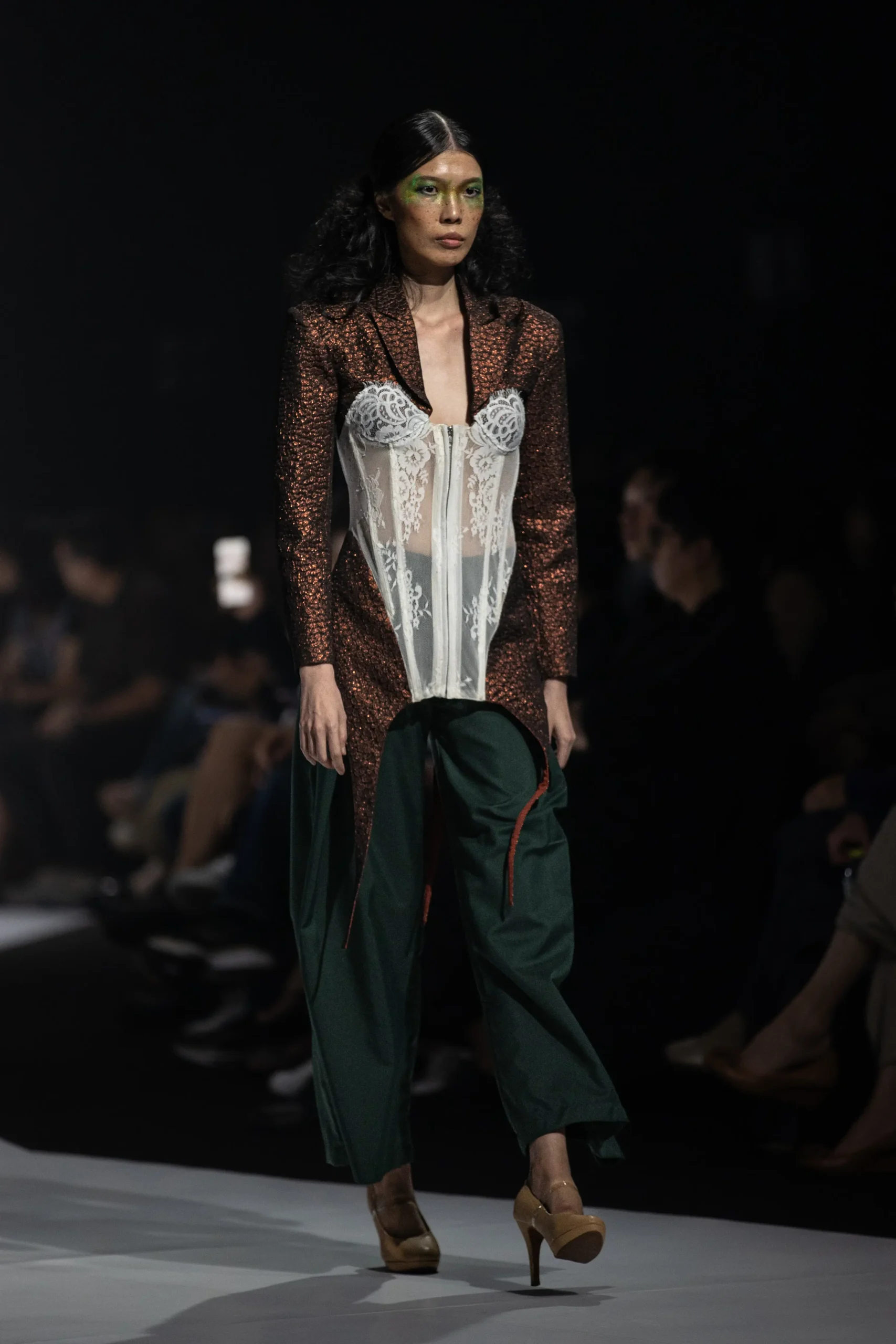
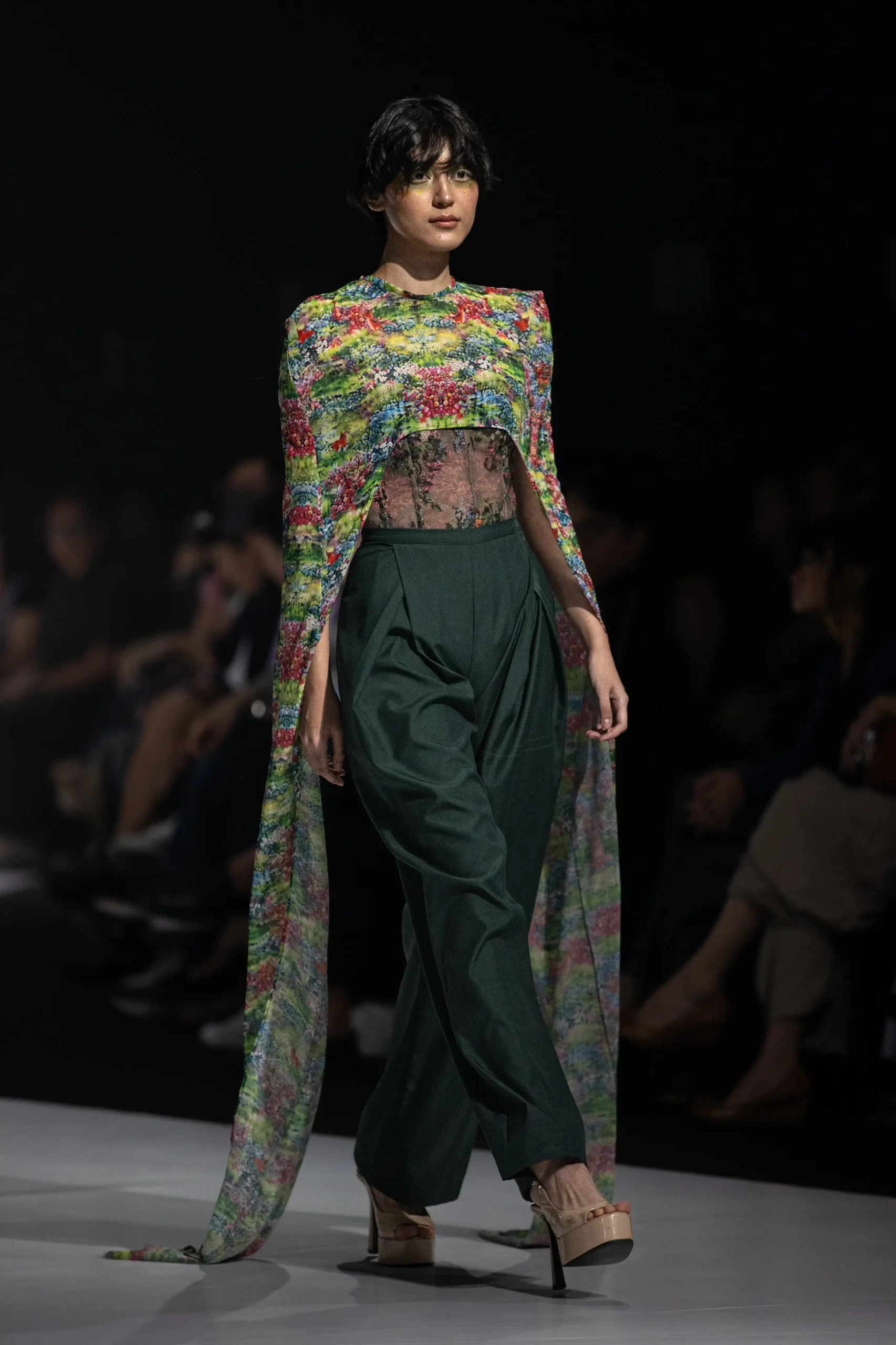
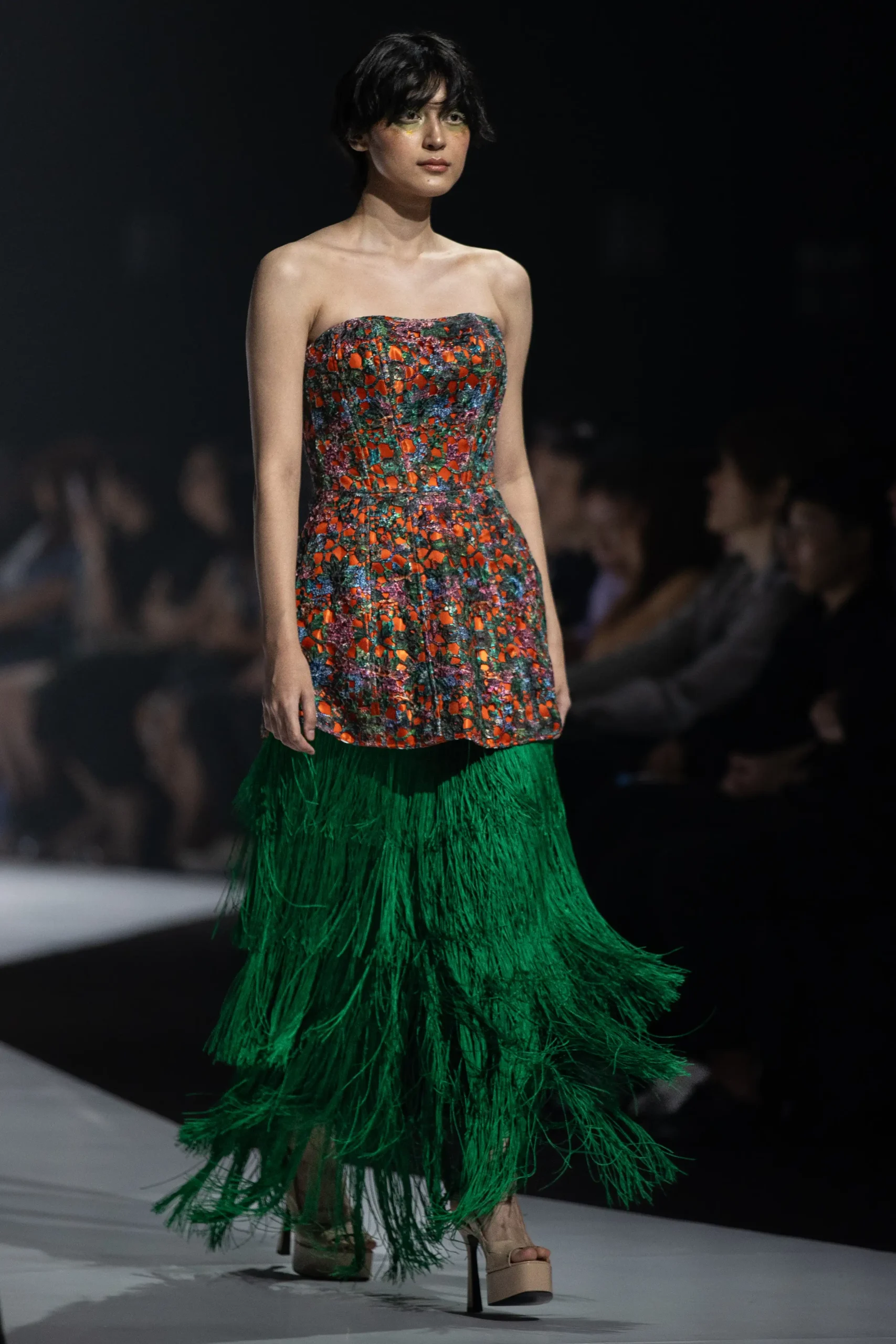
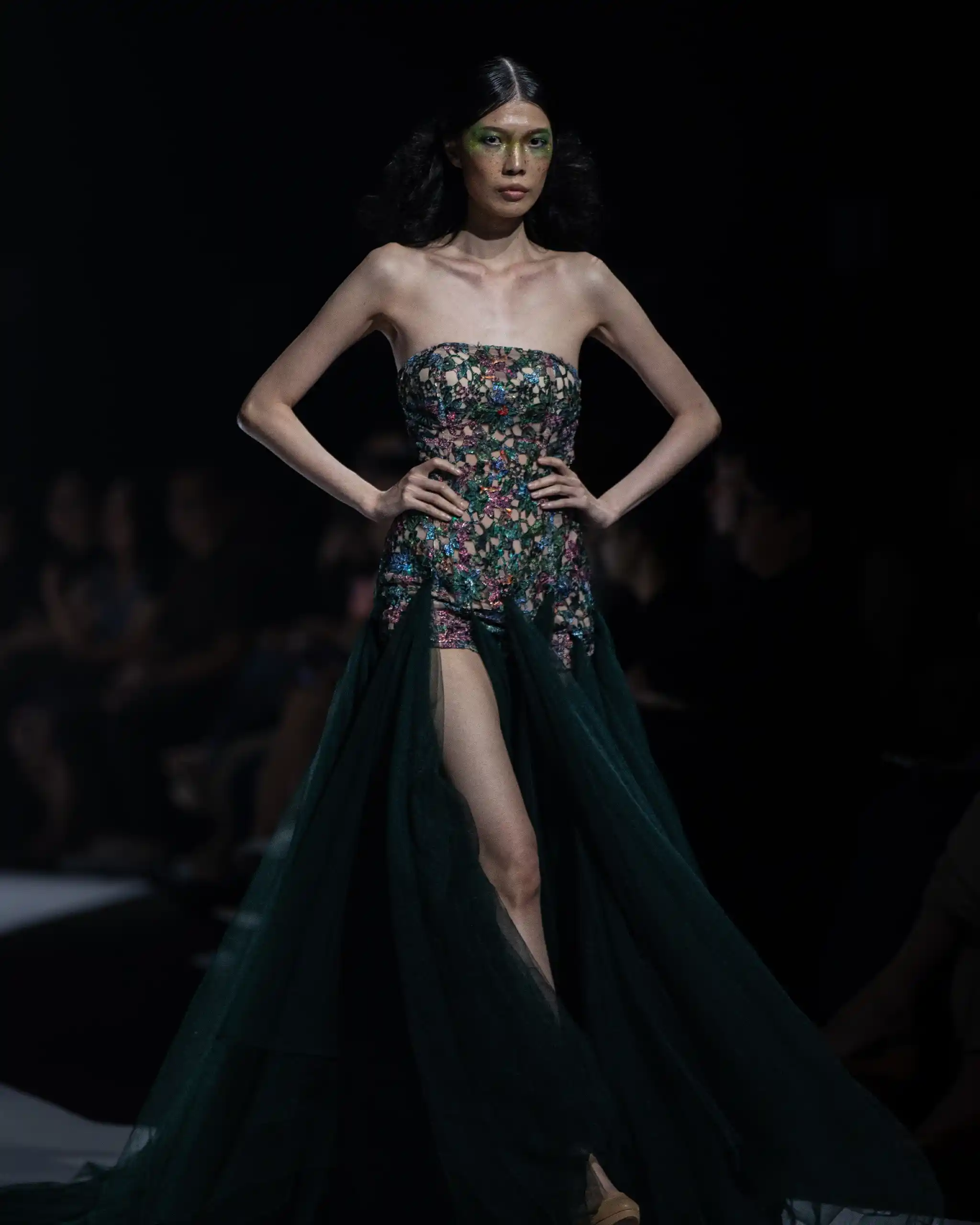
“I love nature,” he says. “There’s a beautiful side, but there’s also a mysterious side.” His interest in flora was nurtured through sculptural silhouettes, digital prints, and flowing fringe that mimicked leaves shifting in the wind. His collection carried a sense of movement, while structured forms introduced an almost otherworldly quality that blurred the line between fantasy and reality.
Murak readily admits he is a daydreamer. “I fantasize about things I want, things I need, or things I can’t get.” Rather than seeing fantasy as an escape, he embraces it as a creative practice—one that transforms everyday surroundings into worlds of possibility, even within one of Southeast Asia’s most urban cities.
Philippines: Going With the Flow
If Laos looked to tradition and Singapore wandered into the woods, the Philippines found its place in water. Growing up in an archipelago defined by its seas, Erjohn Dela Serna turned to an element in constant motion, finding endless possibilities in something that is never still.
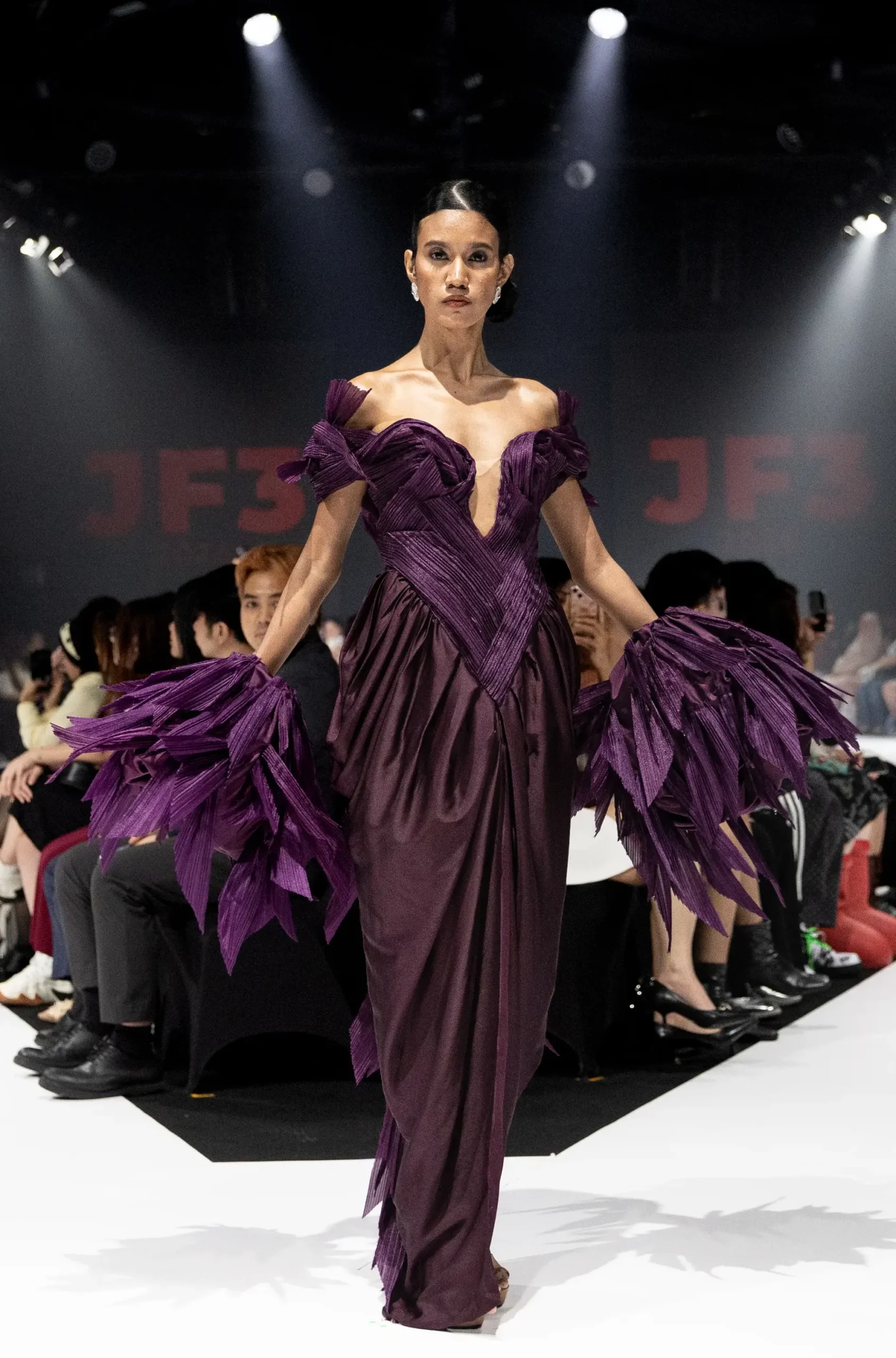
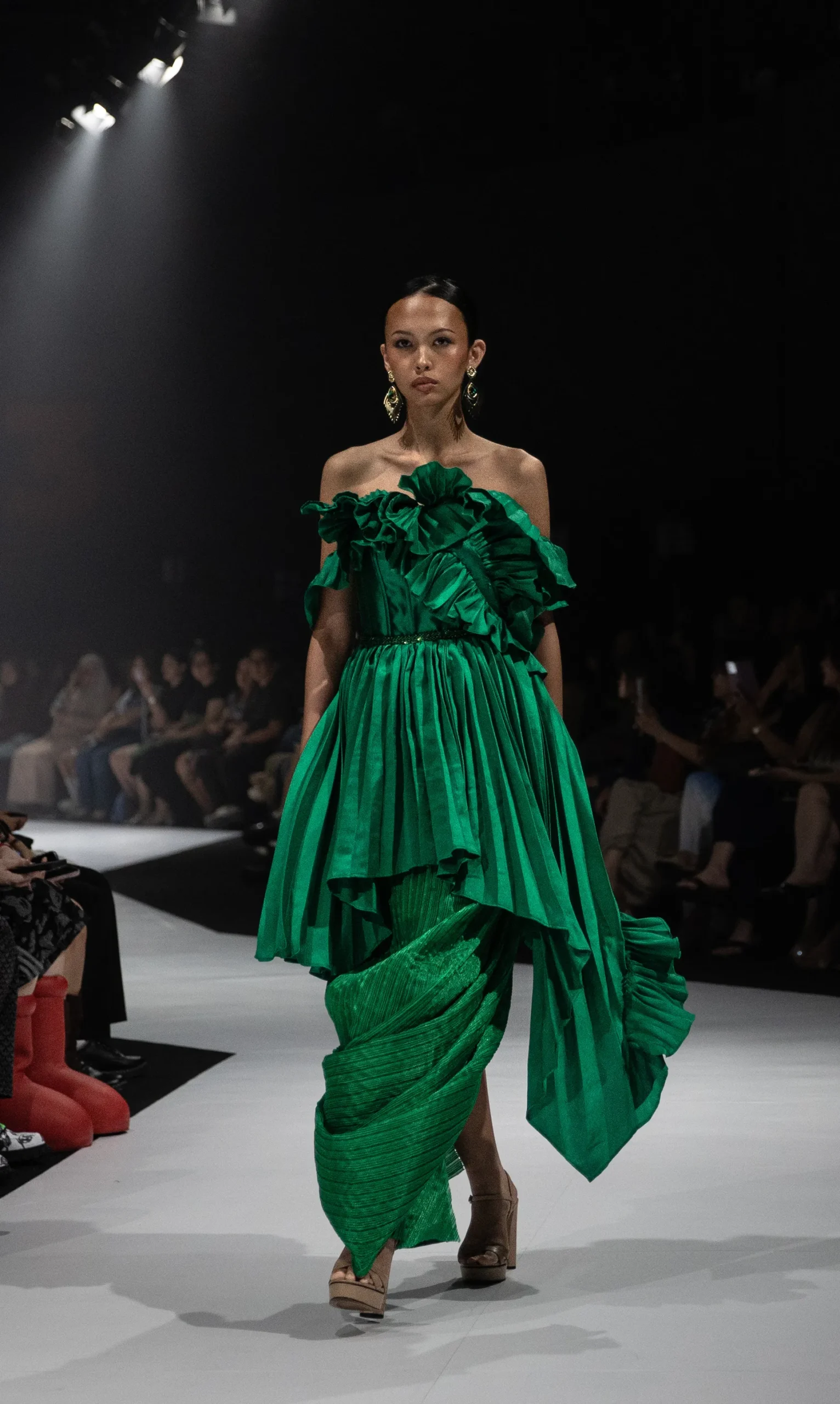
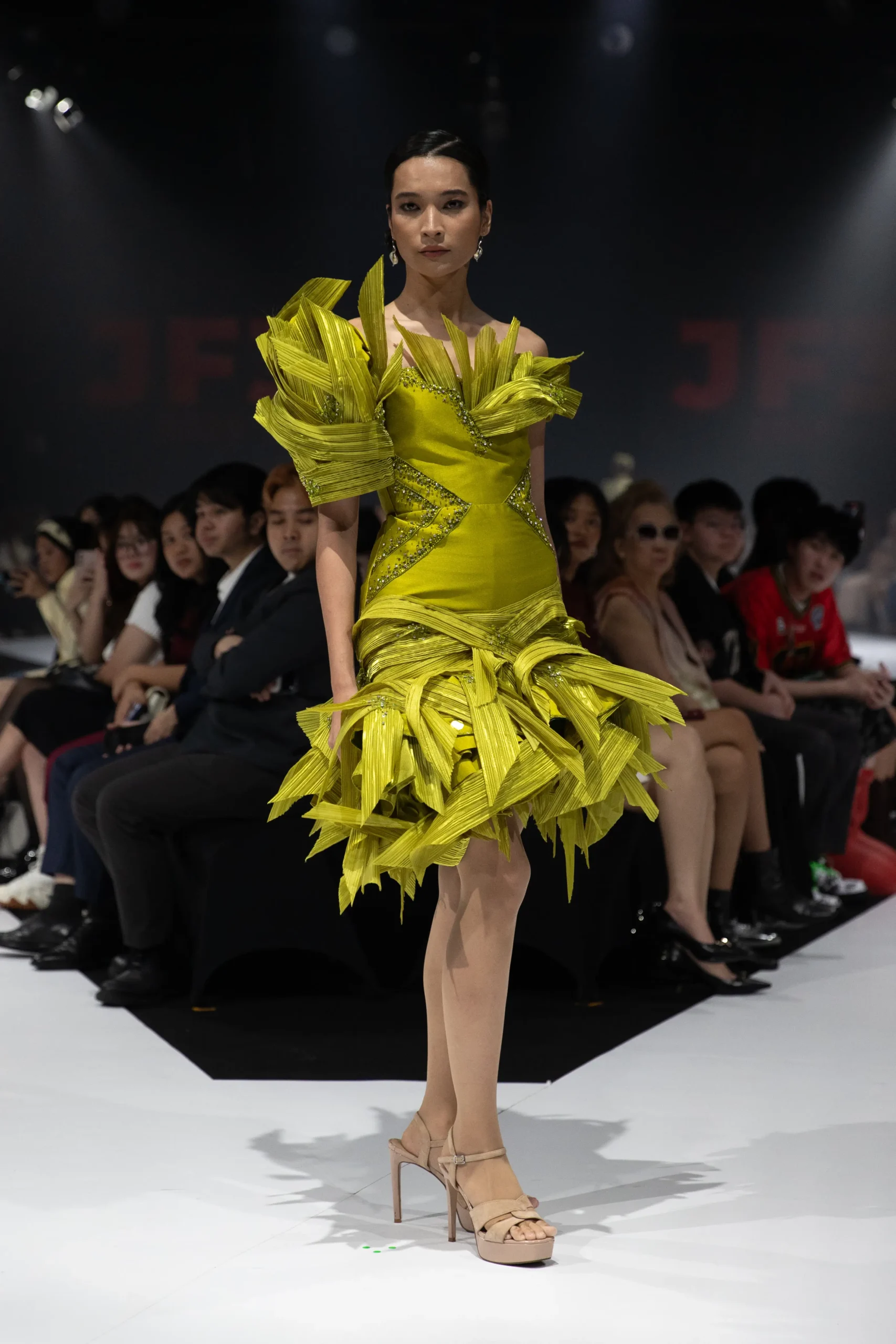
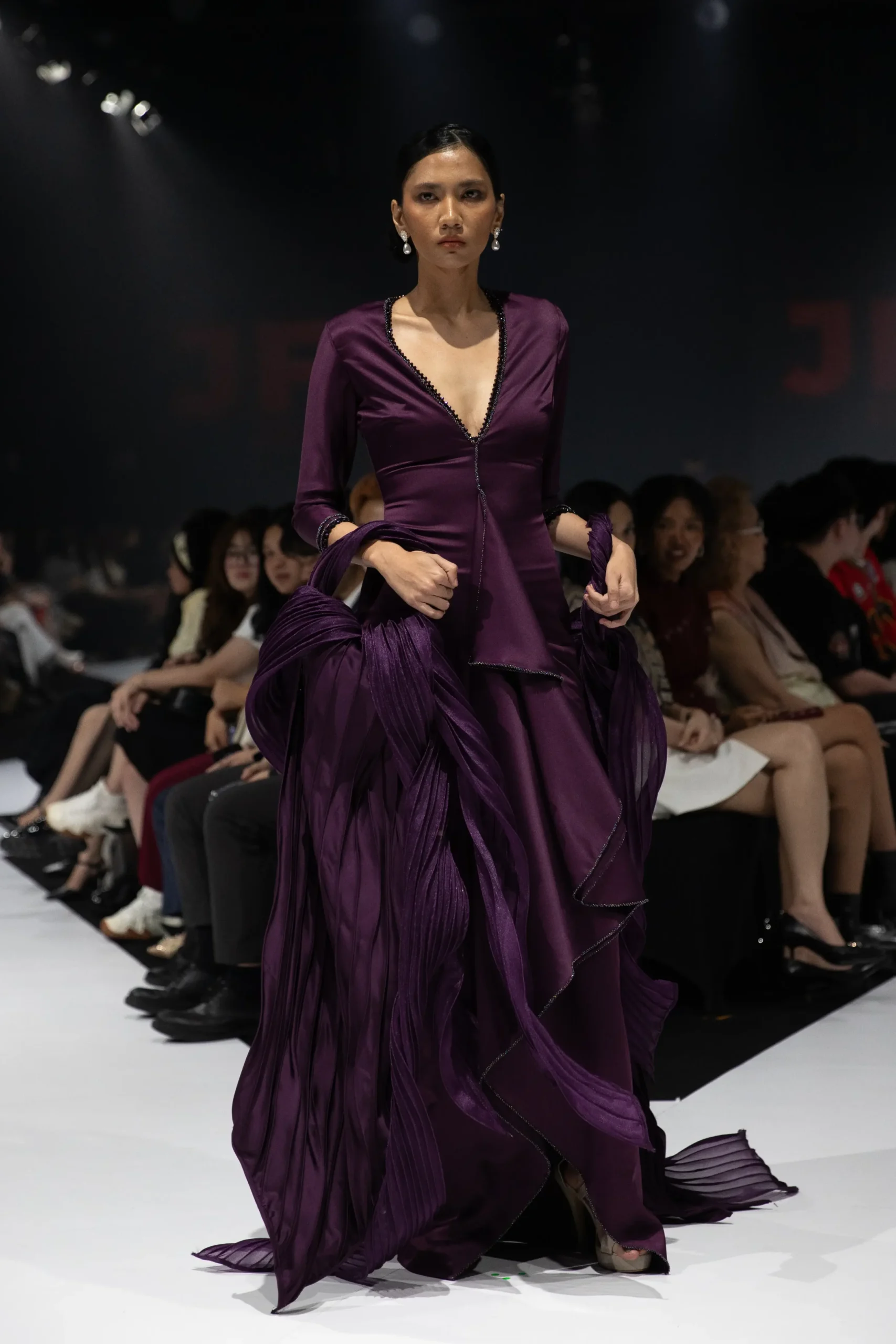
His collection, Liquid Reverie, translated water into sculptural eveningwear through crystalline embellishmentEmbellishmentDecorative detailing added to a garment or accessory, such as beading, sequins, crystals, embroidery, appliqué, feathers, or pearls. Embellishment adds texture, sparkle, and craftsmanship, and is especially prized in bridalGo to Embellishment Glossary, fluid draping, and silhouettes that seemed to ripple across the body.
“You don’t have any pattern to use,” he says of the collection’s construction. “Just what your heart says.” That freedom carried through every detail. Instead of recreating the sea, Dela Serna distilled its movement, unpredictability, and power into form.
The ASEAN Perspective
Placed together, the collections make a persuasive case for regional exchange. Laos brings craft and cultural continuity into contemporary design; Singapore turns nature into fantasy; the Philippines translates water into movement. Their value as a group comes from the fact that none needs to surrender its own vocabulary to participate in the conversation.
“The audience can travel from Laos to Singapore to the Philippines, seeing the traditions and imagination of each country’s designers.” Ng points to a region confident enough to celebrate its differences, generous enough to share them, and ambitious enough to grow together. Reflecting on this year’s JF3 theme, Ng believes the future of fashion belongs to those willing to begin before they’re ready.
“Don’t be afraid. Try. If it doesn’t work, try again. And try again. If you have the heart and you have the passion, we are always here to support you.”
Hayden Ng, President and Founder of AFDS
Fashion often rewards singularity: one breakthrough designer, one defining city, one dominant trend. AFDS argues for something else. Collaboration that sharpens identity rather than softens it. Laos remains Laos. Singapore remains Singapore. The Philippines remains the Philippines. In an industry still searching for the next dominant narrative, Southeast Asia suggests that influence isn’t measured by speaking with one voice, but by giving many the confidence to stand together.
The Neighbours Are Coming Into View
Indonesia’s international ambitions also sit within a wider Asian shift. JF3 has increasingly looked toward neighbouring countries because fashion ecosystems become stronger when designers have places to travel, people to meet, and ideas to exchange.
The regional argument extends beyond the AFDS runway. JF3 Chairman Soegianto Nagaria sees cross-border exposure as a form of creative education, particularly for designers accustomed to seeing their own cultural references through familiar eyes. “Exposure is a very important part of design realization,” he says.
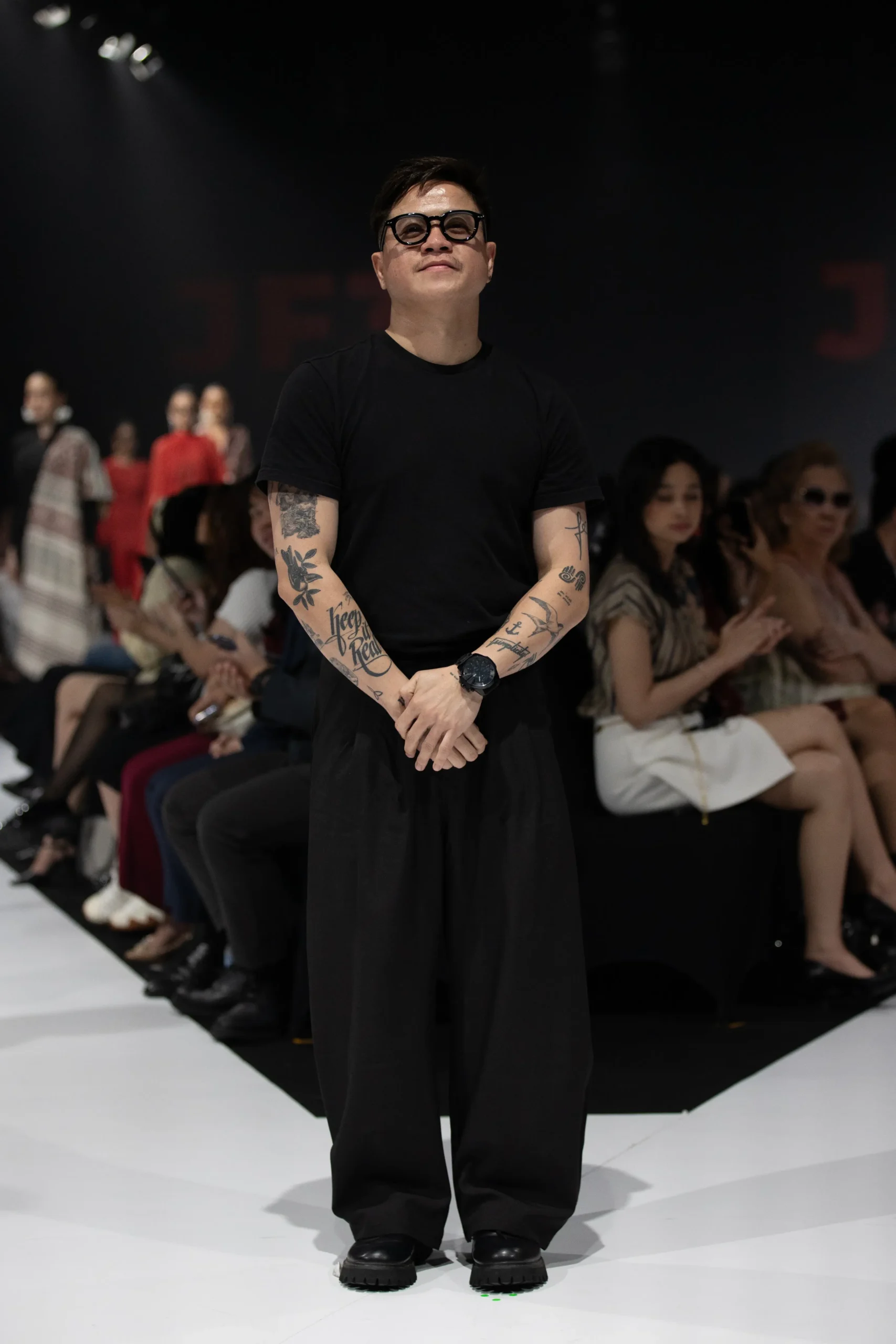
Mareta sees the same opportunity in PINTU, JF3’s international development platform, where conversations are already underway around extending its reach toward neighbouring markets such as the Philippines and Singapore. “I’m really looking forward to working with our neighboring countries,” she says. “How we can work together to improve things. I believe that if we work together, the impact is bigger.”
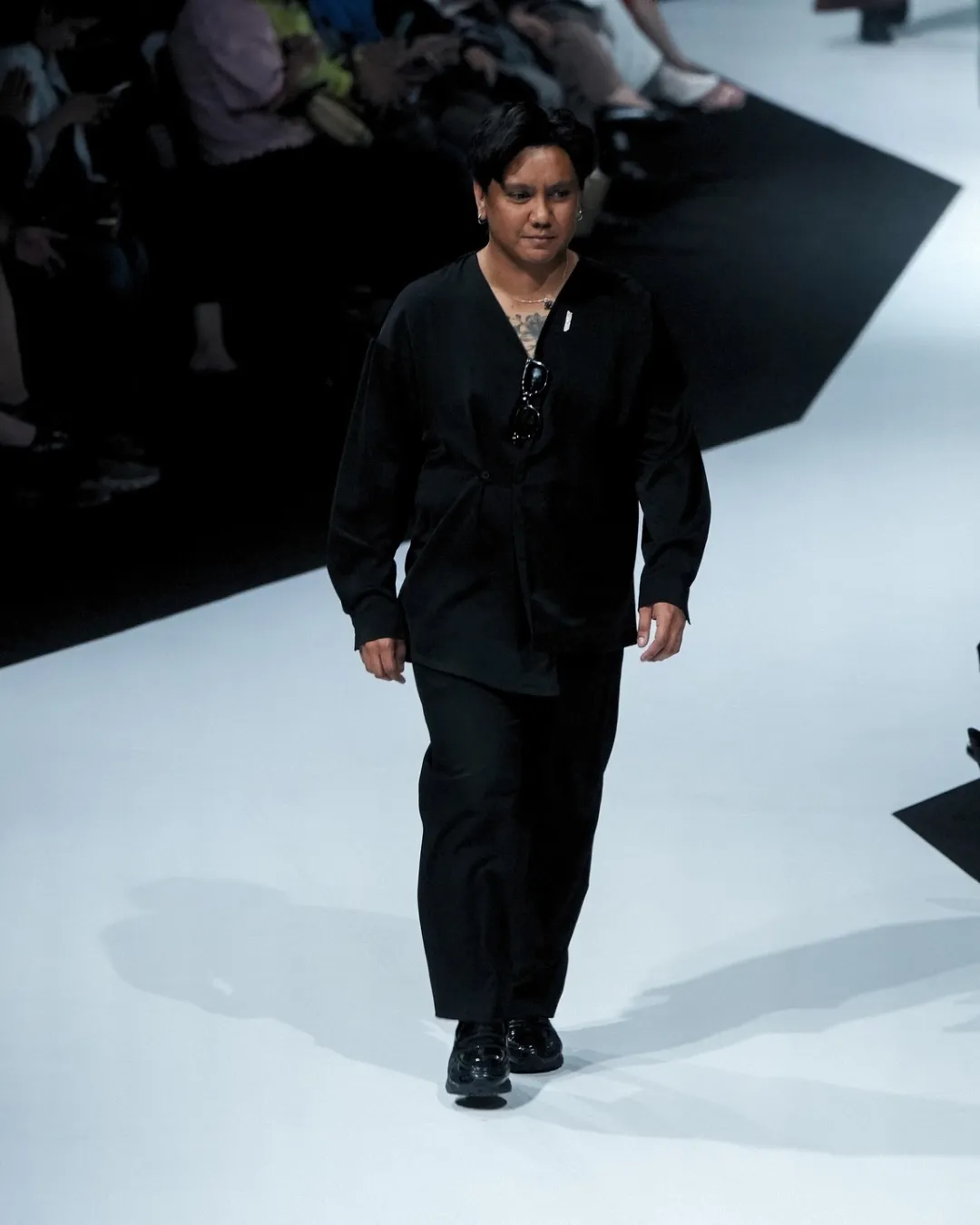
Encountering another market can make a familiar material look newly relevant; encountering another designer can reveal possibilities that may have been invisible at home. Batik offers a useful example. Indonesians may have become so accustomed to seeing it that its visual power can become invisible. An international buyer encountering the same textile without the cultural fatigue may see possibilities immediately.
Asia has always looked to Europe for validation. Asian fashion can now look sideways—to its neighbours, its own materials, and the ideas coming from within the region. Paris still matters, but so does having something distinctly Asian to bring to the world. The advantage lies in difference; the opportunity is knowing how to make it count.
Photos courtesy of JAKARTA FASHION FESTIVAL
Frequently Asked Questions
AFDS is a regional fashion platform, now in its third year of partnership with Indonesia’s JF3 Fashion Festival, bringing together designers from Southeast Asian countries like Laos, Singapore, and the Philippines to showcase distinct national perspectives on one shared stage.
The 2026 showcase featured Thoulany Chanthalangsy of Laos’s KINNALY, reinterpreting traditional Lao dress; Indra Murak of Singapore, drawing on nature’s mysterious side; and Erjohn Dela Serna of the Philippines, presenting the water-inspired collection Liquid Reverie.
PINTU is JF3’s international development platform, aimed at extending Indonesian fashion’s regional reach toward neighboring markets such as the Philippines and Singapore through cross-border collaboration and exchange between designers.
AFDS Chairman Hayden Ng believes fashion moves further when distinct perspectives move together rather than compete. The showcase treats each country’s success as shared momentum, expanding where Southeast Asian fashion is seen without requiring any designer to give up their identity.
Liquid Reverie, by Filipino designer Erjohn Dela Serna, was inspired by water and the constant motion of the sea. The collection translated that fluidity into sculptural eveningwear through crystalline embellishment, fluid draping, and rippling silhouettes.