




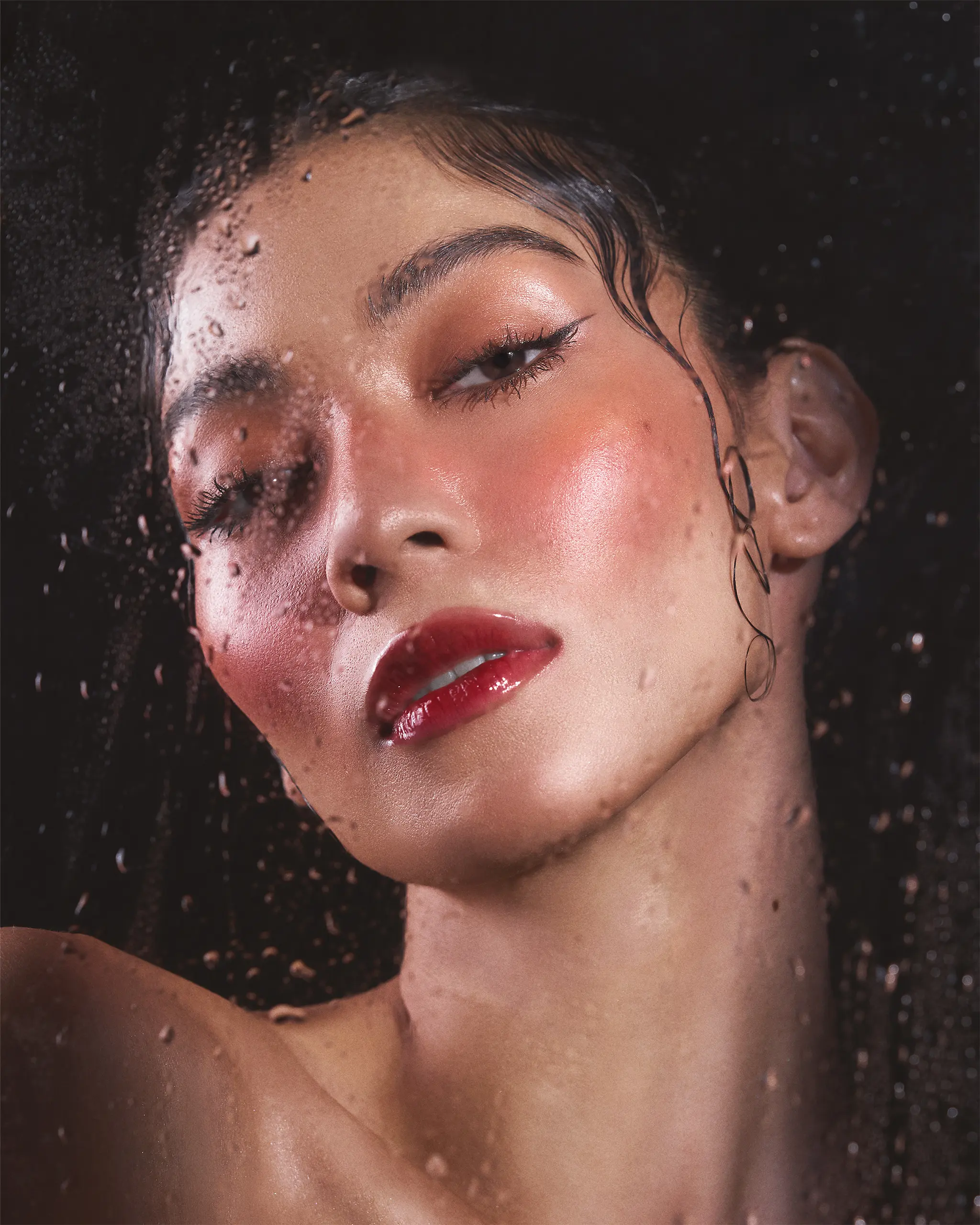
You’ve seen them, the towering water bottles marked by the hour, urging you to up your water intake. Between those, the gallon-a-day challenges, and every hydration hack in the book, it’s clear that the goal is to remain as quenched as possible. And yet here goes South Korea with a curious challenger: waterless skincare. Why are people skipping water in their skincare? Here, we break down why people are going against the most basic element of beauty. At least, in skincare.
RELATED: 6 Luxury Resorts in Southeast Asia for the Wellness Obsessed
The Point of All That Water
Check your bottles. Odds are the first ingredient on the list is a big, bright “aqua.” Do you know that it can make up to 95% of the formula? This leaves a mere 5% for your actives, acids, and all the good stuff.
But water earns its place. It’s called the ‘universal solvent’ in cosmetics that dissolves all the actives, allowing them to penetrate faster and create that weightless and non-sticky feeling. And because the skin absorbs water faster than it does oil, it generally feels better.
Water-based products are also people-pleasers. Whether you tend to oil up by noon or flake like pastry, they’re light, versatile, and generally skin-type agnostic.
Benefits of Skipping Water for the Skin
It’s the complete opposite—skincare with zero added water. Born from the hyper-innovative beauty culture of South Korea, this movement favors concentration over dilution.
What do they contain if not water? Think jojoba oil, coconut oil, argan oil, butters, and other dense bases. Of course, some water may be required during ingredient extraction, but it’s deliberately excluded from the final formula.
The payoff is undiluted potency. Without water to thin things out, your skin gets the full strength of each ingredient. The textures are richer, the effects more visible—and because you’re using less, the product stretches further. Plus, without water inviting microbial chaos, there’s less need for heavy preservatives. That means a cleaner, longer-lasting formula that respects both your skin barrier and the planet.
Bigger Than Beauty
Let’s talk impact. Beyond the beauty benefits, the waterless movement carries real weight for the planet.
The beauty industry guzzles around 120 billion liters of water every year. From crop irrigation to product formulation, from factories to post-shower routines, water is drained at nearly every touchpoint. It’s enough to make even the most devoted double-cleanser pause.
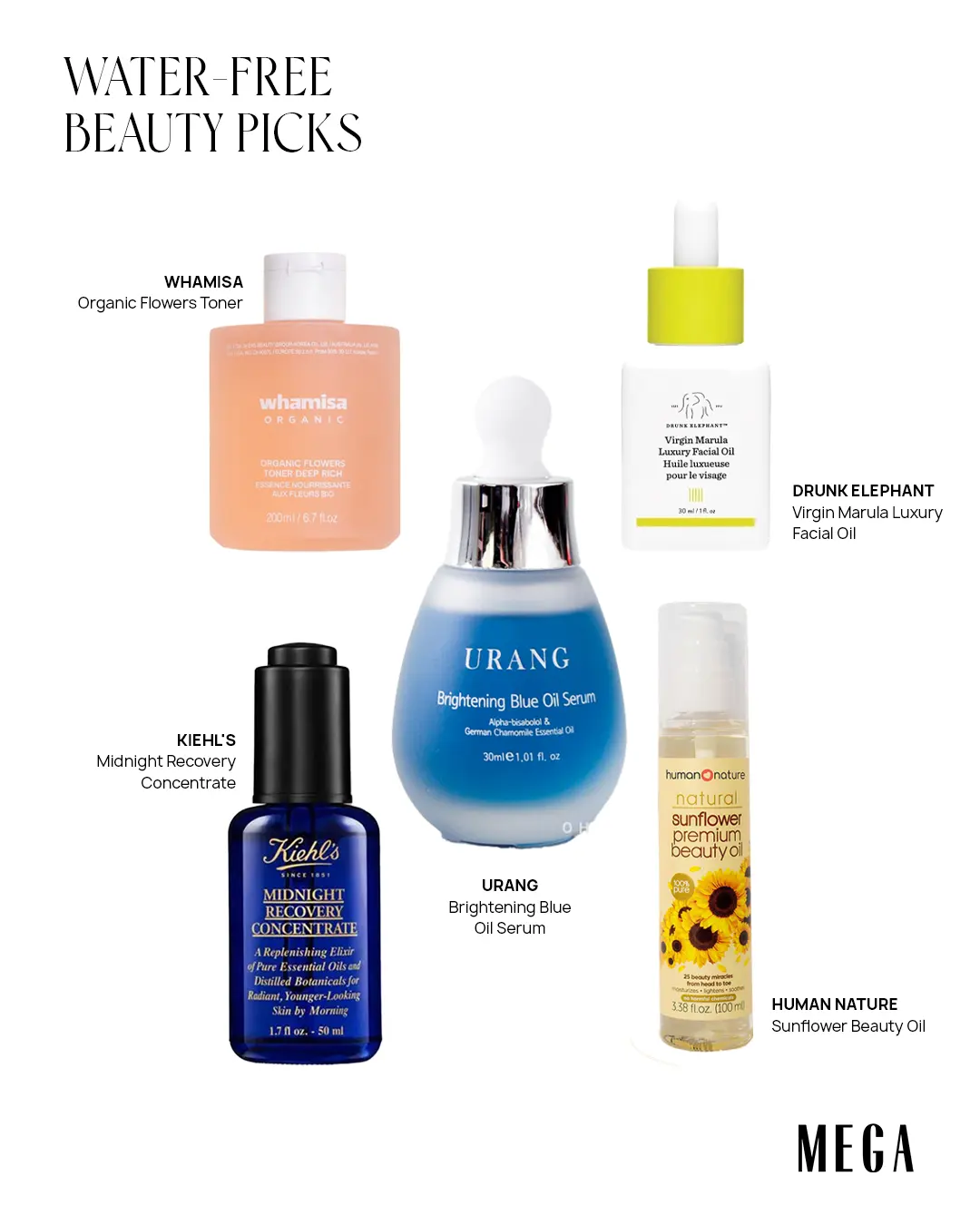
But the industry is waking up to this reality. With climate pressures mounting and consumer awareness rising, brands are starting to rethink the role of water in beauty. You’ve probably already heard of the most common examples: solid shampoos, cleansing balms, and concentrated serums.
This isn’t a trend that demands a dramatic lifestyle pivot or a skincare pilgrimage to Seoul. Waterless beauty is already trickling into shelves everywhere; all that’s left is to start reading the fine print.
Featured Image: Photographed by JOSH TOLENTINO, MEGA AUG 2023
Photos: DRUNK ELEPHANT, HUMAN NATURE, KIEHL’S, URANG, WHAMISA (via Website)
Recommended Video
Latest Posts




Latest Issue