


There comes a point in a woman’s life when the conversation about beauty changes. Youth stops being the central currency, and something more interesting takes its place: ownership. Ownership of the body that has carried years of experience, of the choices that shape how it is cared for, and of the life lived within it.
Obsolete beauty standards once asked women to shrink themselves—to stay smaller, younger, more effortless than reality allowed. But the conversation has shifted. In 2026, beauty is less about preservation and more about expansion: expansion of voice, strength, and the freedom to define one’s own relationship with the body.
Age, in this sense, becomes part of the story rather than something to outrun. Health, discipline, motherhood, and self-awareness reshape how femininity is understood. The body is no longer just something to be seen—it is something that has lived.
A woman’s prime, after all, is not a fleeting moment of youth, but the point when her body, mind, and life finally move in the same direction.
An Icon is Born
In 1995, Ina Raymundo stepped into Philippine pop culture with a moment so mythic it predates the age of virality. She was all of nineteen, appearing in what would become the now-legendary “Sabado Nights” commercial. The alcohol advertisement itself ran for only sixty seconds, but the image it produced lasted far longer: a glance across a bar, playful and knowing, delivered with a confidence that seemed both effortless and self-aware.
The ad made Raymundo instantly recognizable, but what lingered in the national imagination wasn’t exactly the product—it was her. That brief moment captured a particular kind of Filipina appeal that felt bold yet relaxed, sensual yet in control. In an era when bombshell imagery often leaned toward exaggeration, her presence felt modern and self-possessed. Practically overnight, Raymundo became one of the most recognizable faces in the country, her trajectory leading her to show business and her image evolving into shorthand for a certain kind of magnetic femininity.

But if 1995 immortalized the image, 2026 reveals the woman who lived beyond it. The young woman who once embodied a cultural fantasy is now fifty, a wife, a mother of five, and someone who speaks about the body with the authority of a person who has spent decades learning how to live inside it.
Stronger With Time
The body that once defined a generation’s idea of sensual confidence now carries a different story—one shaped not just by time but by discipline, motherhood, and self-awareness.
Raymundo’s relationship with fitness did not emerge from vanity alone. In fact, she credits motherhood with sharpening her awareness of her body. “Becoming a mom did me good,” she says simply. “I became more self-aware and more conscious about staying fit and healthy.” What outsiders often read as remarkable discipline, she describes with striking matter-of-factness: “That’s really it. It takes discipline and consistency, but for me, it’s worth it.”
Her routine reflects that philosophy. Structure anchors her week, not as punishment but as rhythm. Mondays mark a reset: clean eating, intense workouts, and discipline that carries through the rest of the week.
Breakfast is simple and consistent. “Every single day, when it’s Monday, it’s all egg whites,” she says—scrambled egg whites, wheat toast, dry cereal, and cappuccino with skimmed milk. Lunch is lutong bahay, usually baked fish or healthy, comforting broths like sinigang or nilaga, while dinner is a cup of brown rice with chicken or fish. Snacks remain part of the routine: peanut butter on toast with a banana in the morning, and oat fiber crackers with unsalted almonds at night.
Discipline, however, doesn’t mean deprivation. Raymundo follows a “five-two” rhythm—five days of clean eating and two days of indulgence. “Tomorrow I’m going to have something,” she says with a laugh, mentioning otap and chicharon she was offered but she intentionally delayed for after the shoot. Then to clean eating and intense workouts she returns.
Raymundo’s routine reflects a broader cultural shift. In the 1990s, the body was treated as a visual object—something to be shaped for the camera. In 2026, the conversation has widened to include strength, longevity, recovery, and sustainability. Raymundo has lived through both eras and recognizes the difference.
“For me, the ’90s were more demanding,” she says, recalling the industry’s expectations. “Being ultra thin was the expectation, and I was constantly in front of the camera.” Even without the amplifying force of social media, the pressure was constant.
Today, however, her goals have evolved beyond appearance. Strength has become central to how she thinks about aging—and the realization came relatively recently.
For years, her workouts focused largely on cardio: dancing, high-energy classes, suspension training. Weightlifting simply didn’t seem like something she should be doing. Then, in 2024, a conversation in a Canadian gym shifted her thinking entirely. When the gym owner asked why she wasn’t lifting weights like the rest of her family, Raymundo responded with an assumption many women carry: “I’m too old to lift weights.” The owner, who was in her sixties and visibly strong, laughed off the idea. The encounter reframed Raymundo’s understanding of what aging bodies could do. As she recalls, “That conversation opened my eyes to the possibility of lifting.”
Beyond the Bounce Back
If the 1990s taught women to discipline their bodies for public consumption, motherhood forced Raymundo to rethink what the body actually deserves.
She has carried five pregnancies—each one reshaping not only her physical body but also her relationship with it. Rather than becoming more critical, the experience made her more forgiving. “After carrying five babies,” she says, “you learn to respect your body.”
The pressure to “bounce back,” which dominates many celebrity motherhood narratives today, never defined her experience. Even after gaining nearly fifty pounds during her first pregnancy, she resisted the urge to rush recovery. Instead, she focused on accepting where she was before attempting to change anything. Looking back, she sees that instinct as a form of self-protection. She prioritized enjoying the early months of motherhood rather than measuring her body against expectations.
“I’ve always accepted where I am first,” she explains. “Living in the moment and enjoying my firstborn. Then I work on it when I’m ready.” Protecting her mental health, she realizes now, was part of that decision.

Her last pregnancy, however, required even more patience. At thirty-seven, she gave birth to an 8.8-pound baby, a moment that made recovery noticeably slower than it had been in her twenties. The experience forced her to approach movement with greater intention. She describes it without drama, simply noting that she had to be “more intentional about how I moved and took care of myself.”
In 2026, conversations about motherhood include recovery timelines, hormonal shifts, and mental health. In 1995, those topics rarely reached the public sphere. Raymundo has lived through the cultural shift firsthand.
Raising Girls Unfiltered
If the pressures of the ’90s came from traditional media, today’s generation faces a more pervasive force: the algorithm.
Raymundo’s daughters—Erika Rae, Mikaela Jade, Anika Sage, and Minka Eve—are growing up in a world where beauty is mediated through filters, curated angles, and carefully edited images. Asked what she hopes they never inherit from her generation, her answer is immediate and specific: “I don’t want them inheriting body dysmorphia or that constant self-criticism.”
Instead, she wants them to see the body not as an enemy but as something to care for. At home, that philosophy manifests through humor and confidence rather than lectures. Raymundo is known to celebrate her workouts with playful commentary, sometimes asking her daughters a question that perfectly captures the tone of their household: “Is my ass ass-ing?”
The joke may sound lighthearted, but the message underneath is serious. Confidence, in her home, is not something women must earn through perfection. It is simply a way of existing.
A Family in Motion
Fitness, in the household she’s built with Canadian Brian Poturnak, is less a rule than a culture.
The lifestyle developed naturally, she says, because both she and her husband were already active when their children were young. Exposure did the rest. “It wasn’t forced,” she explains. “It just became normal in our home.”
The results are visible across the family—including her son Jakob, whose physique and presence regularly attract attention online. As a Division 1 baseball player for the Sacramento State University Hornets, he is the first Filipino-born and raised athlete working towards a place in Major League Baseball (MLB) in the United States. Raymundo treats the attention with remarkable calm, even as her only son has been anointed an internet boyfriend of some sort. “My son, Jakob, was born nonchalant,” she says. “He really doesn’t get affected by comments, good or bad.”
Her husband’s influence reshaped her own habits significantly. Before meeting him, she admits, her lifestyle looked very different. “Being with him was a 180 degree turn for me,” she says, describing how their shared focus on health changed her standards. In fact, she now offers surprisingly pragmatic advice to her children about relationships: choose partners who value health and fitness.
Within the family dynamic, fitness functions as both motivation and connection. She and her husband push each other to improve while also knowing when to balance one another out. Their children, meanwhile, are encouraged to pursue their own journeys without comparison. When asked how she avoids competition among siblings, Raymundo responds with genuine confusion: “Huh? What comparison?”
The simplicity of that answer reflects a deliberate philosophy. Praise—especially online—does not automatically translate into pressure. The family acknowledges attention, jokes about it occasionally, and then returns to normal life.
Life After the Label
Few public labels are as difficult to escape as “sex symbol.”
Raymundo received the label early in her career, and for years it defined how audiences perceived loher. At first, the attention felt limiting. Toward the end of the decade, she deliberately altered her appearance in an attempt to break away from the image. Cutting her hair short was both practical and symbolic—an act of resistance against the expectations surrounding her.
“I just wanted out,” she recalls. Ironically, the haircut coincided with meeting the man who would become her husband. “I looked like a boy,” she laughs now.

Three decades later, she views the label with a mixture of amusement and acceptance. If people still associate her with that image, she says, she will take it as a compliment. But the meaning of power has changed dramatically for her.
Where younger Ina might have equated power with being desired, the woman she is today sees it differently. “Definitely being in control,” she says. “Desire fades. Control over your life, your choices, and your peace is lasting.”
That control now defines her relationship with public life.
In Her Prime
During the cover shoot, music drifted through the studio in two distinct waves. As Raymundo sat on the makeup chair, Sade played from her speaker, evoking the sublime sensuality of the 1990s. Later, as she stepped in front of the camera, she switched to Olivia Dean—an artist whose sound belongs firmly to the present.
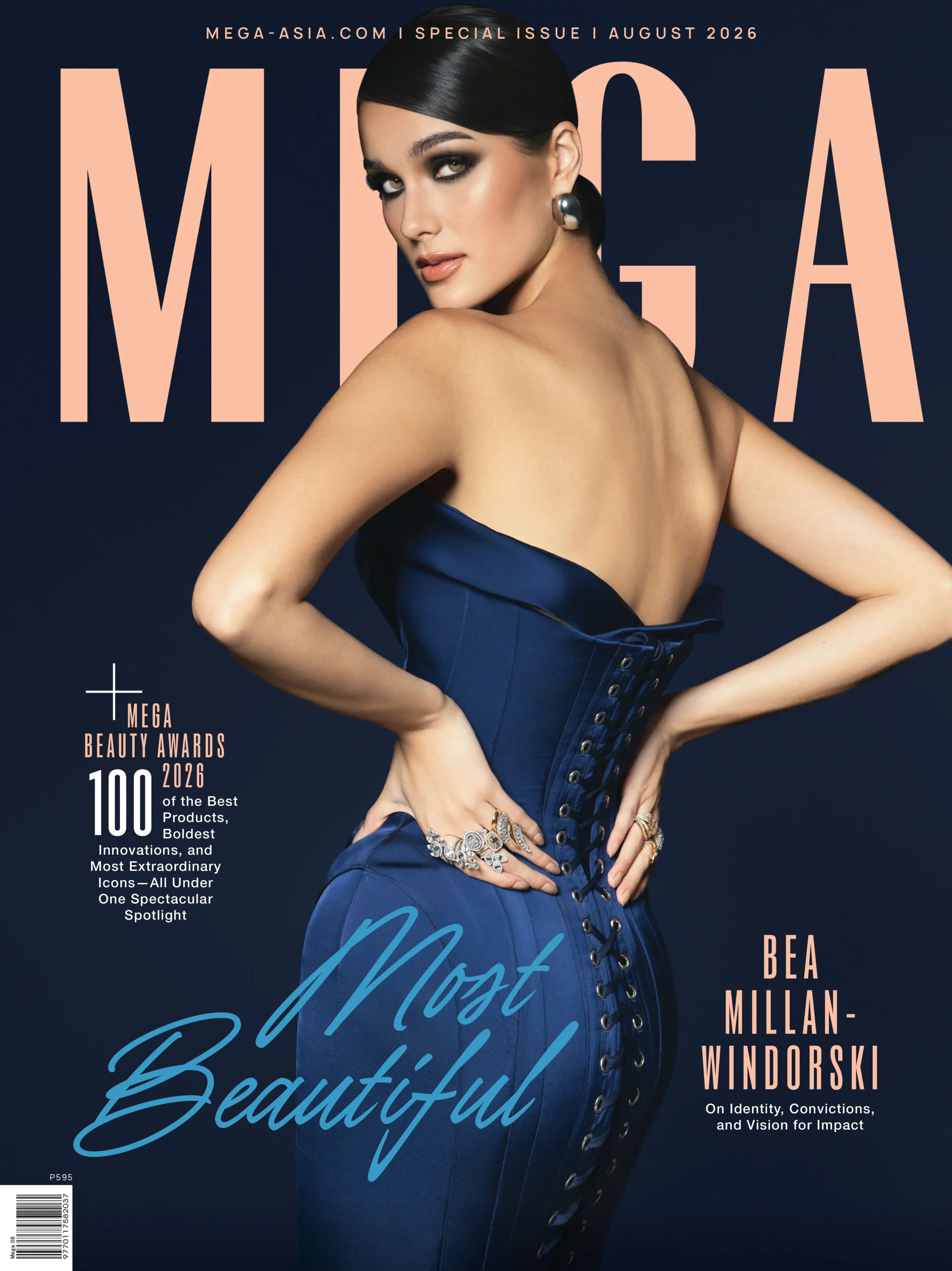
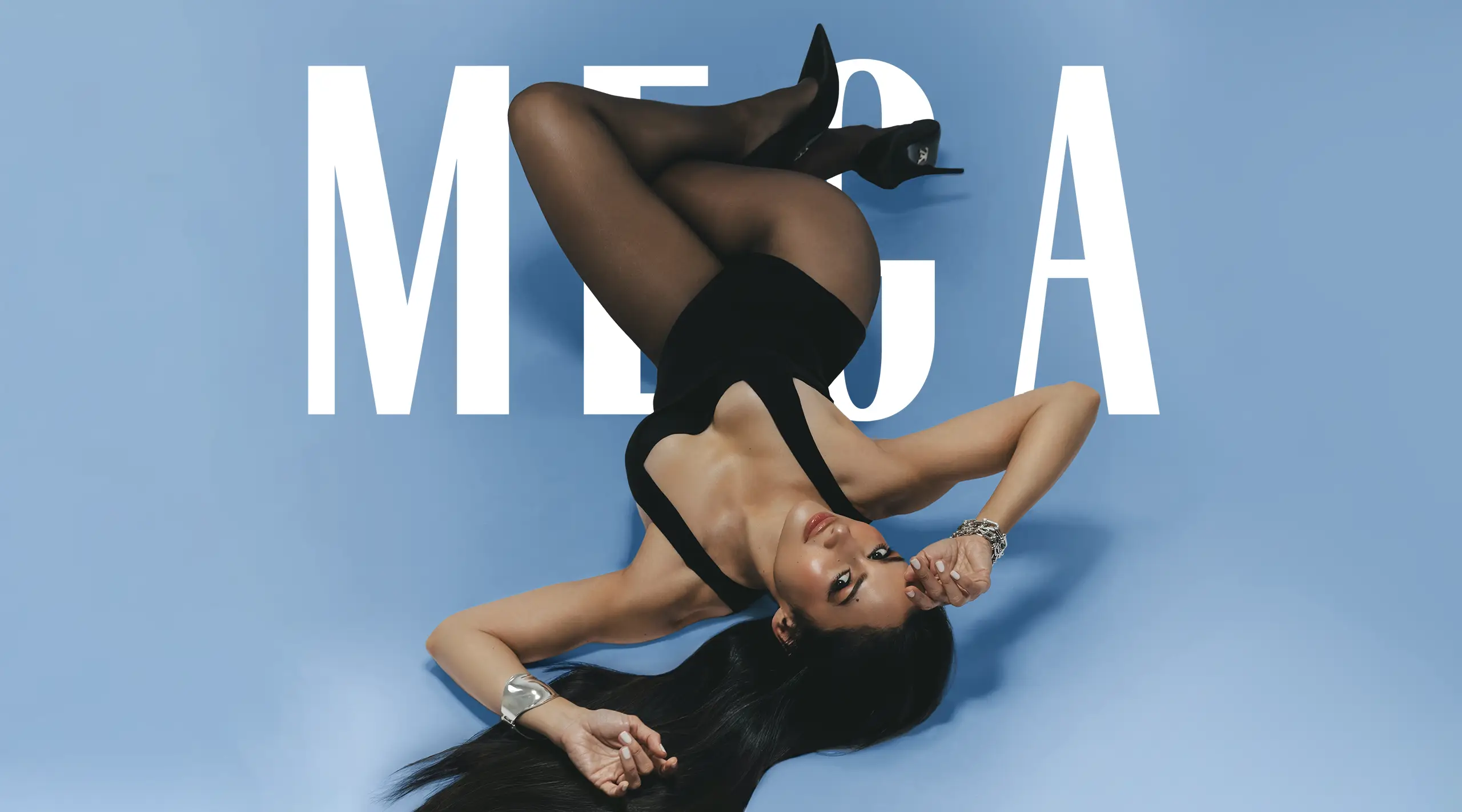
Her captivating energy on set—balanced by her soft-spoken ease—carried the intention she set for herself at fifty. Long before stepping into the studio, Raymundo had already manifested this moment: a MEGA cover that could speak to women at every age. More than a milestone, she hoped it would carry a message—that being fit has many facets, and that the real goal is learning to accept and fully inhabit your own body.
The shift felt symbolic, as though she were bridging two versions of herself: the young woman who entered the cultural lexicon in 1995 and the one who stands here today, decades later, inhabiting a broader and more complex identity. Raymundo understands that evolution clearly. For her, being “in your prime” has nothing to do with age.
“Being in my prime isn’t about age,” she says. “It’s about alignment.”
Alignment between mind, body, and values has replaced the constant pursuit of external validation. She describes her life today as intentional rather than reactive, guided by clarity rather than expectation. In a culture that once framed aging as something to resist, that perspective feels quietly radical. When asked what the real goal of modern wellness should be—if anti-aging is no longer the central promise—Raymundo answers with a single word that reshapes the entire conversation.
“Confidence.”
Because confidence, she believes, changes everything. It alters how women move through the world, how they treat their bodies, and how they understand the passing of time.
The woman who once captured the country’s imagination with a glance across the bar now stands in front of the camera with something deeper. She carries experience, discipline, motherhood, and self-knowledge.
In 1995, Ina Raymundo became a pop culture touchstone. But in 2026, she has become something more enduring—a woman fully in her power.
Photographed by ANDREA BELDUA. Creative Direction by PATRICK TY. Art Direction by CLARE MAGNO. Sittings Editor PEEWEE ISIDRO. Styling by ELDZS MEJIA. Produced by THESSMAR LECTURA. Beauty Direction by AGOO AZCUNA-BENGZON and MARA GO. Multimedia Artist TROY NONATO. Makeup by LEI PONCE. Hair by JAARON GO. Photographer Assistants TOTO PEPITO and JR BAYLON. Stylist Assistants CARL ALBERTO, MIGGS LEGUERA, and BEA HILADO.
Special thanks to CYMA, SOUV! BY CYMA, and ELAIA BY CYMA. Shot on location at ACM STUDIO
Frequently Asked Questions
Ina Raymundo maintains fitness through a five-two rhythm of clean eating for five days and indulging for two, combined with consistent weightlifting and structured weekly cardio workouts.
Ina Raymundo defines being in her prime as achieving alignment between her mind, body, and values rather than pursuing youth, focusing instead on long-term health and sustainable strength.
Ina Raymundo has five children with her husband Brian Poturnak, and she credits the experience of motherhood with shifting her fitness focus toward body respect, health, and patience.
Ina Raymundo began her public career in 1995 at age nineteen after starring in a widely popular “Sabado Nights” commercial, which quickly established her as a national icon.
Ina Raymundo started lifting weights in 2024 after a gym owner challenged her assumption about being too old for strength training, completely reframing her perspective on active aging.

Owen Maddela
Owen Maddela is a writer, editor, producer, and former publisher who serves as Head of Content for the Creative Services Team at One MEGA Group - Asia. Since 2005, his work has spanned the intersections of art and commerce through editorial and branded content across magazines, newspapers, books, websites, social media, and trade expositions.
A keen observer of fashion, culture, food, the arts, design, and entertainment, his tenure in media and wide-ranging interests have shaped a writing style that traces the connections between history, trends, and pop culture. He currently leads branded content for MEGA while continuing to contribute editorial work, with bylines appearing in MEGA, Vogue Philippines, and VMAN Southeast Asia.
A Marketing graduate of De La Salle University, he has also worked in corporate communications and public relations, informing his approach to storytelling and brand-building.
- KEYWORDS
- body
- fitness
- health
- Ina Raymundo