



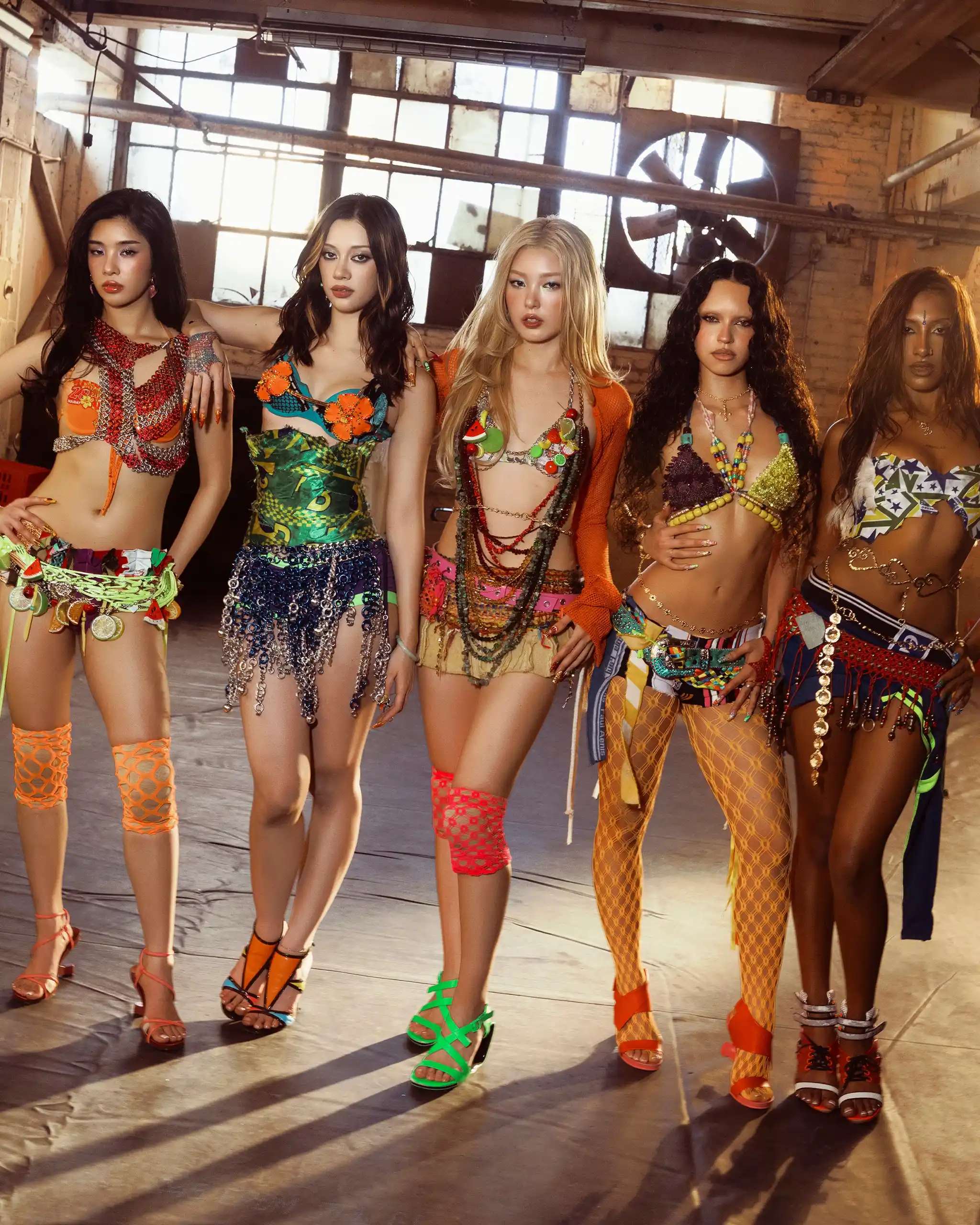
The world stopped when KATSEYE debuted. The global girl group brought together members from the Philippines, Korea, India, China, Switzerland, and Latin America, blending harmonized vocals and synchronized choreography with a distinctly international identity. Their first releases, “Debut” and “Touch,” quickly made waves. Back then, their styling was relatively safe, looking not too far off from the polished, youthful aesthetic we’ve come to expect from K-pop girl groups.
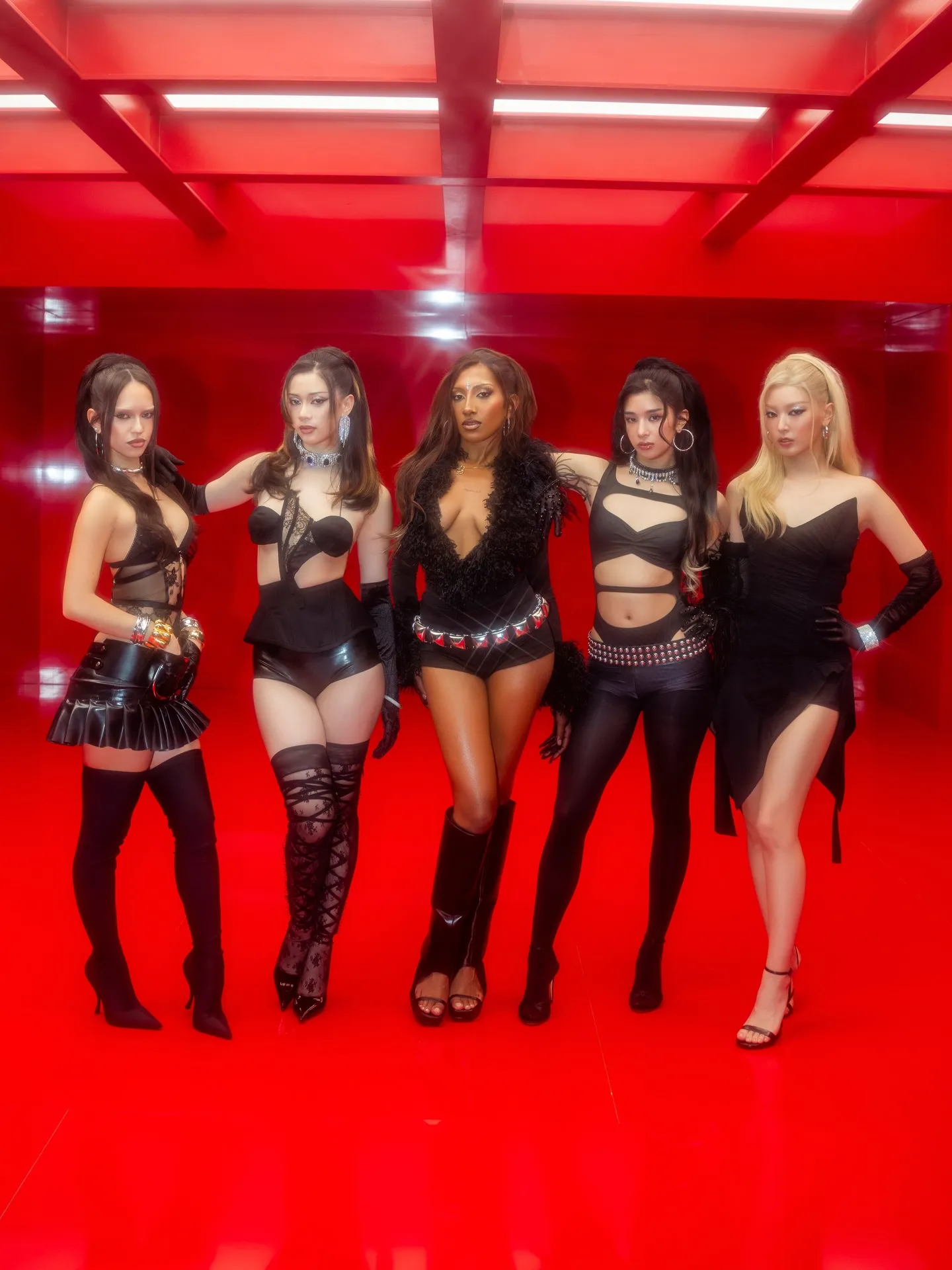
Something shifted along the way, particularly with their EP Beautiful Chaos. Where “Gabriela” felt feminine and intimate, “Gnarly” and “M.I.A.” were bold and loud. This was the era when the girls began showing more skin, their hips moving more freely, their choreography becoming more sensual, and their lyrics becoming less concerned with saying something profound—but do they have to? Naturally, the internet was divided.
Too Sexy, According to Whom?
On one corner of the internet were the Eyekons, those who enjoyed whatever KATSEYE released. Trust, they memorized the dances from “Debut” to “Gnarly.” Like me, they’ve been loving every release. It’s been exciting to watch KATSEYE reveal their range, from dreamy ballads to high-energy club tracks.
i really wish katseye’s whole brand wasn’t just them being sexualized. women are worth more than their bodies pic.twitter.com/f7EbUdMUjQ
— liv .ᐣ.ᐟ (@triloonas) August 14, 2026
In another corner are those who have taken it upon themselves to police KATSEYE—from the music they release to the clothes they wear in their music videos and onstage. Netizens have called them “oversexualized” for showing too much skin, particularly after Yoonchae turned 18. But is the group actually being sexualized—or are we simply watching young women become more comfortable expressing themselves?
Lemme just say they're legit wearing the same thing but idk why yall think katseye is sexier but your concern for the kids doesn't affect the girls. As for the collabs and choreography aspect the mh collab was never inappropriate choreo you're a weirdo<3 https://t.co/Ha5Yv7rnlj pic.twitter.com/XvjDDbDoIo
— ☆𝓟𝓲𝔁𝔃𝓮𝓱 𝓓𝓸𝓾𝓼𝓽☆ (@pixzeh) August 22, 2026
I’d argue that their styling can be an expression of confidence and agency. More importantly, the members seem to have room to express their own individual relationships with fashion and sensuality. Daniela and Lara may be comfortable in their brassieres, short skirts, and stilettos, but you won’t necessarily see Yoonchae dressed the same way. If anything, the Korean member is often styled in tops that cover her abdomen, sometimes paired with accessories that add another layer to the look.
Women Have Been Doing This Forever
This isn’t the first time pop stars have dressed themselves in revealing outfits. It isn’t even close. Madonna, Lady Gaga, Britney Spears, Beyoncé, Zara Larsson, Tate McRae, Sabrina Carpenter—the list goes on. Sabrina, in particular, has also faced criticism over the supposedly “oversexualized” nature of her performances.

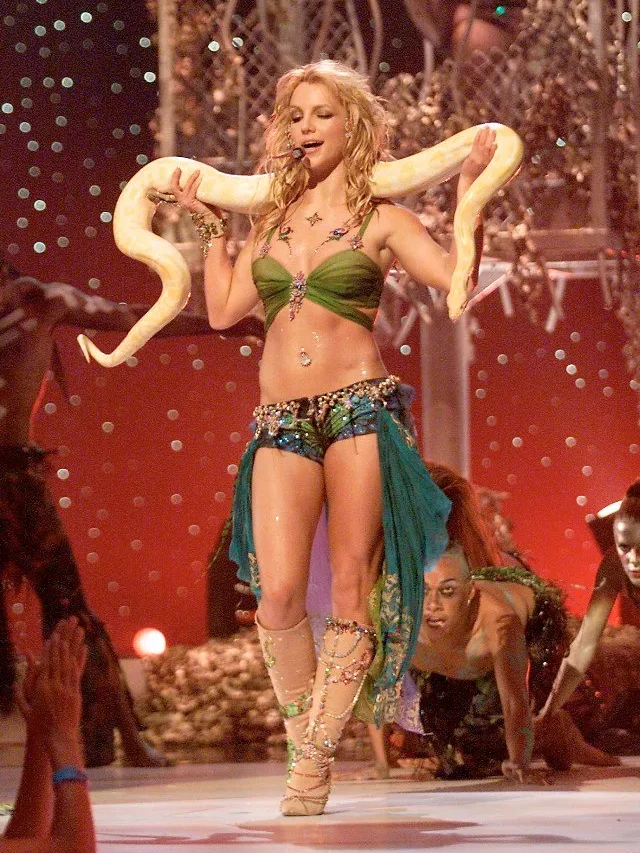
The familiar rebuttal is always some variation of: “But kids listen to them.” So what? Kids also listen to these artists.
Growing up, didn’t we listen to the Pussycat Dolls, Britney Spears, and Lady Gaga, and watch their music videos with awe? So what makes KATSEYE’s case feel so different? Is it because they’re young? Is it because they come from a K-pop system? Is it because they’re women?
A Double Standard in 2026
Everyone knows how ruthless dedicated fans can be—but some are still quick to apply a different standard to women. Women in K-pop are scrutinized for showing a little skin, while male idols can strip off their shirts, thrust at the air, and send fans into a frenzy—and it’s celebrated as part of the performance.
And this isn’t to say that male idols should be policed more, either. If anything, no one should be policing performers for how much skin they choose to show when it’s part of their own artistic expression.
Double standards in 2026? Unfortunately, not surprising.
Choosing to Show Skin Isn’t the Same as Being Sexualized
If there’s anything that kids can learn from KATSEYE, it’s to be fearless, bold, and confident. Kids will listen to whoever they want—perhaps that’s what parenting is for. But policing a group of women, telling them what they should wear, how much skin they should show, or how they should move, isn’t empowerment.
There’s a difference between being sexualized and choosing to be sensual. There’s a difference between objectification and owning your image. And there’s certainly a difference between a woman being told to show her body and a woman deciding for herself that she wants to.
Maybe the question shouldn’t be why KATSEYE is showing so much skin. Maybe it should be why we’re still so uncomfortable when women choose to show it.
Featured Image and Photos: KATSEYE (via Instagram), GO RUNWAY
Frequently Asked Questions
Critics point to bolder styling and choreography starting with their EP Beautiful Chaos, particularly tracks like “Gnarly” and “M.I.A.,” and increased scrutiny after member Yoonchae turned 18, with some netizens calling the group’s image “oversexualized” as a result.
No. Pop stars from Madonna and Britney Spears to Lady Gaga, Beyoncé, Zara Larsson, Tate McRae, and Sabrina Carpenter have long worn revealing outfits and performed sensually, showing this isn’t a new phenomenon unique to KATSEYE.
Yes. Members like Daniela and Lara are often styled in brassieres, short skirts, and stilettos, while Yoonchae, the group’s Korean member, is typically styled in tops that cover her abdomen, sometimes with added accessories.
Critics argue yes: female idols are often scrutinized for showing skin, while male idols removing their shirts or performing suggestively during choreography tends to be celebrated as part of the performance rather than criticized.
Being sexualized implies an outside party imposing a sexual framing on someone, while being sensual or choosing to show skin can be a personal expression of confidence and agency, particularly when the choice comes from the performer herself.
Recommended Video
Latest Posts


Latest Issue