



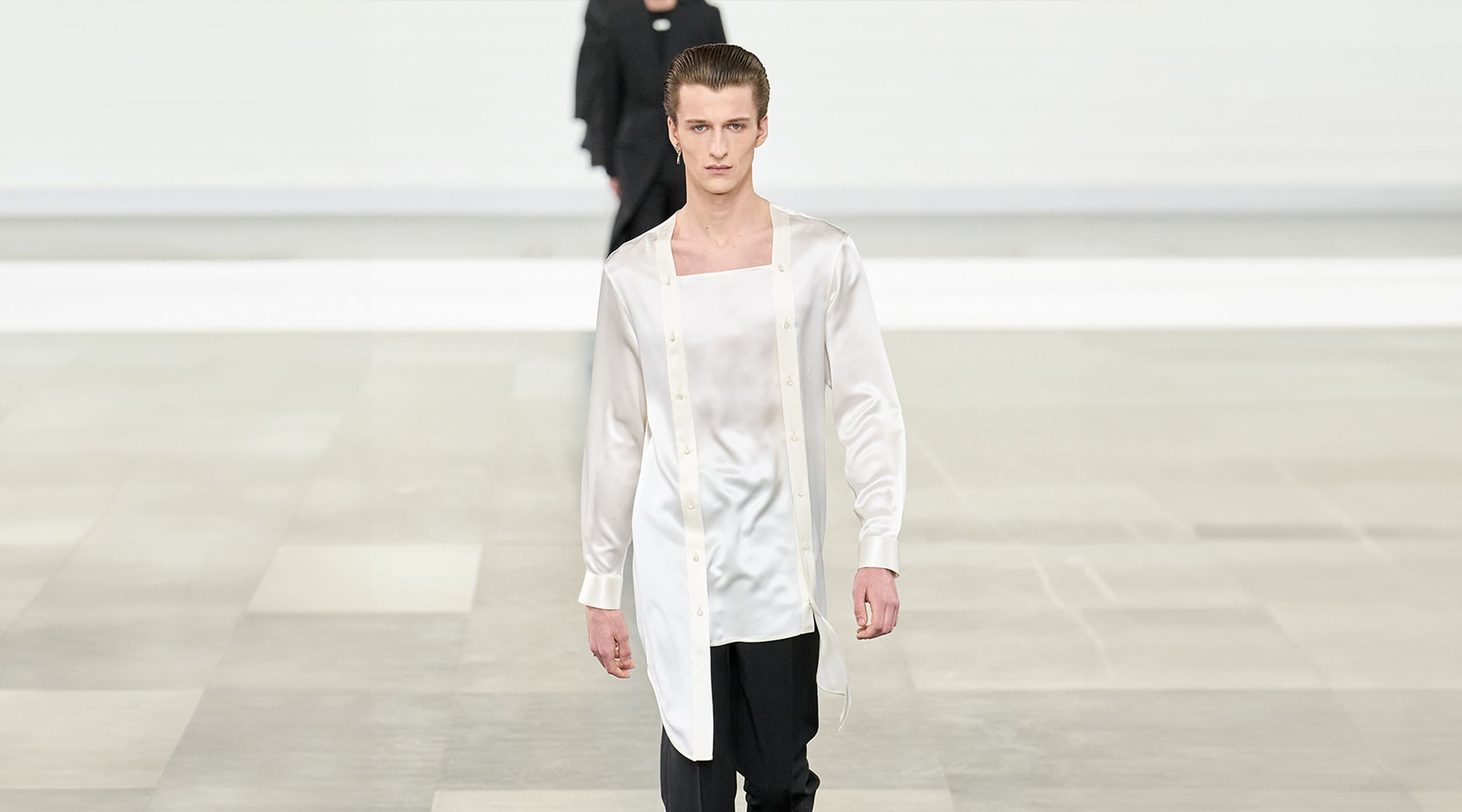
Kim Jones readies a potential farewell steeped in couture nostalgia, delivering menswear looks so refined it borders on the unseen
The black box of the Dior Men F/W25 runway was as much a stage as it was a metaphor—either the house’s packaging or perhaps for the uncertainty of Kim Jones’ future at the house. With Jonathan Anderson rumored to take over, Jones may very well be preparing to ascend elsewhere. If so, he’s leaving behind a collection so exquisite it feels like a wedding, funeral, and baptism all in one, drenched in grace, mystery, and masochism.
RELATED: Vintage Fashion: The Charm of Wearing Something Old
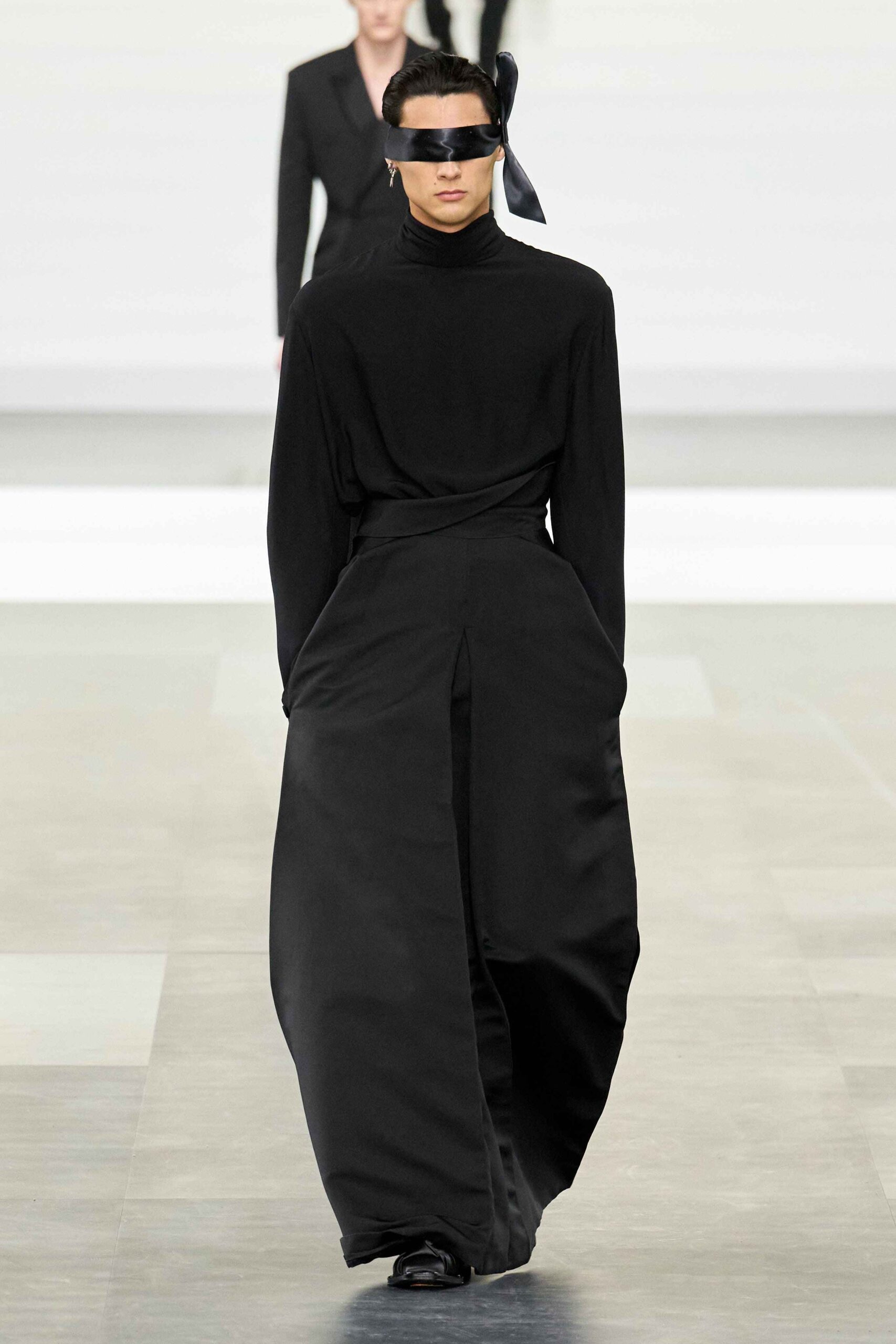
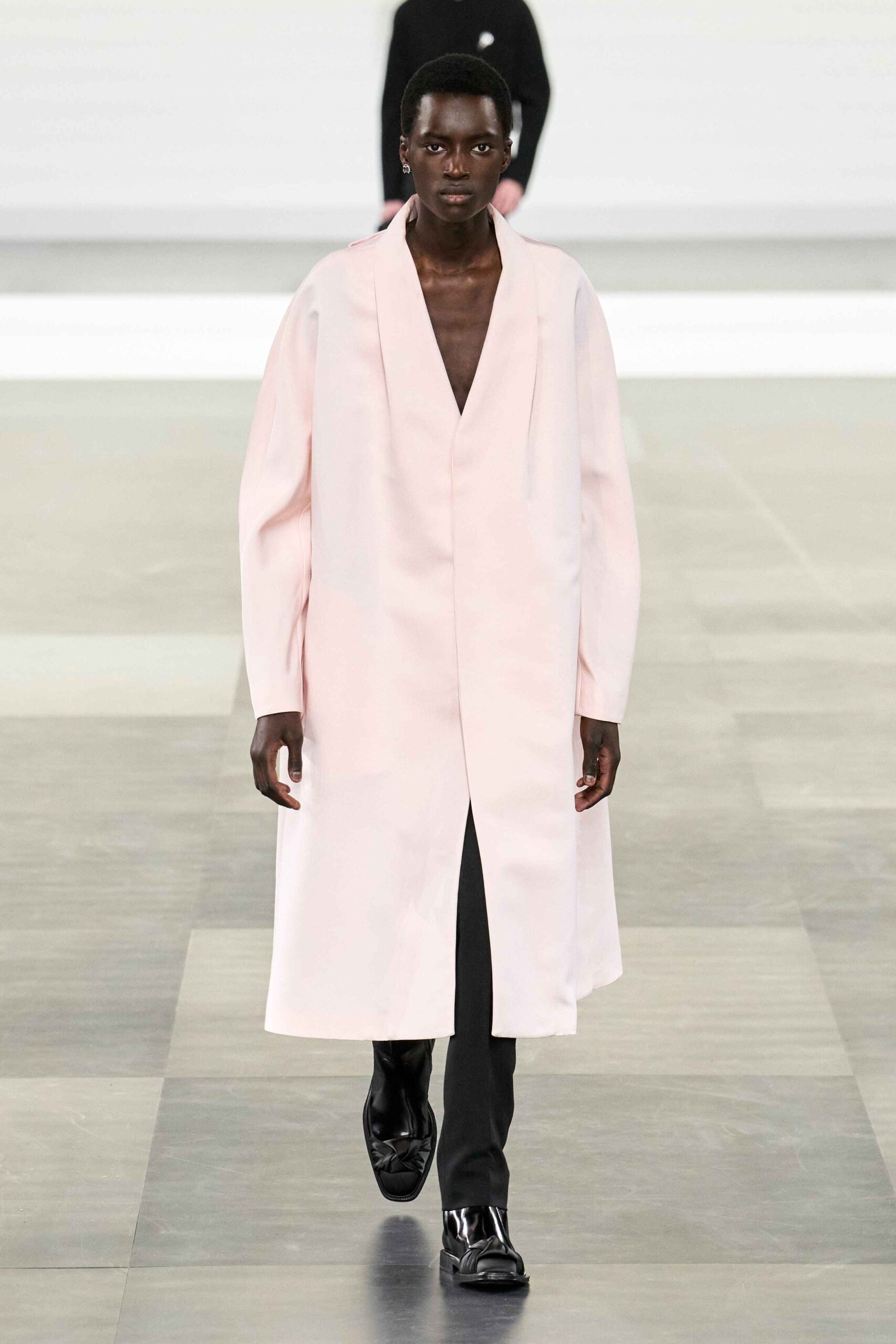
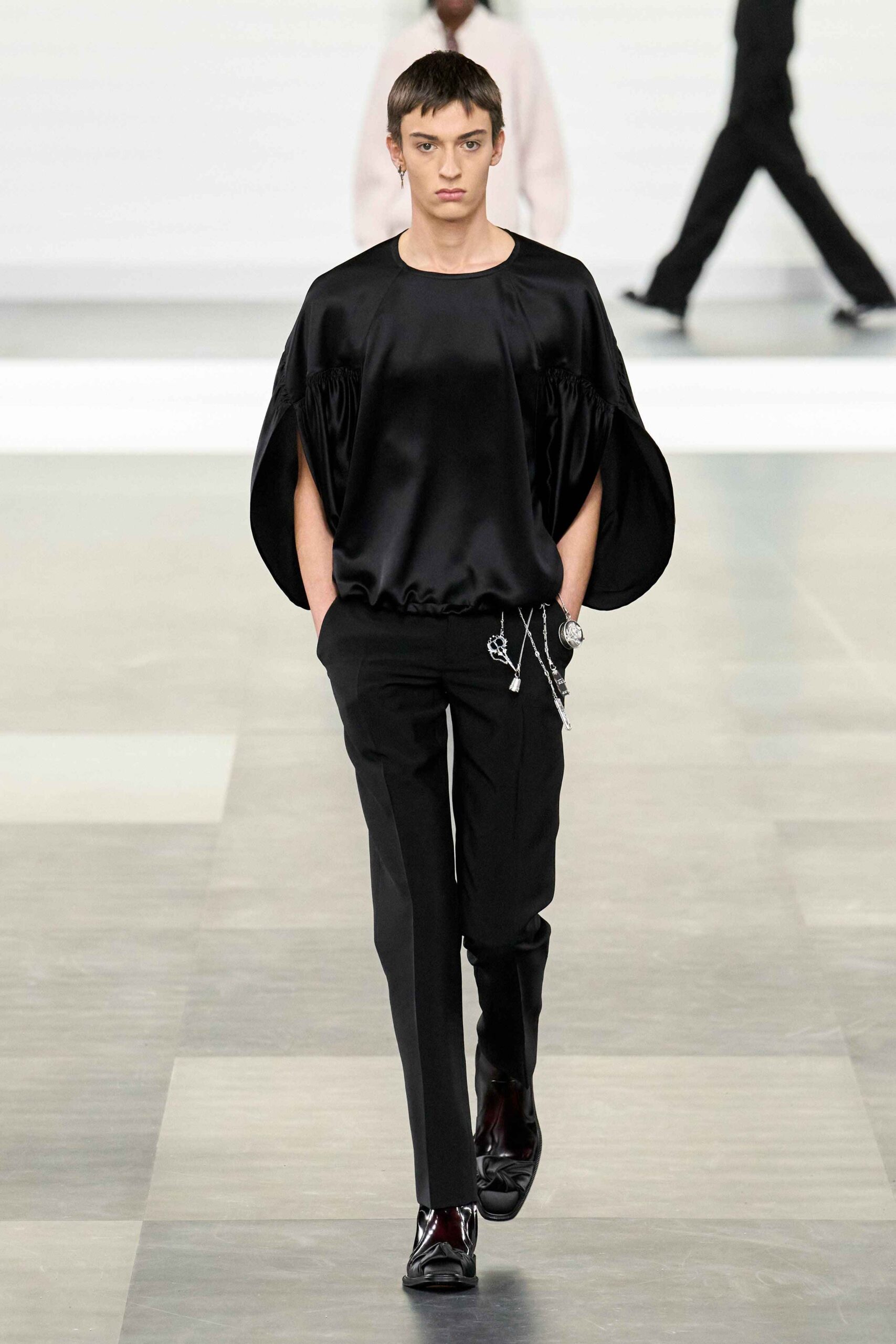
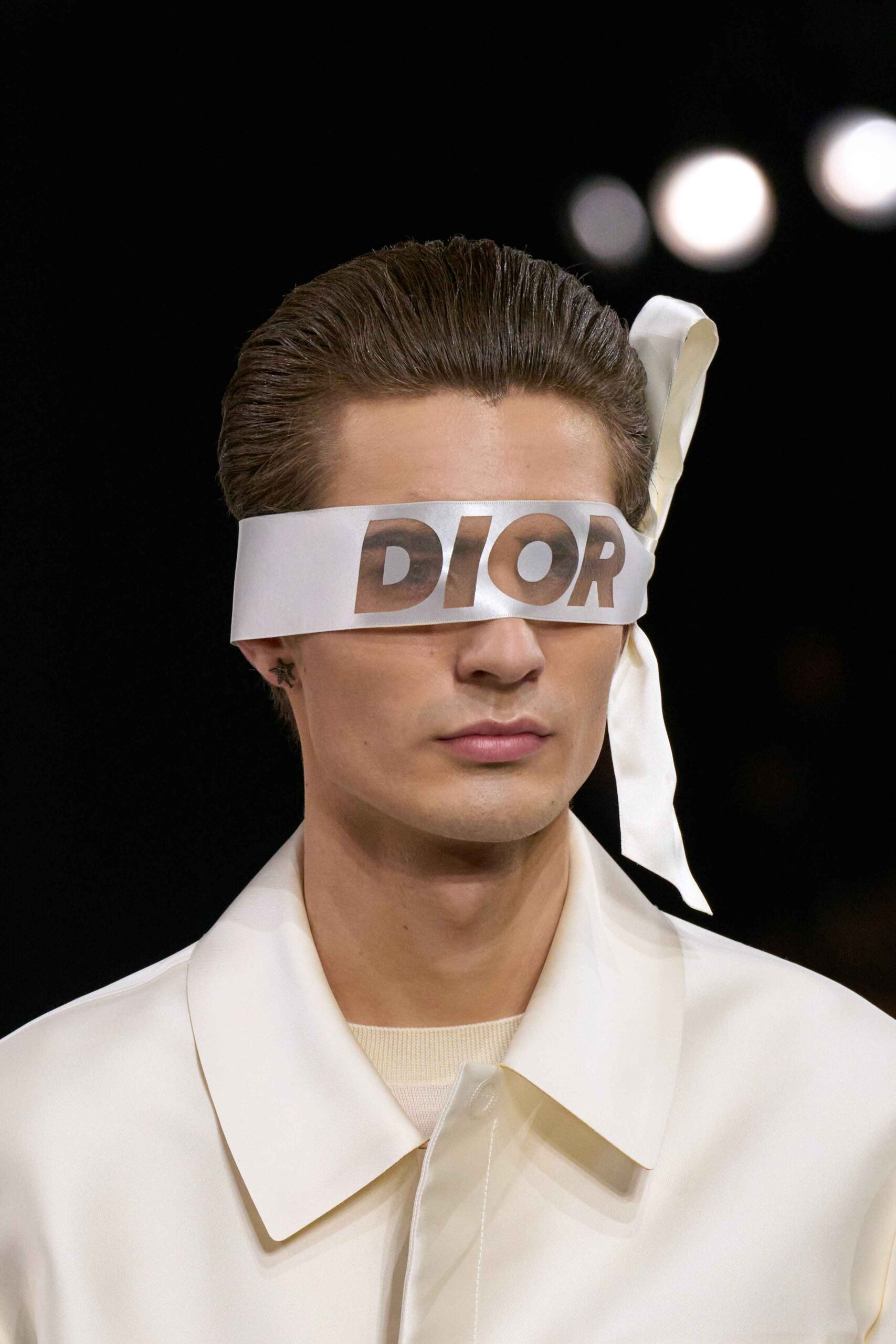
The show opened with a hauntingly beautiful sight: models wearing delicate silk blindfolds, floating down a staircase like ethereal specters navigating the unknown. The blindfolds, an intentional highlight, felt like a commentary on the fashion industry’s relentless cycles—blindly moving forward, always searching for the next, like the game of musical chairs in this constant pull of creative director shifts. Meanwhile, Michael Nyman’s poignant score swelled in the background, heightening the possible sense of farewell.
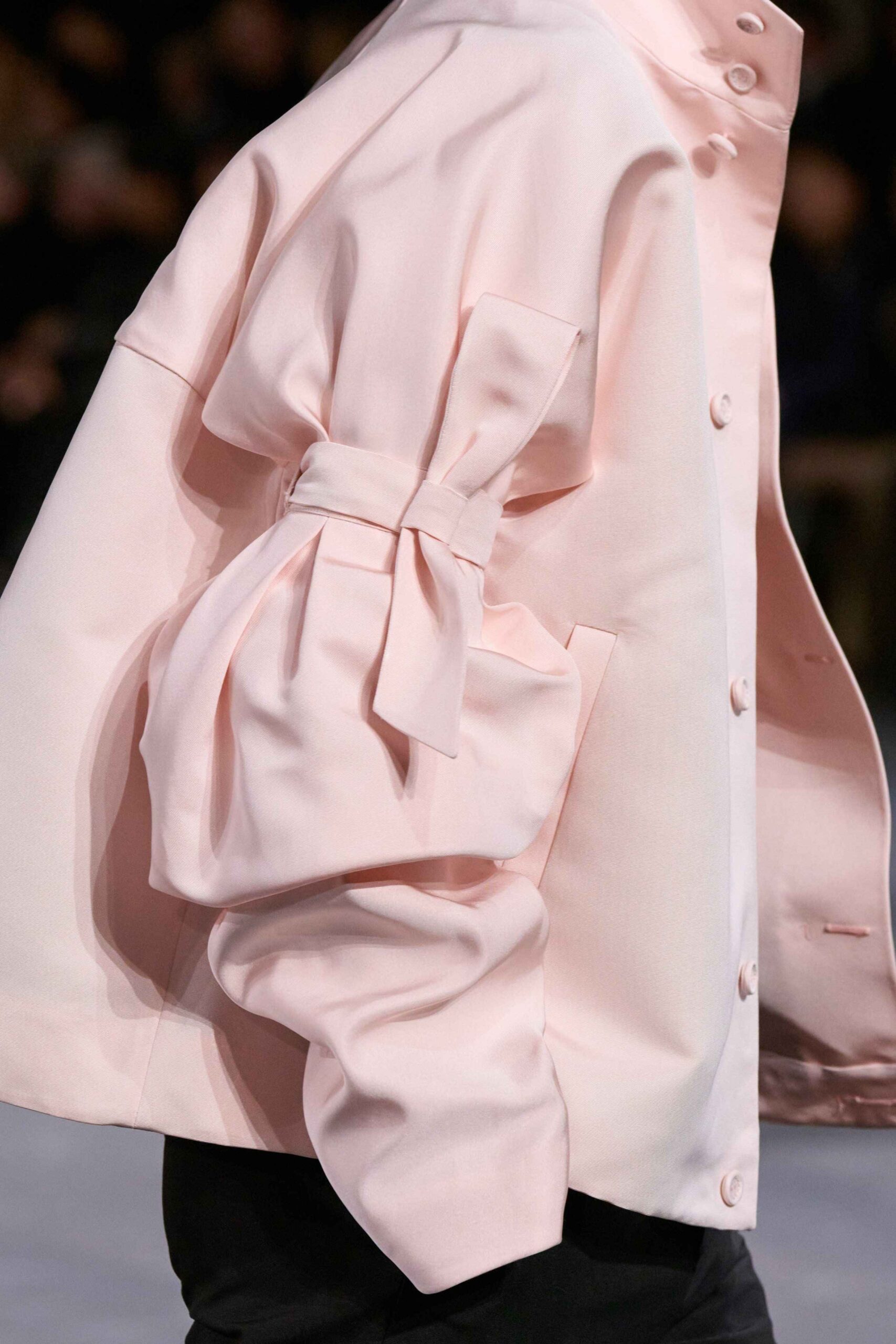
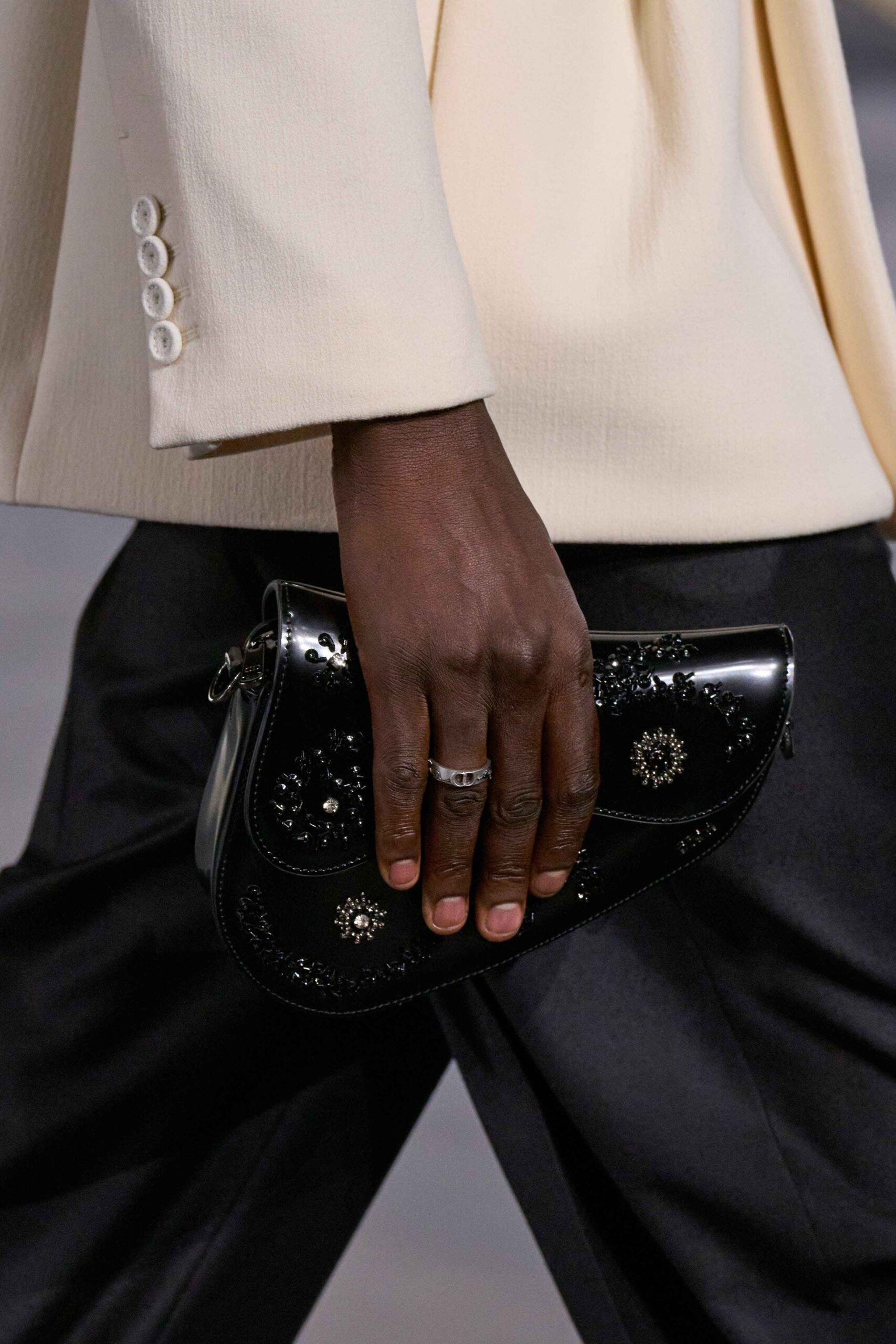
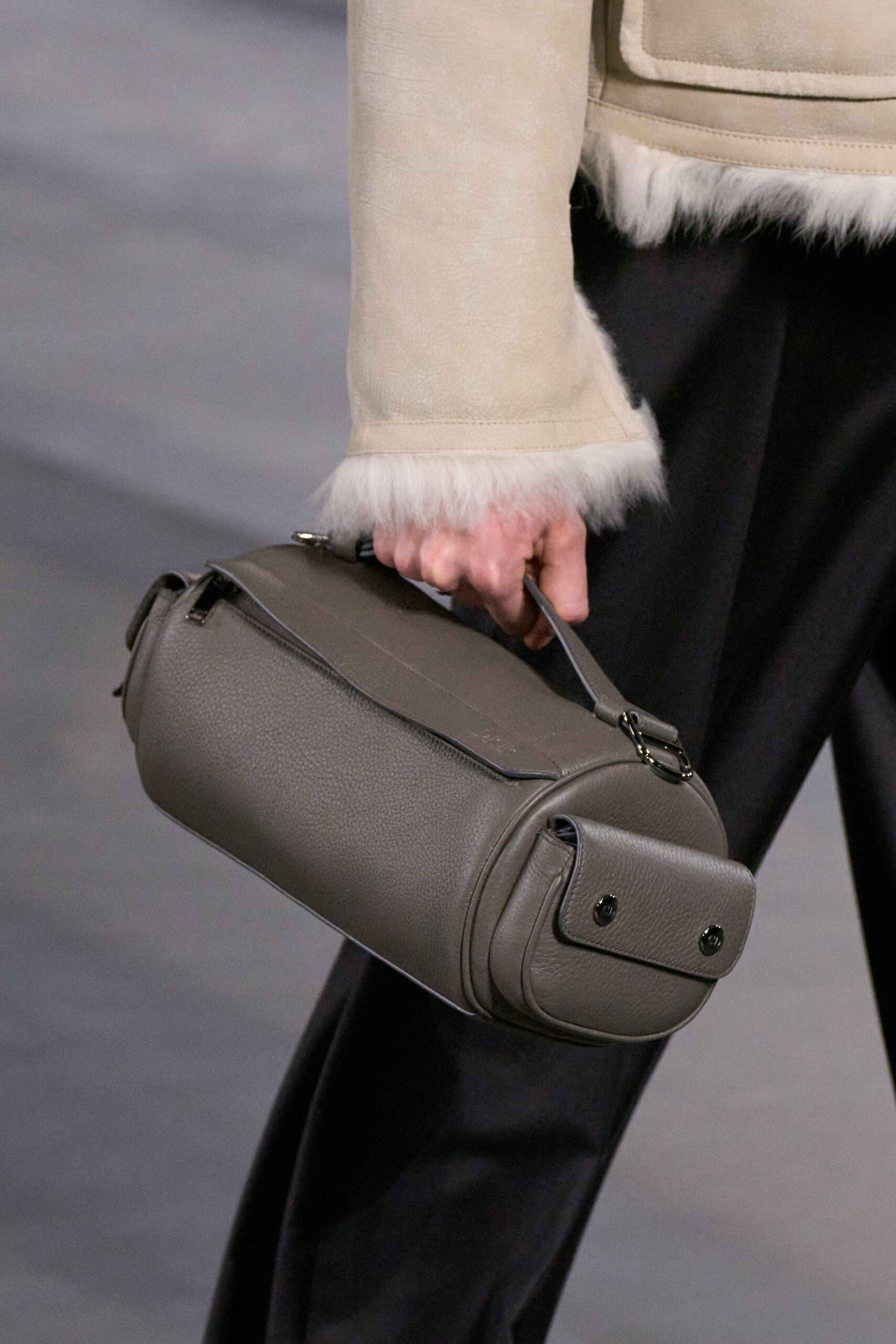
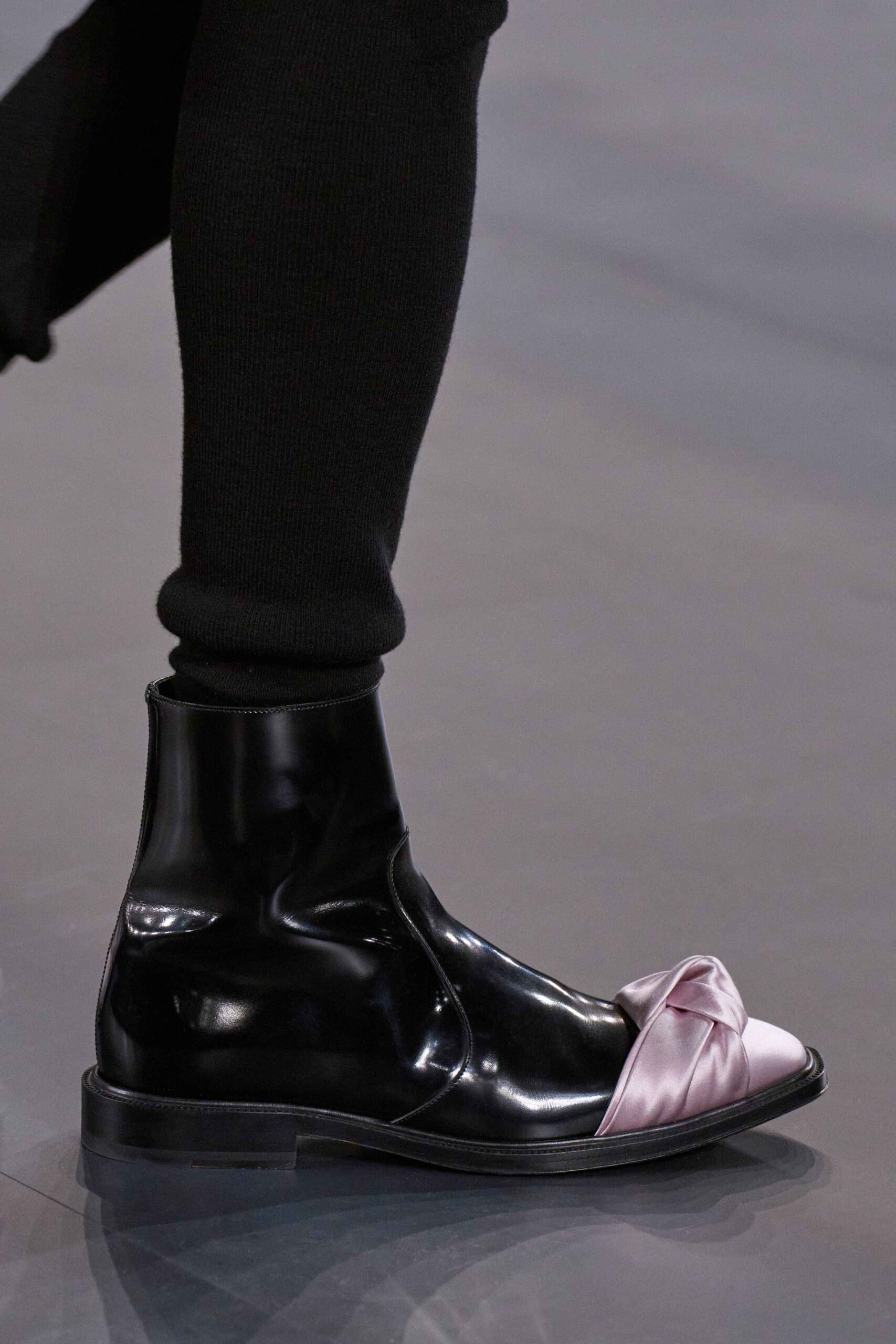
Jones delved deep into Dior’s archives, pulling inspiration from the Ligne H collection of 1954. The angular, graphic silhouettes of that era were translated into menswear, creating elongated, clean lines that exuded a quiet elegance. There was no neon or streetwearStreetwearCasual fashion rooted in skate, hip-hop, and youth culture, defined by graphic tees, hoodies, sneakers, and limited-edition drops. Once an underground movement, streetwear now shapes luxury fashion through collaborations betweenGo to Streetwear Glossary in sight—just a restrained palette of black, white, and muted tones.
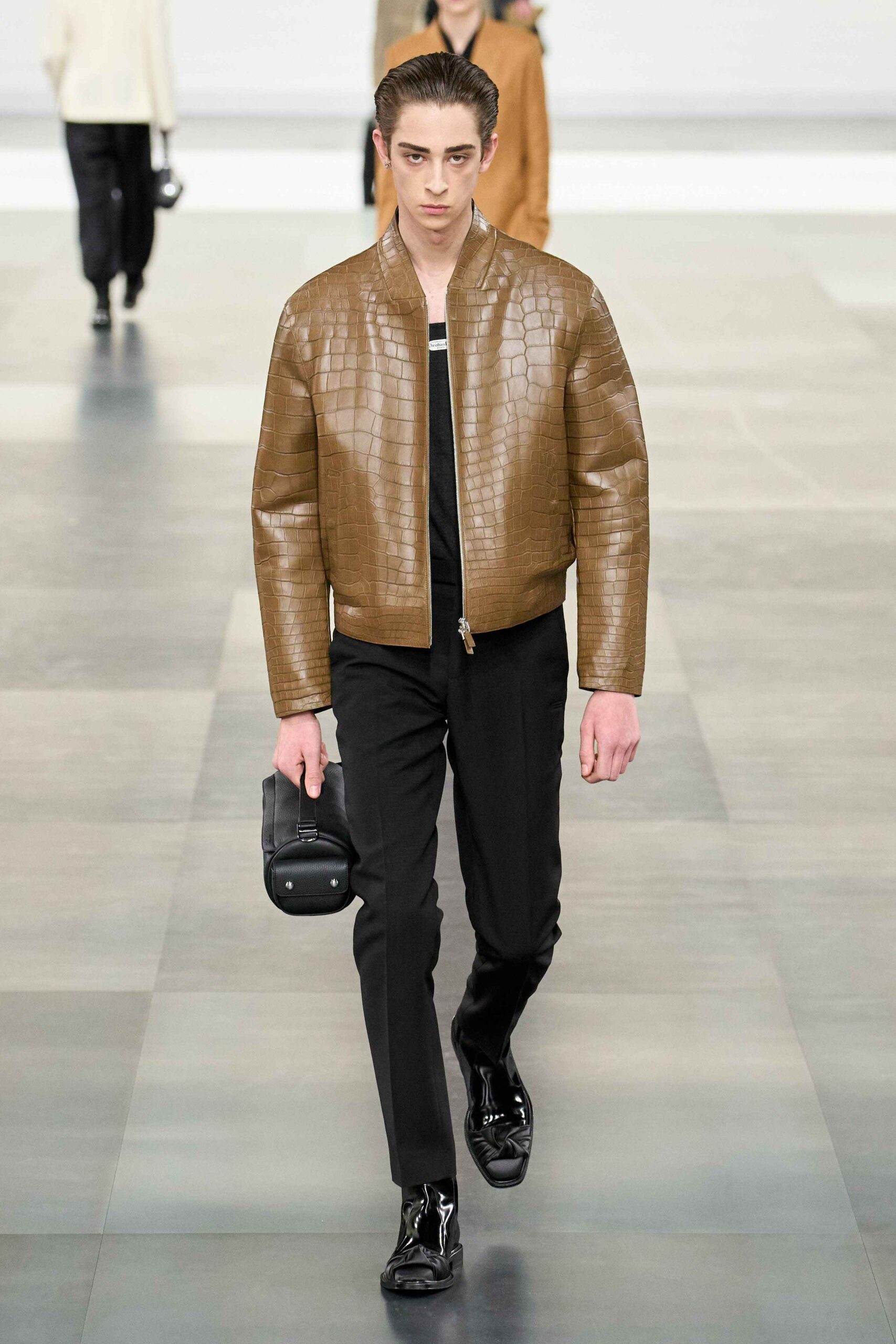
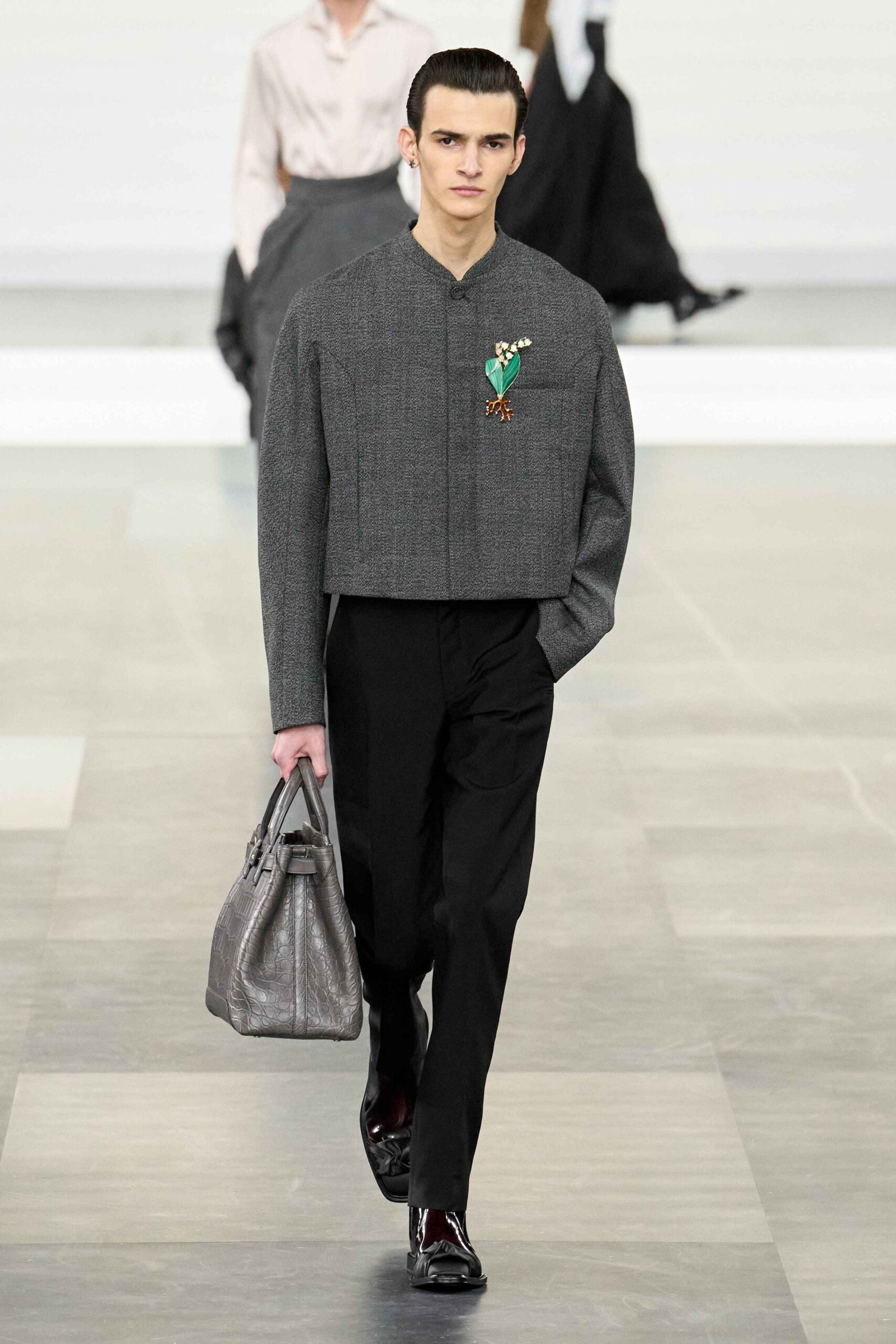
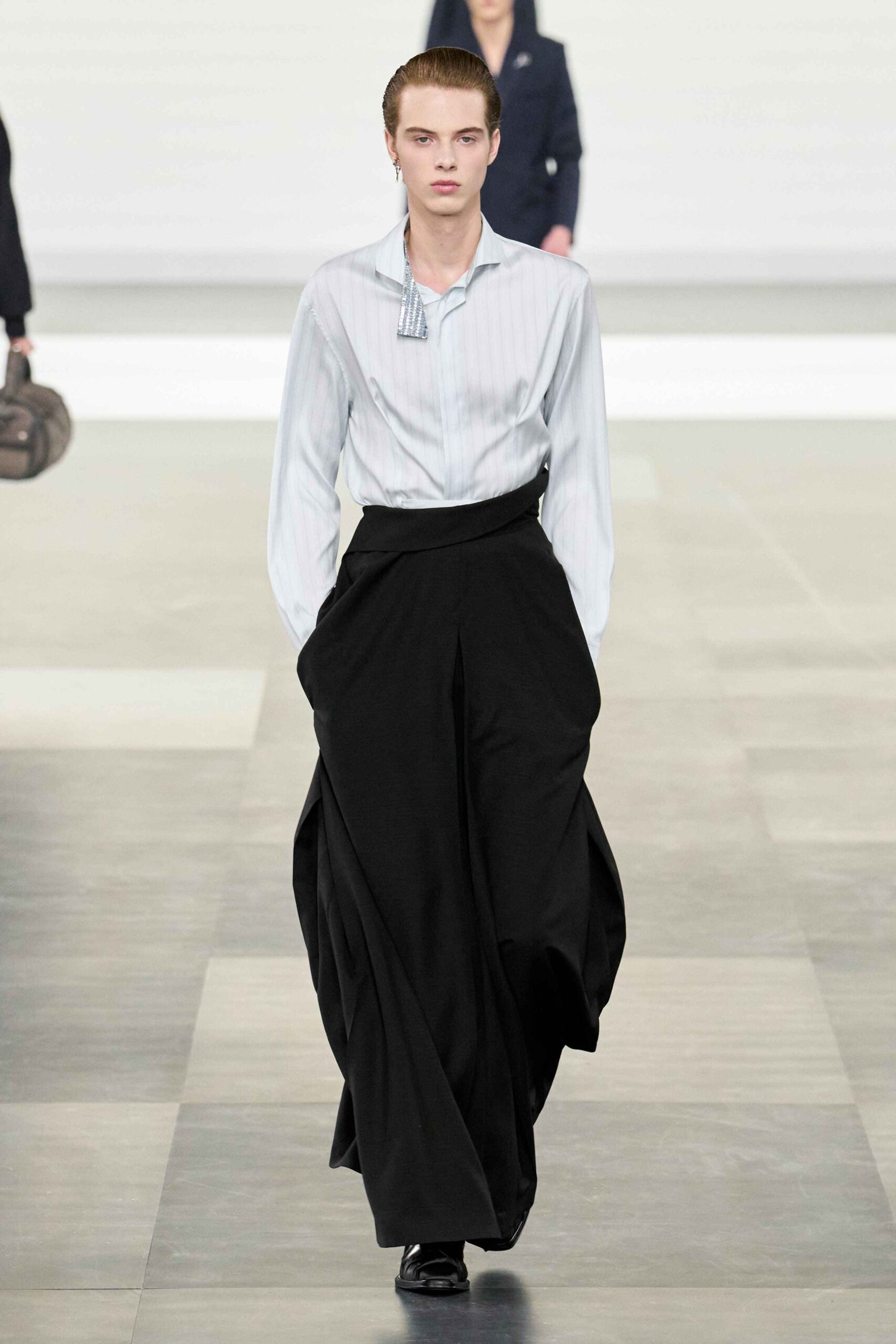
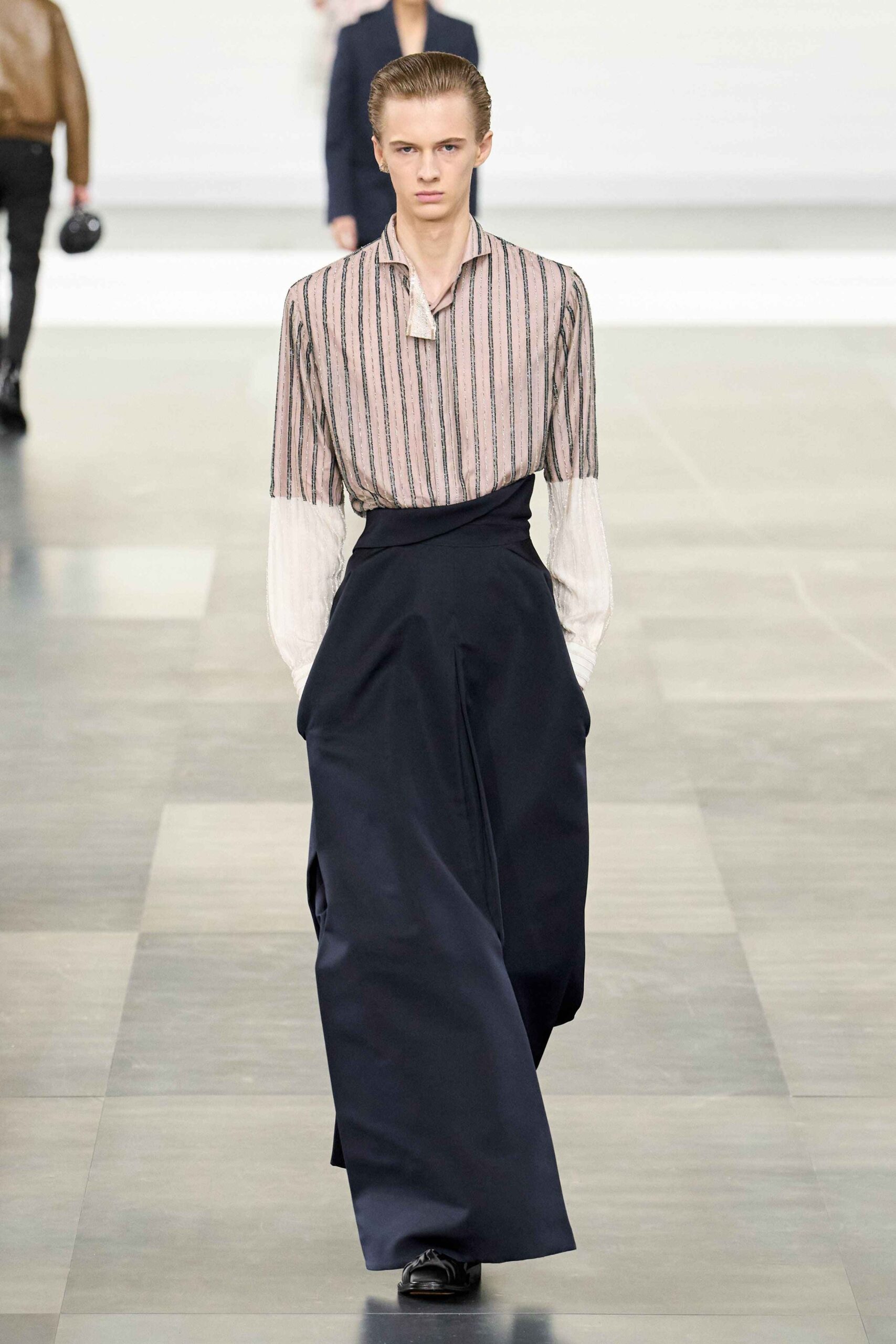
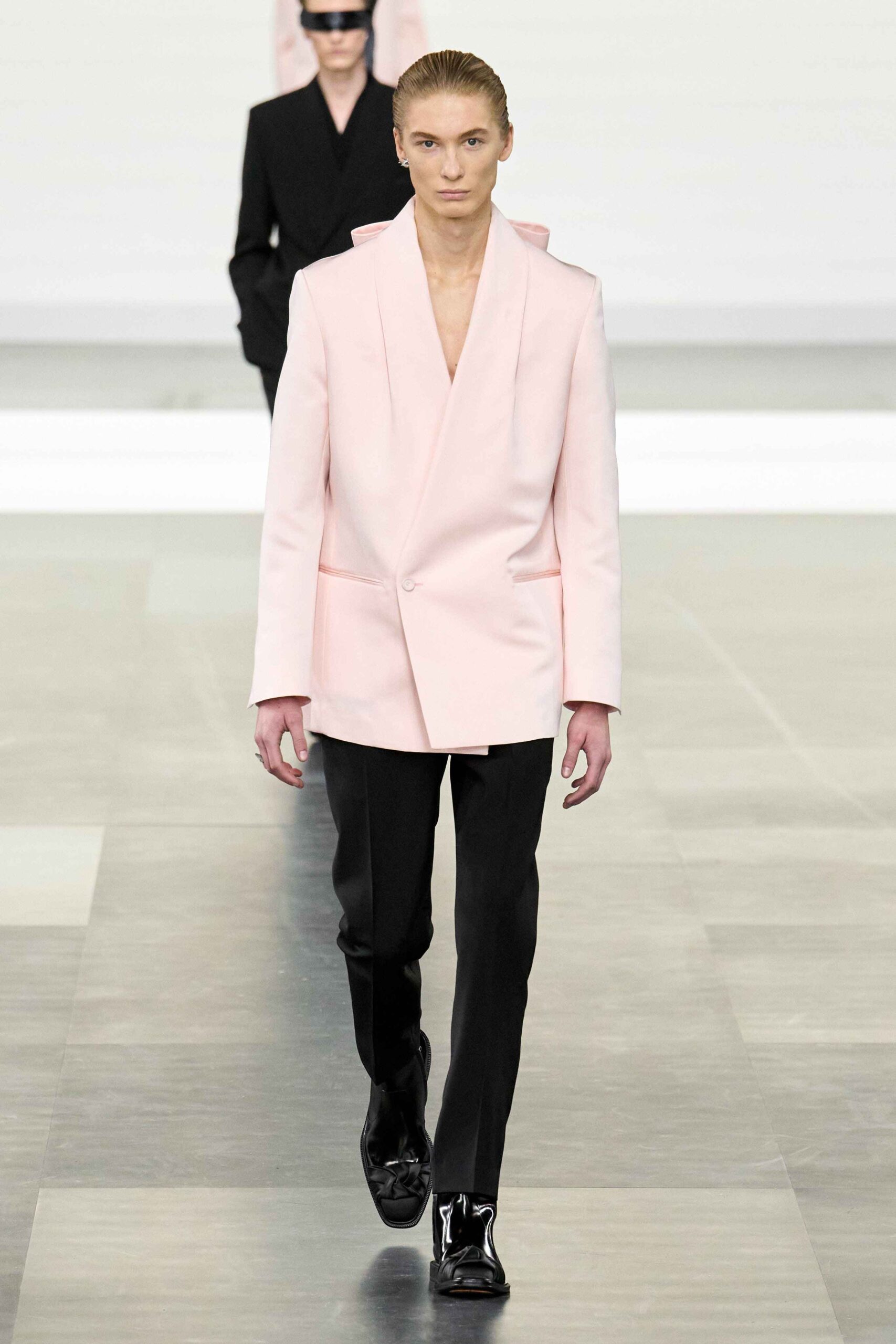
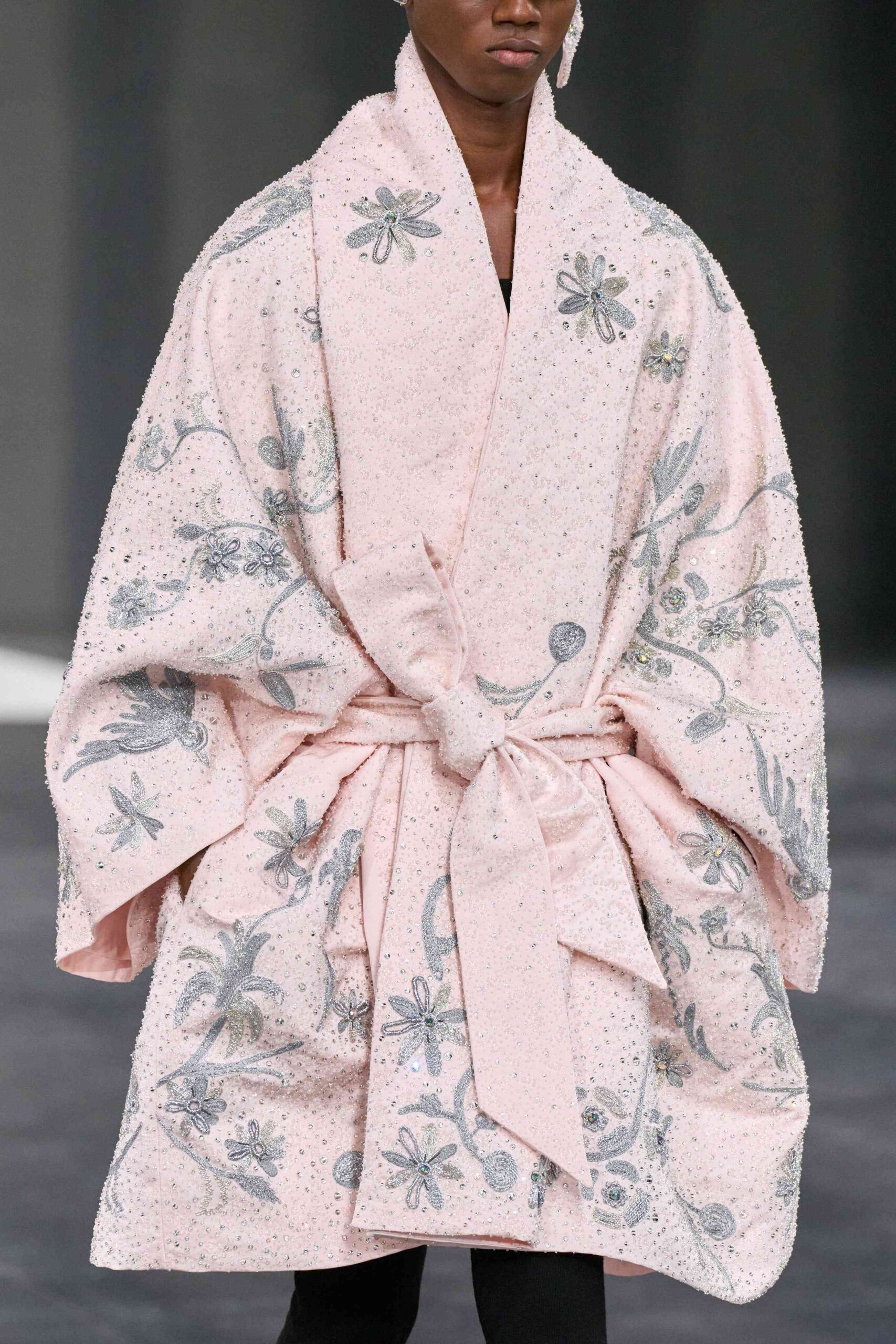
The tailoringTailoringThe craft of cutting, shaping, and fitting garments, especially suits, jackets, and trousers, precisely to the body. Good tailoring relies on structure, proportion, and careful hand and machine work, andGo to Tailoring Glossary was razor-sharp, yet imbued with a softness that bordered on romantic. Double-breasted jackets skimmed the body like liquid armor, while billowy silk shirts and exposed backs added a hint of vulnerability. Jersey trousers fell in effortless folds, while metallic embroidery from Dior’s 1948 Pondichéry haute couture look was reimagined in a blush pink robe that closed the show. The pieces held history, yet looked unbound by trends.
There was an undeniable intimacy to the drapingDrapingThe process of arranging and shaping fabric directly on a dress form or body to create a garment's design, rather than a flat pattern. Draping lets designers experiment with volume,Go to Draping Glossary, the skin peeking through slits, and the almost BDSM-like interplay of vulnerability and control. It was an appreciation of the body, dressed in couture but exposed in its essential form. Jones’ signature streetwear finish lingered subtly.
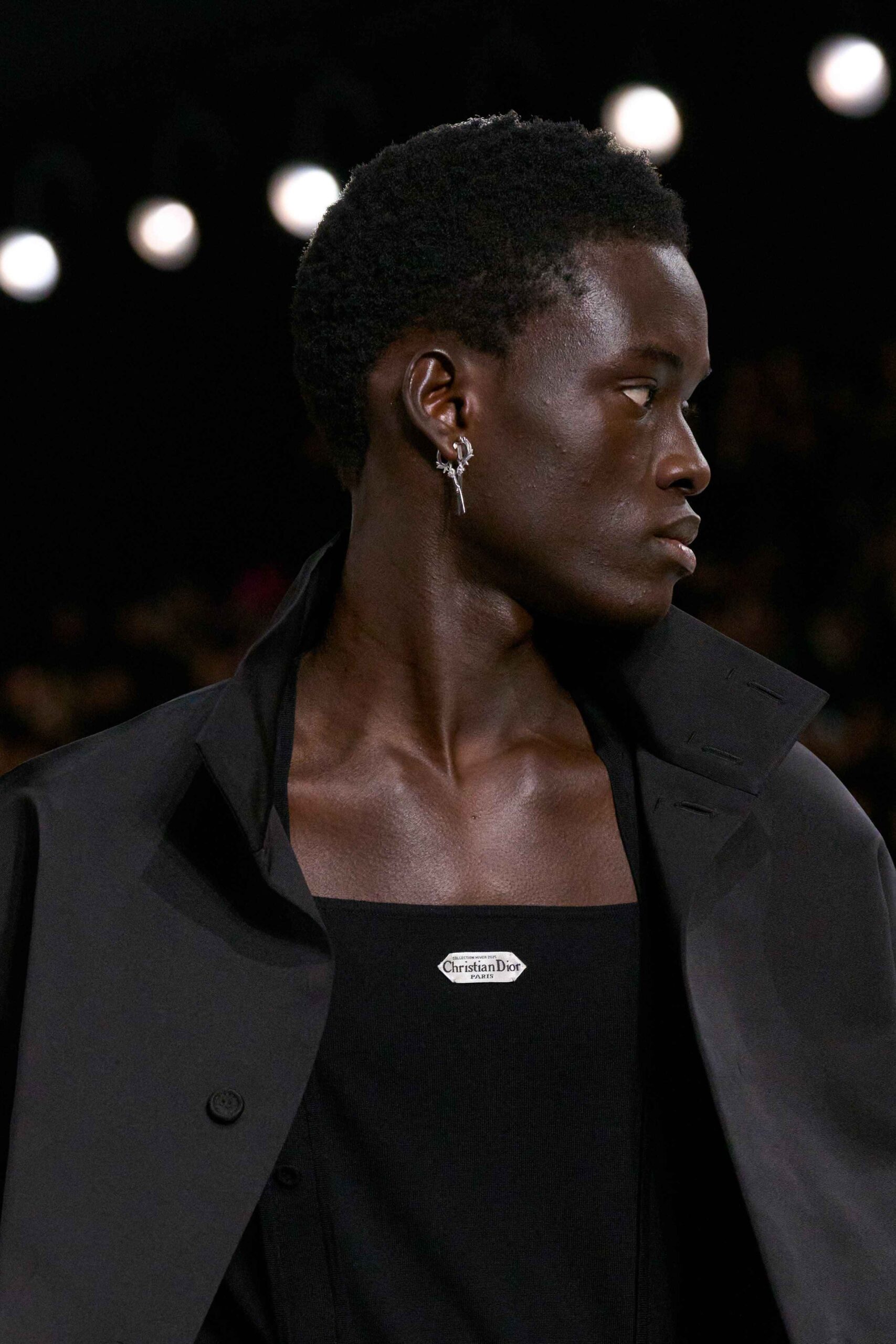
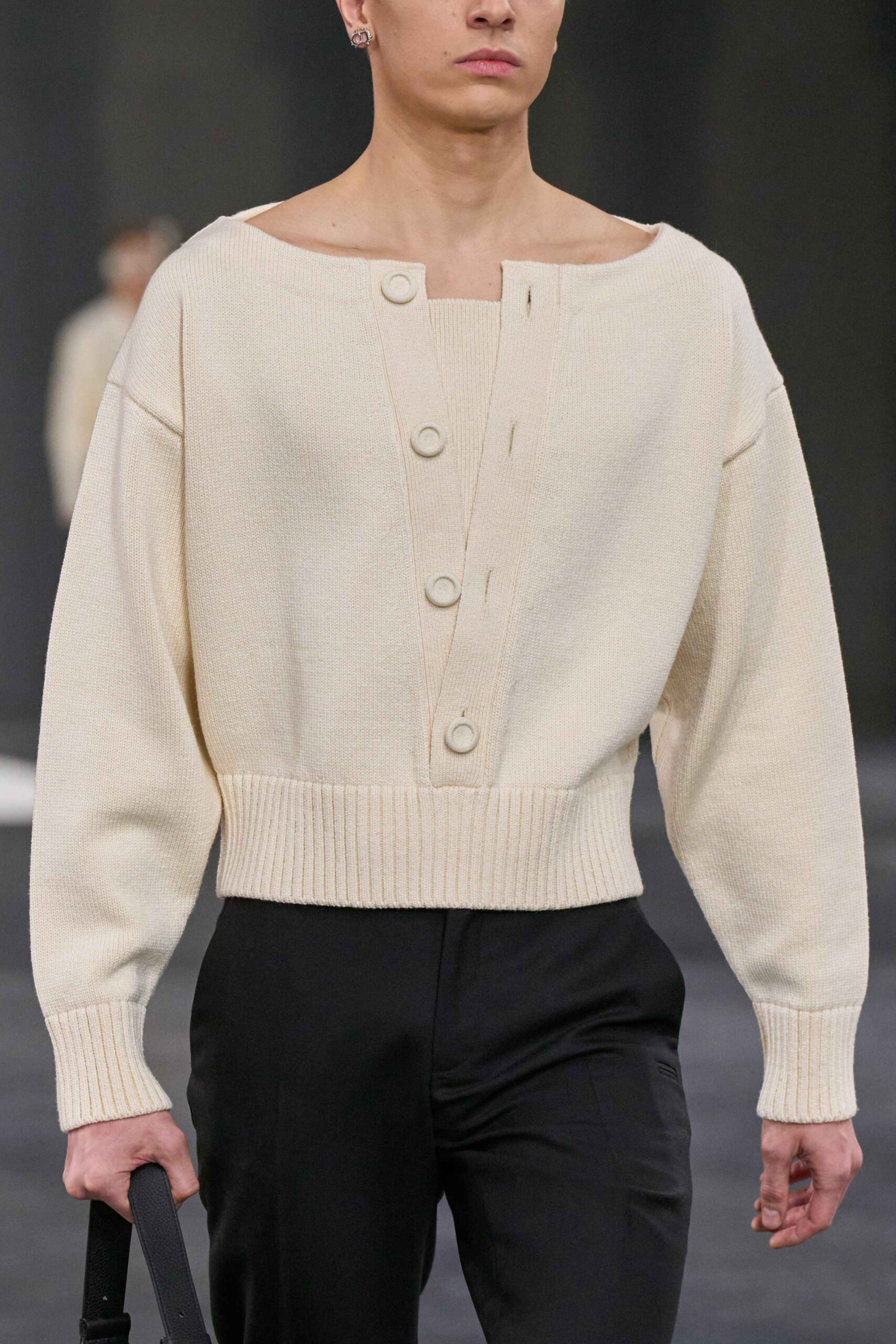
If this is indeed Jones’ swan song at Dior, he’s leaving on the highest note possible. The collection transcends fashion’s fleeting seasons, meditating on grace, power, and metamorphosis. Was this goodbye? Whether or not the rumors hold true, Kim Jones’ legacy at Dior is nothing short of sacred.
Photos: DIOR