To make it in fashion, or any creative field, there understandably needs to be talent, or at the very least, an inclination towards it. But while it’s one thing to have the skills, it’s another to tap into creativity and vision and turn it into craft. Every design, after all, begins with an idea, and finding those ideas doesn’t just come at the snap of a finger. First and foremost, it is rooted in perspective and how they translate the world around them into their craft.
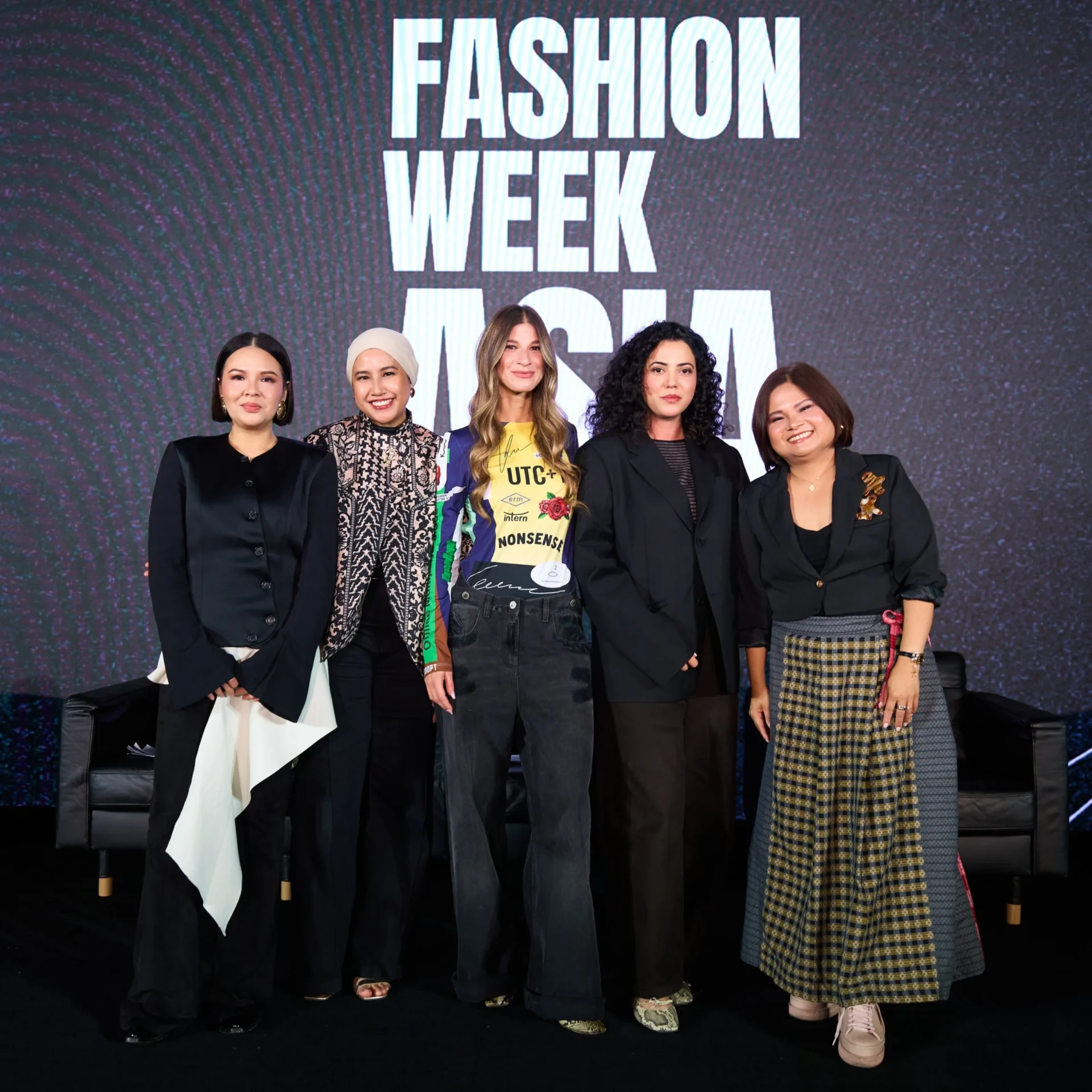
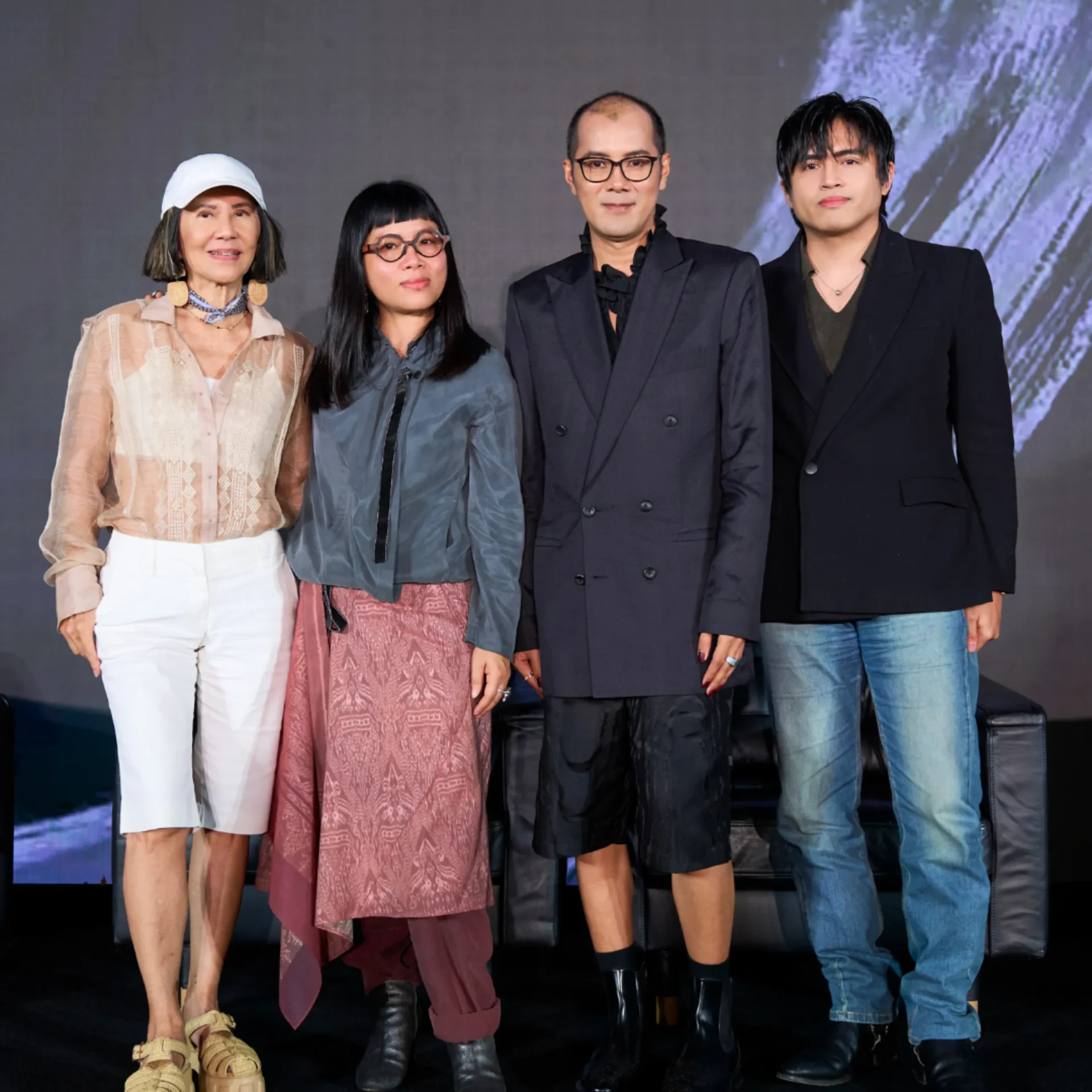
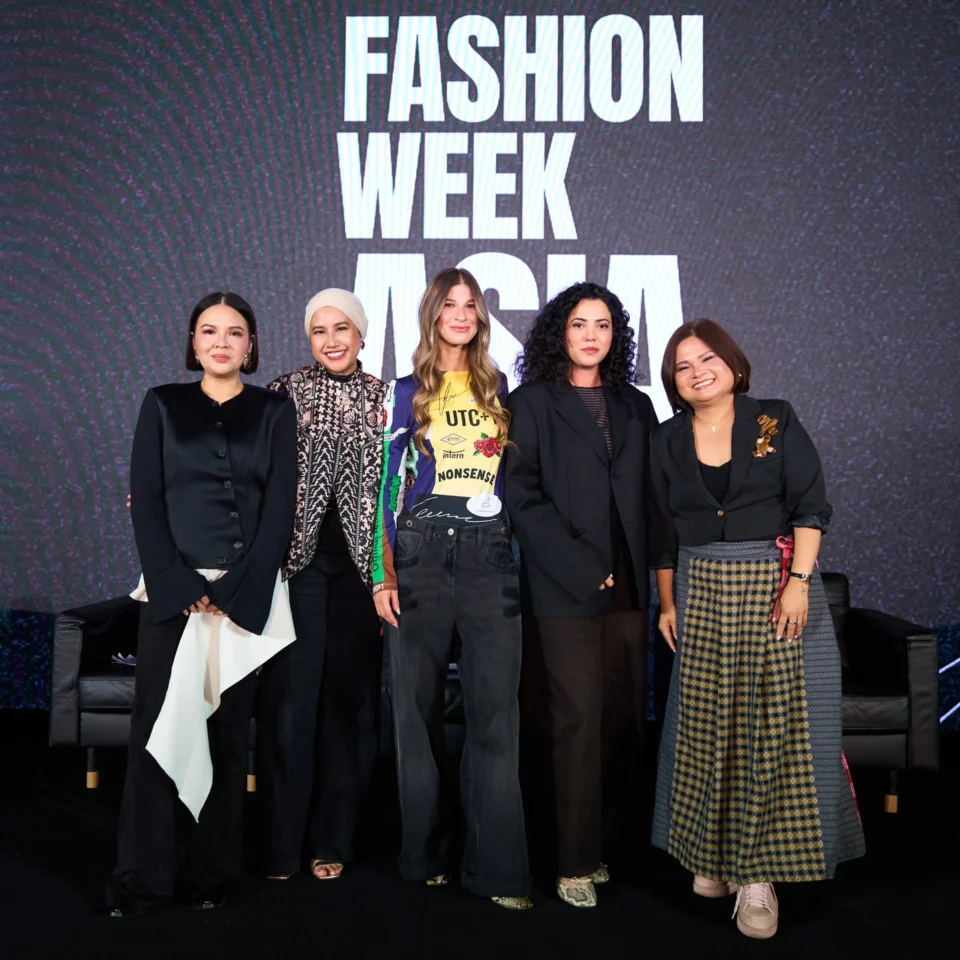
That challenge of turning one’s point of view into a creative language was at the center of The Creative Code, a panel discussion at The Fashion Forward Asia Forum during Fashion Week Asia. Moderated by Pam Quiñones, Deputy Editor & Fashion Director of Vogue Philippines and Founder of Qurator Studio & Vestido Manila, the talk brought together TOTON Co-Founder & Designer Toton Januar, ARNAZ co-founder and chairwoman and co-founder of SoFA Design Institute Amina Aranaz, Vogue Singapore Editor-in-Chief Desmond Lim, and CEO, Chief Vision Officer & Fashion Designer of Rajo Laurel Enterprises and House of Laurel Inc., Rajo Laurel, to dive into how designers can develop their creative voice and stay true to it as they evolve as artists.
RELATED: Everything That Happened on Day 3 of Fashion Week Asia
How Toton Januar and Amina Aranaz Find Their Creative Voice
In today’s digital age, information, especially through social media, can often become overstimulating and even overbearing. For the speakers, wading through the noise means actually looking at the world around them. “I always have my inspiration from my personal experience and emotion,” said Toton Januar. “Most of the time, I look around me, my culture, what’s going on in my country.” Some of the inspiration may have nothing to do with fashion, but the designer still treats those experiences as ones that can lead to artistic breakthroughs. “Fashion is not only creating clothes, but it’s a way for me to express my emotion, my opinion, through the artistic way of making clothes.”
For Amina Aranaz, she understands the dilemma many young designers and creatives face in even knowing where to start. And looking back on her years in the industry, she sees it as a journey that begins close to home. “I realize that it really starts from the self,” Aranaz shared. “It starts from looking internally. There’s always an introspection that comes with beginning the design process.”
While it is understandable that those just starting will look to external inspirations for their work, Aranaz emphasized the importance of starting from within, and it’s a journey that doesn’t always have a straight path. “The starting point really is self-understanding, self-awareness, and then you try to go deeper and explore and nurture it until slowly, little by little, through experimentation, a lot of play, you will eventually find your design language.”
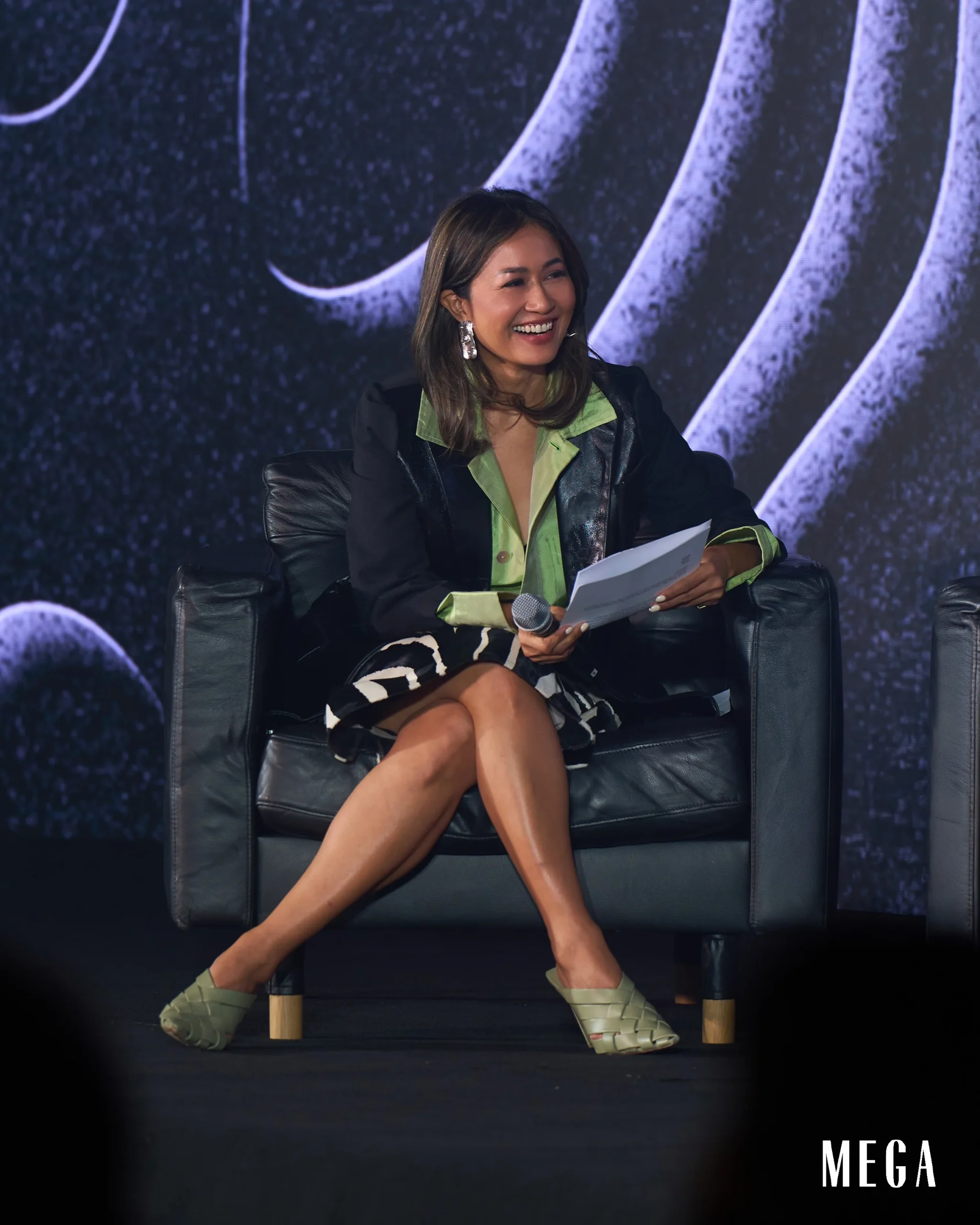
Rajo Laurel also sees inspiration as not paved on a linear path and having a set of rules to follow. Instead, it’s one built on the world you are surrounded by and hope to be a part of. “Talk to the people who are actually going to wear your clothes. You have to create the connection between the vision and reality,” Laurel advised, adding that he turned to his sisters early on to develop his design language.
In this process, the celebrated designer also implored the next generation of creatives not to always assume perfection at every step of the way. While there’s nothing wrong with wanting to consistently achieve results, sometimes that doesn’t always pan out, and that’s more than ok. “Don’t be afraid to make mistakes. Mistakes are the most wonderful lessons that we can ever achieve. Because mistakes are the windows to pure creativity.”
Even for creatives who don’t see themselves in fashion, taking inspiration from the world and the environment can be a great place to start. Desmond Lim knows this well. With his work leading a major fashion publication in Singapore, Lim understands that there’s so much to be gained by opening yourself to the world.
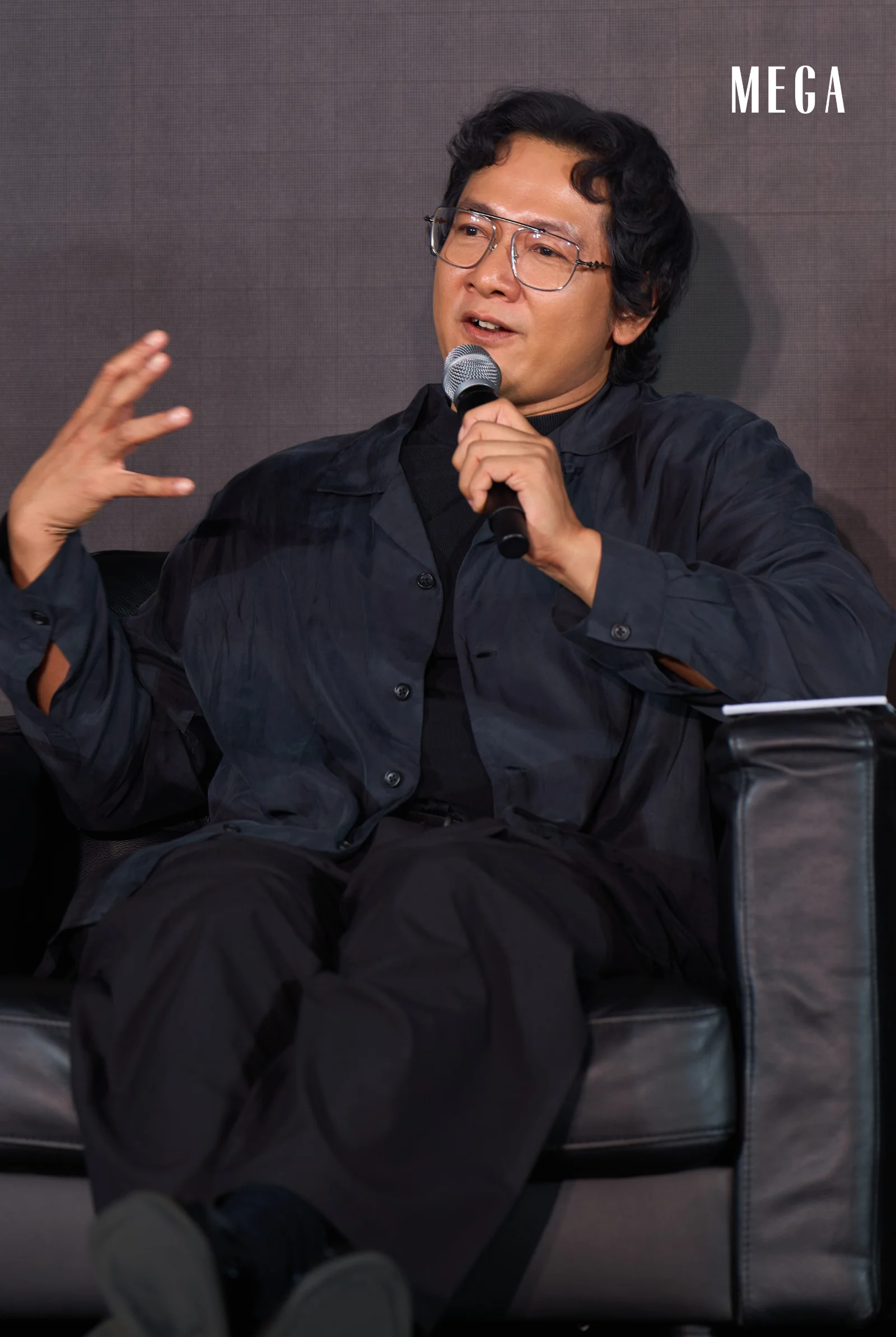
“It’s very important to be very sensitive on the ground, on knowing where the sentiments are. I always encourage a lot of people to rethink what they think the word community is or what they think culture means to them. Because whatever culture that means to a whole bunch of people may not necessarily mean to you.”
Culture isn’t rooted in a single idea, but a collection of so many that interact and intersect with one another. As such, creativity, art, and culture are open to interpretation and new perspectives. “The journey, I think, needs to be packed with plenty and plenty of curiosity,” Lim said. To thrive in the creative world is to be open to learning, exploring, and experiencing the many communities and cultures that make it.
Turning Inspiration Into a Collection, With Rajo Laurel and Amina Aranaz
Inspiration can come from anywhere. In the same way, turning concepts and ideas into tangible, physical work doesn’t always have to be done in a set pattern. The creation process welcomes deviation in whatever piece, look, idea, or world you choose to build. And this doesn’t mean a full collection right out of the gate; as Aranaz shared, it can be a root that slowly grows into something more.
“I don’t start with making 30 pieces. Each one will evolve. And then once I find that perfect combination of what shape of the bag, what’s the material, what’s the color, then it sort of gives birth to different things. And once I have enough, then I start to edit and say, ‘Okay, this is what I will put part of the collection.’”
For Januar, the start of the process is an opportunity for him to envision the story each collection will tell. “It’s a chance for me to build a world, to build a set of ladies from certain tribes in my mind. So every collection is a new adventure, and it’s always the starting point.” Notably, the final product for the Indonesian designer may not answer the questions he started with, but along the way comes reflection and research that eventually forms the collection.
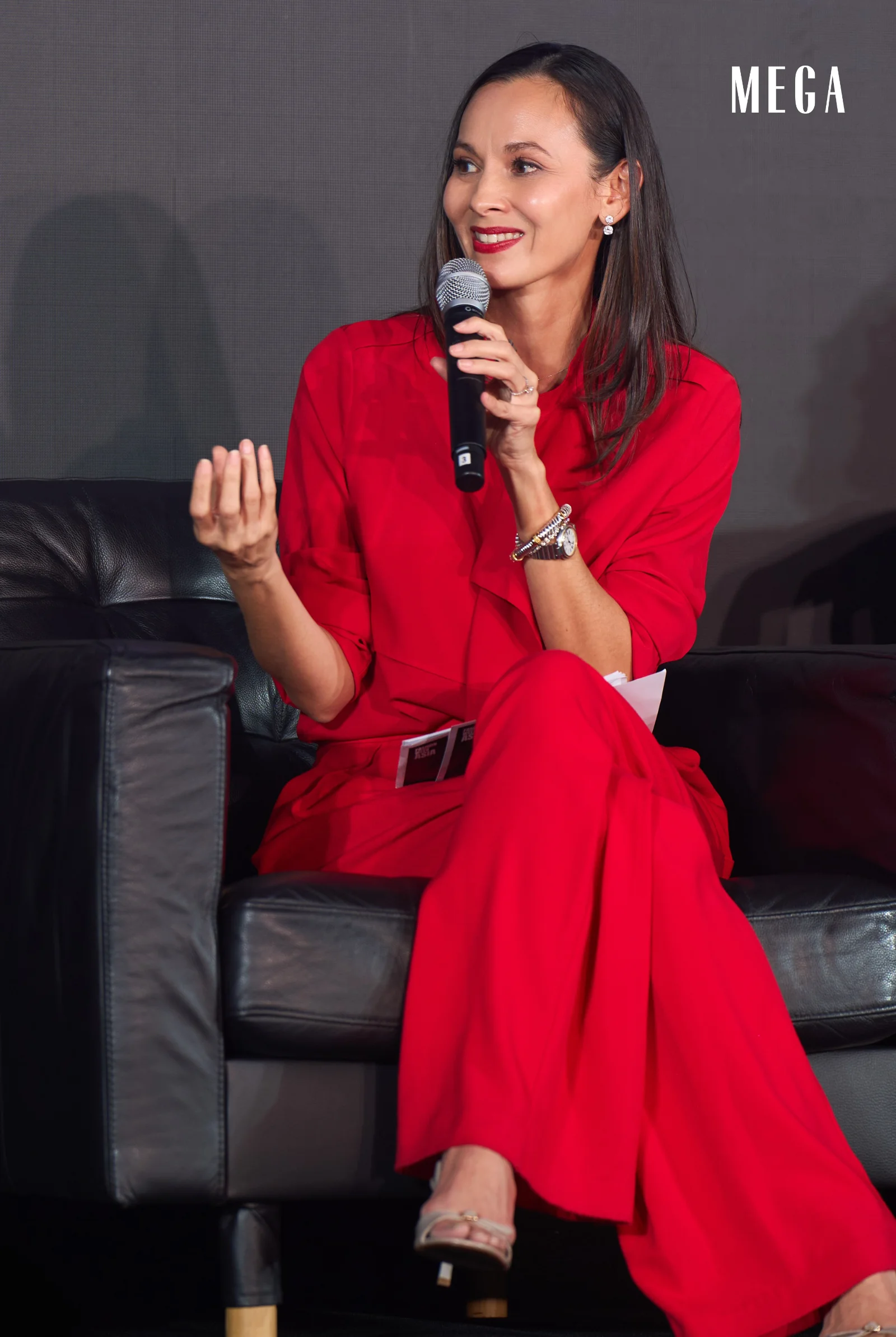
“When it comes to designing, actually sketching the clothes, I have all these materials, knowledge, and emotions in the back of my head, so I try to translate it to shape, form, and texture, and try to explore what kind of fragments are suitable.”
But if working with an ambiguous concept might seem too difficult for young designers, Laurel suggested that they can build their own template and schedule that serves as the blueprint and foundation for where the design can go. “Once you’ve created the structure, you can put that aside and then begin the storytelling. Because for me, I’m a storyteller. What that means is that when I create a collection, I must have a story to tell. That actually fundamentally grounds the collection, and then I base it upon the schedule of what I’m giving myself.”
Taste is fundamentally subjective, but as early as now for the next generation, Laurel encouraged them to develop what they like and what they don’t. “Design is like eating. You can only design if you actually like what you’re tasting. And if you don’t like what you’re tasting, it’s okay; chew it, spit it out. And then develop that taste until the taste becomes your own.”
Desmond Lim on Letting Go of Your Work
Regardless of where their inspiration takes them, designers ultimately create. Something physical comes out at the end of the process. But once that work is out there in the world, it is no longer theirs. Whether it be a client, buyer, or a random commenter on social media, everyone is open to taking their work however they want. Admittedly, this can become a source of friction and anxiety in the disconnect that comes between the creator and their audience. But even during those moments when others interpret the story differently, it’s not a cause for despair.
Lim recalled a conversation he had with actress Michelle Yeoh where he asked her how she deals with criticism directed towards her. The Oscar-winning actress told Lim she shows up to work giving her 100% that she can give, and that is more than enough for her regardless of how others may take it. It’s advice Lim took to heart. “If I feel that that was my 100%, I’m actually super okay to let it go. They may like certain things, they may not like certain things, and that’s just the journey of life. We just try to do better each time.”

Even with the reputation Rajo Laurel has, he more than welcomes different interpretations of his work. Fashion is a lot of things, but it should never be boring for Laurel. “What makes fashion exciting is the way they interpret what you do. The minute it leaves the studio, you have to let go of this creation and let it live through the vocabulary of another person’s life.”
Added Aranaz, “I think as designers, we also cannot be, I would say, too proud about our work that we completely own the piece. Once it’s out there, you don’t own it anymore. And so we also have to try not to be so protective of our work and where it lands. Because really, once it’s out there, anyone can make something else of it. And you also have to have a spirit of generosity.”
Fashion shouldn’t be experienced in isolation. It is not in a vacuum, which is why collaboration is also a powerful tool in changing the way we see clothes and fashion in general. One thing can be turned into a completely different thing, and it would still hold meaning. As Januar shared, “For me as a designer, I have specific stylings when I come up with a collection. But I don’t want everyone to follow that. Instead, I would love for people to interpret it their own way. So I really love when I see a woman coming to me with my piece, but she styled it in a very original way.”
Rajo Laurel’s Advice for Young Designers
As young creatives set about on their journey to find their voice and unique perspective, they’ll go on figurative and even literal journeys that are not like any other. And along the way, the panelists shared their advice for emerging designers on how they can make the most of their path of discovery.
For Lim, it starts from within, which will eventually shape how they exercise and express their talent. “Follow your heart, not follow a trend. I think your gut instincts will guide you to interesting places. I think it’s also very important to know who you’re actually designing for. Who is this woman that you’re planning to dress? And what’s the lifestyle like? Because essentially the lifestyle will inform you of the kind of work that you will put out.”
He also hoped that the audience won’t be swayed by how social media has made it feel like you need to have something to show for yourself all the time. “We have always been told, if it’s not big, it’s not cool, it’s not loud, then you haven’t got there yet. But sometimes, it doesn’t need to be all that.”
Januar sees curiosity, integrity, and courage as key values he hopes young designers learn to develop. “It’s important not only because you’ve got to have fun and enjoy what you’re doing, but also I think you have to expand your world. You have to go beyond fashion and see whatever else out there. Make yourself not only richer as a designer but richer as a human being as well.”

Aranaz focused on the attitude young designers should build at this stage of their careers. “Always stay humble and operate with kindness. Don’t look at everyone as competition.” Despite how stressful the industry can become, Aranaz feels that designers shouldn’t always take everything too seriously. “Have fun when you are working. Have fun when you’re creating your collections because it’s really when you start playing and let go; that’s when the magic happens. So don’t ever let go of that curiosity. Don’t ever let go of that playfulness.”
She advised the audience on understanding the business side of the industry, a tip also shared by Laurel. “While passion, creativity, and imagination are necessary, so are knowing your profitability, your finances, your operations. If you truly want your ideas and creativity to last beyond your collections, to last beyond you, you need to embrace that side.”
Finally, Laurel wants designers who get into the industry to do so for the right intentions. “Love the craft and know the craft. Know how to make clothes, first and foremost. Ideas are only ideas that live in your head. But if you don’t actually know how to magically make it real, then no one will benefit from it.”
And, as cliché as it sounds, take your time. Success may not come on day one, and that’s fine. Everyone has their own path, and you will get to where you need to go. As Laurel expressed, “Be patient. Don’t be in a hurry. Enjoy the process. You’re only young once. So take your time. And don’t worry because the people who will love your work will find you. So keep on listening to your voice.”
Featured Image and Photos: Photos by BRYAN BACTAD
Frequently Asked Questions
The Creative Code, moderated by Pam Quiñones, brought together designers Toton Januar, Amina Aranaz, and Rajo Laurel and Editor-in-Chief Desmon Lim to discuss how creatives develop their own voice, perspective, and design language throughout their careers.
Panelists described looking inward and to personal experience for inspiration. Toton Januar draws from culture and emotion, while Amina Aranaz emphasized self-understanding and introspection as the true starting point of any design process.
Amina Aranaz described an iterative process that starts small and evolves, while Toton Januar builds a narrative world for each collection. Rajo Laurel advised creating structure first, then grounding the work in storytelling.
Desmond Lim shared advice from actress Michelle Yeoh: give your full effort and let go of how others interpret the result. Rajo Laurel and Amina Aranaz echoed this, saying designers must release ownership once work reaches an audience.
Panelists encouraged young designers to follow instinct over trends, stay humble, understand the business side of the industry, and love the craft itself. Rajo Laurel also urged patience, noting success doesn’t need to happen immediately.
Recommended Video
Latest Posts


Latest Issue