




Actors are among the most recognizable people in society. Audiences know them through the characters they portray, the films they headline, the awards they receive, and the visibility that naturally accompanies public life. It is easy, then, to mistake celebrity for the profession itself. But recognition has never defined the profession. When the cameras stop rolling, what remains is work—disciplined, demanding, and often unseen. It asks artists to spend years learning how to listen before they speak, observe before they perform, and understand lives they have never personally lived. An actor’s greatest instrument has never been the camera, but empathy. Maybe the better question is not who an actor is, but what the profession asks of them.
RELATED: Iza Calzado Knows That Art’s Impact Goes Beyond the Screen

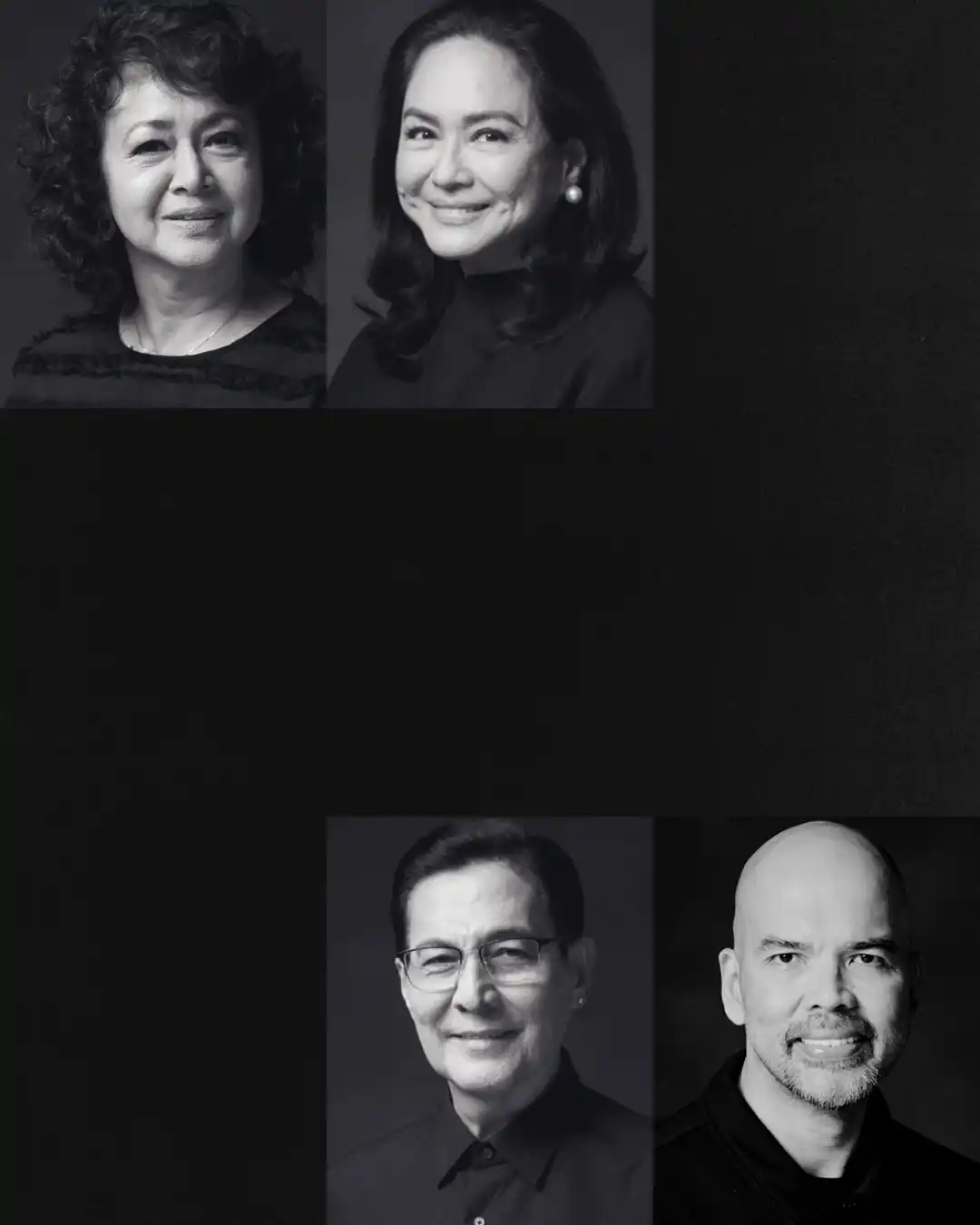
As President of AKTOR, the League of Filipino Actors, Iza Calzado has come to see acting as a profession defined as much by responsibility as by performance. Together with Chairman Dingdong Dantes, Vice Chairman Agot Isidro, and board members Cherry Pie Picache, Jasmine Curtis-Smith, Mylene Dizon, and fellow artists, she leads an organization dedicated to advancing the welfare and professional interests of actors across Philippine entertainment. In doing so, AKTOR champions a vision of the profession grounded in community, culture, and service.
“At AKTOR,” Dingdong Dantes begins, “we define ourselves through four guiding pillars. First, actors are paragons of professionalism. Second, we are nation builders. Third, we are protectors of the community. And fourth, we are cultural champions.”
Pillar 1: Paragons of Professionalism
Actors are rarely described in terms of professionalism. Instead, that is expected of doctors, lawyers, architects, teachers, and engineers. Nation-building belongs to public servants. Cultural stewardship is often reserved for historians, scholars, or museums. Actors, meanwhile, are too often reduced to entertainment.
AKTOR’s philosophy begins with professionalism because the organization believes the industry cannot flourish unless the people working within it do so first. The performance is visible, but professionalism rarely is.
“We hope people remember that behind every performance is a professional who has devoted years to mastering a craft,” Dantes says. “What audiences see on screen is only the final result of countless hours of preparation, discipline, collaboration, sacrifice, and hard work—not just from actors, but from the many people behind the camera who make every production possible.”

To recognize acting as a profession is to recognize the realities that sustain it. Most actors work as freelancers, moving from one production to the next with little certainty of what follows. Between projects lie concerns that audiences rarely consider.
“The most common concerns revolve around welfare, overall well-being, and job security,” Dantes explains. “Because actors are generally freelance workers, access to mandatory social benefits and healthcare can be challenging. Many are responsible for managing these on their own.”
Mental health, workplace safety, and sustainable careers have become equally urgent concerns. “One principle should remain constant,” the collective says. “The well-being of the people behind our stories must always come first.” Caring for artists is inseparable from caring for the stories they tell. The quality of a nation’s cinema, television, and theater cannot be separated from the conditions under which those works are created.
Pillar 2: The Faces of a Nation
A nation remembers its victories through history, but it remembers its people through stories. Films preserve the rhythm of everyday speech, the tensions between generations, the humor that survives difficult times, the ambitions of ordinary families, and the questions that define a particular moment. When newspapers yellow, and headlines are forgotten, audiences continue returning to characters who understood them before they understood themselves.
This is why AKTOR describes actors as nation builders: because they help a country recognize itself. “We are not only storytellers on screen,” the collective emphasizes. “We are also contributors to society through the values we uphold and the stories we choose to tell.”
The characters Filipinos continue to revisit do more than entertain; they influence how audiences understand family, justice, grief, love, sacrifice, identity, and even one another. Stories remain in conversation for decades. They become part of the nation’s collective memory.
Pillar 3: Strength in Numbers
Professionalism does not end with individual excellence. It also depends on whether an industry is willing to protect the people who sustain it.
That belief shaped one of AKTOR’s most significant contributions to date: its participation in discussions surrounding the Eddie Garcia Act. Enacted in 2024, the landmark legislation strengthened workplace safety standards across the Philippine film and television industry following the death of veteran actor Eddie Garcia in 2019 after an on-set accident. For AKTOR, the legislation demonstrated what becomes possible when artists participate directly in shaping the profession they practice.
“One of the greatest lessons we’ve learned through AKTOR is the power of unity,” the collective notes. “When individuals come together and organize, their collective voice becomes stronger, the gaps become clearer, and the solutions become more meaningful and effective.”

They point to the Eddie Garcia Act as a defining example. “Because artists had an organized platform through AKTOR, we were able to share our perspectives, raise our concerns, and participate meaningfully in conversations that directly affect our profession. Having a seat at the table and ensuring that the voices of working artists were heard was, in itself, a significant step forward.”
Legislation is not the destination but evidence of what collective action can accomplish. “This is only the beginning. We must continue to be vigilant, proactive, and collaborative in shaping a culture that puts people first—one that champions dignity, protection, and sustainable careers for performers and all workers in the entertainment industry.”
Representation also means having a voice in the decisions that govern the profession. A profession becomes stronger when the people practicing it help define its standards.
Pillar 4: To Carry A Culture Forward
Stories do more than entertain as they determine what a society remembers, celebrates, and carries forward. Choosing which stories endure is also choosing which values endure.
That responsibility feels especially urgent today. Information moves faster than understanding, algorithms often reward immediacy over nuance, and digital manipulation increasingly blurs the line between fact and fabrication. Culture rarely disappears all at once. More often, it is diluted by repetition, overshadowed by distraction, or forgotten altogether. In moments like these, stories become acts of remembrance.
For AKTOR, preserving culture does not mean resisting change. It means allowing Filipino stories to evolve alongside the people living them while remaining rooted in the histories, identities, and experiences that define them.
“Ultimately, our focus is on the work itself,” Dantes says. “The glamour, visibility, and recognition that often come with the profession are simply byproducts. At the core is a commitment to becoming better professionals, to telling stories responsibly and truthfully, to preserving and promoting our culture, and to looking after one another as a community.”
A cultural champion does more than safeguard the past. The work lies in ensuring Filipino stories continue to grow, find new audiences, and remain truthful to the people from whom they came. The performance eventually ends. The responsibility to Filipino stories does not
Philippine Cinema Beyond Borders
The last decade has increasingly introduced Filipino artists to international festivals, streaming platforms, and global productions. What once felt exceptional has gradually become the norm. Calzado expects that momentum continues.
“Our greatest hope is that our audience continues to expand—that Philippine films, television programs, and the stories we tell resonate not only with Filipinos but also with audiences around the world. We have world-class talent and uniquely Filipino stories that deserve to be seen and appreciated on the global stage.”
Dingdong Dantes, Chairman of AKTOR
The aspiration is not simply international recognition. Recognition arrives, fades, and eventually belongs to another news cycle. Cultural presence lasts longer. Every Filipino story that travels abroad broadens the conversation about who Filipinos are, what our artists create, and why those stories deserve a place alongside the world’s finest cinema and television. But ambition alone cannot sustain that future.
“Our greatest hope is to continue advocating for an industry that invests in its people by promoting professionalism, strengthening protections and welfare programs, and fostering collaboration among stakeholders,” AKTOR says. “When we empower our artists and creative workers, we elevate the quality of our storytelling and create an industry that every Filipino can take pride in.”

Remarkable cinema never begins with remarkable cameras, larger budgets, or technological innovation. It begins with people willing to imagine, collaborate, and devote themselves to a craft whose greatest achievement is making extraordinary work appear effortless.
Protecting artists is not separate from protecting Philippine entertainment. The two have always depended on one another. The audience may remember the performance. The industry remembers the profession. A nation, if it is fortunate, remembers both.
What, then, does AKTOR ultimately protect? Not actors or contracts, not even an industry. It protects the possibility that Filipino stories—and the people entrusted to tell them—continue to thrive for generations. As President Iza Calzado puts it, “Every role, every production, and every performance is ultimately an act of service to our shared culture and identity.”
So, what is an actor? An actor is not simply someone who performs. An actor remembers a nation, protects a profession, strengthens a community, and carries culture forward. AKTOR just gives that profession a responsibility.
Photographed by JERICK SANCHEZ
Recommended Video
Latest Posts



Latest Issue