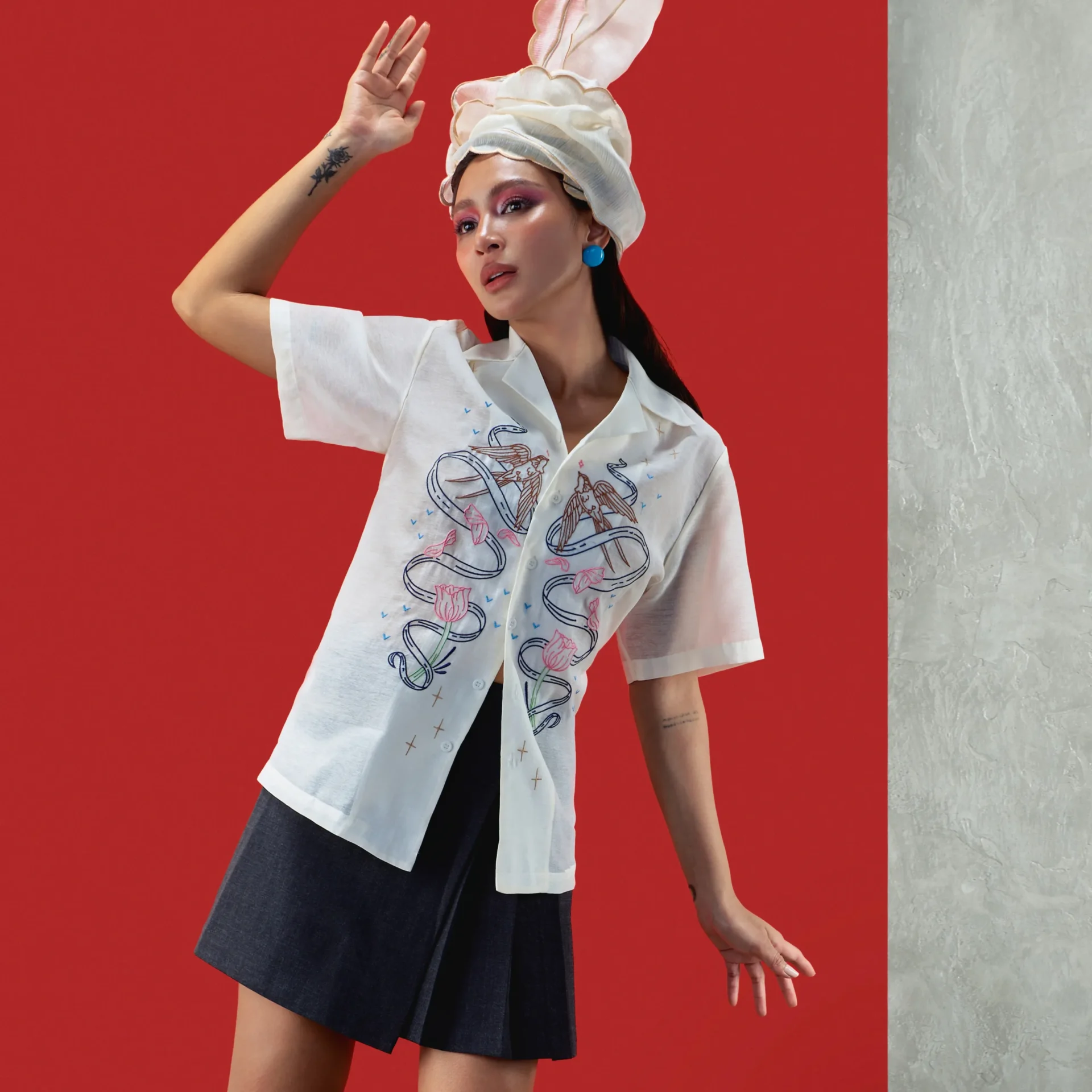




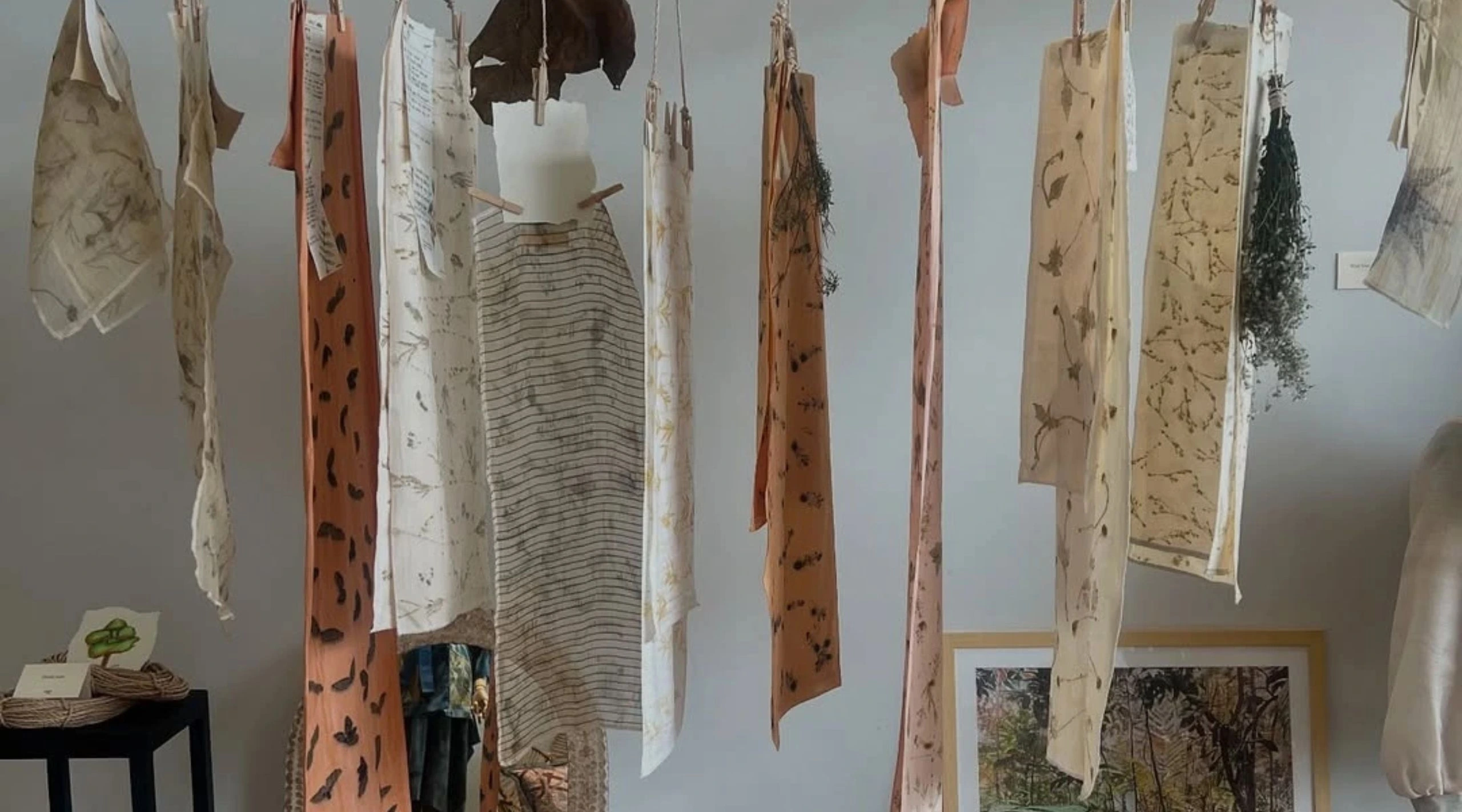
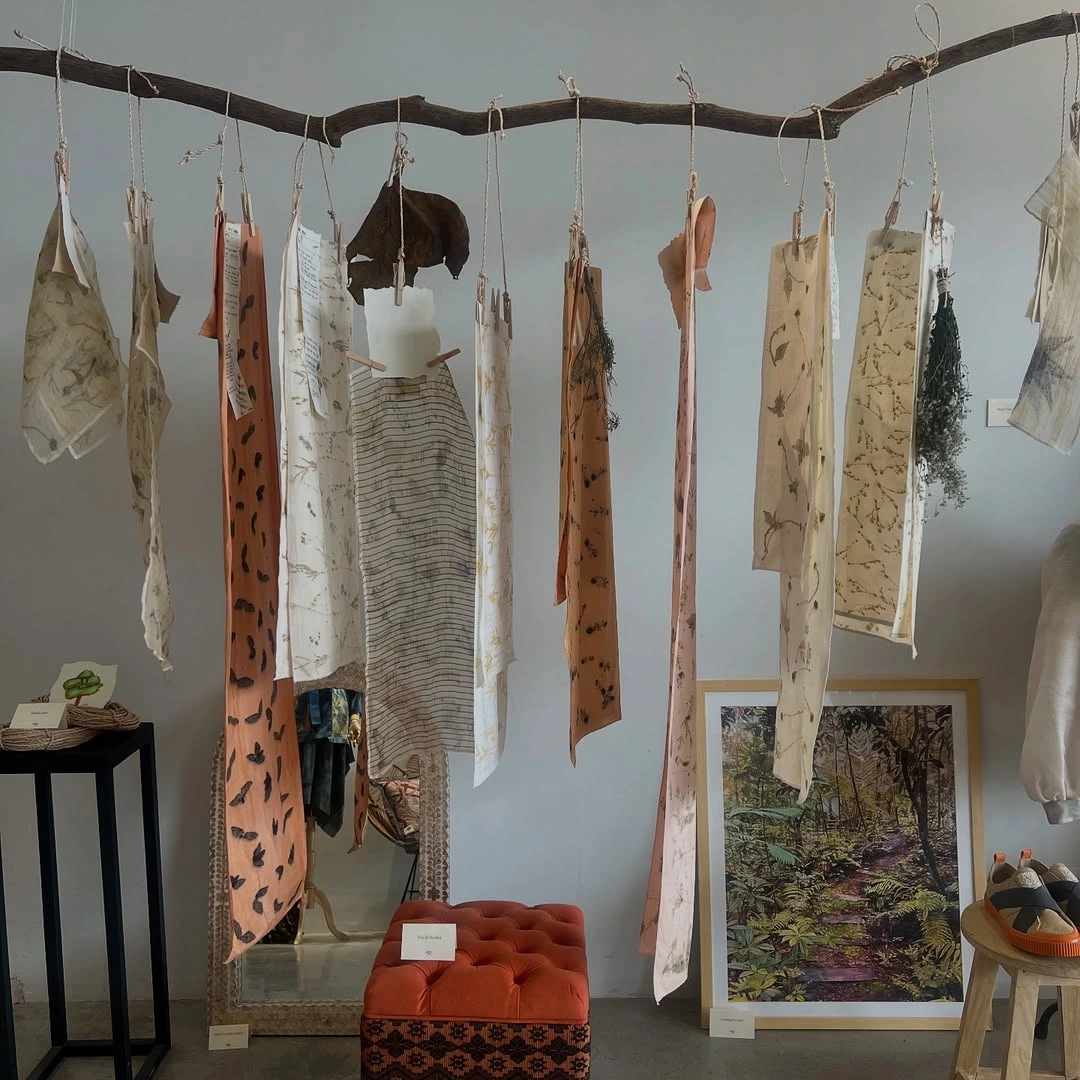
“These leaves have sun and moon,” Zarah Juan gives an example of the creative process behind her brand, holding up a swatch of fabric printed with pressed foliage. “When you flip the leaves, the sun has a darker part and the moon has a lighter part. Iba-iba ang binibigay ng shade, which I like. I find that interesting… and romantic, that there’s a sun and a moon.” She pauses. “Sabi ng anak ko, mukha raw marijuana.”
RELATED: These Sustainable Pieces Make Travel Better—for You and the Planet
The Filipino designer could speak of natural dyeing as both courtship and comedy—romantic in concept, irreverent in delivery.
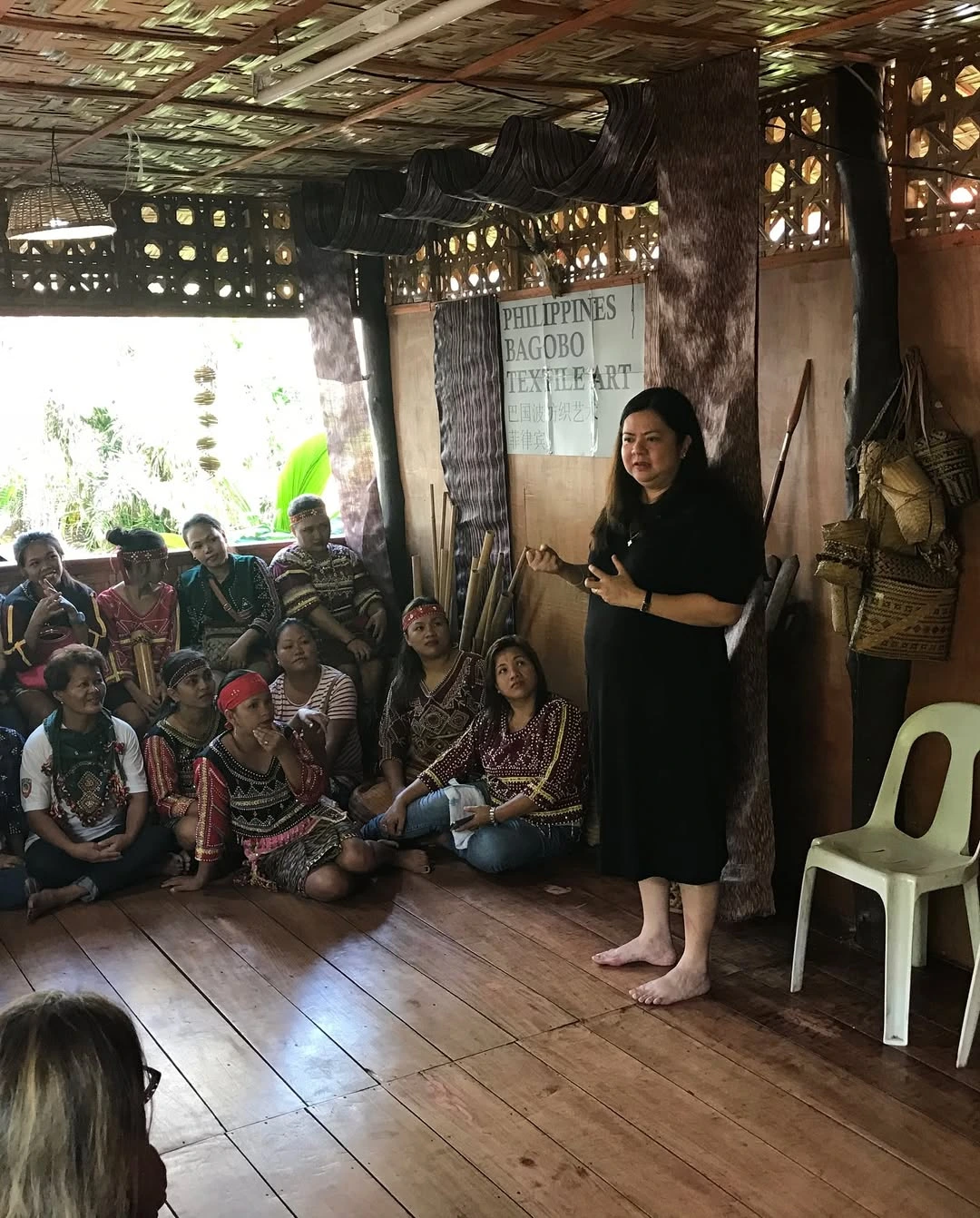
But beneath her wit is a profound vision: one that rejects knowledge hoarding, exposes the industry’s dark realities, and views beauty as something that is alive, breathing, and, most of all, shared.
No Secrets, No Shortcuts
Nine years after joining ArteFino as a grantee, Zarah Juan is now one of its most beloved regulars—a designer whose work champions Filipino storytelling through craftsmanship, humor, and heart. But even success, she says, comes with an inner tug. “At some point,” she reflects, “I had to ask myself: what’s next?”
“Next” didn’t mean scaling up or going global like many Filipino brands. It meant digging deeper, as something so simple as . “I kept observing the process of our weavers,” she says. “And I thought, I don’t want to stop here. I want to add value to what our artisans are doing.”
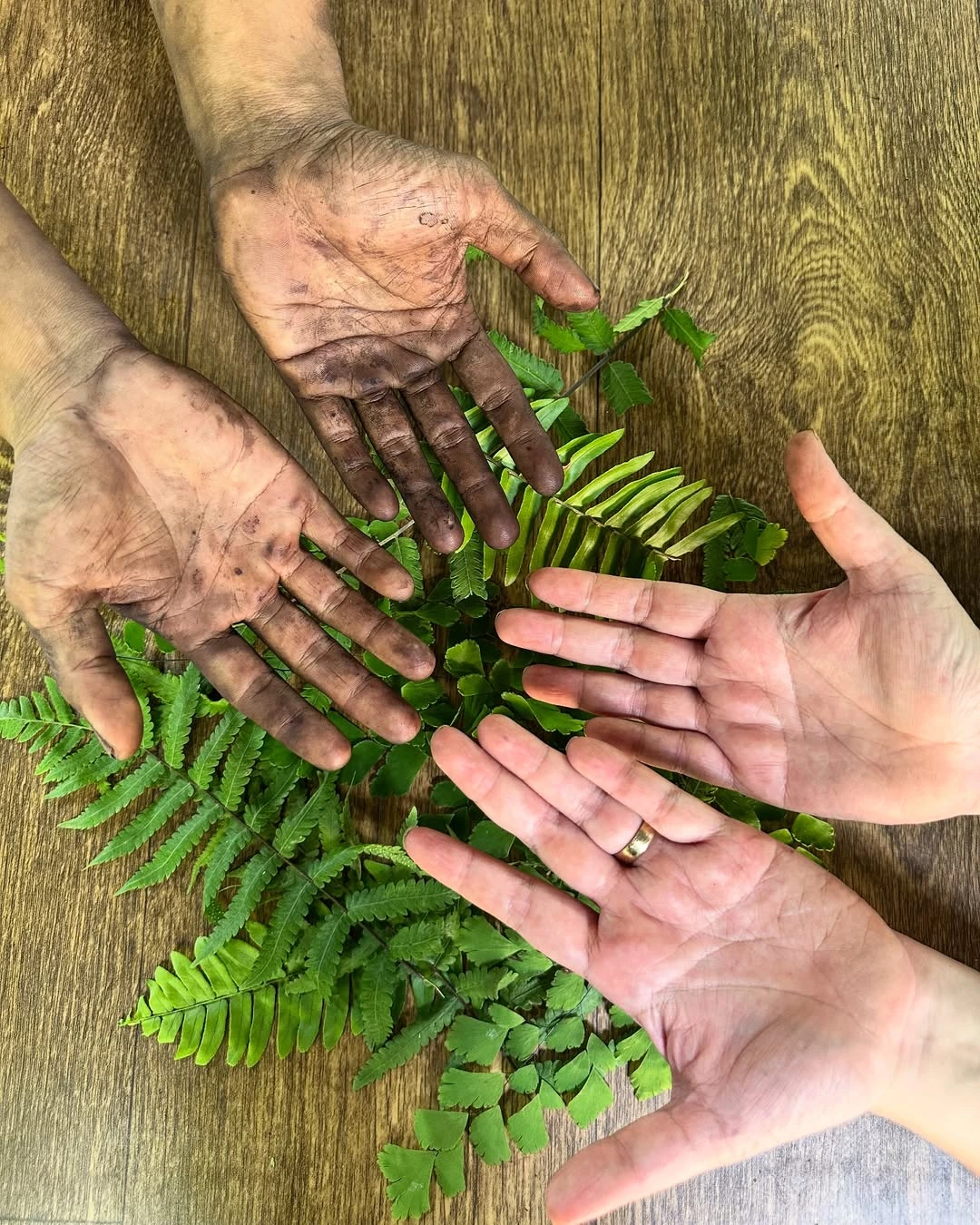
That search led her far from Bulacan and straight into the forests and dye baths of Jakarta, Indonesia, where she spent over a week learning eco-printing and natural dye techniques—methods that embed the shapes and pigments of leaves directly into fabric using pressure, heat, and time.
Her takeaway shows the knowledge wasn’t hers to keep. “There is no gatekeeping,” she says, firmly. “I want natural dye to be very accessible. The technique can be shared. Creativity is up to the designer—but the process, that can belong to everyone.”
She’s currently building a syllabus for communities, designed not to hand down knowledge but pass it forward. “We have to do what we have to do,” she says plainly, noting that while the threads themselves may not be locally sourced, the hands, the process, and the intent are.
Tagalog as Design Language
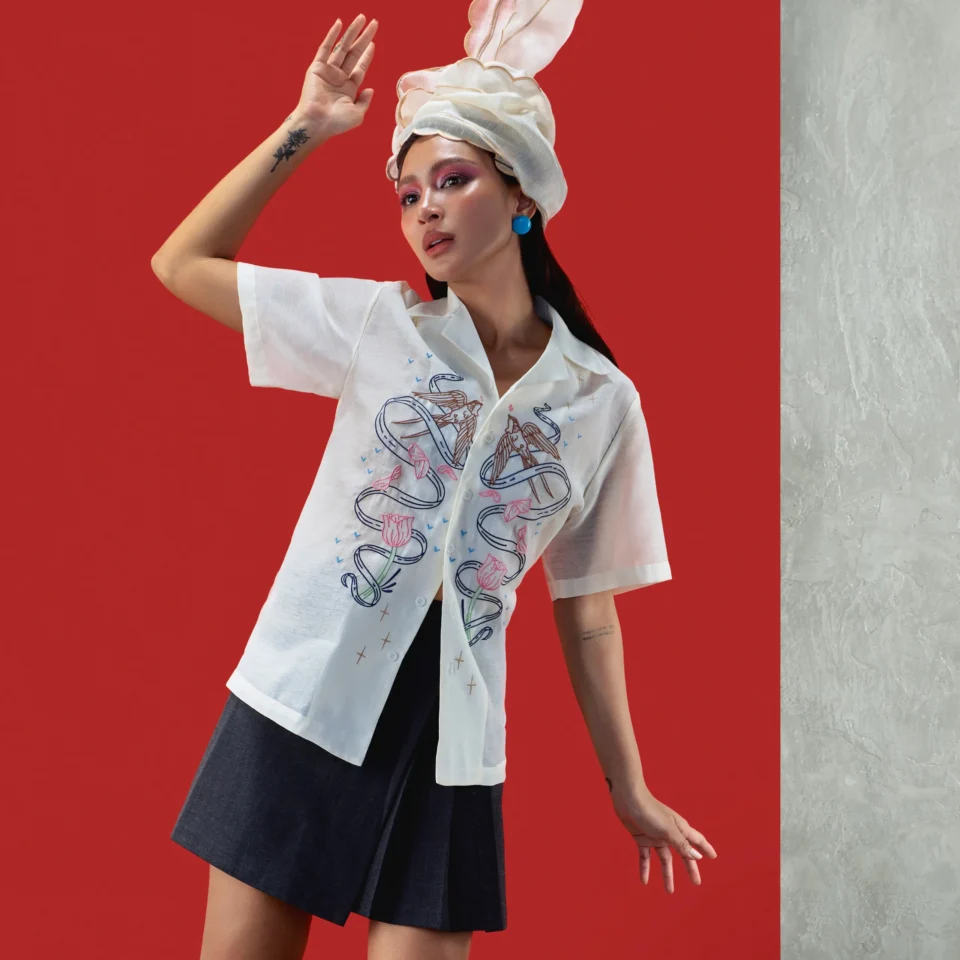
Her latest work, recently shared during the media launch of the new ArteFino Lounge, uses this leaf-printing process in pieces that feel both grounded and poetic. When complimented for the lyrical language she used during her presentation, she was surprised. “But honestly, it’s just being Filipino,” she says. “It’s just plain Tagalog.”
Raised in Bulacan, she grew up speaking a version of Tagalog that, as she puts it, “is 100% how Bulacanians would talk.” But in a room where even fellow Filipinos find the language difficult or unfamiliar, that simplicity can land like verse. “If you think that’s poetry,” she tells me, “it means the language itself is beautiful. And it is.”
In our contemporary heritage flooded with buzzwords, watered-down culture, and borrowed aesthetics, she chooses to speak plainly. To name things in their native form. To let beauty come not from ornament but from understanding.
“I decided to open my heart using my own language,” she says. “Because that’s the only way I can express everything.”
The Zarah Juan Ecosystem
This natural dye process—sun, moon, and all—won’t be a seasonal flirtation. “It will be part of the Zarah Juan ecosystem,” she says, referring not only to her brand but to the broader circles she hopes to reach: communities, fellow designers, curious minds.
Because for Juan, the point was never to build a brand for admiration, but a practice that invites participation. A design philosophy that carries a question: What can we make together, if no one is left out of the process?
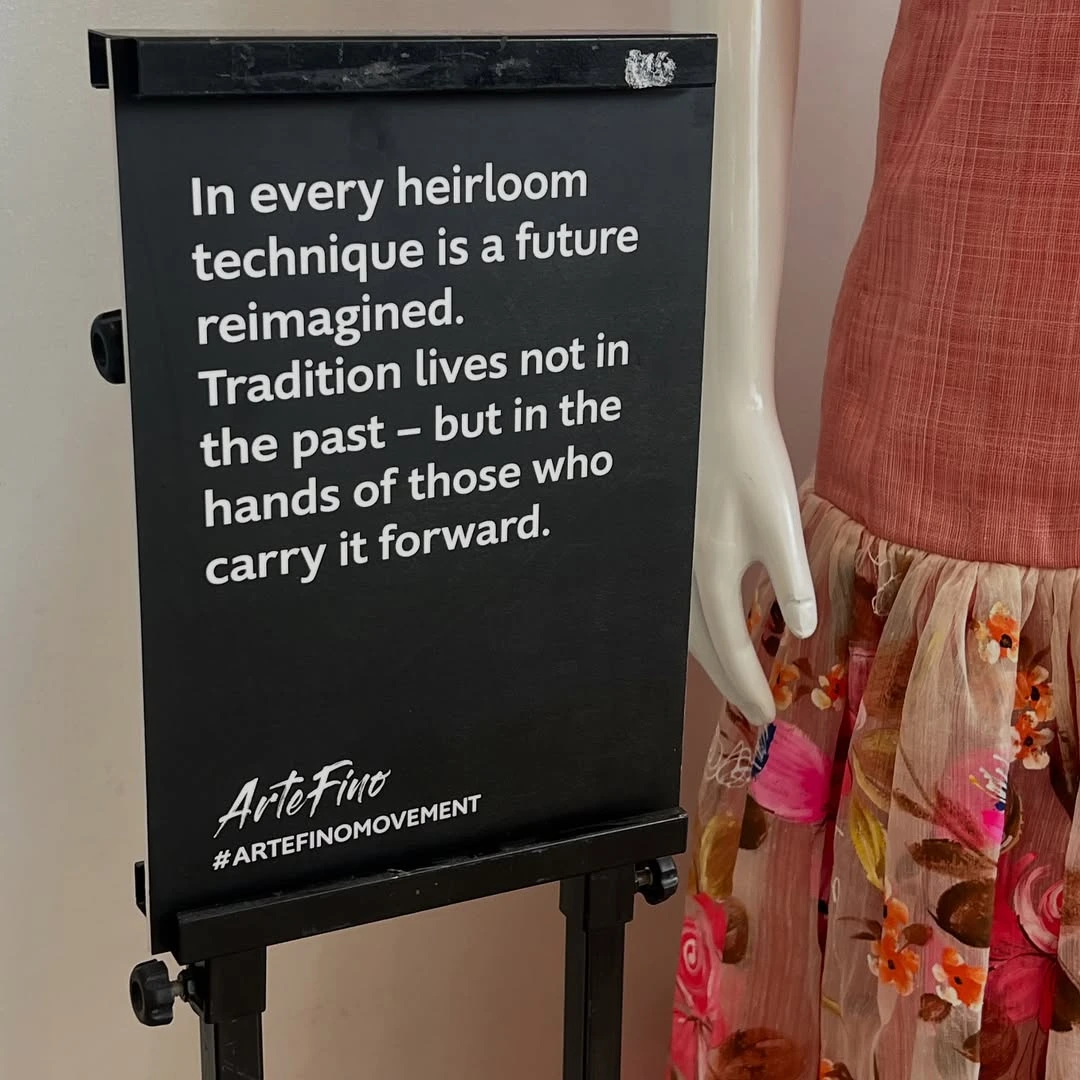
Call it anti-gatekeeping, or simply a return to the bayanihan spirit of design—craft as community, not commodity. In an industry that loves its secrets, Zarah Juan’s biggest flex may be that she has none.
Photos: ZARAH JUAN and ARTEFINO (via Instagram)