




Recommended Video
It’s the same correct-and-conceal performance every morning. It works for a while. But peel it all back and we end up asking the same question. What actually works for all our undereye woes? MEGA consults board-certified dermatologist Dr. Coreen Copuyoc, who answers with treatments that go deeper than the eye can see.
RELATED: Makeup Artist Mei Pang on Her Creative Journey and Pursuit of Self-Discovery
Eyebags? Dark Circles? Are They The Same?
They aren’t. It’s easy to mistake one for the other (and, unluckily, have both at the same time), but they’re not the same beast.
Dark circles manifest in pigment: flat shadows that come in various shades from purple to brown, depending on your skin tone, genetics, and pigmentation issues. Eye bags, on the other hand, are puffy protrusions under the eyes, not always dark in color, but made to look that way because of the shadows they cast.
Different causes, different treatments. There are also concerns like fine lines and deeper wrinkles. Luckily, Dr. Coreen—who uses a combination approach—has plans for each.
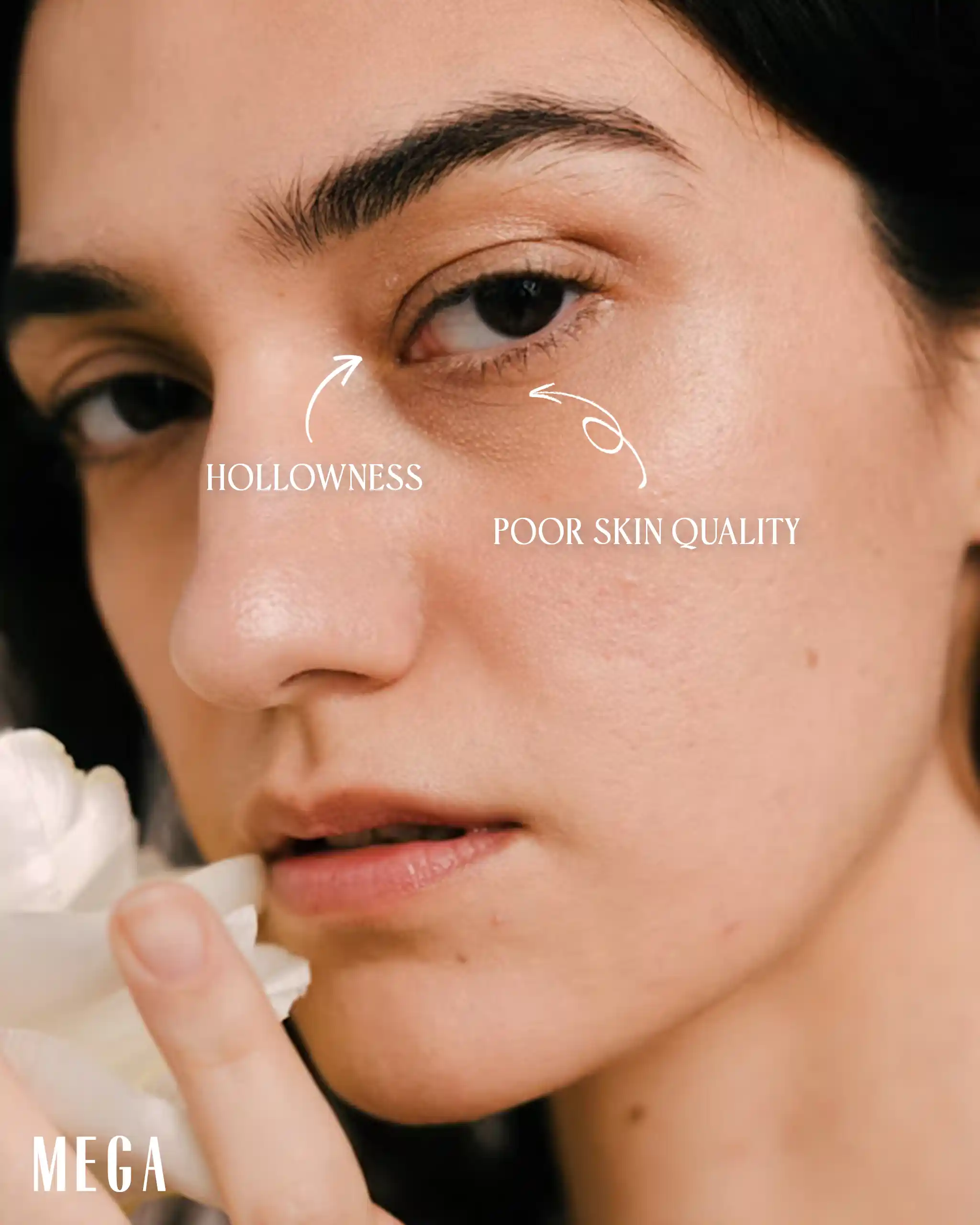
For Hollowness and Poor Skin Quality
For under-eye hollowness and skin texture, she typically relies on polynucleotide (PN) injections from salmon DNA. “These help regenerate the skin by stimulating fibroblasts, improving texture and elasticity over time,” she begins.
For Restoring Volume
For volume loss in the tear trough area, she uses hyaluronic acid (HA) or pure collagen fillers, depending on the patient’s anatomy, preferences, and tolerance for risk. “Downtime is generally minimal, about one to three days for most patients. Bruising or hematoma is fairly common,” Dr. Coreen says of the side effects.
She goes deeper into it. “Although very rare, HA and collagen fillers carry a small risk of vascular occlusion, which, in the worst-case scenario, may lead to blindness. This is why it’s critical to see a well-trained, experienced injector. I take every safety precaution during treatment, and thankfully, I’ve never encountered this complication,” she assures.
For Pigmentation and Wrinkles
Arguably the most common concerns of patients, these issues require a laser-focused approach. The skin expert gives three options.
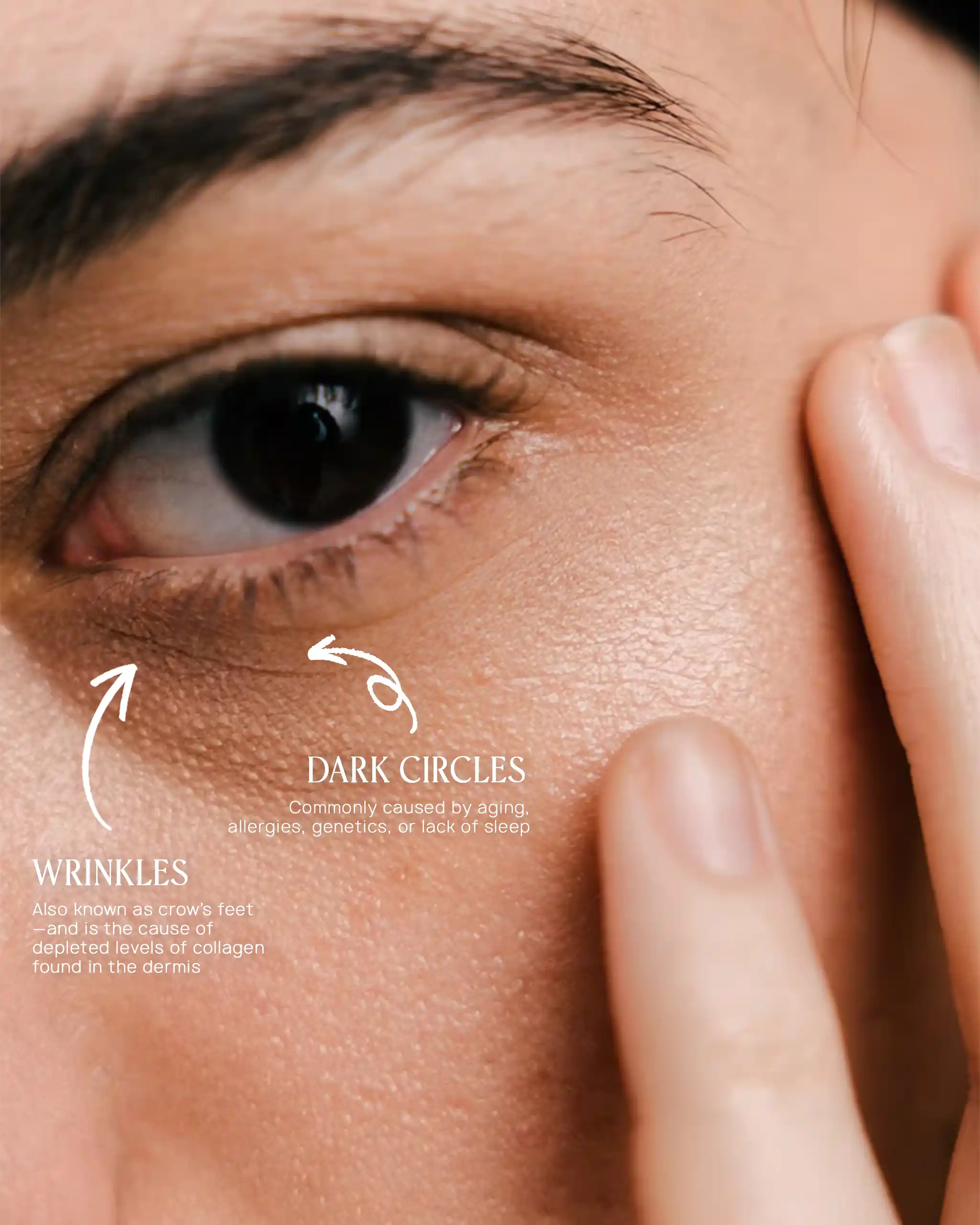
“I use non-ablative lasers like Nd:YAG—low downtime, but needs multiple sessions.” But for those with deeper wrinkles and texture, ablative Er:YAG laser is the way to go. “Lastly, RF microneedling is great for improving skin quality and fine lines with minimal downtime.” It fires radiofrequency through micro-needles to kickstart collagen and firm up your eye skin.
Whatever Happened to PRP, Fillers, and Eye Creams?
Surprise, surprise: the days of PRP and fillers might be behind us. We initially asked her about such traditional treatments, to which she met with a rightful Are you sure? Here’s why they’re a lot more outdated than we think.
“The newer injectables focus more on skin quality and long-term regeneration,” she says. “PRP can work, but the results are often inconsistent because the quality depends on the patient’s own blood and how it’s processed.”

Instead, experts like Dr. Coreen now favor PN and PDRN (like salmon DNA), which are scientifically more stable, predictable, and less prone to playing blood favorites. Even traditional fillers have been upgraded. The newer generations are softer and better suited for delicate zones. “They’re less likely to migrate or cause issues like sausage-formation or Tyndall effect, which was more common with older formulations.”
Now, to answer the golden question, do eye creams work? Dr. Coreen tells us not to completely cancel them, but also not to expect miracles in a jar.
“They can help with hydration, puffiness, and mild pigmentation or fine lines… But their effects are mostly limited to the outer layers of the skin.” Her advice? Opt for clinical aesthetic treatments. You need the real reinforcements.
It’s time to treat what concealer and eye cream can’t. Book a consult with Dr. Coreen Copuyoc at St. Luke’s Medical Center BGC and keep an eye out for Coco Skin Dermatology and Aesthetics, soon to launch in Quezon City.
Featured Image: Photographed by WILMARK JOLINDON, Creative Direction by MARA GO, Art Direction by BRIE VENTURA, Produced by JONES PALTEING, Makeup by JAKE GALVEZ, Hair by PATTY CRISTOBAL, Model QUEENIE SALMON
Photos: DR. COREEN COPUYOC (via Instagram) and FARUK TOKLUOĞLU (via Unsplash)

Latest Posts



Latest Issue