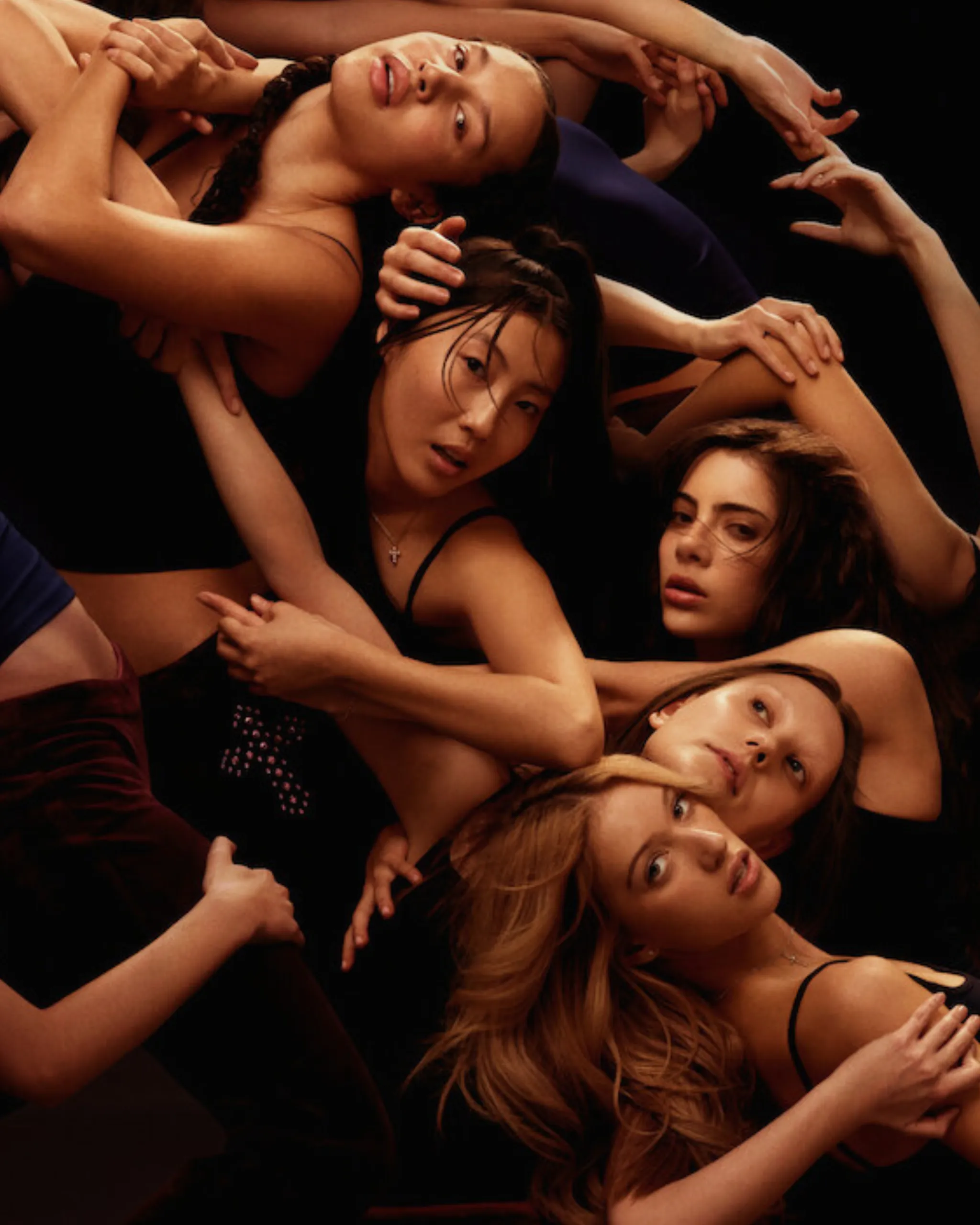
Netflix’s newest series, The Body, has taken the internet by storm. A curious amalgamation of Mean Girls, Jennifer’s Body, Carrie, and Cruel Intentions, creator Quinn Shephard takes us back to 2004 with a recognizable Y2KY2KShort for "year 2000," an aesthetic inspired by the late 1990s and early 2000s, featuring low-rise jeans, baby tees, butterfly clips, metallic fabrics, and glossy lips. Revived by Gen ZGo to Y2K Glossary aesthetic. It’s campy, it’s raunchy, it’s sapphic, and its Catholic school setting makes it especially nostalgic for millennials and older Gen Zs.
And it’s safe to say people loved it. Not quite in the way audiences loved Euphoria, but in a way that reminds us of what being a teenage girl once meant. Perhaps this is exactly the kind of show today’s teens need.
RELATED: The Hunger Games Franchise Knows How to Make a Good Song
Girlhood is a Religion
Lisbeth Anderson (Geena Meszaros) yearns to join St. Mark’s popular dance team, to the point that she’s willing to do absolutely anything to get in. After an initiation gone wrong leaves Grace Franklin (Sofia Wylie) in a questionable state, Lisbeth seizes the opportunity to get closer to the girls, even going so far as to mimic their words and mannerisms just to seem like one of them.
It’s interesting to see the dynamics of religion reflected in the context of girlhood—because, in some ways, it is a religion of its own. Lisbeth practically worships Anya Butler (Kristina Bogic), the dance team’s captain, changing everything about herself just to belong. And as she steps into power within the Lions, she manages to convert most of the girls into loyal followers, determined to believe in her.
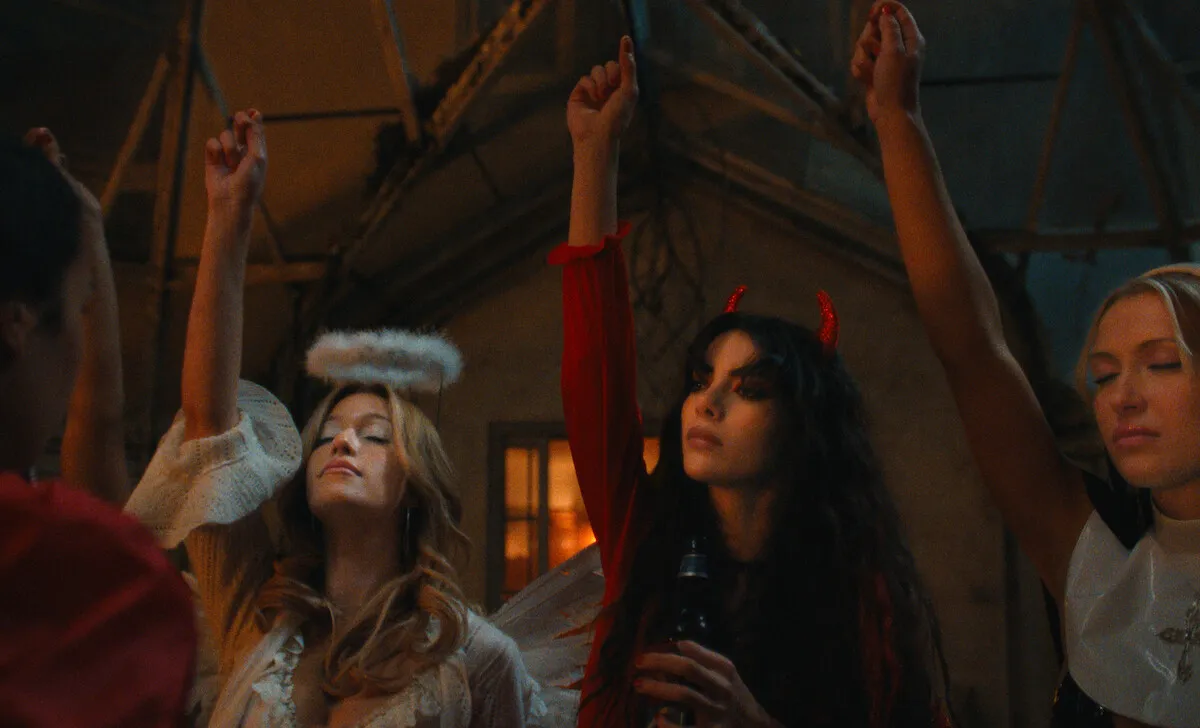
But belonging also comes with the fear of missing out. I mean, you’re not really part of the group if you’re not experiencing the same things, right? Take Elise Zakaria (Sara Boustany), who claims to have “seen” Grace and convulses in the middle of the chapel just to get Anya’s attention (so gay, btw). Next thing you know, the other girls are claiming they’ve seen Grace, too—even praying to what feels like a ghost just to conform and prove their allegiance to the Lions. Sounds familiar, doesn’t it?
Thou Shalt Not Fall in Love
Anya and Elise’s sapphic yearning has captured so many hearts—including mine. Perhaps it’s the niche yet relatable experience of falling in love with your best friend in a Catholic school. It’s forbidden, it’s frowned upon, and when internalized homophobia enters the picture, can we really blame Anya for being confused?
It’s an awfully familiar situation for many sapphics who grew up in a Catholic setting. Not really feeling attracted to your boyfriend, holding hands with your best friend in ways that feel a little more than platonic, and even teasing a kiss before making out in the school bathroom? And honestly, we can’t forget Anya and Elise’s incredibly intimate choreography. It’s arguably one of the best conversations about lesbian yearning in recent television—without either of them having to utter a single word.
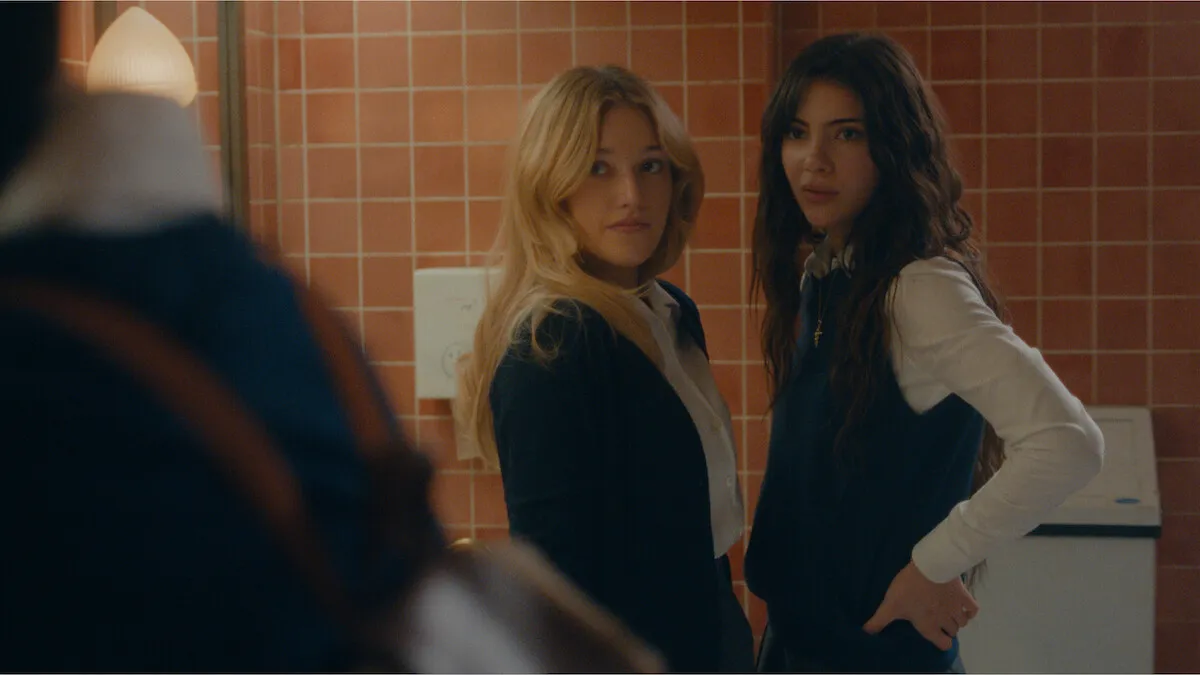
Elise’s “Let me kiss you,” in particular, left an imprint on many sapphic viewers. It’s that familiar feeling of not only wanting your affections to be reciprocated, but also wanting the freedom to be truthful about who you are together. No hiding, no second-guessing. Just same-sex love, even when the world around you makes it difficult to accept.
Their angel-and-devil costumes in the first episode add another layer to their dynamic. It’s almost as if Elise sees Anya as her purest desire, while Anya sees Elise as her biggest sin. And perhaps that’s what makes their relationship so compelling: the very person Anya longs for is also the person she’s been taught to resist.
The Many Faces of Faith
Beyond the Lions, the series also explores several religious concepts, from religious psychosis and indoctrination to Catholicism and cult-like devotion. Throughout its eight episodes, you get a sense of just how differently the characters relate to their faith. Anya only really prays when she needs something, Elise seems detached from Catholicism altogether, while Lisbeth and her family take their religious beliefs to another level.
Father Franklin (Nnamdi Asomugha) points out to Leo Anderson (Jackson Kelly), Lisbeth’s brother, that the Bible shouldn’t be taken literally—a telling contrast to his family’s belief system. They seem to interpret religious teachings to the extreme, as particularly demonstrated by Lisbeth’s mother, Catherine Anderson (Louisa Krause).
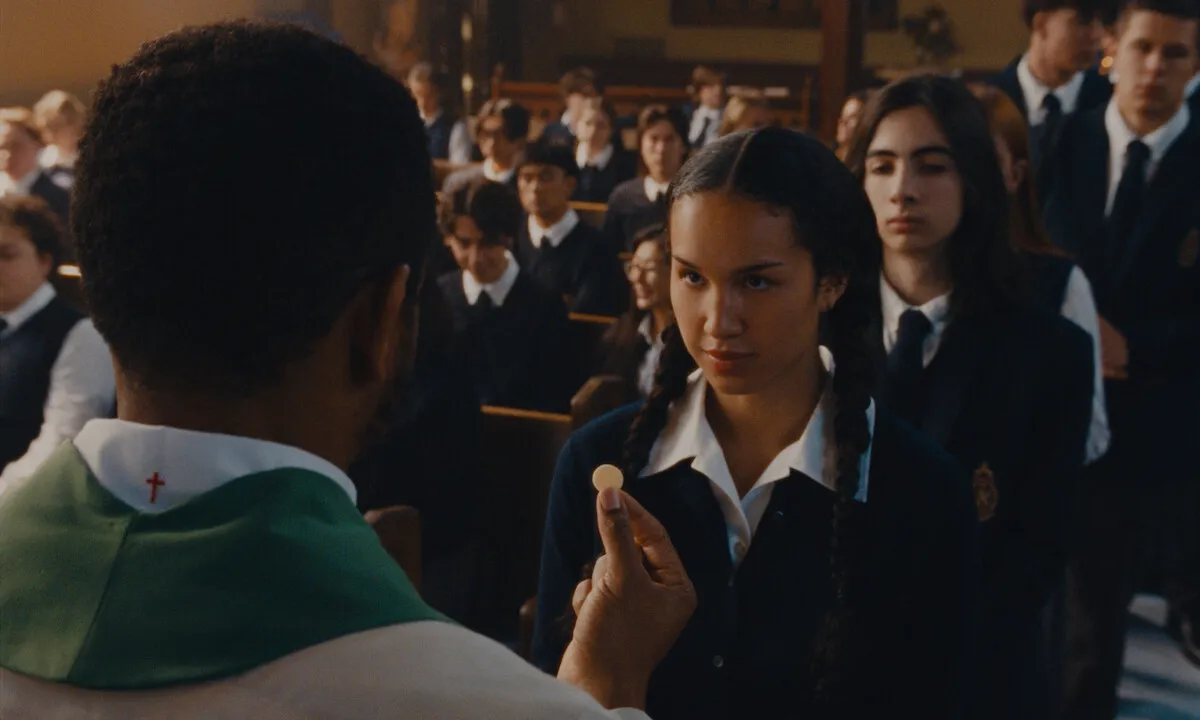
On the other end of the spectrum, however, are the things that remain unexplained. Several questions linger by the end of the series, particularly surrounding Grace. For much of the show, she’s in a coma, yet the people around her gradually transform her into something of a saint. The townspeople begin treating her condition as a miracle, almost as if she’s already passed on.
It’s fascinating—and a little unsettling—how an unconscious girl can suddenly become a symbol of hope and religious devotion simply because people need her to be one. She can’t even speak for herself. In a series so concerned with belief, perhaps one of its most interesting questions is how easily people can turn someone else’s suffering into something to worship.
Dressed to Belong
There’s plenty of criticism when it comes to Y2KY2KShort for "year 2000," an aesthetic inspired by the late 1990s and early 2000s, featuring low-rise jeans, baby tees, butterfly clips, metallic fabrics, and glossy lips. Revived by Gen ZGo to Y2K Glossary fashion, but The Body actually nails the early 2000s look. The bags alone deserve their own moment: Balenciaga Le City bags adorned with rosaries, Dior Saddle and Columbus bags, Louis Vuitton duffle bags, Fendi baguettes, vintage Gucci hobo bags, and even a Von Dutch Bowling bag.
Of course, the fur coats and oversized shades didn’t miss either. The cherry on top? Bebe tops, the bedazzled Lions jacket, and Juicy Couture-esque ensembles. Pair them with big hoop earrings, iconic hair poufs, and Tumblr-inspired grungeGrungeA style that emerged from 1990s alternative rock, featuring flannel shirts, ripped denim, oversized knits, band tees, and combat boots. Deliberately rumpled and anti-glamour, grunge has been revisited by designersGo to Grunge Glossary makeup, and you have a wardrobe that feels straight out of the era. The fashion and beauty departments definitely did their assignments, right down to the Nokia phones and Motorola Razrs making their way into the girls’ hands.
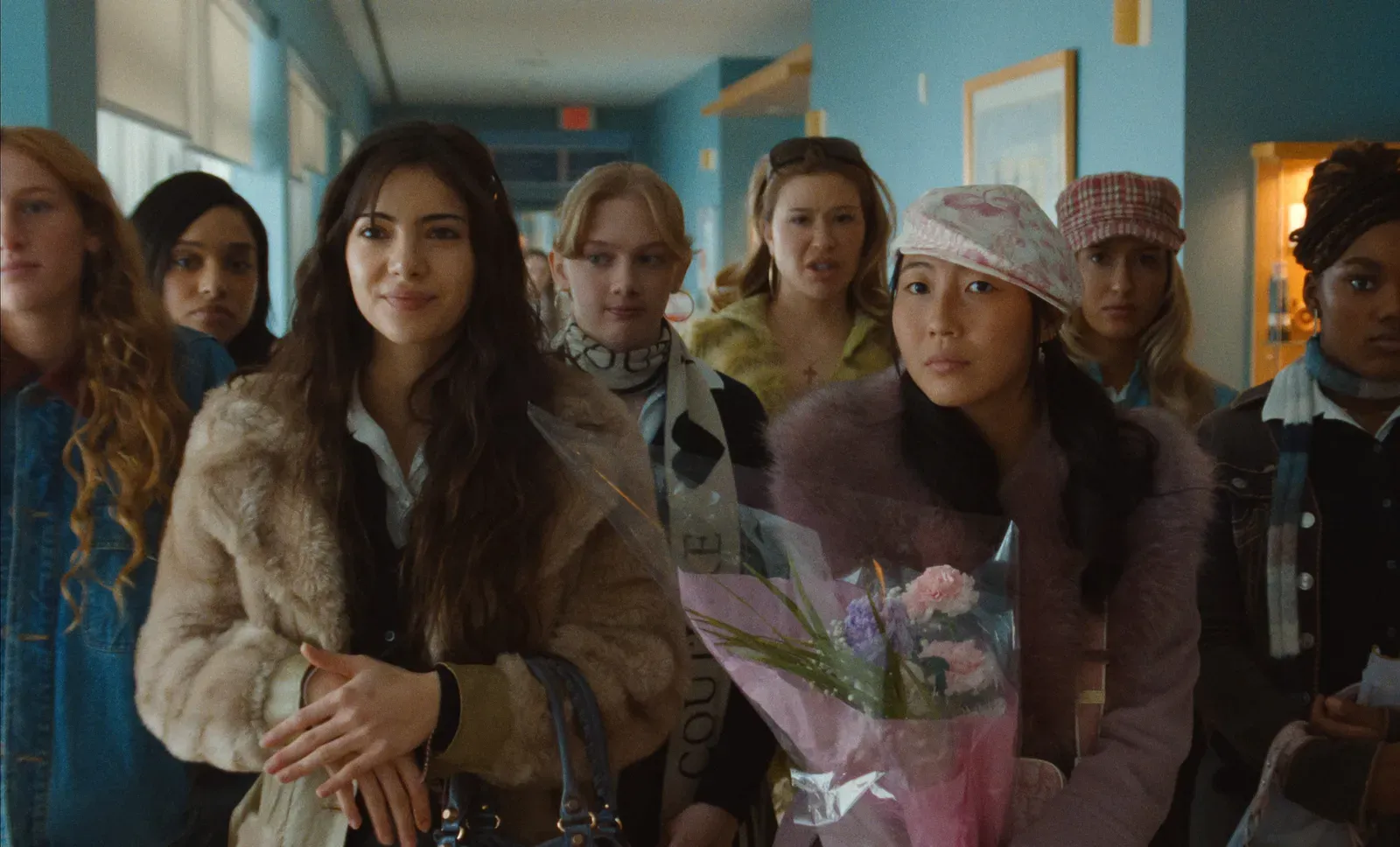
Even Lisbeth, who initially dresses like a plain Victorian child, gradually adopts the Lions’ style, thanks in part to Anya’s mom. I mean, at least she’s finally drawing her eyebrows. Her transformation doesn’t go unnoticed by her own mother, either, who spots her fur coat and Fendi baguette and promptly calls her a prostitute for it.
Beyond the nostalgia, the styling also becomes part of Lisbeth’s transformation. As she gets closer to the Lions, her appearance begins to reflect the identity she’s so desperately trying to claim. Because sometimes, becoming one of the girls starts with dressing like them.
In Camp, We Trust
The Body isn’t interested in playing it safe. It borrows religious symbols and gives them its own campy twist: the pill from the first episode becomes “the body of Christ,” Lisbeth conducts a ritual to cleanse the Lions of their sins (complete with every girl’s confession!), and the dialogue is often as excessive as the situations themselves. The series embraces a theatricality that makes it both entertaining and, well, campy. It’s not afraid to be ridiculous, cringeworthy, uncomfortable, or downright outrageous—and that’s precisely the point.
It’s almost refreshing to find a plot that doesn’t feel the need to ground itself completely in reality. Beyond its supernatural and religious mysteries, the series can be a teen drama one minute, a mystery-thriller the next, and a full-blown Y2K fever dream by the end of an episode. It understands that there’s nothing wrong with more is more.
Beneath all the camp, Catholic guilt, questionable decisions, and Y2KY2KShort for "year 2000," an aesthetic inspired by the late 1990s and early 2000s, featuring low-rise jeans, baby tees, butterfly clips, metallic fabrics, and glossy lips. Revived by Gen ZGo to Y2K Glossary aesthetics, there’s a story about the messiness of growing up as a teenage girl: wanting to belong, figuring out who you are, falling in love with someone you perhaps shouldn’t, and making sense of a world that constantly tells you who to be.
It’s chaotic, uncomfortable, and certainly not a perfect picture of girlhood—but perhaps that’s why it works. For anyone who grew up in the 2000s, The Body feels like a nostalgic trip back to their teenage years, when everything seemed a little more dramatic and every feeling a little more permanent. And for a new generation of viewers, it’s a reminder that girlhood, in all its beautiful and terrible glory, is an experience worth telling stories about.
Featured Image and Photos: TUDUM (via Website), THE BODY (via Instagram)