



Sex sells. And that’s a problem.
This isn’t the first time Euphoria actress Sydney Sweeney has courted controversy (see: American Eagle Outfitters ad), but this time, she’s lost over 200K followers on Instagram—and managed to double down on the criticism.
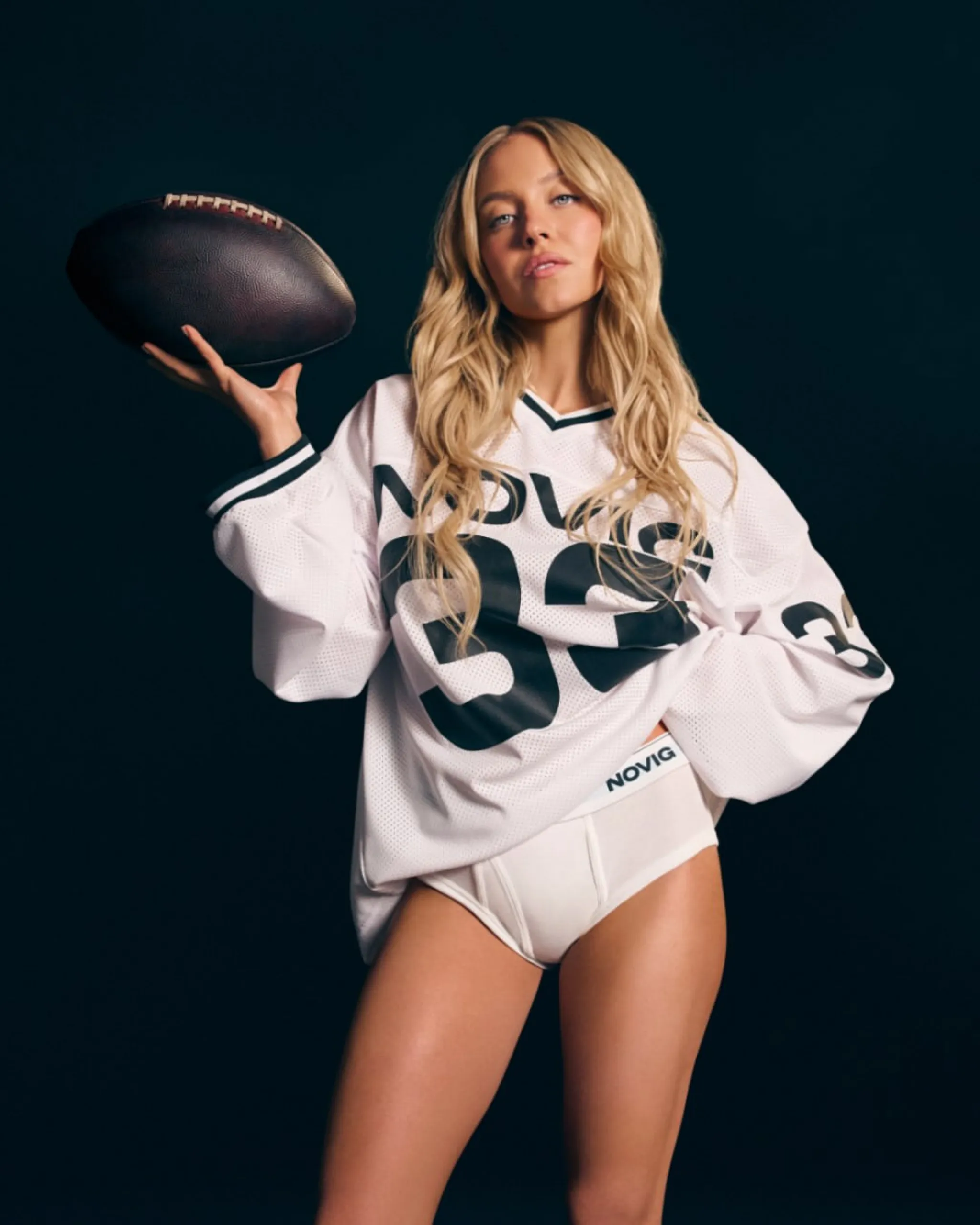
Her latest ad for sports betting company Novig has drawn significant attention, flak, and controversy for featuring her nude, using footballs, jerseys, and other sports equipment to cover herself up.
And it feels particularly at odds with the long-standing fight for women in sports to be seen for their athleticism, not simply their appearance.
RELATED: These Filipina Athletes Are Proudly Representing the Country on the World Stage
@lexie.dunks #everybodywatcheswomenssports | sorry it’s a little late | #everybodywatcheswomenssports #fyp #womenssport #viral ♬ original sound – lexie |🪽
The Long-Standing Fight of Women in Sports
I’ve been an athlete for as long as I can remember. Of course, being a cheerleader, complete with a short skirt and pom-poms, meant that not everything we wore was always seen as respectful. Perhaps it doesn’t help that several media portrayals paint cheerleaders as stuck-up blondes who make out with guys in their free time (thanks for that, Glee).
Not a lot of people understand just how competitive cheer can be. The Philippines’ UAAP Cheerdance Competition, ICU Worlds, Finland’s impressive all-girl cheer teams—watch the entire Bring It On franchise and Netflix’s Cheer, and you can begin to see how the sport has grown into a competitive scene of its own.
The point is—it’s not just for show. It’s not for sex appeal. It is a highly competitive sport that deserves respect and recognition, like all sports.
Just a few months ago, the European Broadcasting Union released Raising the Bar, its guidelines on how to respectfully cover women’s sports. It points out that “lingering shots on bodies,” “low-angle cameras that capture revealing views,” and “excessive slow-motion replays” have become rampant in coverage of women’s athletics.
It’s ridiculous that the EBU needed to publish a guide on how to cover women’s sports with respect—but it’s a reality that remains glaringly true. Women can train for years on end, build muscle, hit the gym, and collect medals, but it can all come down to how athletes—women—are perceived.
What the EBU guidelines recognize is that the problem isn’t simply whether an athlete is wearing revealing clothing. It’s how the camera—and, by extension, the audience—is being asked to look at her.
Sweeney’s ad isn’t sports coverage, of course. But it taps into a similar visual language: the female body becomes the thing we are invited to look at first. And that’s where some athletes have pushed back against her ad. Women have fought to be treated like any other respected athlete, only to see that progress complicated by the same old fixation on their bodies—all because sex sells.
When Nudity Tells a Different Story
Funnily enough, Sweeney herself was curious: What’s wrong with it? She pointed to other magazine covers—ESPN’s The Body Issue, in particular, which featured nude athletes on its covers. What makes it different, many ask.
Sydney Sweeney has faced backlash from female athletes over her nearly nude ad for a sports prediction market
— Dexerto (@Dexerto) September 14, 2026
She responded by sharing images of athletes who have posed nude pic.twitter.com/jQprd4SIhm
Nudity, on Sweeney’s body, looked sexual. Meant to invite and attract. Made to heat up a room and leave you wanting more. But when these athletes are nude, you’re meant to admire them: every lean muscle, every line, every point of strength, every scar. Because to them, every body has a story.
Her being nude has nothing to do with sports betting—and that’s what’s particularly frustrating in the context of women’s sports. The campaign borrows from the visual language of athletics: basketballs, footballs, basketball hoops, hockey sticks, jerseys, courts. The sports become a backdrop, while the woman’s body becomes the spectacle.
Choice Isn’t the Whole Story
“It’s her choice anyway.”
Isn’t that precisely the point? Sweeney had the choice to be fully clothed for an advertisement, but she chose to be nude anyway.
Don’t get me wrong, though. Women are allowed to be provocative, show skin, feel sexy, and go nude. I’m not telling Sweeney what she can or can’t do with her body. It is her choice, after all. But choices have consequences. What happens when that choice exists within an industry that has historically valued women’s bodies for how they look before what they can do?
Choosing how we present ourselves is entirely up to us, but there’s a fine line between empowerment and objectification. Perhaps you feel empowered watching Sweeney’s ad, and good for you. But for other women—those in sports, in particular—it can feel like a pushback against recognizing the powerful body that works on courts, in arenas, and on stages.
Serena Williams, for example, has spent much of her career receiving body-shaming, racist, and sexual remarks. People have commented on her muscular body and sheer power, calling her “manly.” It’s precisely this reality that makes Sweeney’s ad so difficult to separate from the larger conversation. Women are already subjected to criticism for not having the “ideal woman’s body,” and Sweeney’s sexualization risks reinforcing the idea that this is what a woman’s body should look like.
So yes, a woman’s body pays. A woman’s body can run, skate, somersault, dribble, and perform.
A woman’s body can win Olympic medals, trophies, and the number one spot in world rankings.
For the love of women, our bodies can do infinitely more than just sell sex.
Featured Image: SYDNEY SWEENEY (via Instagram)
Frequently Asked Questions
Sydney Sweeney’s ad for sports betting company Novig features her nearly nude, using footballs, jerseys, and sports equipment to cover herself. It has drawn backlash and cost her over 200,000 Instagram followers, with critics arguing it sexualizes imagery borrowed from women’s athletics.
The European Broadcasting Union’s “Raising the Bar” guidelines caution against “lingering shots on bodies,” “low-angle cameras that capture revealing views,” and “excessive slow-motion replays” in women’s sports coverage, aiming to shift focus toward athletic performance rather than physical appearance.
Critics argue ESPN’s The Body Issue frames athlete nudity around strength, muscle, and physical achievement, inviting admiration for the body’s capability. Sweeney’s ad, by contrast, uses a similar visual language but for sexual appeal, unconnected to any athletic accomplishment of her own.
Yes. Serena Williams has faced body-shaming, racist, and sexual commentary throughout her career, including remarks calling her muscular physique “manly,” which the article cites as part of a broader pattern of scrutinizing women athletes’ bodies over their performance.
Critics argue that while Sweeney had the choice to pose nude, that choice exists within an industry that has historically valued women’s appearance over athletic ability, so the decision still carries consequences for how women in sports are perceived.
Recommended Video
Latest Posts
Latest Issue