



Designers share their insights into what transforms a beautiful dress into a winning gown for a worthy Miss Universe
What’s in a Miss Universe gown? Every move is planned to capture the judges’ attention. The gown owns the stage, each detail choreographed for impact. The slit, like a poised response, hints without revealing. Embellishments twinkle, ensuring the gown outshines all. In the glamorous universe of Miss Universe gowns, the winning combination hinges on the artful balance of glamour, confidence, and just the right amount of sparkle to capture the coveted crown.
RELATED: What Makes Miss Universe Philippines 2024 Different, As Told by the MUPH Officers
Rian Fernandez
Rian Fernandez emphasizes the necessity of artistic vision and detail-oriented craftsmanship. According to Fernandez, the foundation of a winning gown lies in the designer’s ability to channel their creative energy and keen fashion sense into a cohesive and stunning piece.
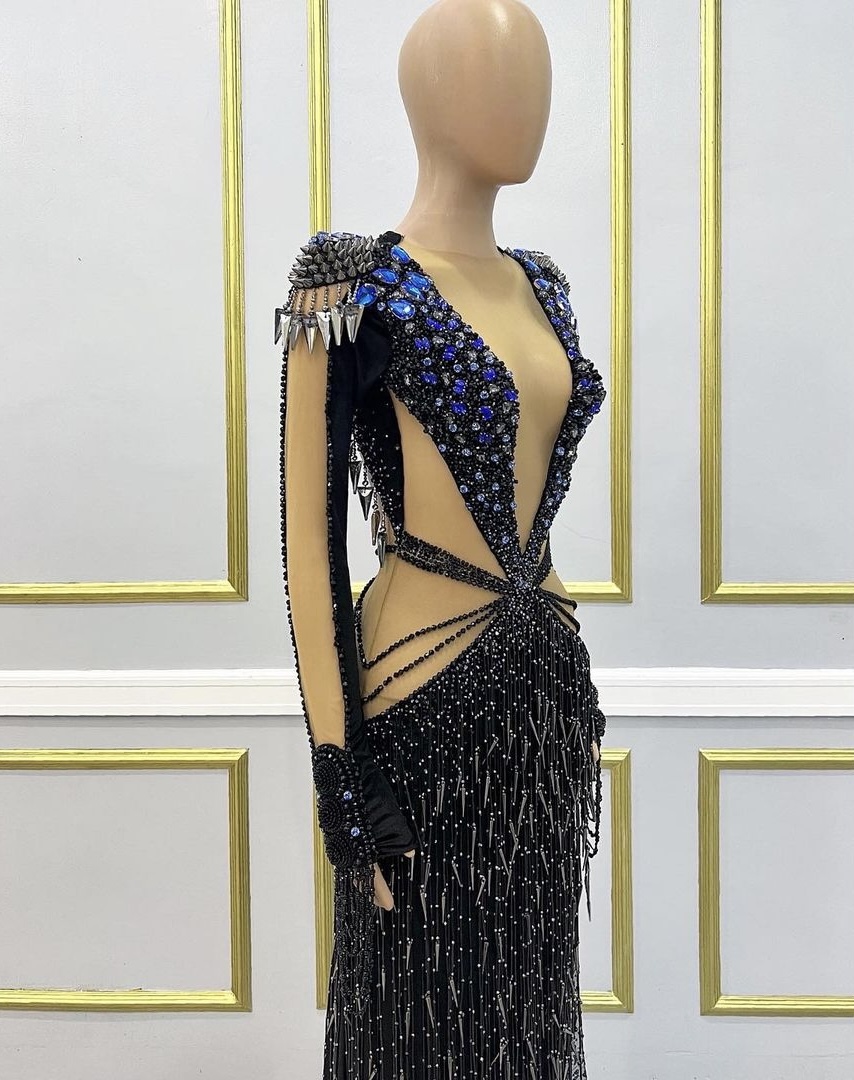
“In my experience, bringing out my artistic juices and having a tasteful eye for fashion, combined with keen attention to details, is crucial to achieving an elaborate piece with high-quality construction,” Fernandez explains. “It takes a village and a lot of pressure to create a winning gown—from choosing the right materials and designing the piece, to bringing that design to life. Most importantly, in designing a piece for each queen, you must understand her character in terms of fashion and style.”
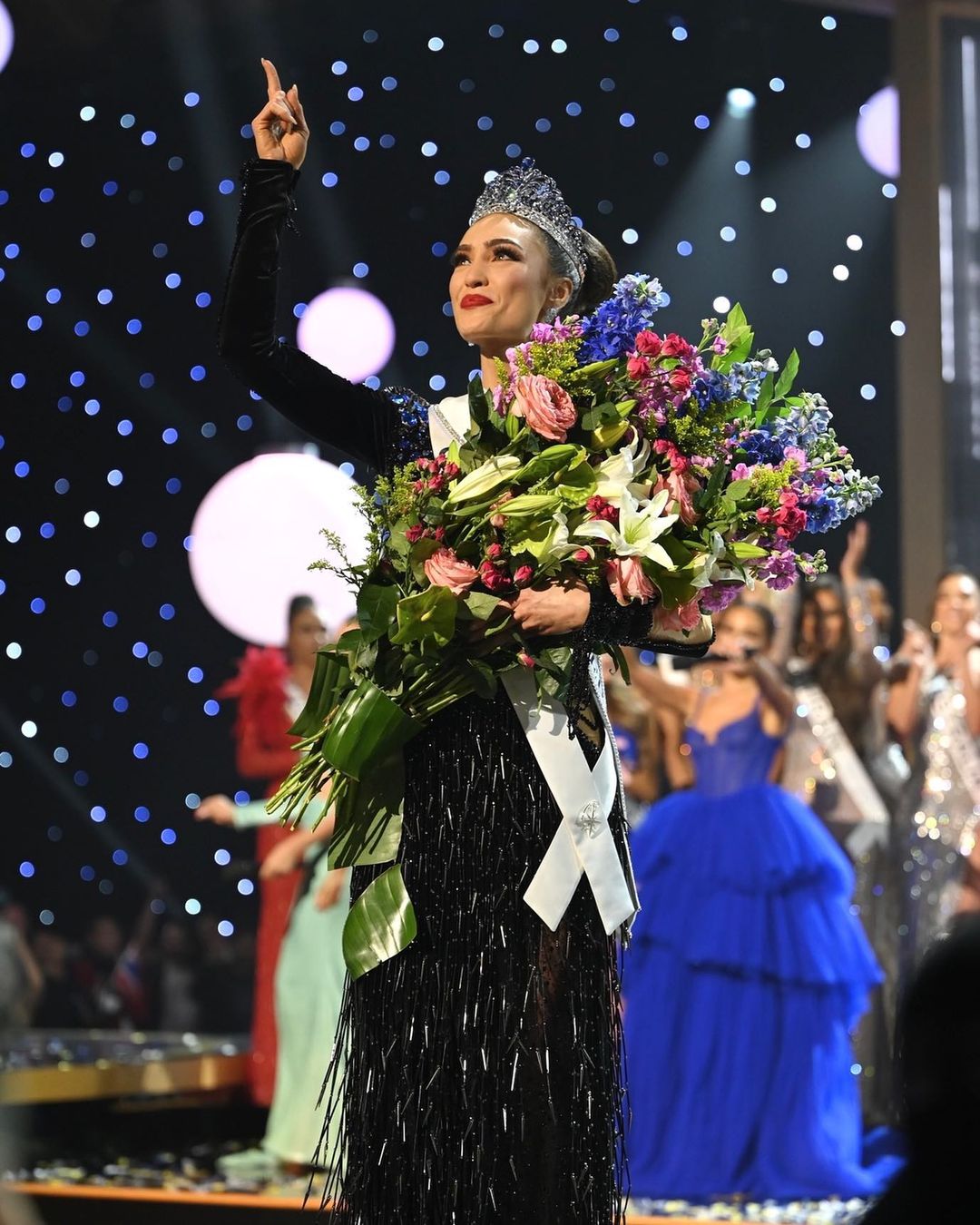
For Fernandez, the gown is a reflection of the wearer’s personality and confidence. By tailoring each design to fit the unique style and essence of the contestant, the gown becomes an extension of her, enhancing her natural beauty on the grand stage.
Louis Pangilinan
Louis Pangilinan focuses on the transformative power of a gown. For Pangilinan, a gown’s success is measured not only by its craftsmanship and aesthetic appeal but also by its ability to elevate the wearer’s confidence and beauty.
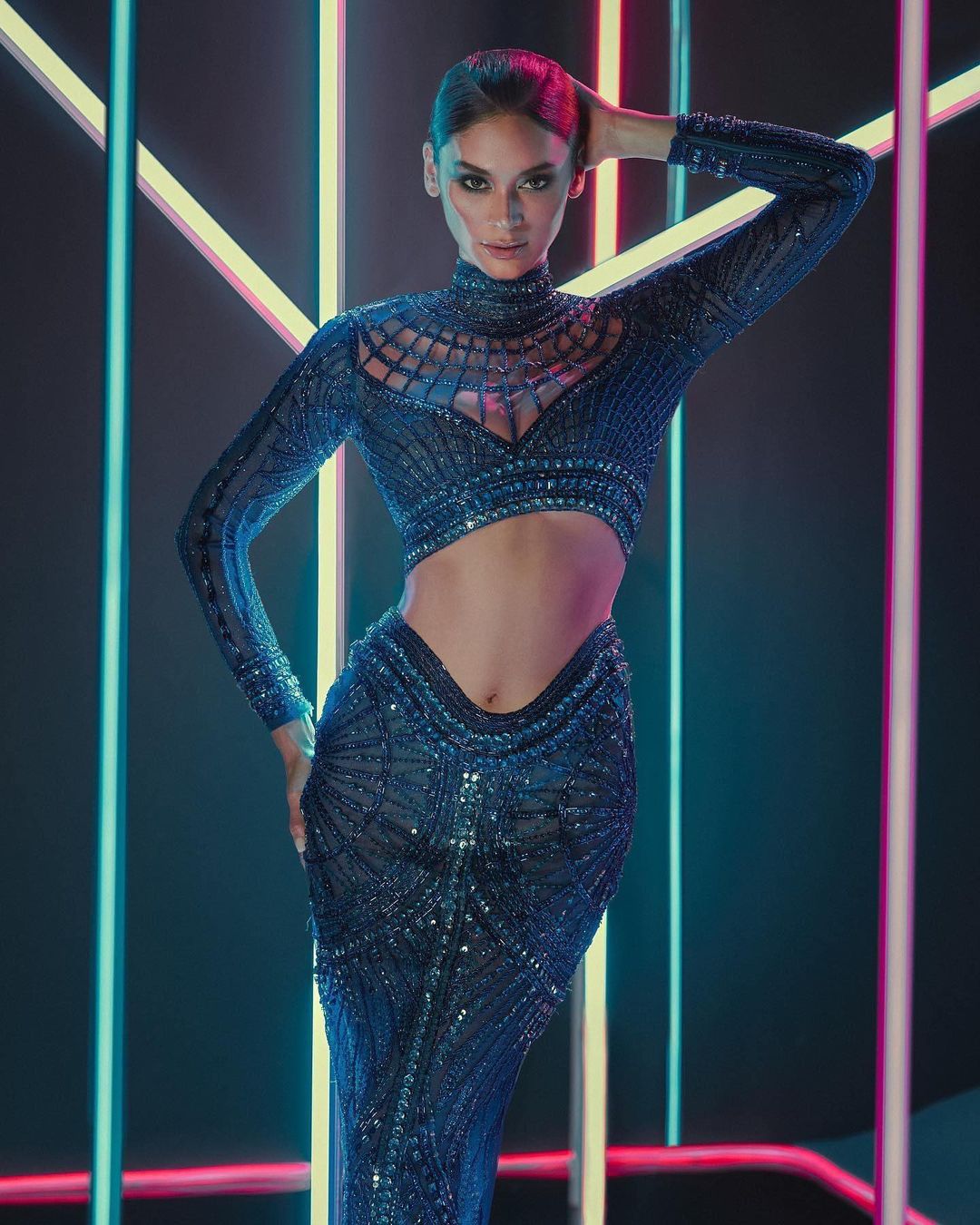
“As a designer, aside from the quality craftsmanship and attention to details, I see my gowns not only as single stitched and beaded fabric but as a crucial part of making someone unleash their ‘winning glow,'” Pangilinan states. “A winning gown isn’t just formed and constructed in glitz, glamour, and aesthetic physical expression, but it is something that makes everyone feel confident and beautiful.”
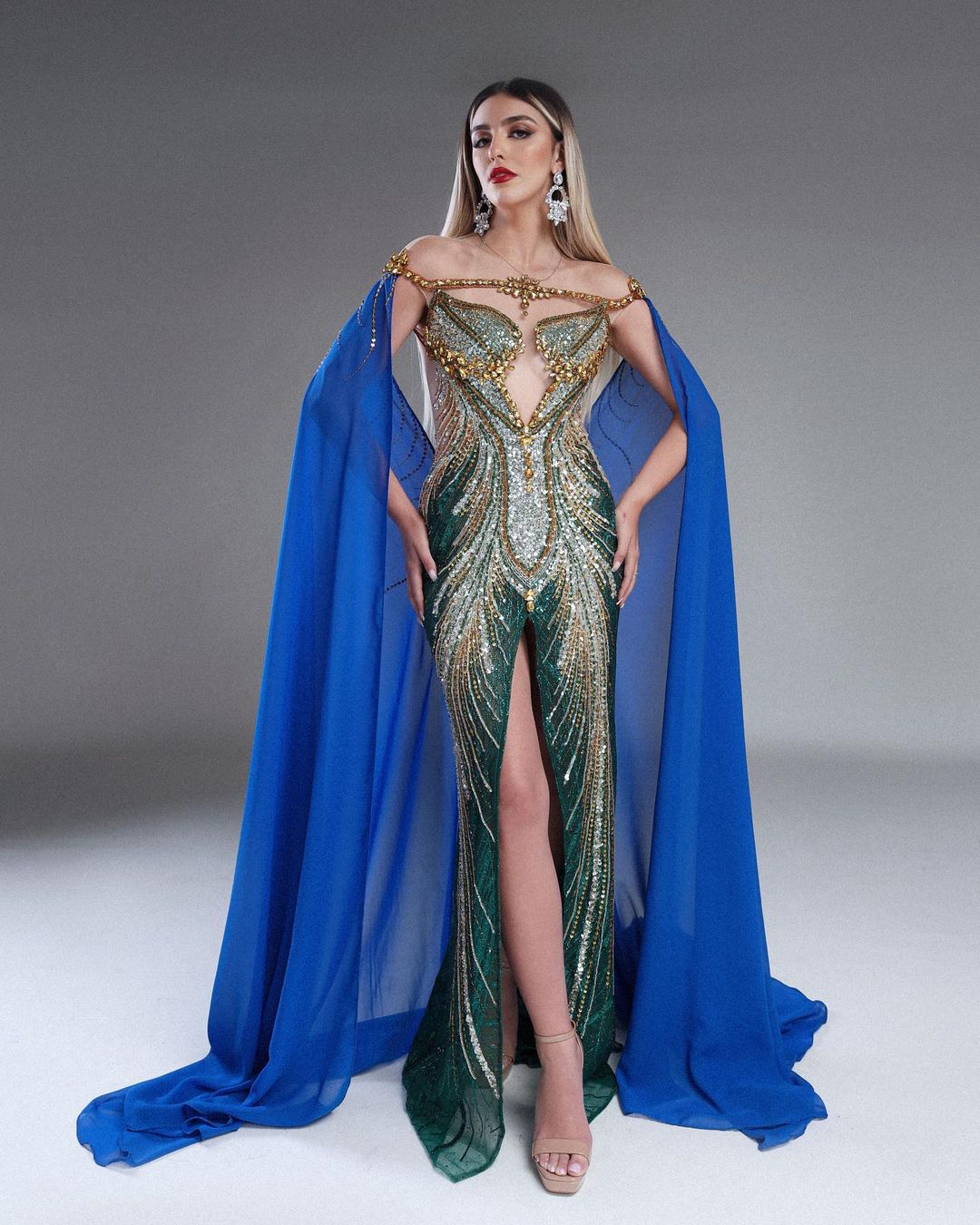
Pangilinan’s philosophy highlights the importance of emotional impact. A winning gown should make the contestant feel like the best version of herself, allowing her to radiate confidence and poise. This inner glow, coupled with the gown’s physical beauty, creates an unforgettable presence on stage.
Francis Libiran
On MEGA’s The Next Move podcast, Francis Libiran shares the story of how the Miss Universe Philippines organization approached him to design a gown for Beatrice Luigi Gomez. Initially, he sketched over 25 designs. Meeting Gomez in person at his atelier, he sketched five more after getting to know her. “When we started talking, that’s when I drew another five sets because I saw her in person, got to meet her, talk to her, and just feel who she really is as a person,” Libiran explains.
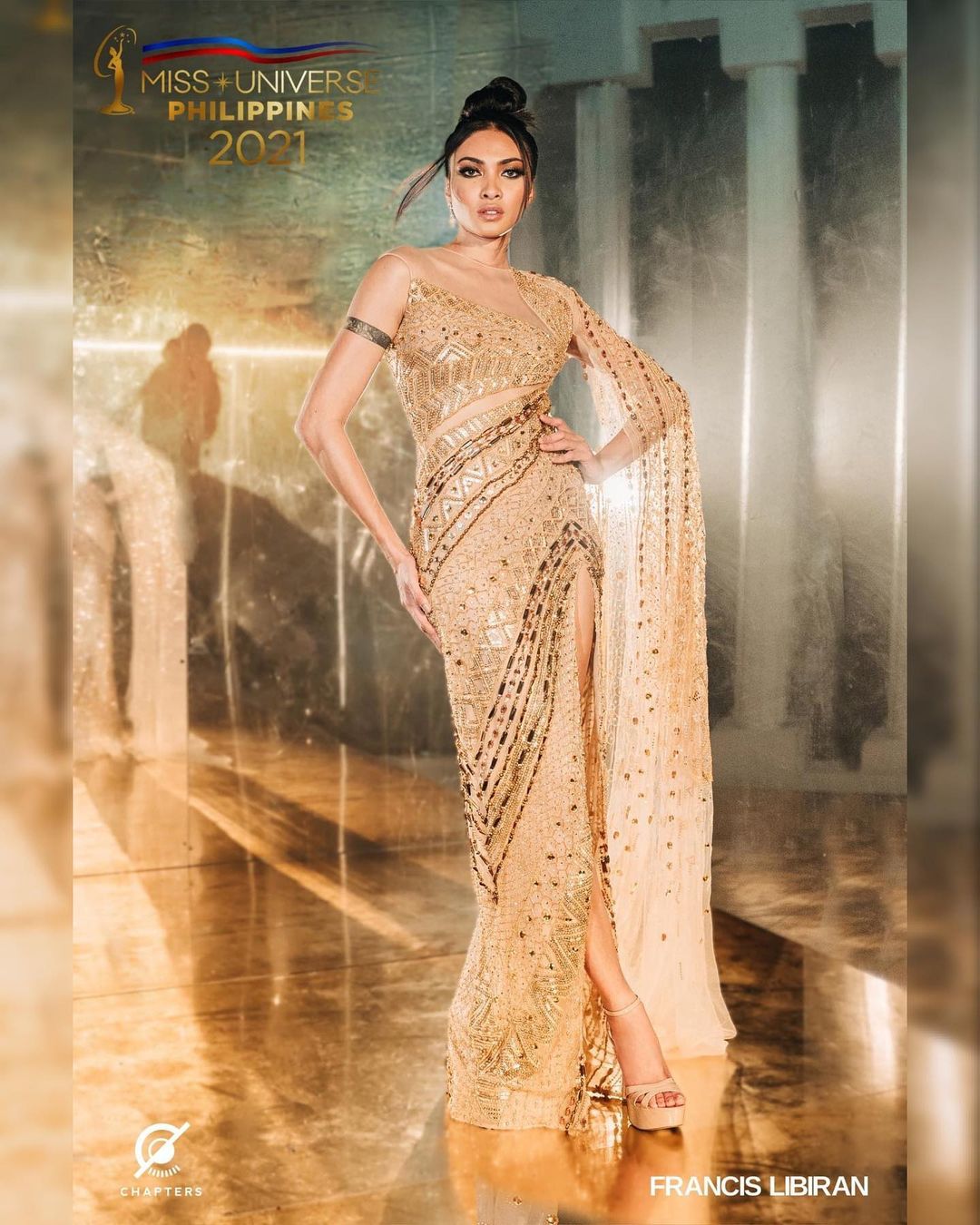
Detailing his process, he says, “I banked on her attitude in front of the camera, her stage presence. She has long legs, so I needed to include a high slit. I wanted it to be very sexy on her, to show off the silhouette of her figure when the light hits it.” Libiran emphasizes the importance of studying the candidate: her personality, her stage presence, and how she carries herself. “Confidence plays a big part in this pageant,” he concludes.
Libiran also mentioned that his muses inspire his designs, ensuring each gown accentuates the candidate’s beauty and figure. He believes a winning gown should reflect the wearer’s advocacy and mission while promoting Filipino artistry. “A winning gown represents our country—native yet innovative, world-class, and intricate.”
Michael Cinco
Michael Cinco’s perspective on a winning pageant gown highlights the importance of a flattering silhouette, luxurious textiles, and fluid movement. The Dubai-based designer believes these elements enhance the contestant’s natural beauty and confidence on stage.
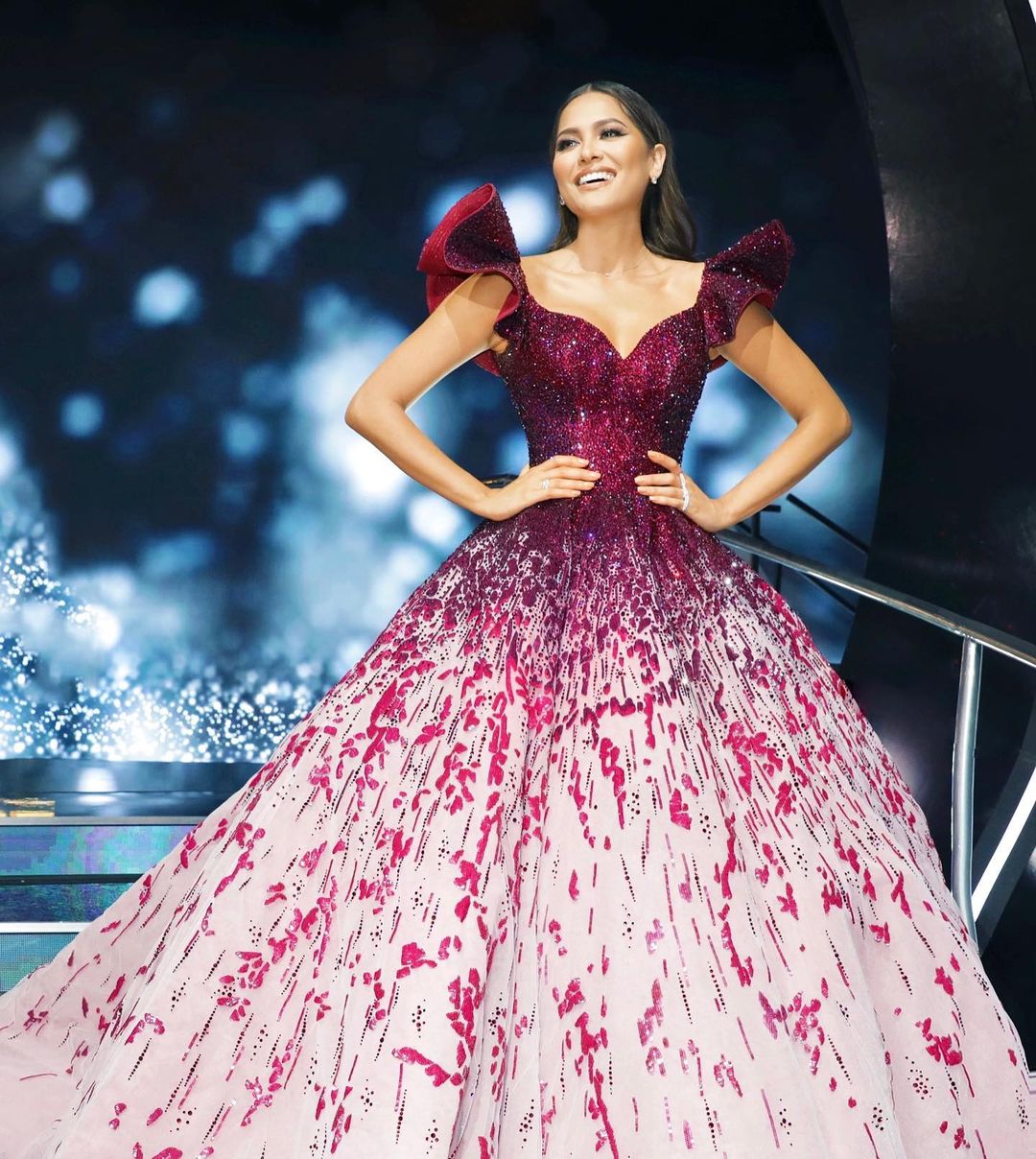
“The silhouette should complement the contestant’s body shape, enhancing their natural curves and proportions,” Cinco explains. Common winning silhouettes, according to Cinco, include “mermaid, sexy gowns with drama at the back and with shock value.”
Mak Tumang
Mak Tumang’s perspective on standout pageant gowns emphasizes that there is no fixed formula for success. Instead, he draws from his experience to highlight key principles. Tumang stresses the importance of visual appeal, stating, “The gown must first and foremost be obviously visually appealing. What its wearer and other people see is beauty in its entirety.” He also emphasizes emotional resonance, suggesting, “The gown is a winning pageant gown in its own right if it successfully captures the hearts of the audience. It is like a net being cast to simply gather hearts.”
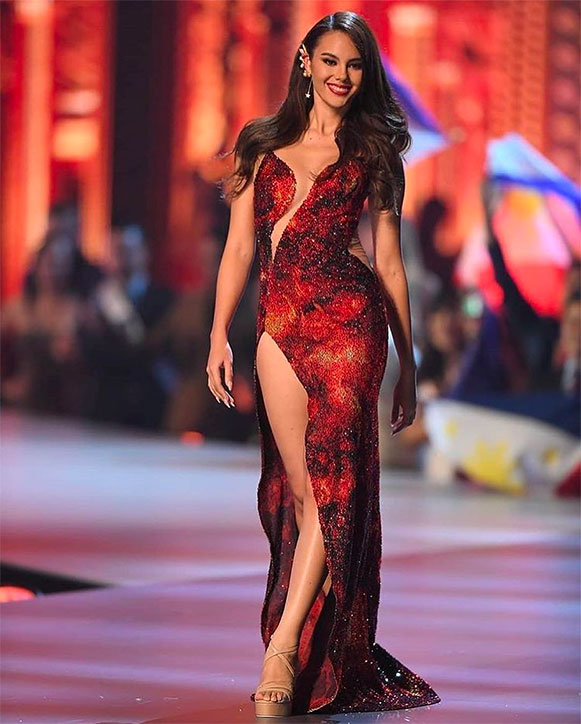
These insights light the multifaceted nature of pageant gown design, where emotional connection becomes a component to create unforgettable pieces. He adds, “The gown conveys the emotions of its designer, which include his or her triumphs as well as vulnerabilities. It is where its impact comes out.”
Mark Bumgarner
Mark Bumgarner shares his approach to designing pageant gowns, particularly highlighting his work with Michelle Marquez Dee at the Miss Universe 2023 competition. “She [MMD] wanted a silhouette that wouldn’t restrict her hand movements, aiming to showcase her curves and accentuate her long legs. Seeking to defy the typical pageant dress, she aimed to redefine the modern beauty queen image with a simple yet visually striking design,” Bumgarner explains.
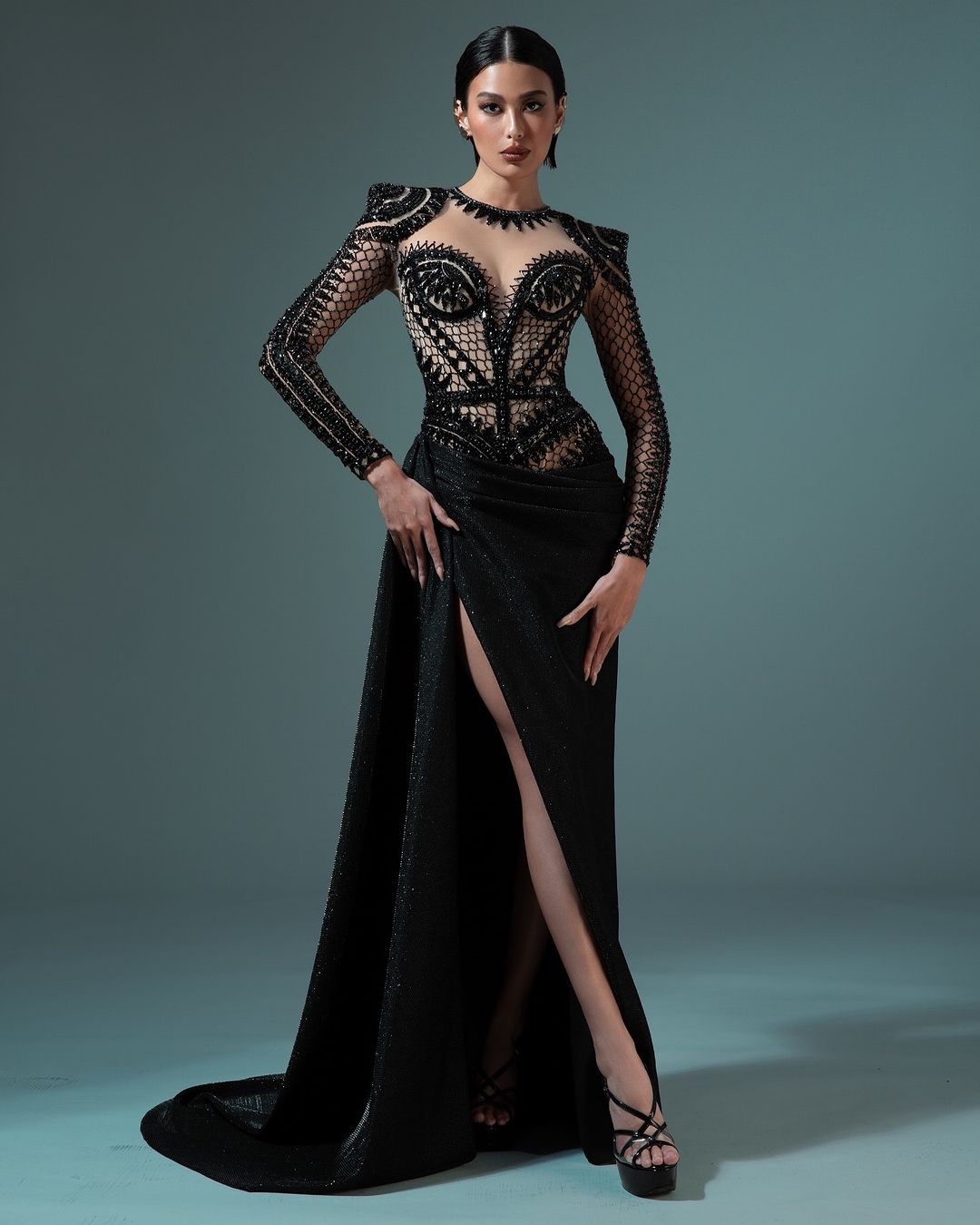
This philosophy was also evident in the Apo Whang-Od-inspired look, which incorporated motifs like the day and night hourglass and rice mortar, representing spiritual shield; fern, representing fertility and strength; and snake skin, representing safety and protection. These elements trace their roots to the remote mountain landscapes of Kalinga, where the legendary tattooist resides. Bumgarner’s approach aims to break away from traditional pageant norms by using unconventional methods and silhouettes, striving to create designs that not only stand out but also empower the wearer by emphasizing both elegance and freedom of movement.
Albert Andrada
It was the Philippines’ first victory in forty-two years, and Albert Andrada had a hand in helping this win. The designer believes that a standout pageant gown involves several key factors: silhouette, color, fabric, and proportion. “The form speaks and brings out the femininity of the candidate. It should express the best parts of what makes up a woman,” Andrada explains. He emphasizes the importance of color, noting that “a proper choice should help enhance her complexion.” For fabric, he prefers something light and airy. “Whatever beadwork or embroidery components are used on the fabric, it lessens the weight of it. It allows the candidate to sashay gracefully with elegance.” Proportion is also crucial, as “cut and artwork should be in their right places. The gown should always be properly executed according to the candidate’s body proportion.”

Andrada adds that every gown should have a story or inspiration, helping the candidate express her vision of womanhood and victory. “At the end of every pageant, a queen emerges and will spend her reign educating and emulating people,” he concludes.
A winning Miss Universe gown is the culmination of artistic ingenuity, precise craftsmanship, and a deep understanding of the wearer’s essence. When these elements harmonize, they create not just a gown, but a winning look that leaves behind a legacy.
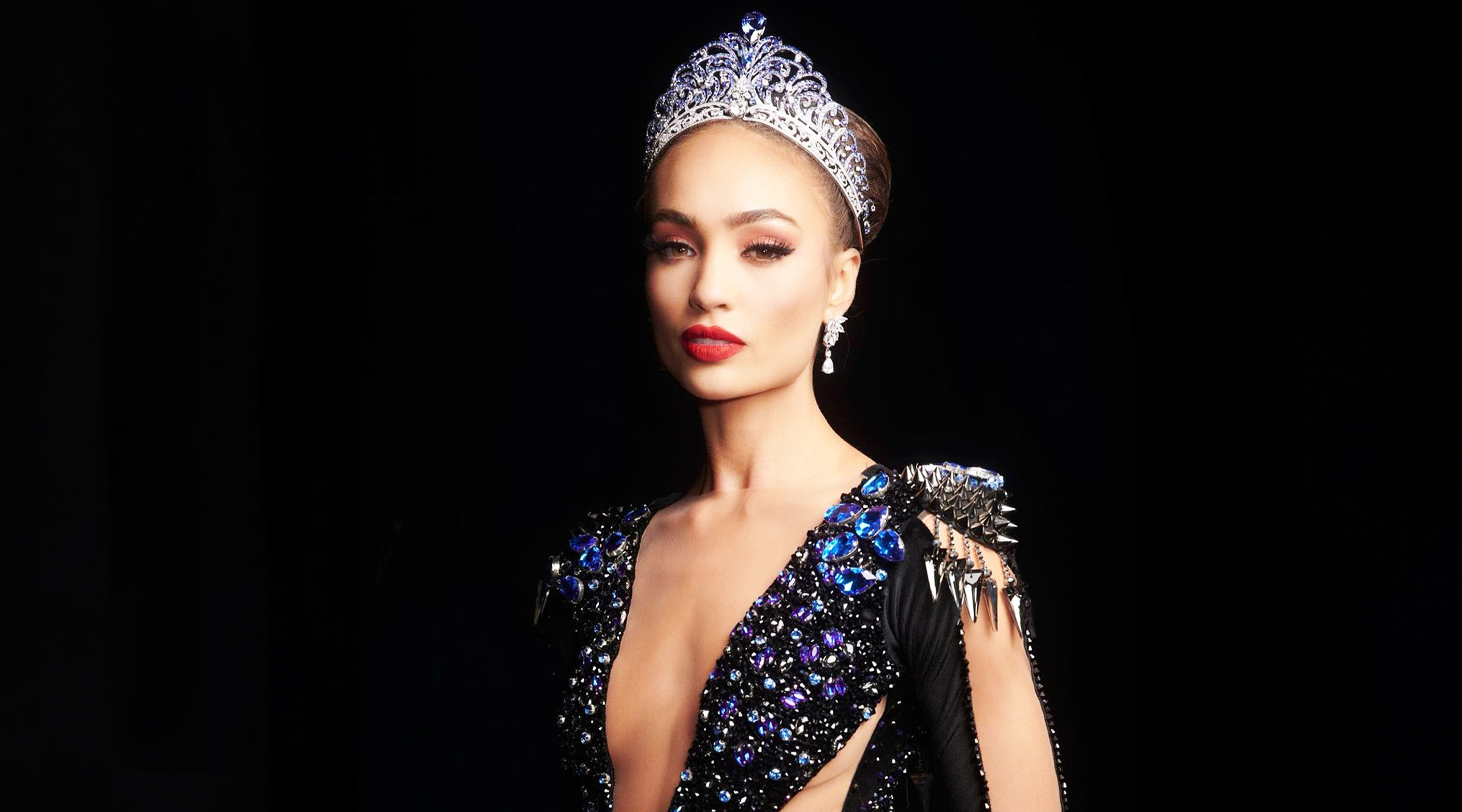
Photos: MISS UNIVERSE (via Facebook); RIAN FERNANDEZ, R’BONNEY GABRIEL, and MICHAEL CINCO (via Instagram)
Featured Image: R’BONNEY GABRIEL (via Instagram)