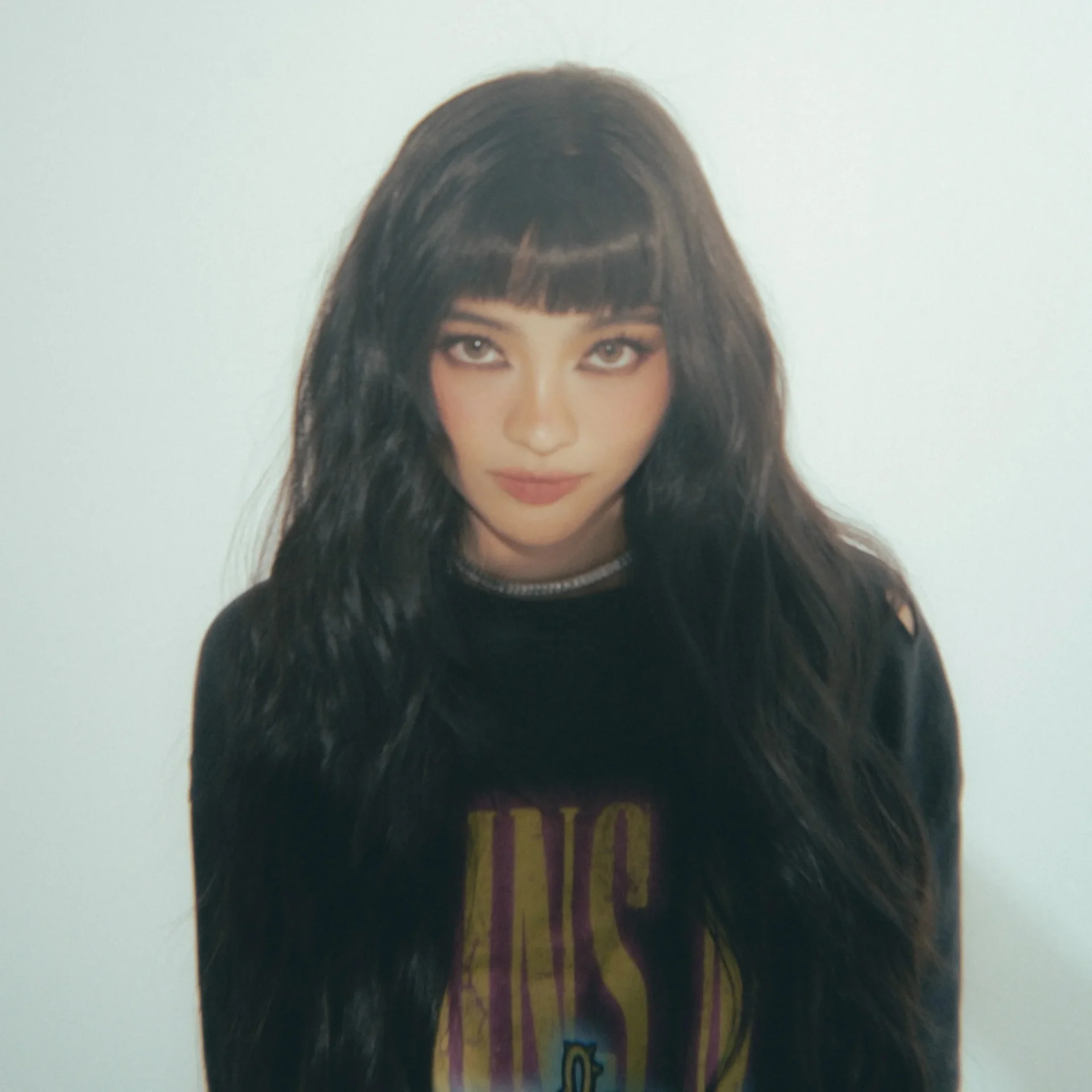




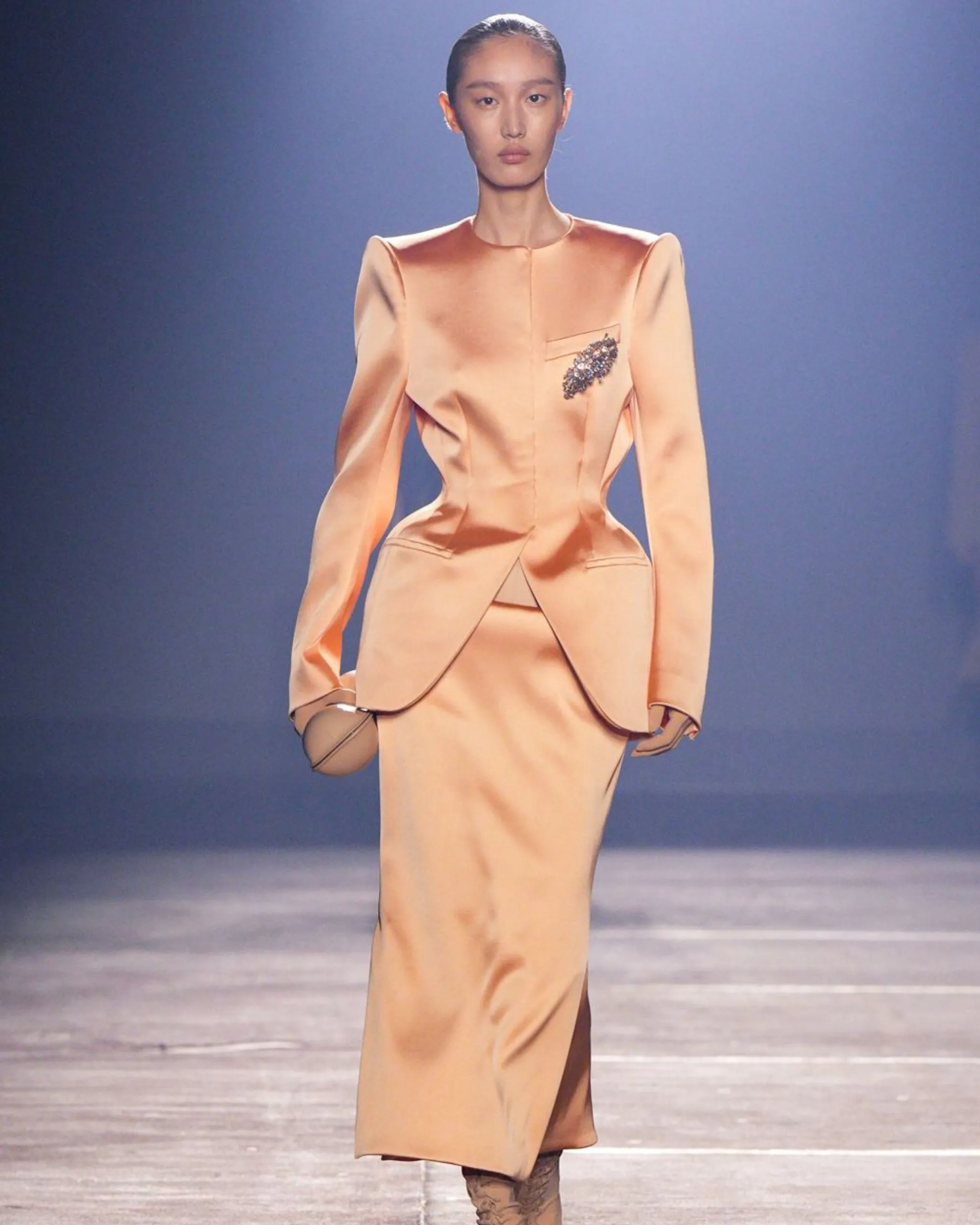
Mugler has always loved to shock. Thierry Mugler’s heyday in the ’80s and ’90s reveled in power-dressing excess—shoulders that could cut glass, waists cinched into submission, women rendered like chrome-plated warriors. In recent years, Casey Cadwallader transformed that theatrical DNA into a pop-culture juggernaut, sending sculptural bodysuits and cutouts across Beyoncé’s stages, Cardi B’s videos, Dua Lipa’s red carpets, and The Real Housewives’ confessionals. The Mugler woman has always been fierce, always erotic, always larger-than-life. But this season, under the debut of Miguel Castro Freitas, she grew up.
RELATED: 4 Designers Who Can Be the Next Fendi Creative Director
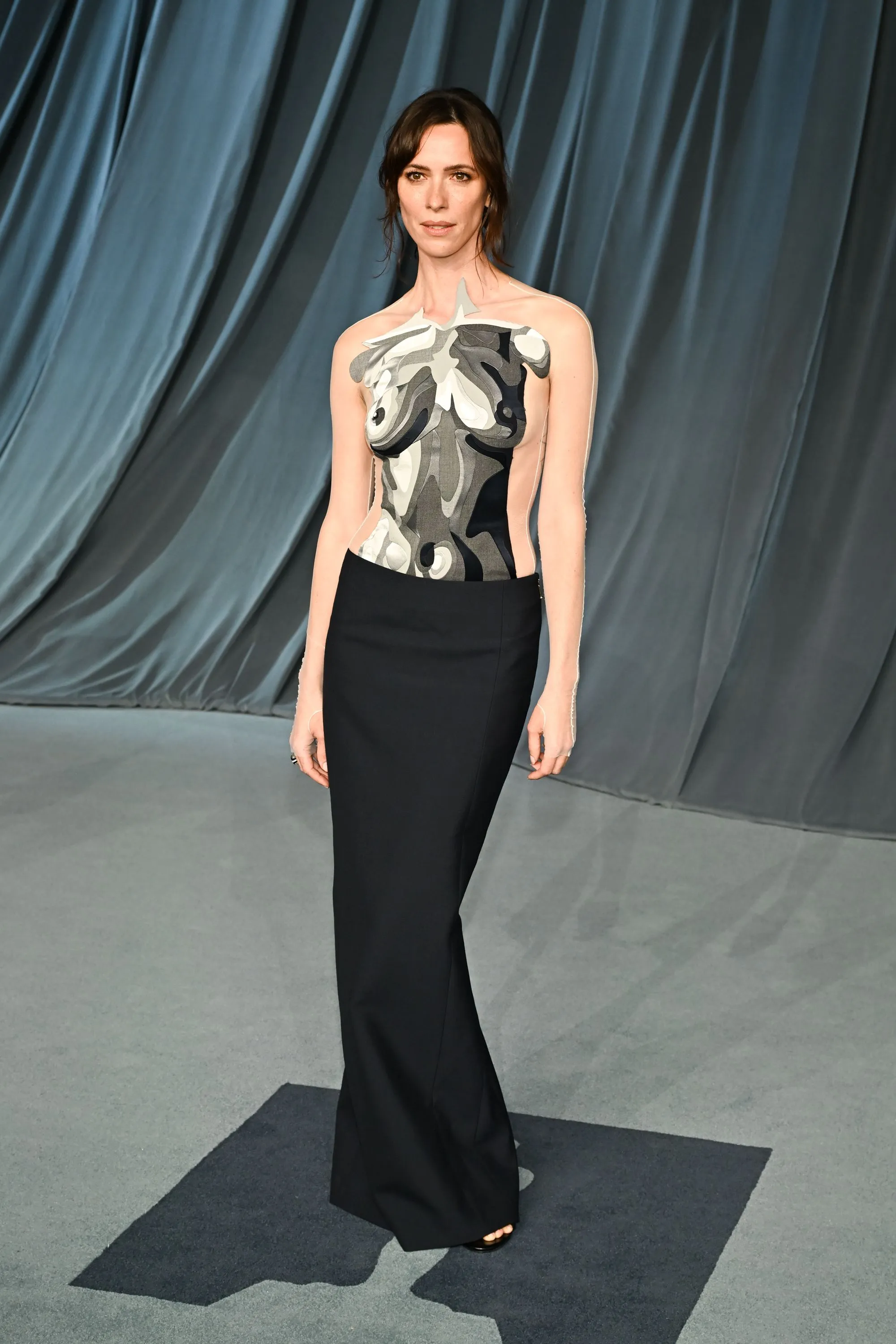
Like many other debuts this season, this Spring/Summer 2026 collection was a recalibration: a collection that still seduced and provoked, but spoke in a more measured, more self-possessed voice. The exaggerations were still there, yet refined, filtered through the sensibility of a designer with a background in tailoringTailoringThe craft of cutting, shaping, and fitting garments, especially suits, jackets, and trousers, precisely to the body. Good tailoring relies on structure, proportion, and careful hand and machine work, andGo to Tailoring Glossary and couture. Mugler’s notorious ostentation was tempered into something startlingly sophisticated.
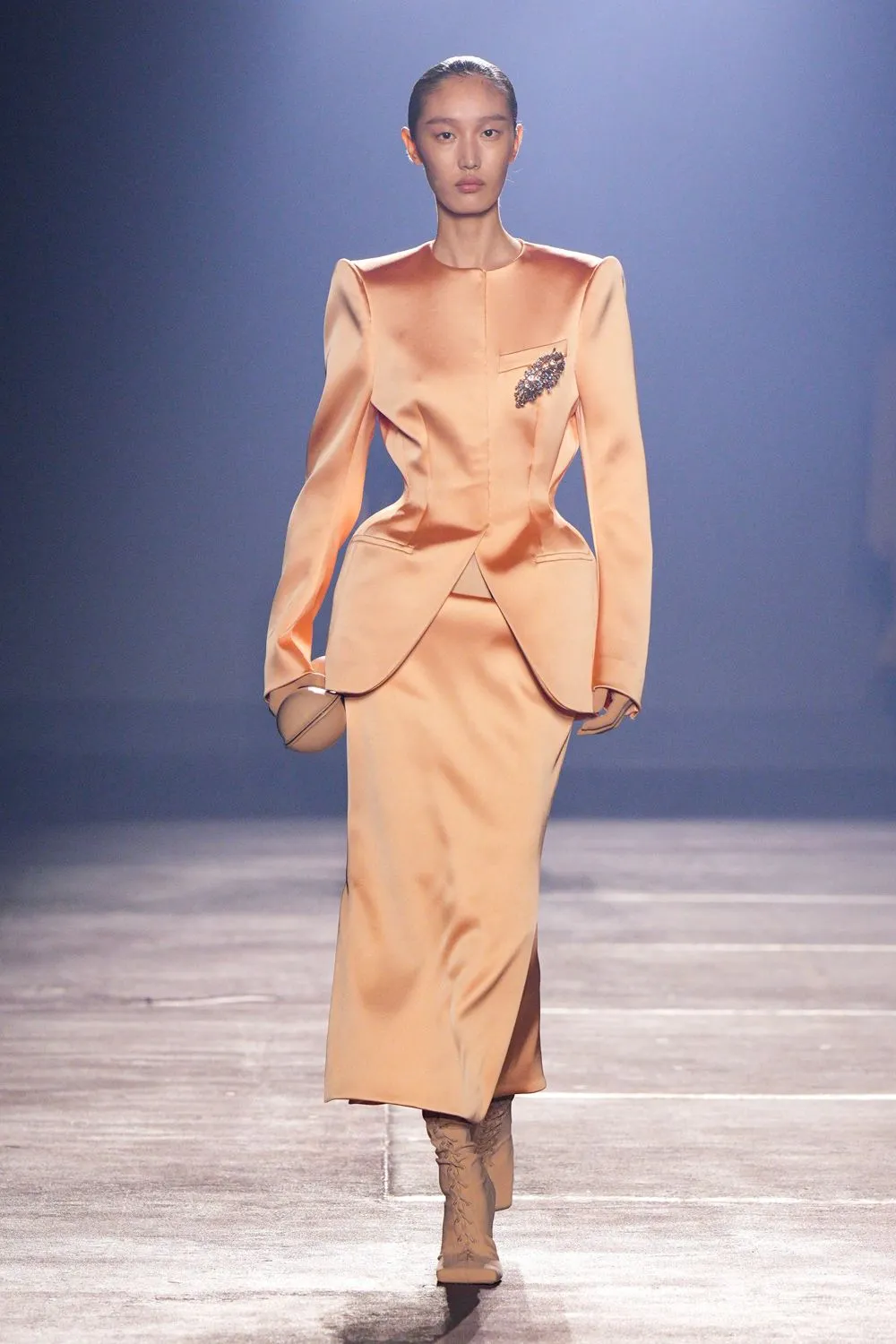
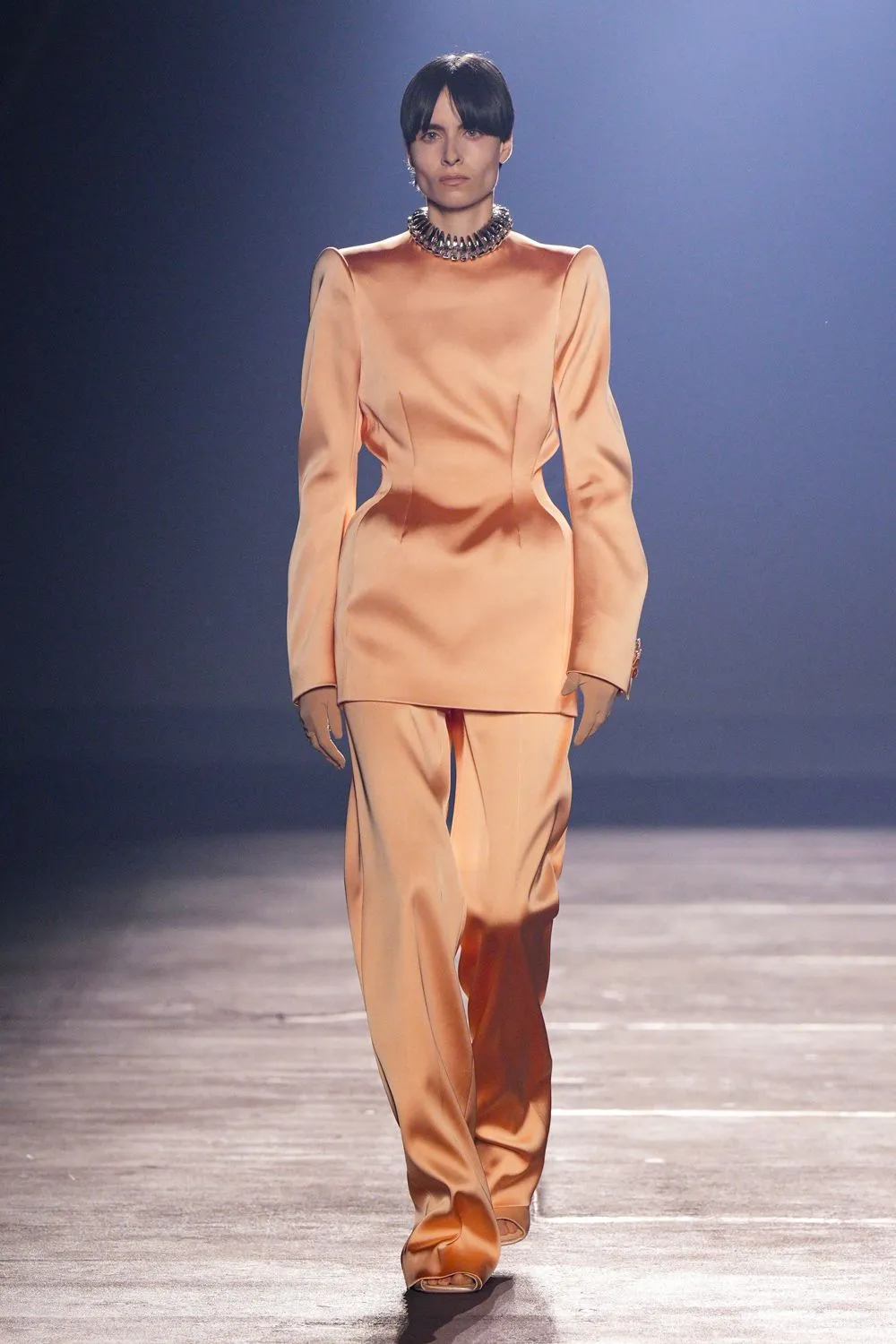
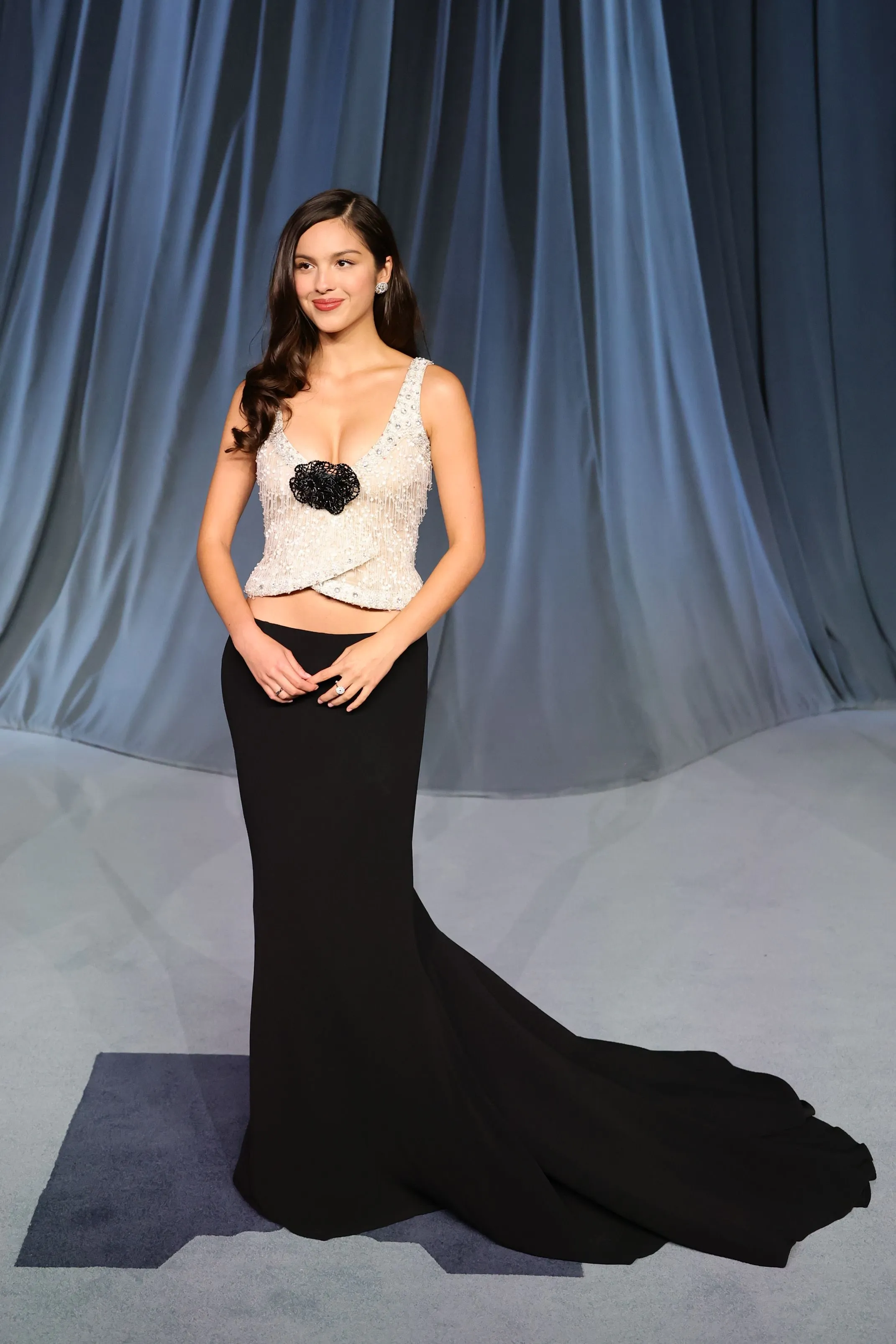
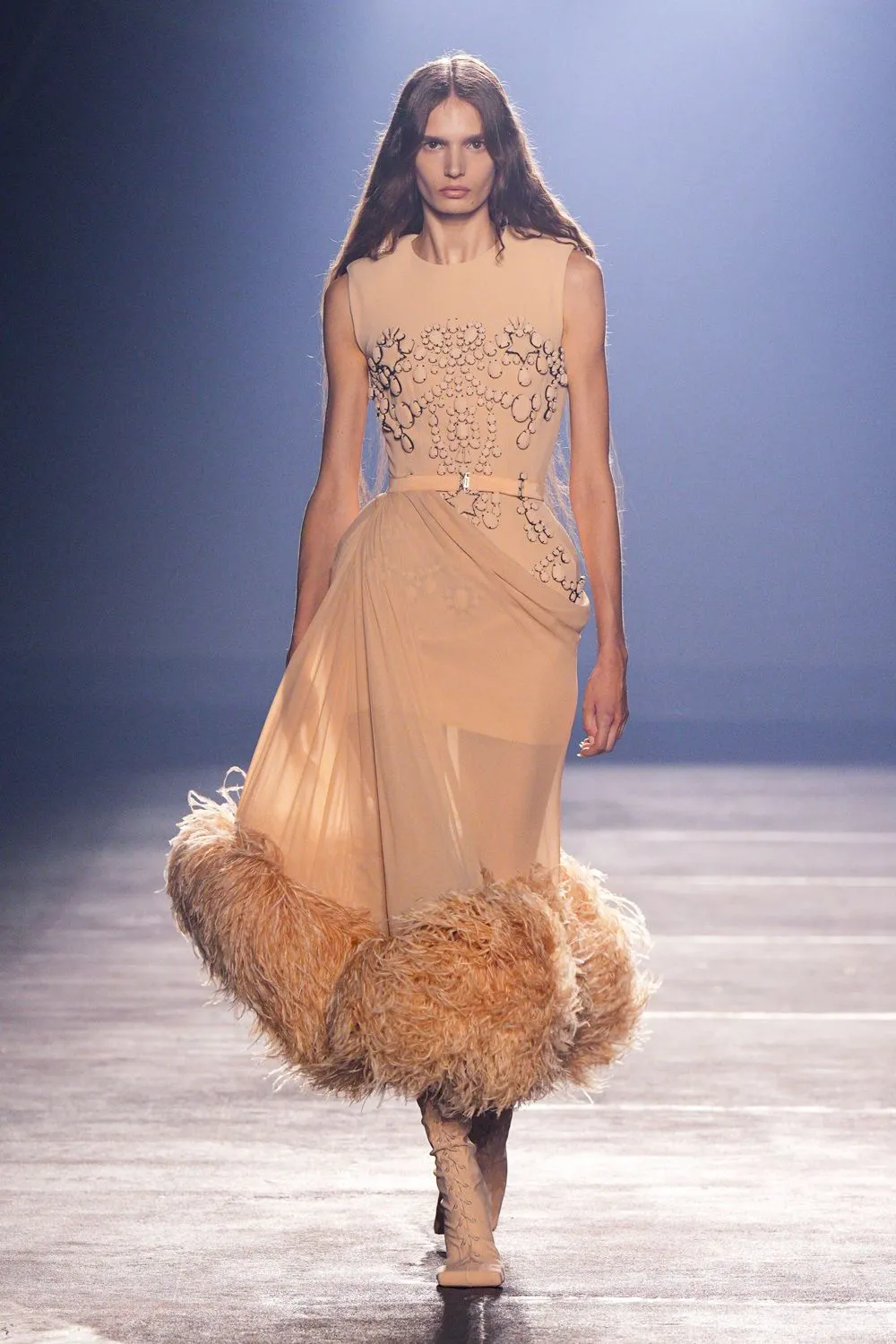
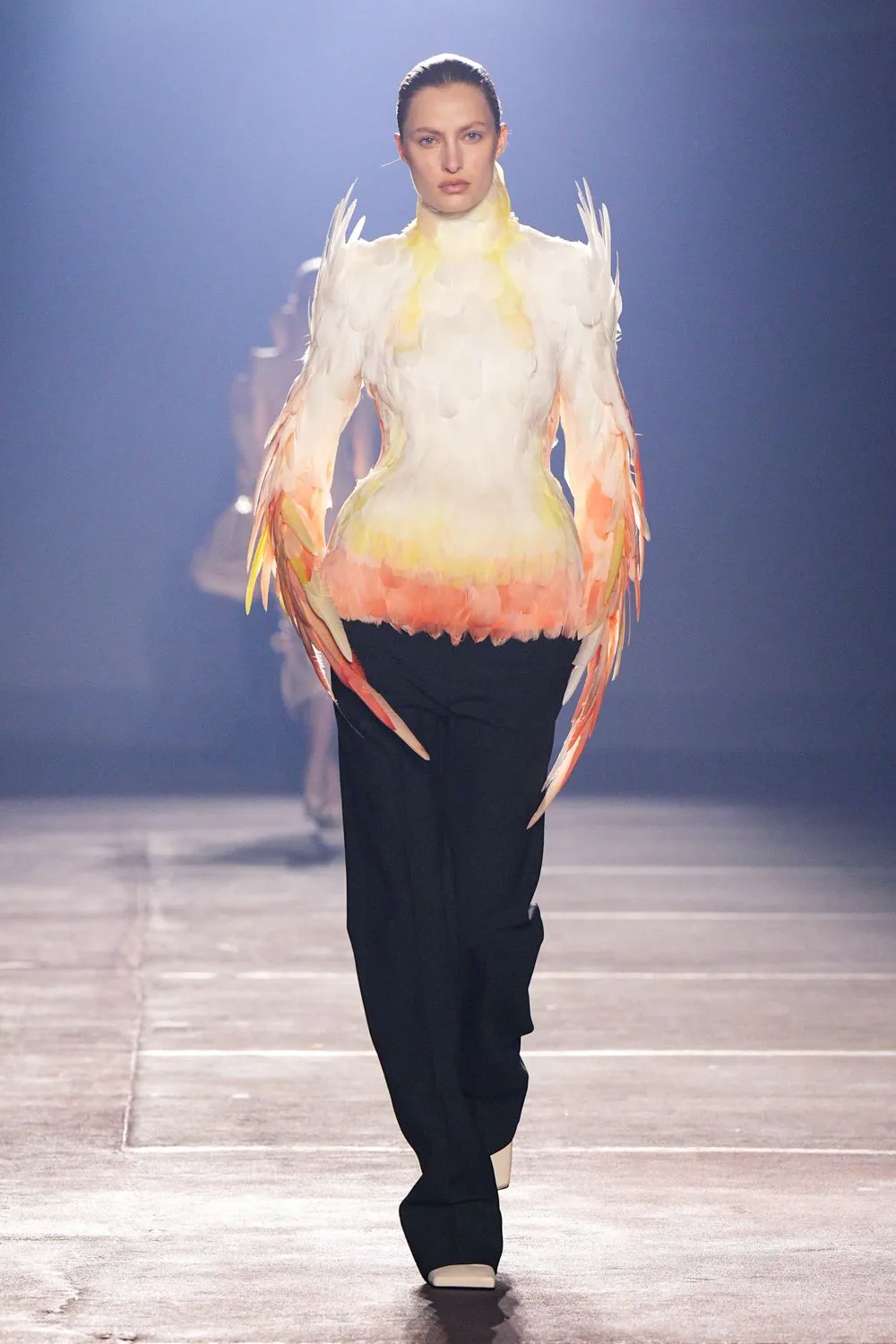
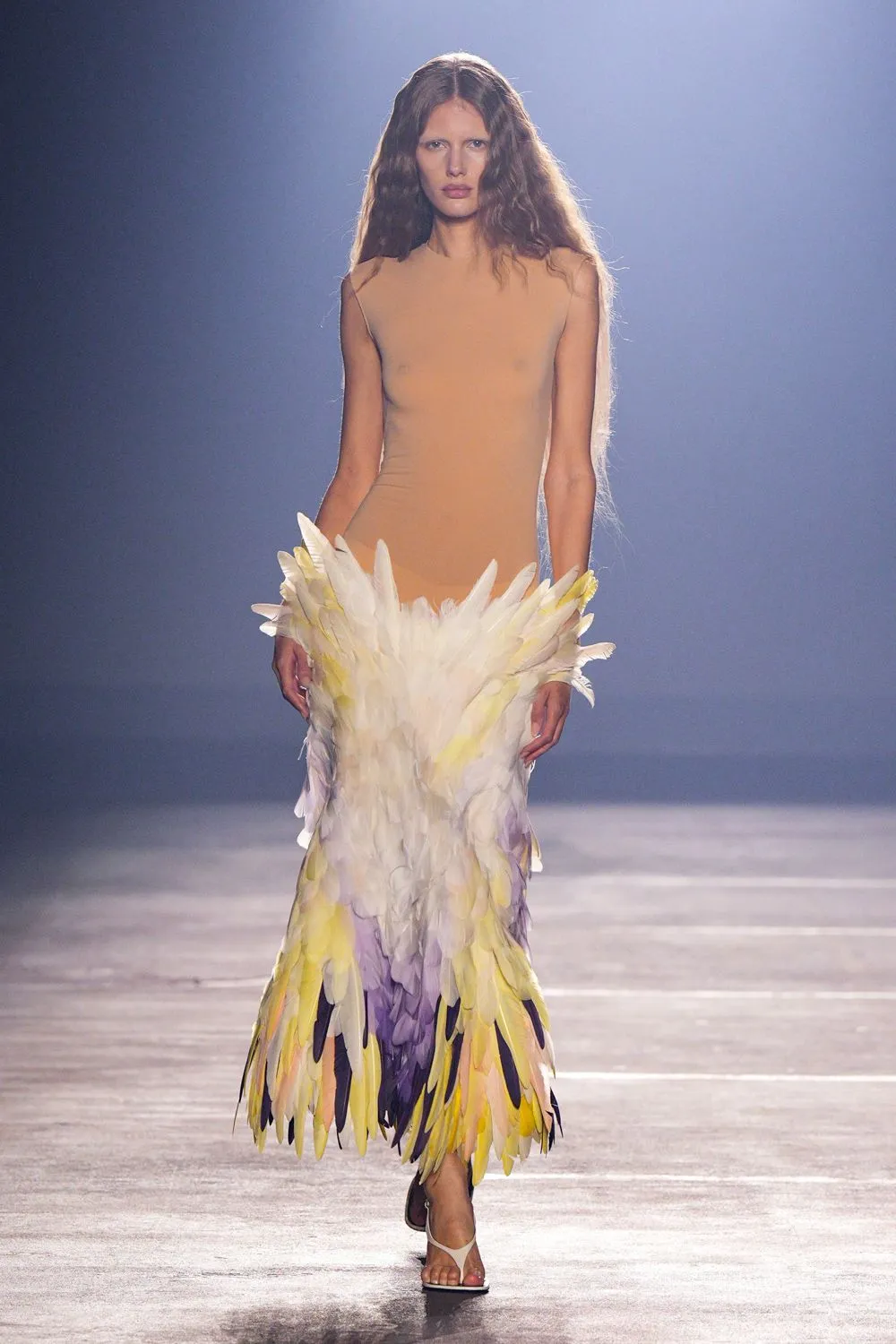
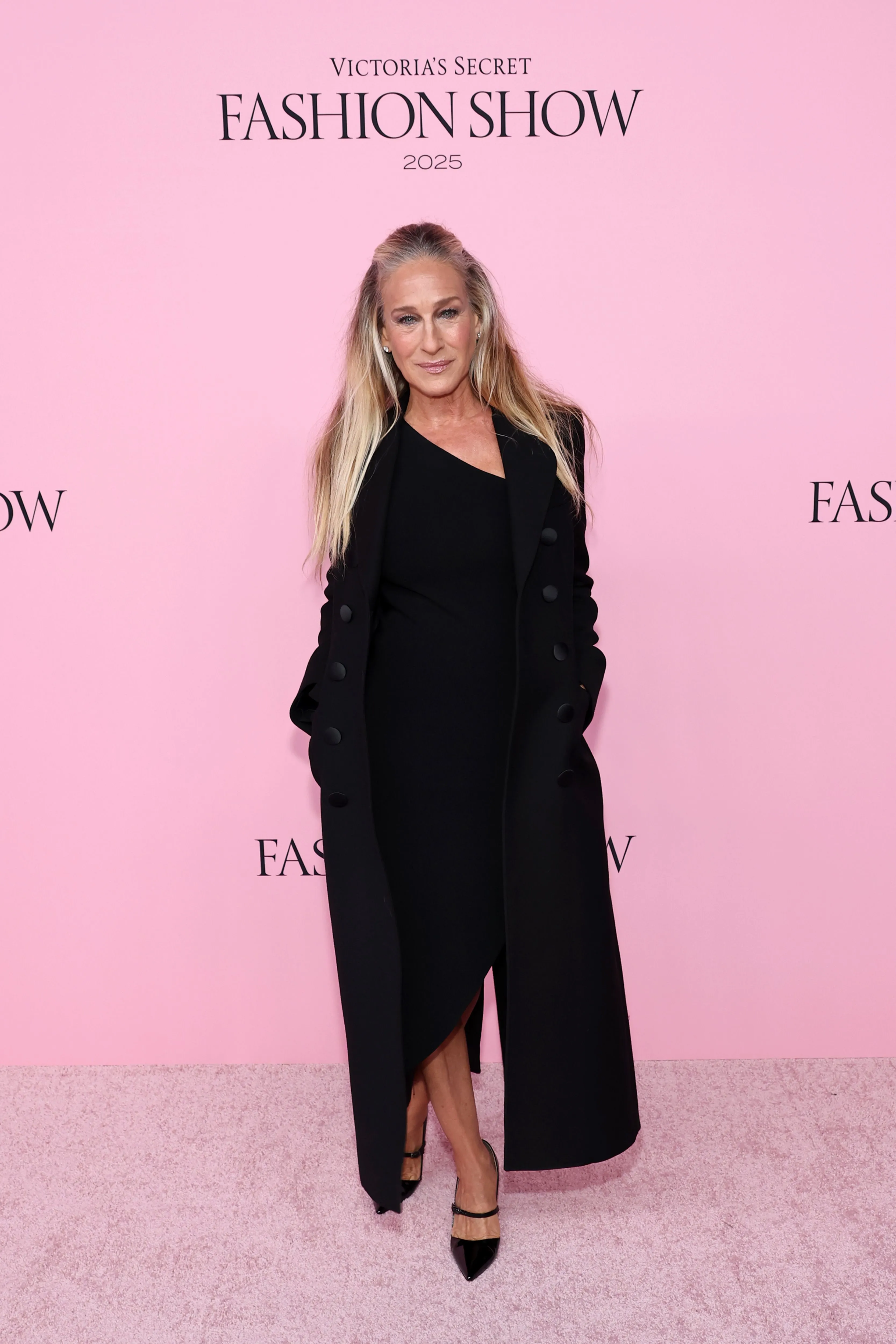
Feathers skimmed the body like wings half-shed, not costume but transformation in motion: angelic, but never cherubic. Latex and leather no longer screamed—they conversed. A black patent coat, nipped to the waist with surgical precision, read not as camp but as armor. A crystallized sheath glittered, each facet catching the gaze the way Pamela Anderson, seated in the audience, once caught cameras in the 90s—provocative, yes, but with a knowing wink. Anderson, a totem of the house’s unabashed sexuality, is a reflection of Mugler’s risqué legacy, now reframed in grown-up terms.
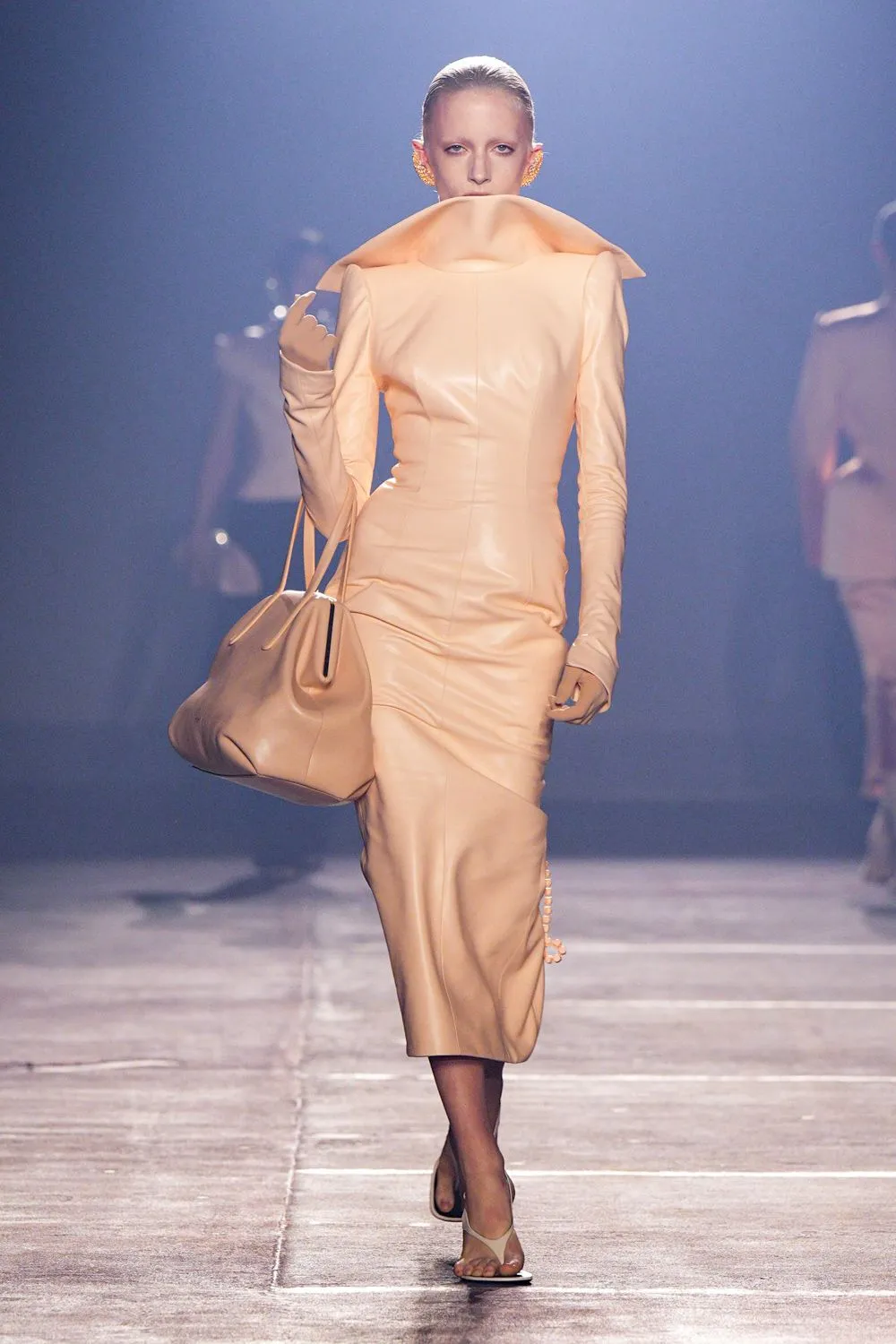
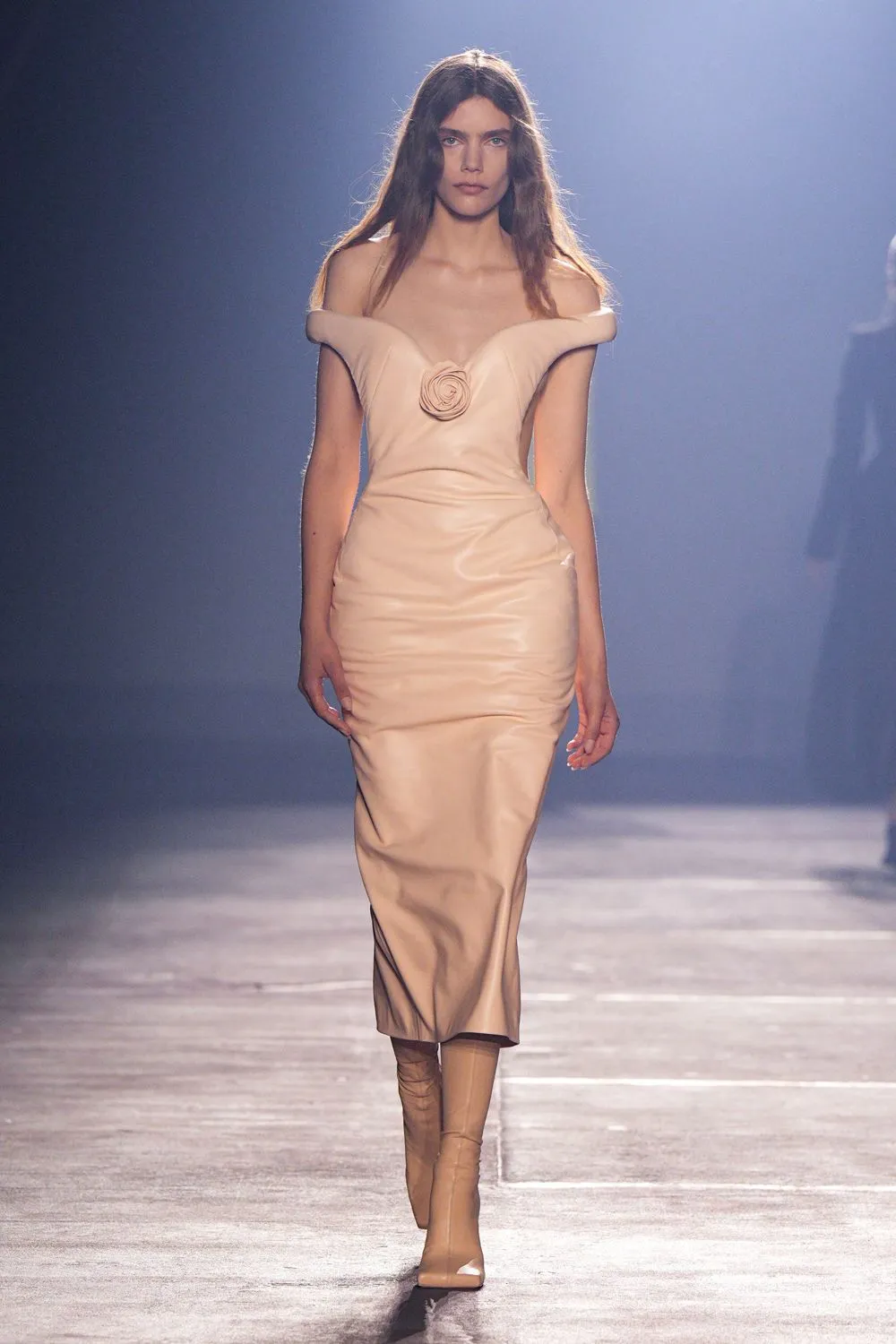
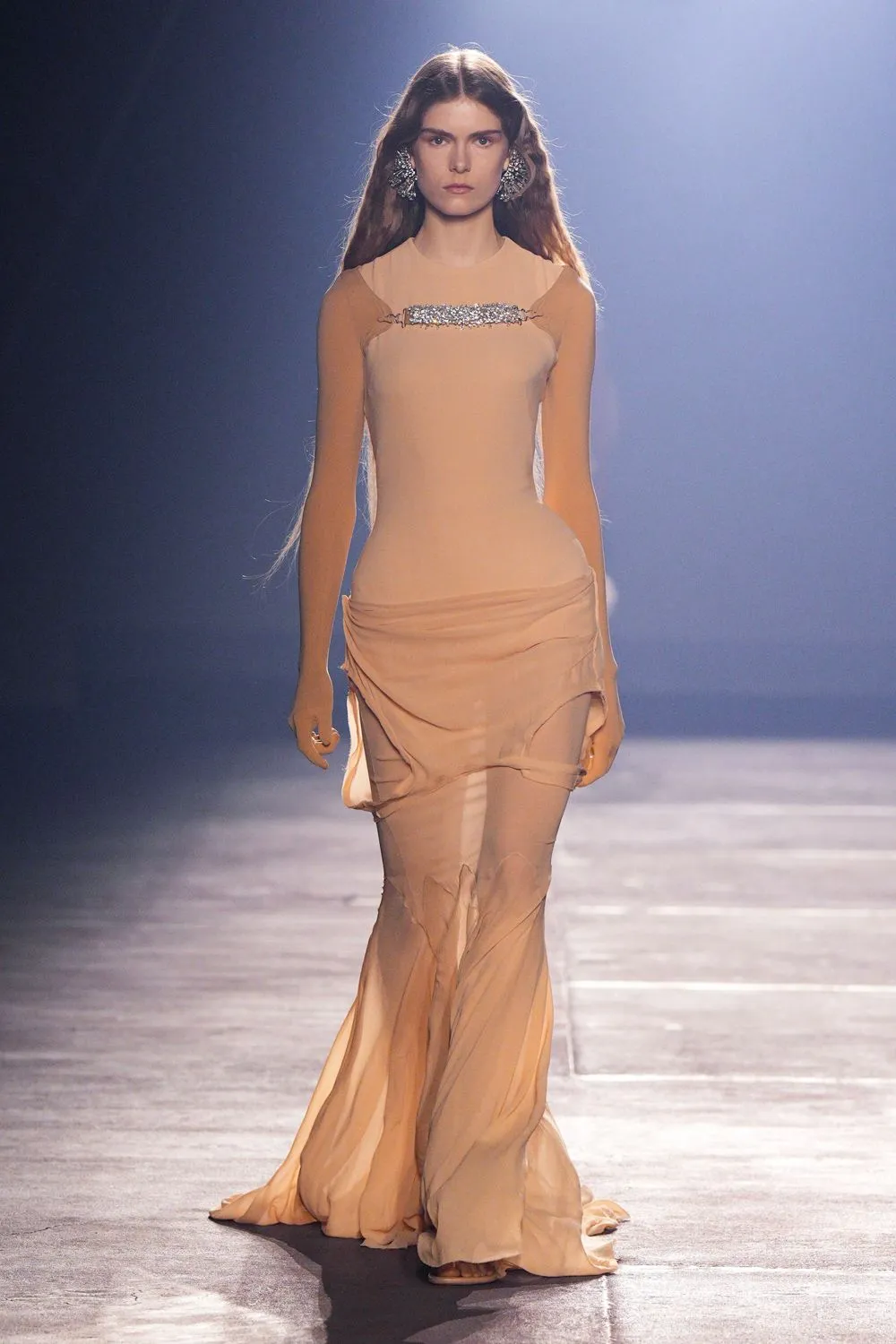
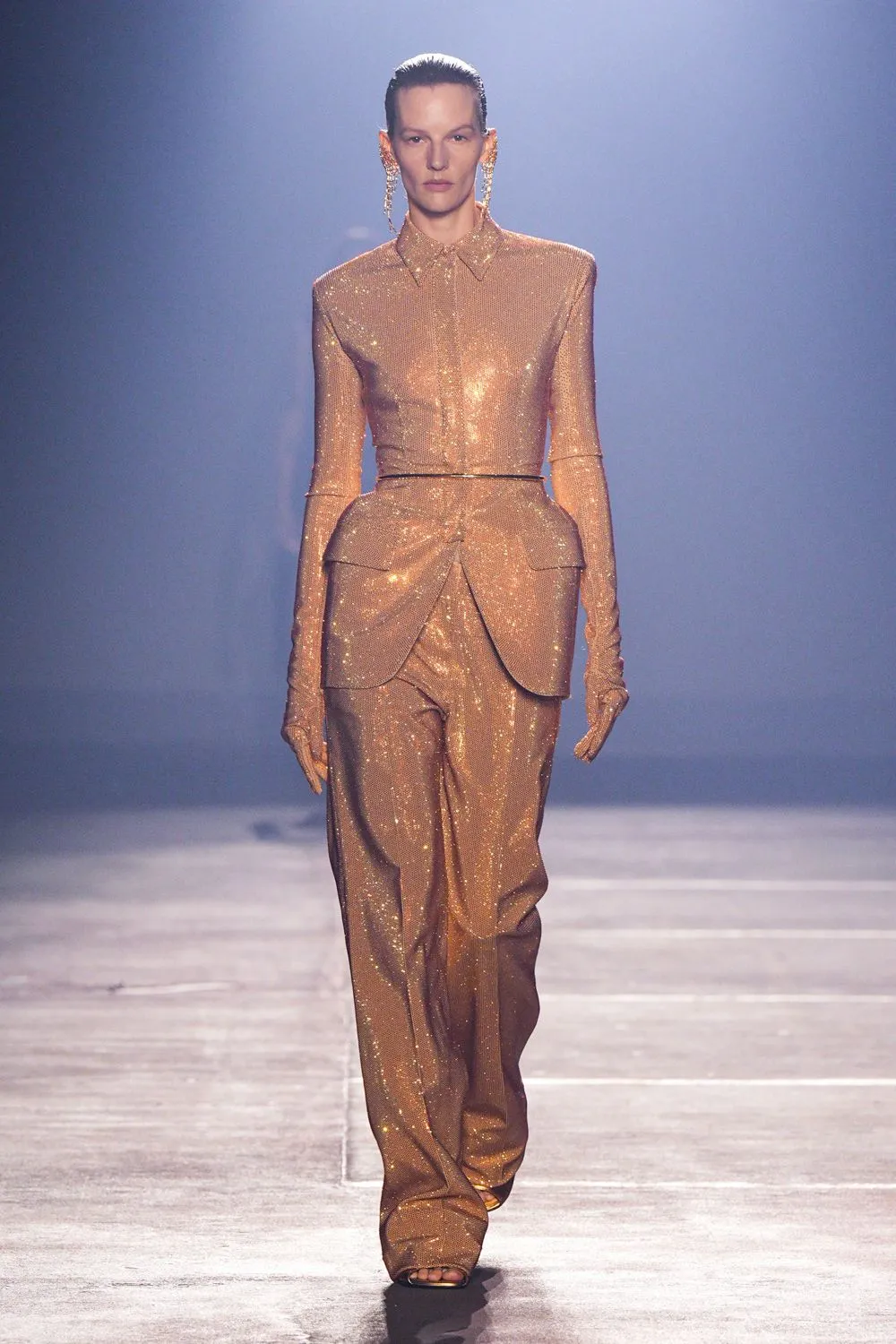
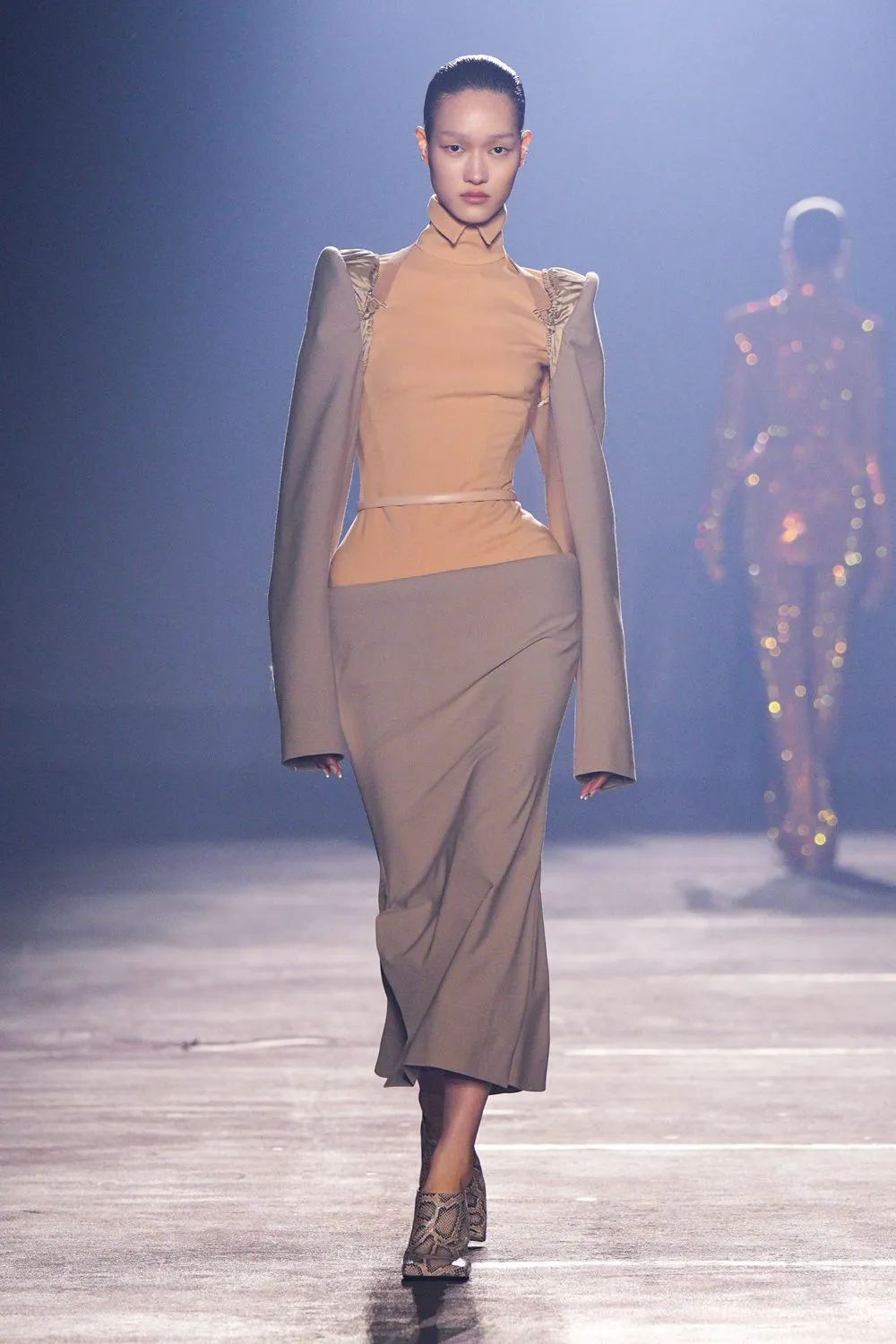
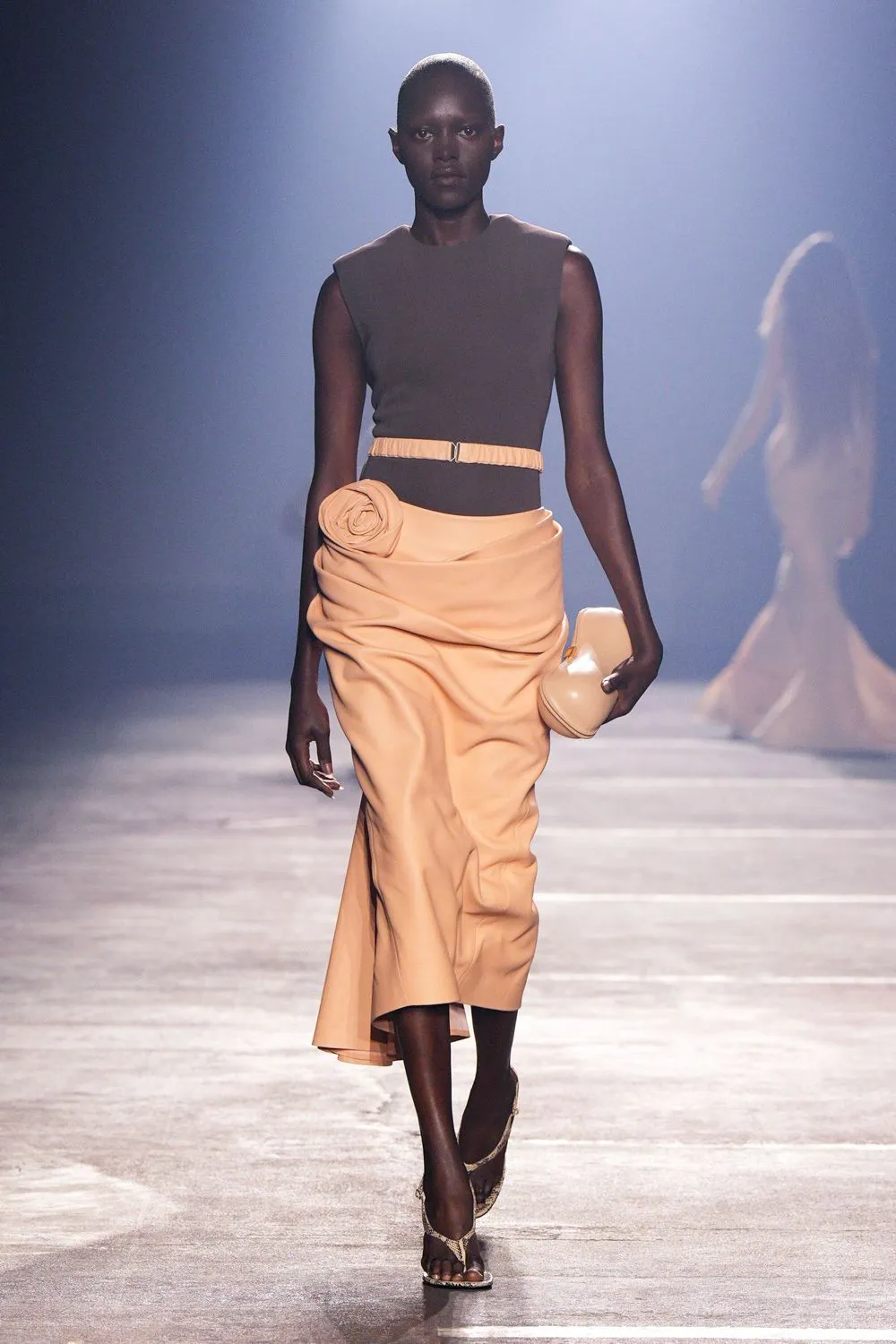
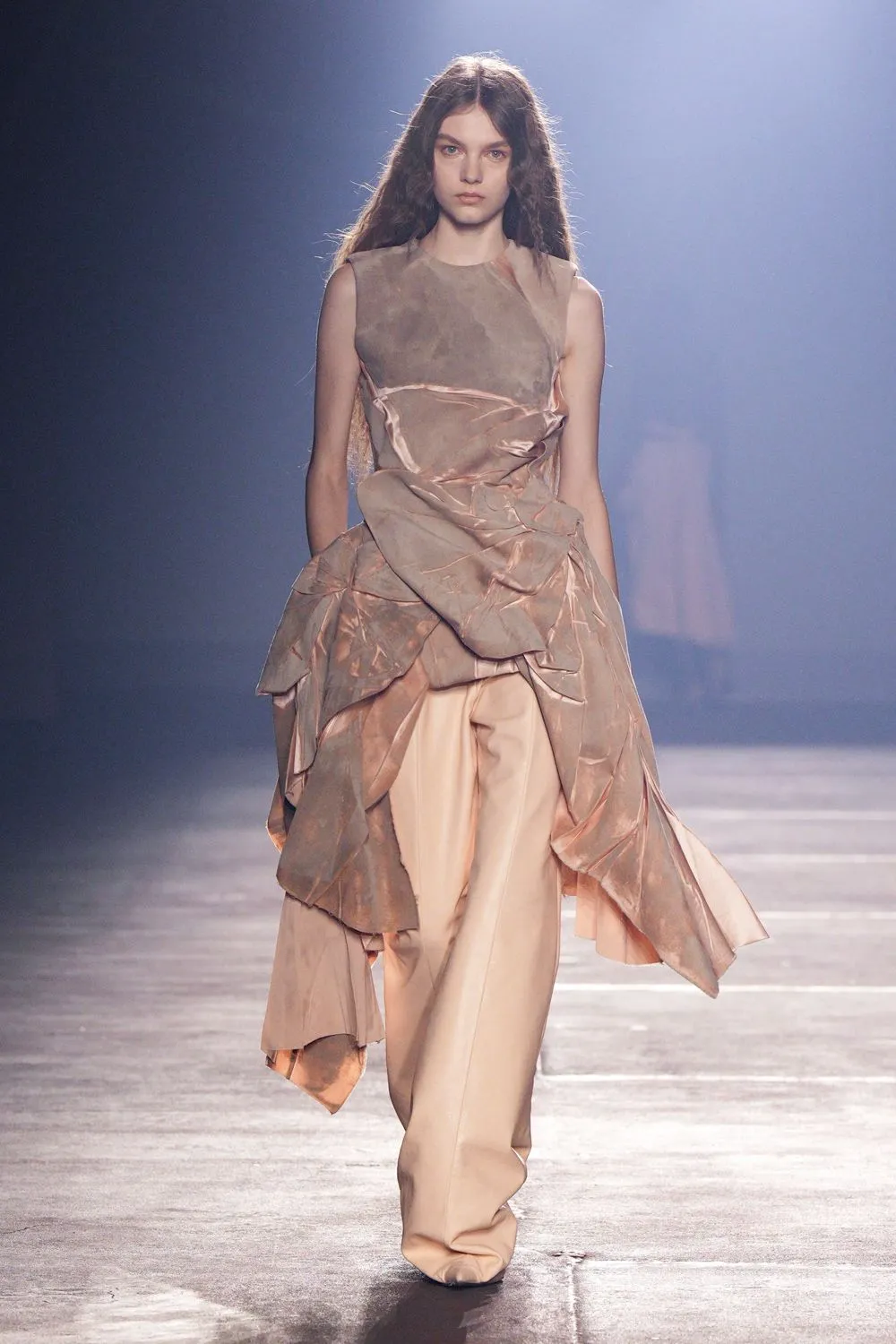
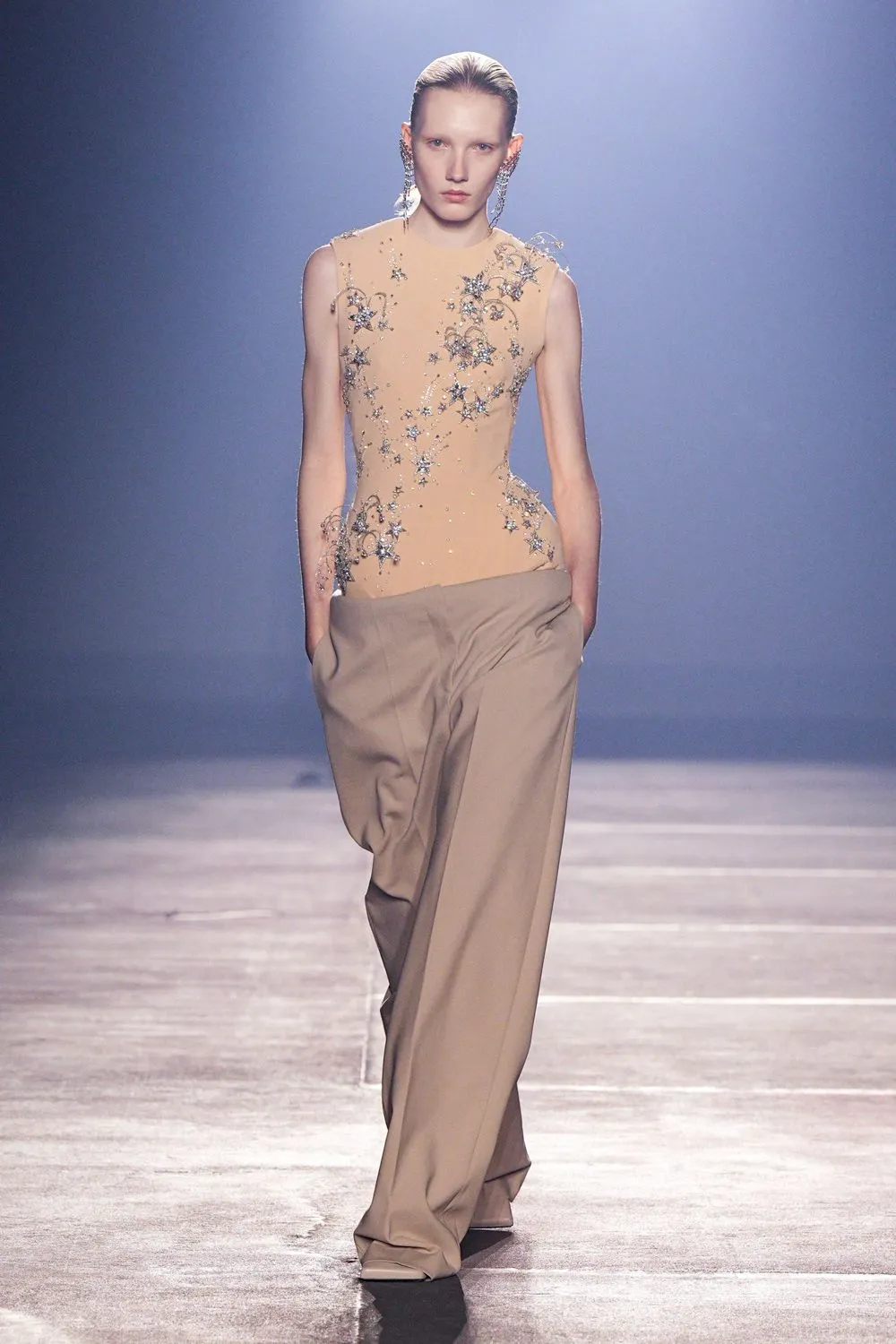
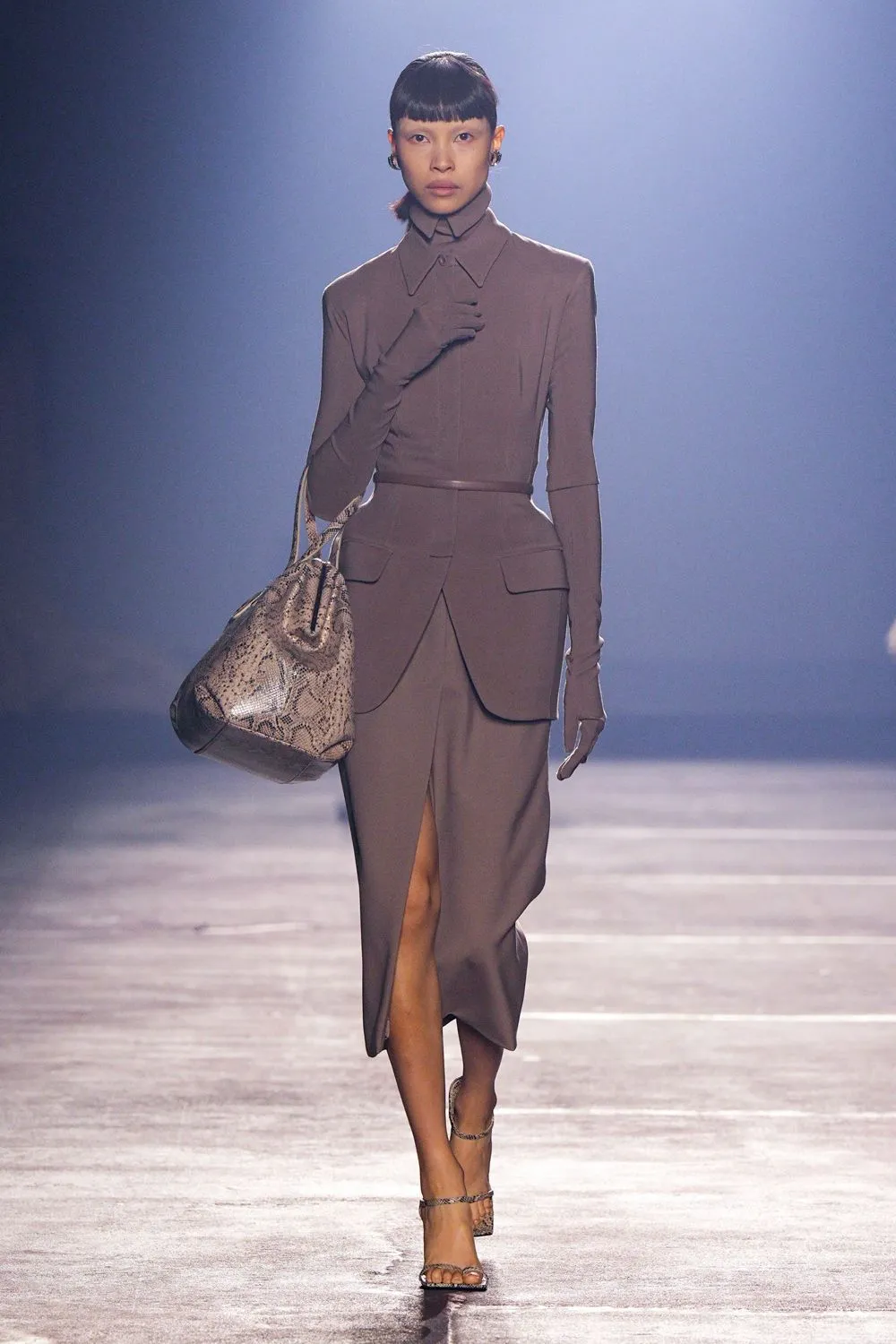
There was an anthropological undertone in the palette: flesh tones in every shade, rendering garments as second skins, a visual taxonomy of desire. Sheer bodysuits stretched like membranes, draped with fringes that flickered like restless nerves. Black and gray, Mugler’s classic codes, returned with unexpected gravitas: sculpted décolletés inflated outward as though air itself were a seamstress, leather rosettes scrolling across dresses like subversive calligraphy.
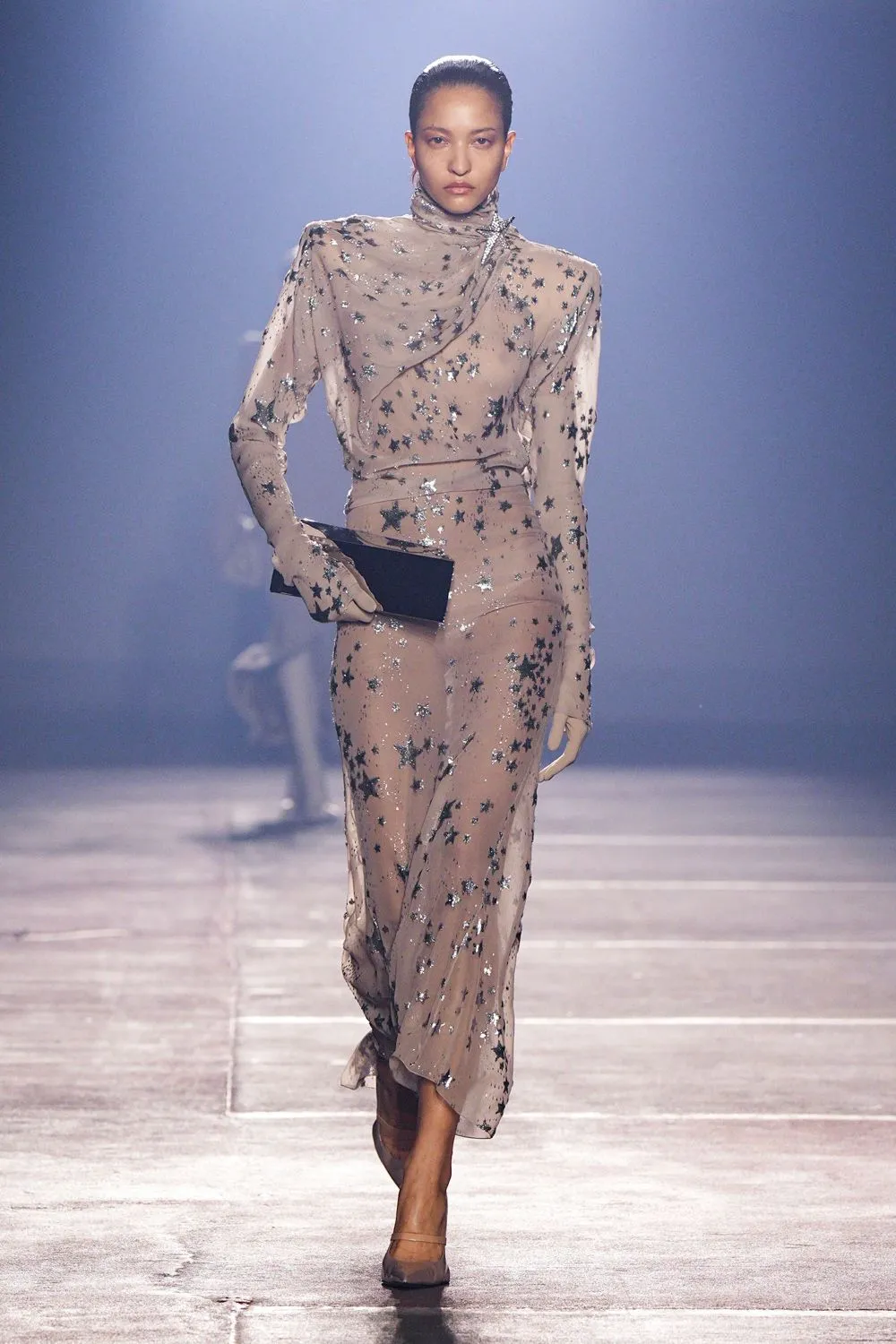
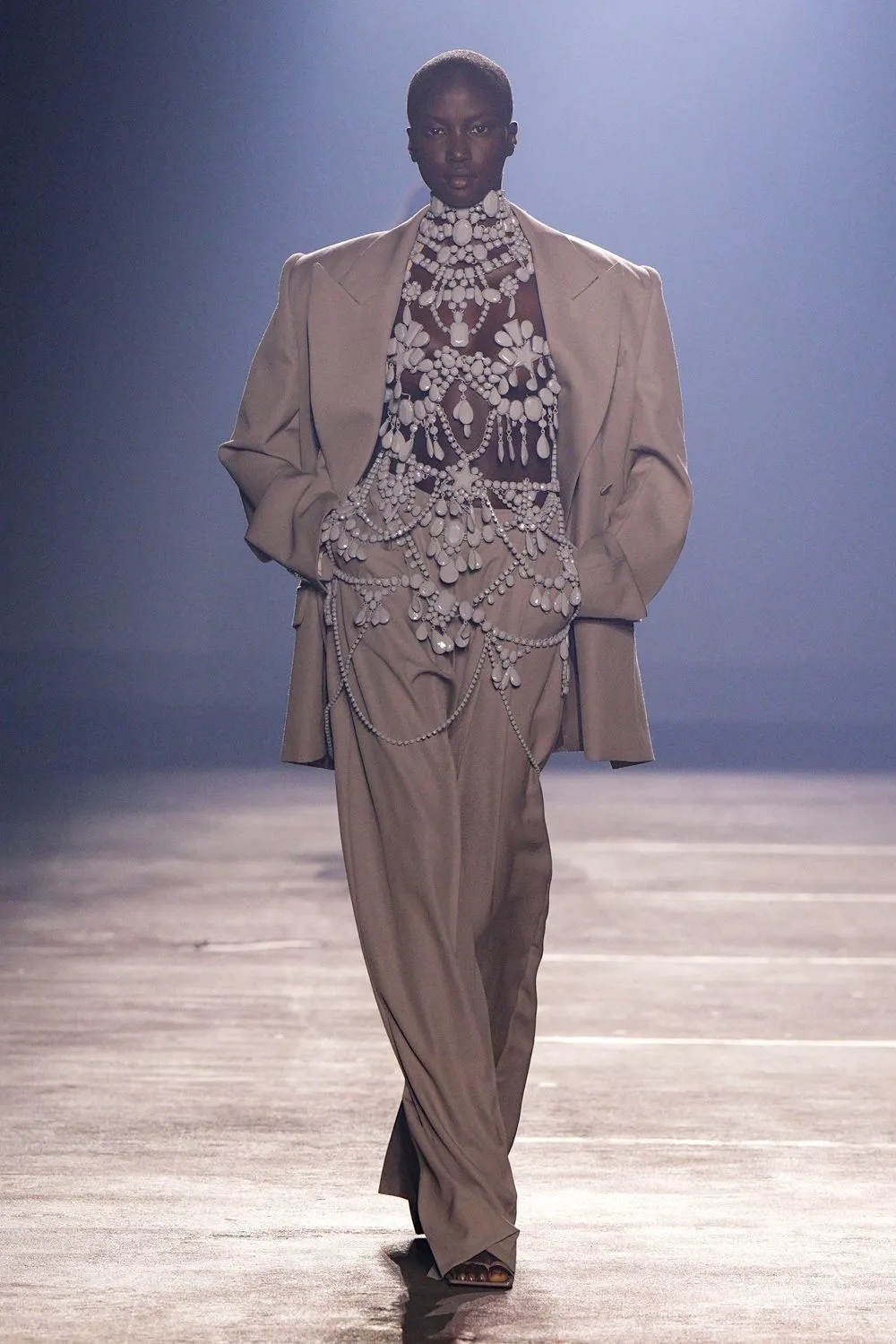
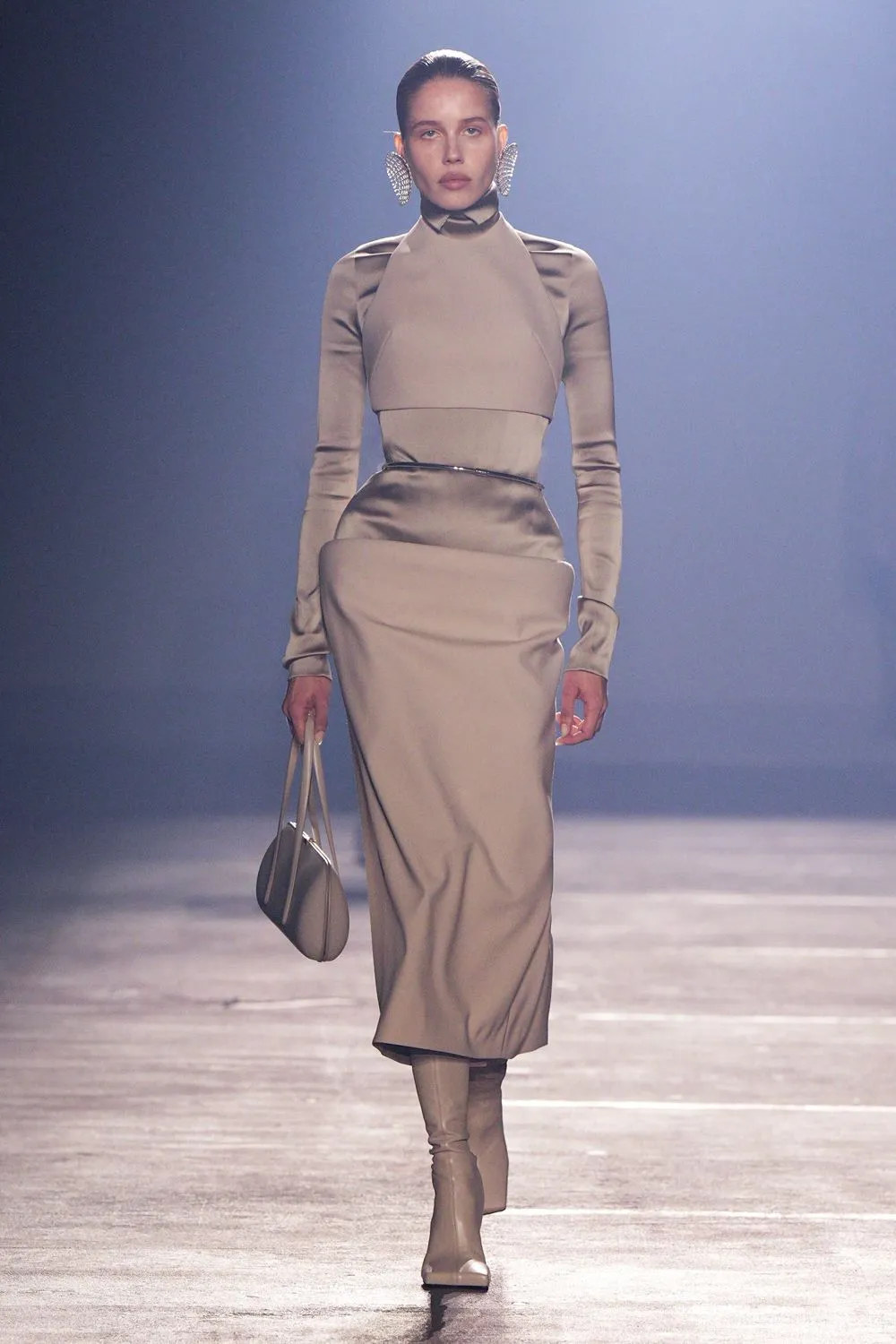
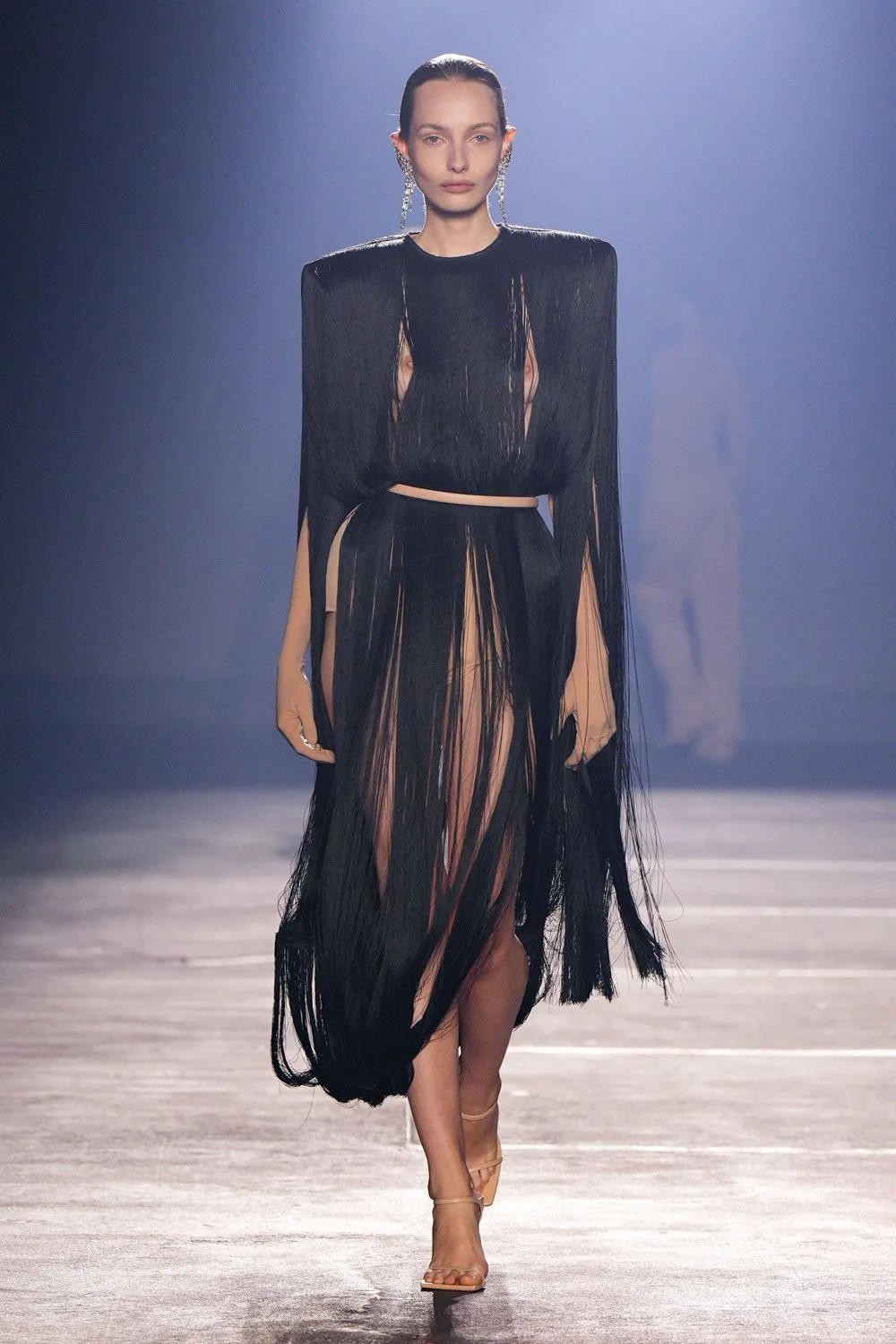
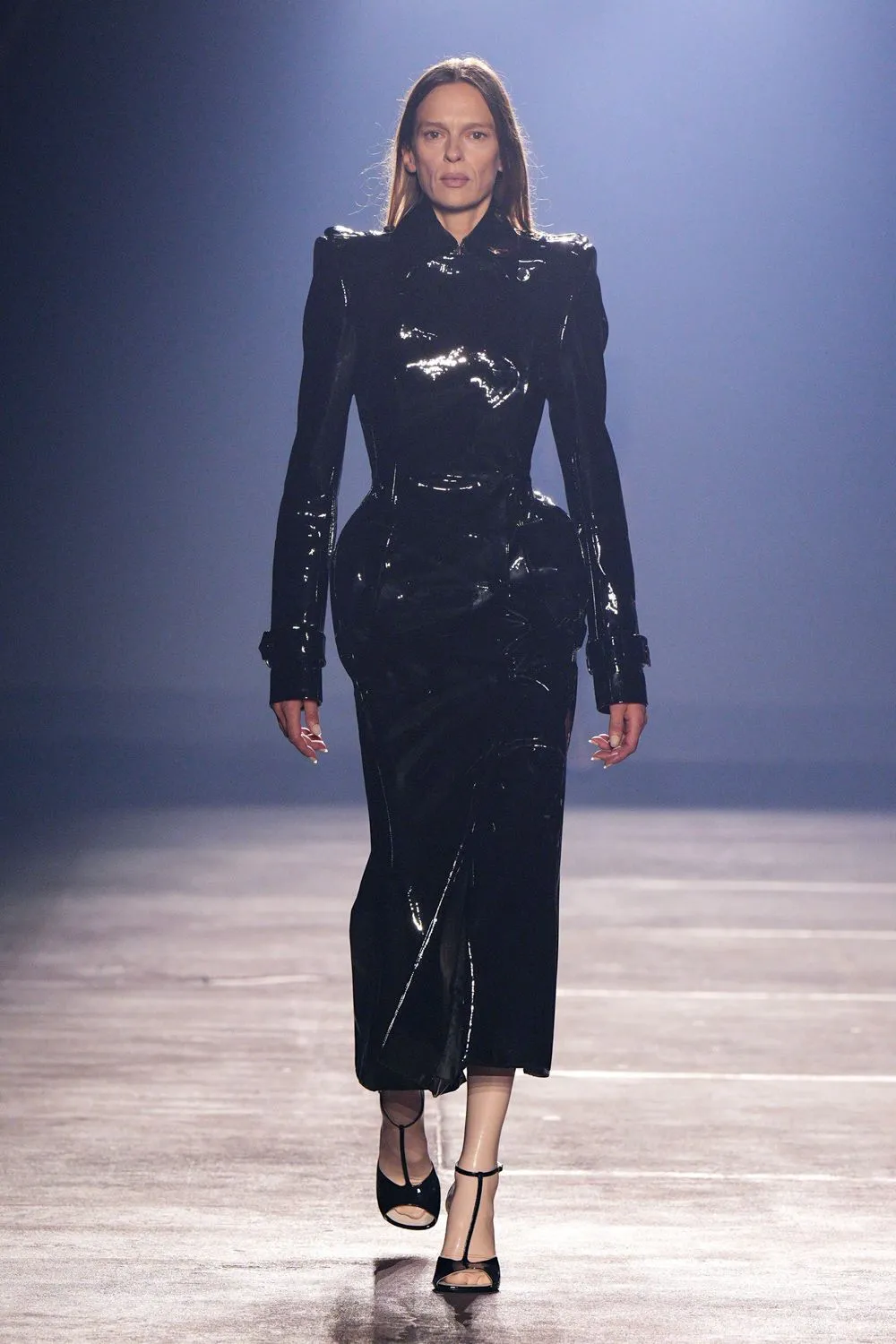
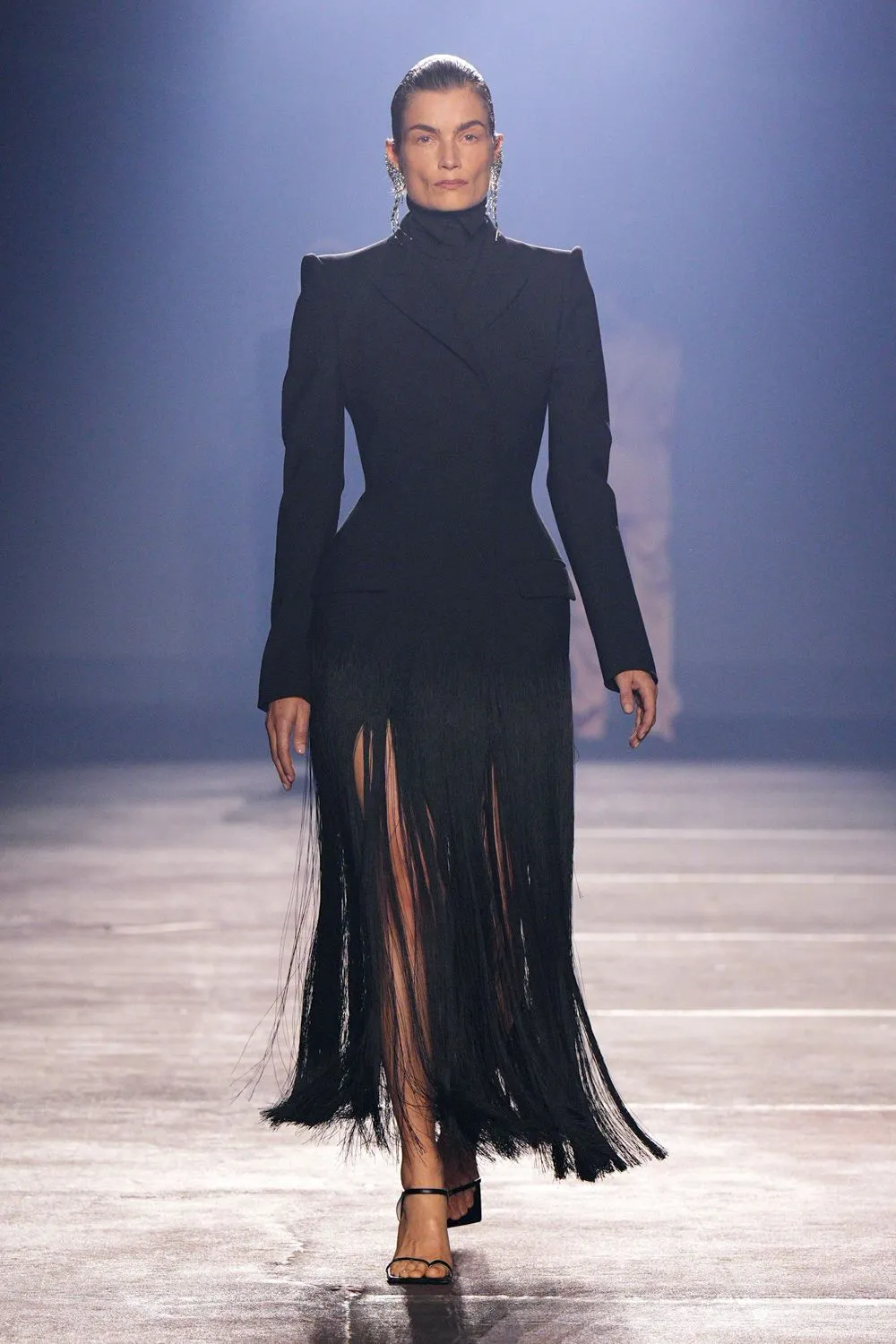
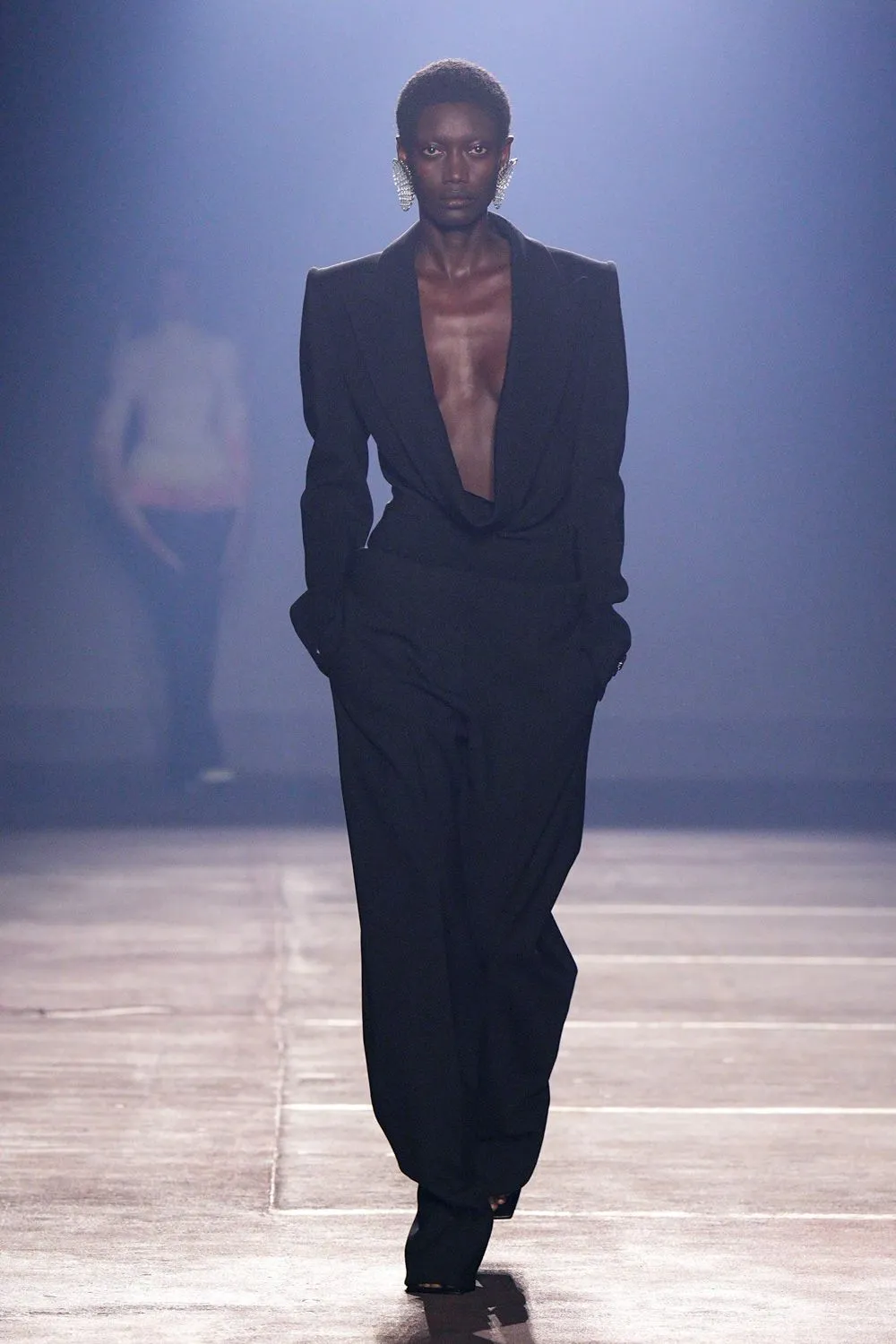
The effect was a dialogue across eras—Thierry Mugler’s operatic exaggerations, Cadwallader’s high-octane futurism, and now Freitas’ grown-up sensuality. The Mugler woman is still dangerous, still magnetic, but she wields her power differently. She doesn’t need shock value because she already has value.
Has she grown up? Absolutely. But in her maturity, she hasn’t dulled her bite. Instead, she has sharpened it into something far more formidable: elegance with teeth.
Photos: MUGLER
Recommended Video
Latest Posts
Latest Issue