



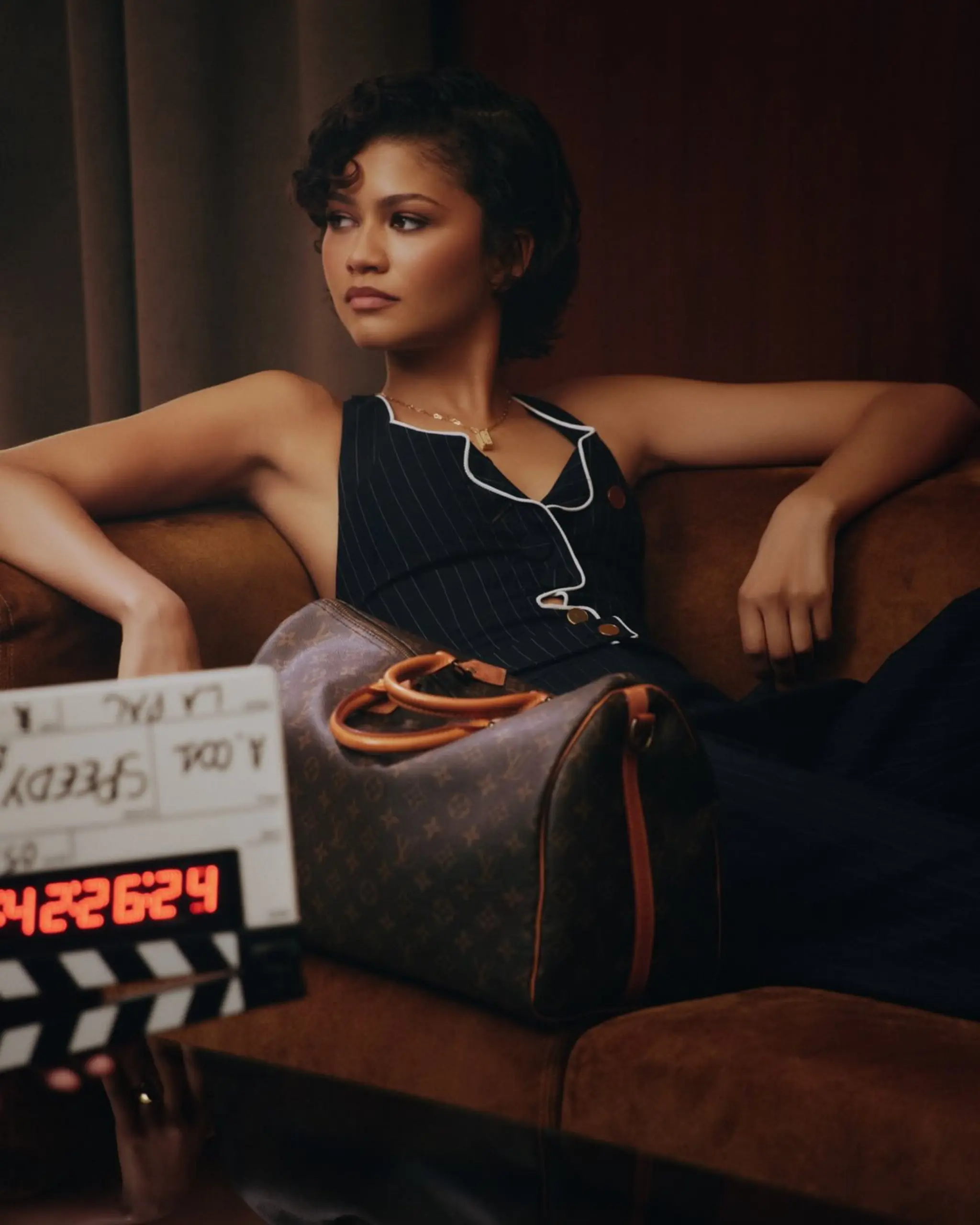
When a young Louis Vuitton arrived in the city toward the middle of the nineteenth century, he found a world in transition. People were beginning to move faster than ever before as horse-drawn carriages were traded for the speed of trains and ships. During this era of rough travel, the role of a craftsman was to act as a guardian for a traveler’s most precious belongings. An apprenticeship under Monsieur Maréchal taught Vuitton that a box was a vessel for a person’s life.
RELATED: Runway Rundown: Louis Vuitton Men’s F/W26 Treats the Future as Familiar


The House’s Initials
After nearly two decades of mastering the art of the custom trunk, he established his own workshop near the Place Vendôme. It was here that the philosophy of the House was truly forged. His trade was built on listening to the specific wishes of a client and translating those needs into wood, leather, and canvas.

As the years stretched and his descendants followed his path, the House turned to softer luggage. In the early part of the twentieth century, the need for practicality birthed the Noé, a bag originally designed for carrying bottles of champagne. Soon after, the Speedy emerged as a response to a new demand for freedom of movement. By the time the Alma arrived, it brought with it a sense of Parisian poise, while the Neverfull eventually bridged the gap between the heritage of vintageVintageClothing and accessories that are at least 20 years old and represent the style of a particular era, valued for their quality and uniqueness. Vintage shopping supports sustainable fashion, andGo to Vintage Glossary trunk linings and the relentless demands of modern life.

Today, this long history of craftsmanship finds a new voice in Zendaya, who brings a renewed energy to the storied Speedy. In her hands, the bag feels as relevant today as it did when it first captured the spirit of a mobile generation. While the ways we travel have changed since Louis first set foot in Paris, the desire to carry our world with us remains exactly the same.
Photos: LOUIS VUITTON (via Website)
Frequently Asked Questions
The Louis Vuitton monogram was introduced in 1896 by Georges Vuitton, the founder’s son, as a tribute to his late father and a measure against counterfeiting. The 130th anniversary marks over a century of the monogram’s continuous presence across the house’s trunks, luggage, and ready-to-wear accessories.
The Speedy emerged in the early twentieth century as Louis Vuitton responded to growing demand for lighter, more portable luggage. It has since become one of the house’s most enduring silhouettes, recently brought into a new cultural moment through its association with Zendaya as a Louis Vuitton house ambassador.
Louis Vuitton arrived in Paris in the mid-nineteenth century and apprenticed under a trunk-maker named Monsieur Maréchal, learning to build custom trunks suited to the era’s rail and sea travel. He later established his own workshop near the Place Vendôme, where the house’s philosophy of client-driven craftsmanship was first formed.
Among the house’s most recognized silhouettes are the Noé — originally designed to carry champagne bottles — the Speedy, the Alma, and the Neverfull. Each emerged at a different moment in the twentieth century in response to shifting demands for portability, structure, and everyday utility.
Zendaya serves as a house ambassador for Louis Vuitton and has been closely associated with the Speedy bag in the brand’s current campaigns. Her involvement brings renewed visibility to one of the house’s most historic silhouettes, connecting its legacy of mobility and craftsmanship to a contemporary audience.
Recommended Video
Latest Posts

Latest Issue