





It used to be the kind of thing women denied even to their closest friends. These days, though, the facelift is just another line on the beauty menu, and the options have never been better. But even in the age of agency, access, and Kris Jenner’s new back-to-her-forties face, it pays to know what each one does. Consider this your cheat sheet—because if you’re going to do it, you might as well do it right.
RELATED: This Cult-Favorite Serum Takes Instant Facelifting to the Next Level

1. SMAS Facelift
This is one of the most speculated techniques (alongside deep plane) behind Kris Jenner’s famously tight-and-right transformation. It involves tightening the SMAS (superficial musculo-aponeurotic system), a layer of tissue between the skin and muscle. Instead of pulling the skin alone, it lifts this deeper structure for longer-lasting, more natural results. In most cases, only a concentrated section near the lower cheek and around the ears is repositioned, creating a refined lift without overly stretching the face.

This is for you if… You’ve got deep nasolabial folds, a softened jawline, and mid-cheeks that are starting to shift downward from their once-plump perch.
Downtime: Two to three weeks
2. Deep Plane Facelift
Also in the Kris Jenner speculation pool, but a tier deeper (literally). What makes it different from the SMAS? Where SMAS lifts the lower face more horizontally (a cinch near the ears), the deep plane works below that layer, lifting skin, fat, and muscle together in one elegant, upward sweep. The vertical lift softens laugh lines, restores cheek volume, and defines the jaw, as if time decided to play favorites.
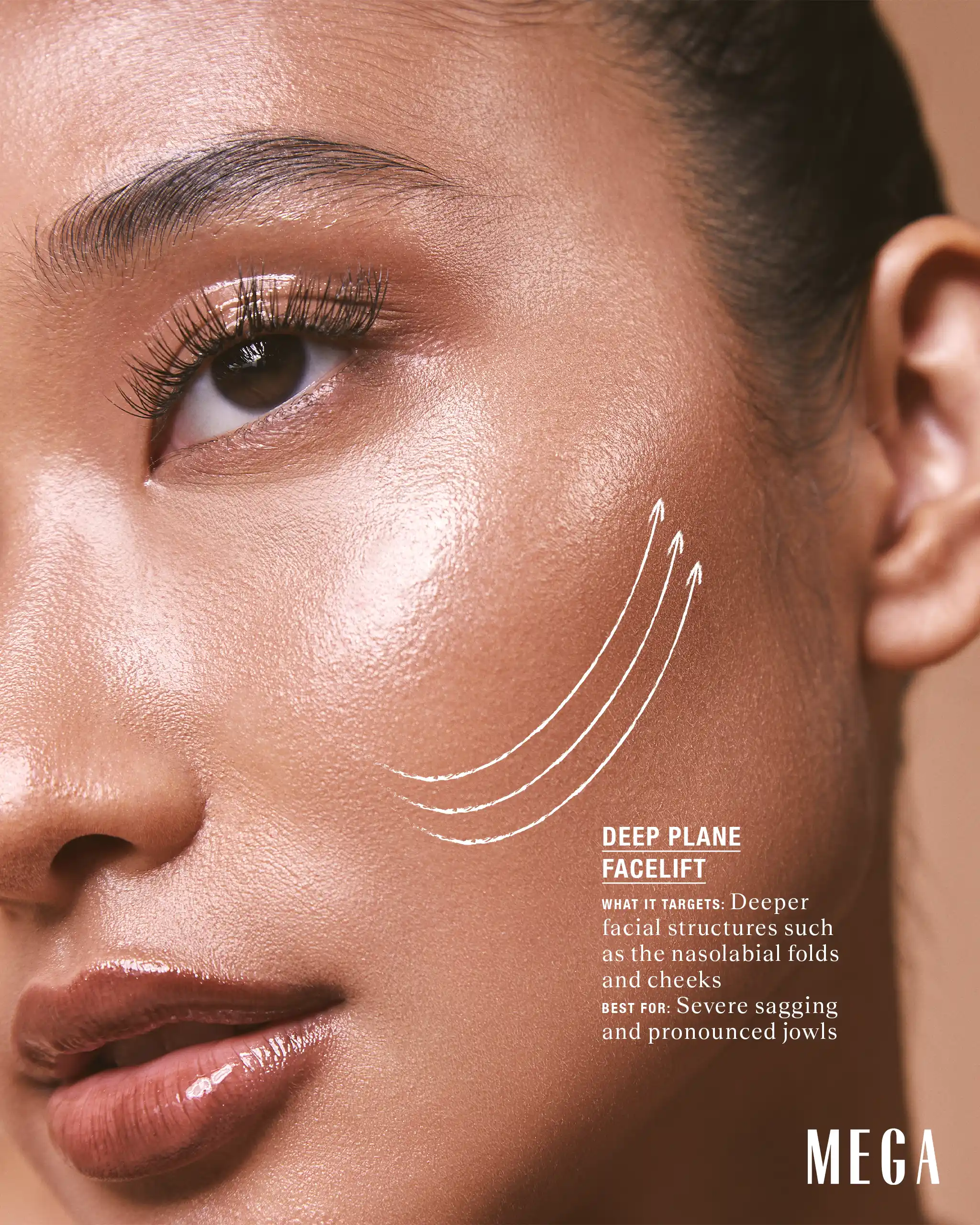
This is for you if… You’re in your 40s to early 60s, noticing deeper sagging and jowling, and want some definition and youth back in your lower face.
Downtime: Two weeks
3. Endoscopic Facelift
But if you’re younger and can’t commit to a full-on nip and tuck just yet, try the endoscopic facelift. Instead of a full lift, this technique uses a tiny camera and a few small incisions to quietly reposition tissue and give the face a gentle, lifted reset. No skin is removed—just a subtle shift upward. Low commitment, high return.
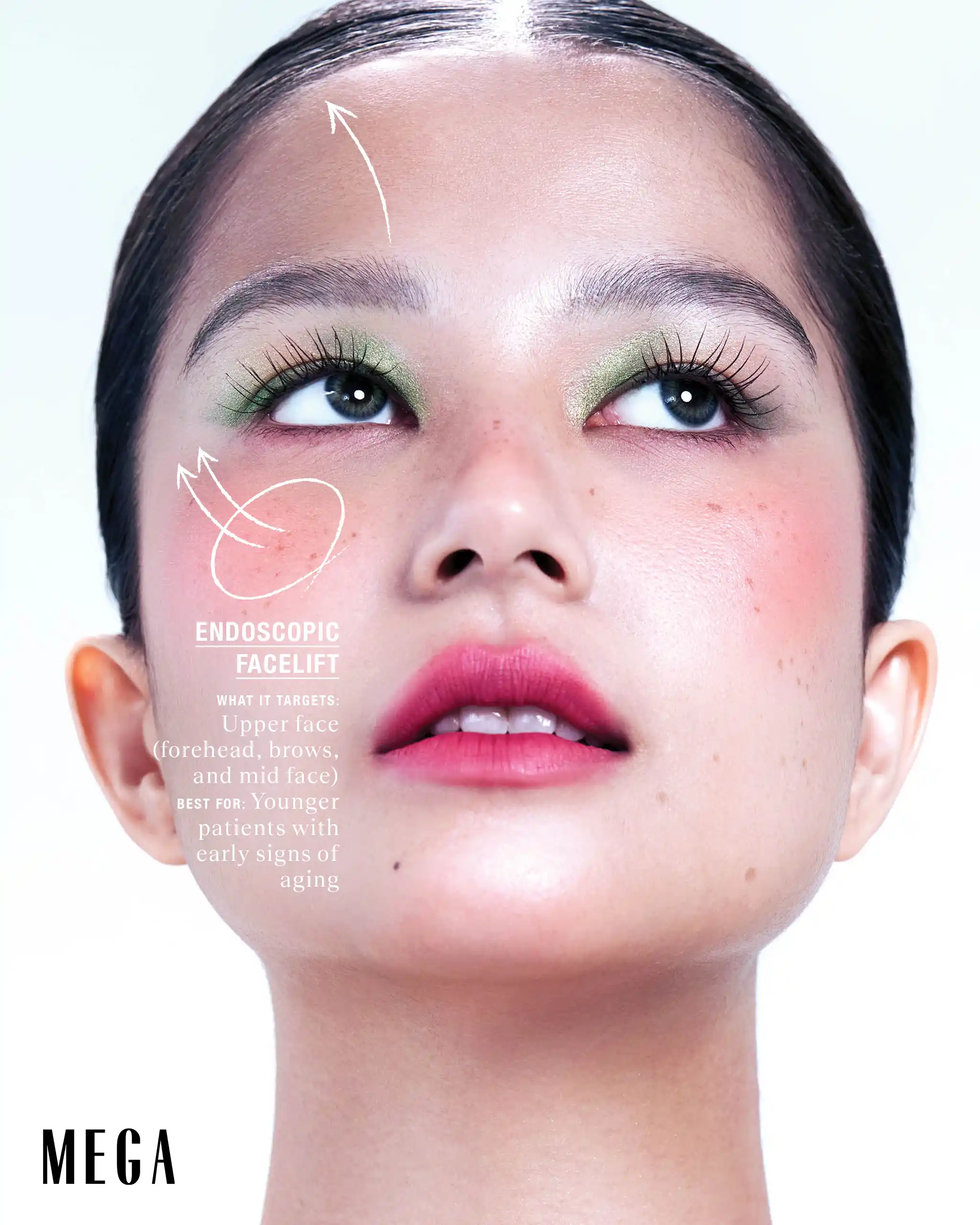
This is for you if… You’re in your 30s to 50s, seeing the first signs of sagging in your midface, brow, or forehead.
Downtime: One to two weeks
4. Mini Facelift
Meet the facelift’s quiet little sister. With shorter incisions and a gentler touch, the mini lifts the lower face, especially around the chin, jawline, and those mouth corners that have started to head south. Unlike a traditional facelift, which lifts everything from cheek to neck, this focuses on two key zones (usually mid-to-lower face), leaving you subtly snatched and social again in as little as seven days.
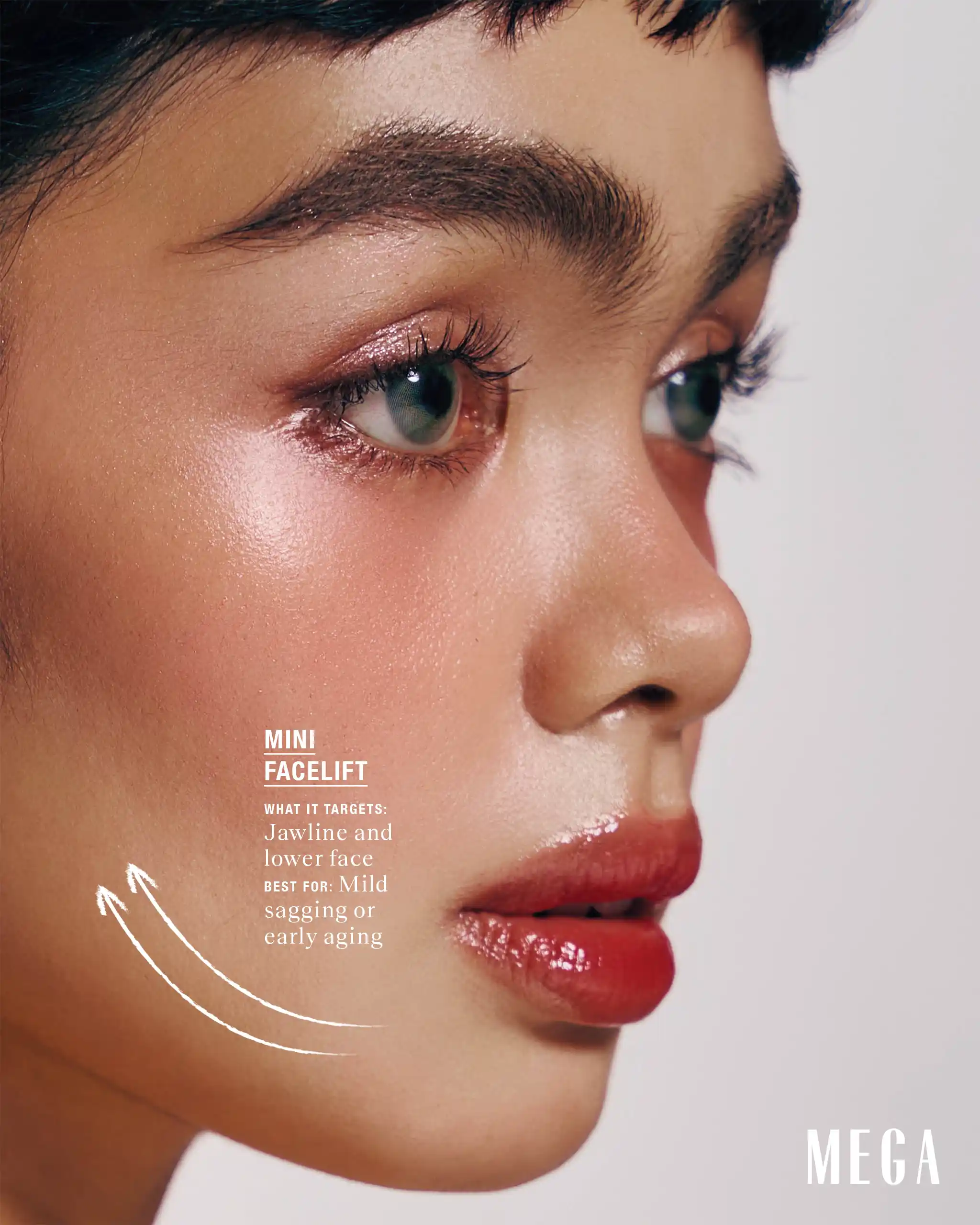
This is for you if… You’re in your late 30s to early 50s, noticing early signs of sagging in your lower face, and want a subtle lift without the downtime of a full facelift.
Downtime: One week
Photos: MEGA ARCHIVES
Recommended Video
Latest Posts




Latest Issue