



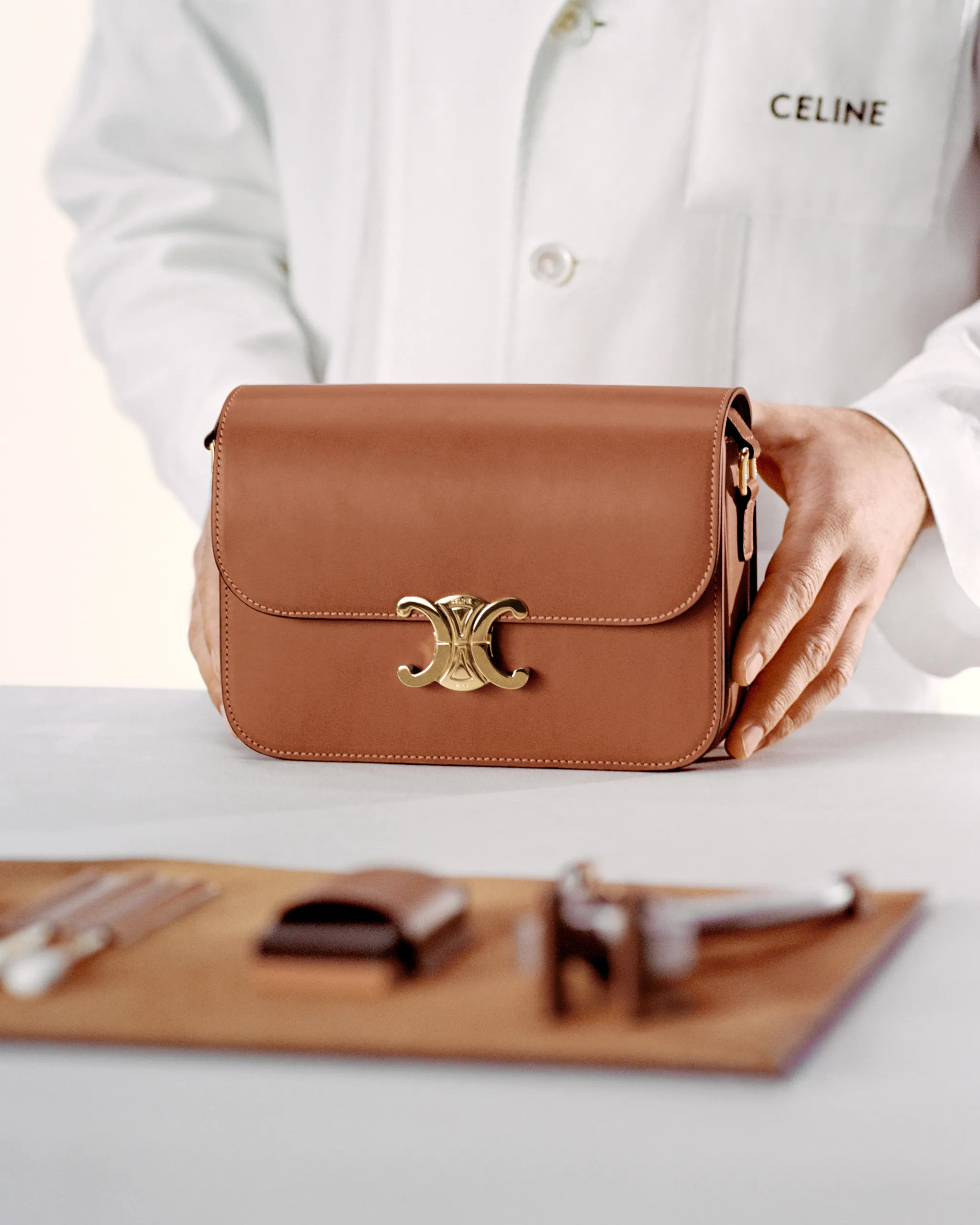
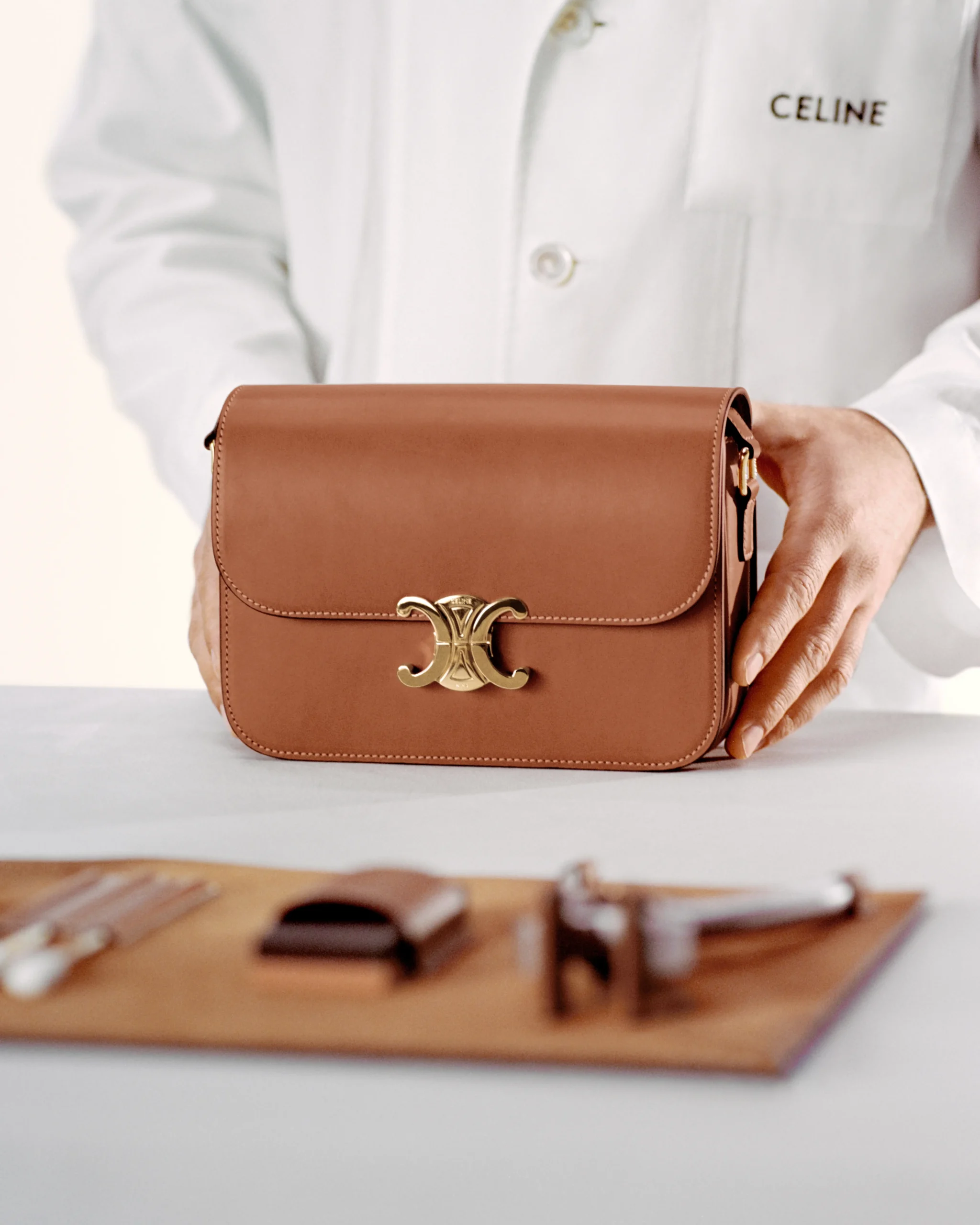
A finished handbag keeps the secret of its creation. Smooth seams tuck away every join, and hand-painted edges give nothing away about the hours spent perfecting them. By the time a CELINE Triomphe finds its way to a new owner, all that painstaking labor has settled invisibly into the leather.
An insider look at that process typically requires a trip to an atelierAtelierA designer's private workshop or studio where garments are conceived, cut, fitted, and finished, often by hand. The term is closely tied to couture and made-to-order fashion, evoking craftsmanship, exclusivity,Go to Atelier Glossary in Europe. However, CELINE brought a piece of that world to Manila for many to see. Inside its Greenbelt 3 boutique, the house hosted an intimate savoir-faire presentation where a visiting master artisan demonstrated the precise steps behind the iconic Triomphe.
CELINE’s Savoir-Faire Lives Through the Artisans Who Learn It

We often translate savoir-faire as “know-how,” but in high fashion, the phrase holds a weight that goes beyond basic technical skill. It isn’t just about following a recipe or executing a blueprint. Real savoir-faire is an instinct—a tactile dialogue between an artisan and the material resting on their workbench.
Leather, after all, is wonderfully unpredictable. Because every hide brings its own unique grain, pliability, and character, no two pieces behave the exact same way. Prior to bringing a blade to the surface, the artisan inspects the leather, feeling for subtle shifts in texture to decide where each panel belongs. A standard pattern tells you what to cut, but years of hands-on practice teach you where and how.
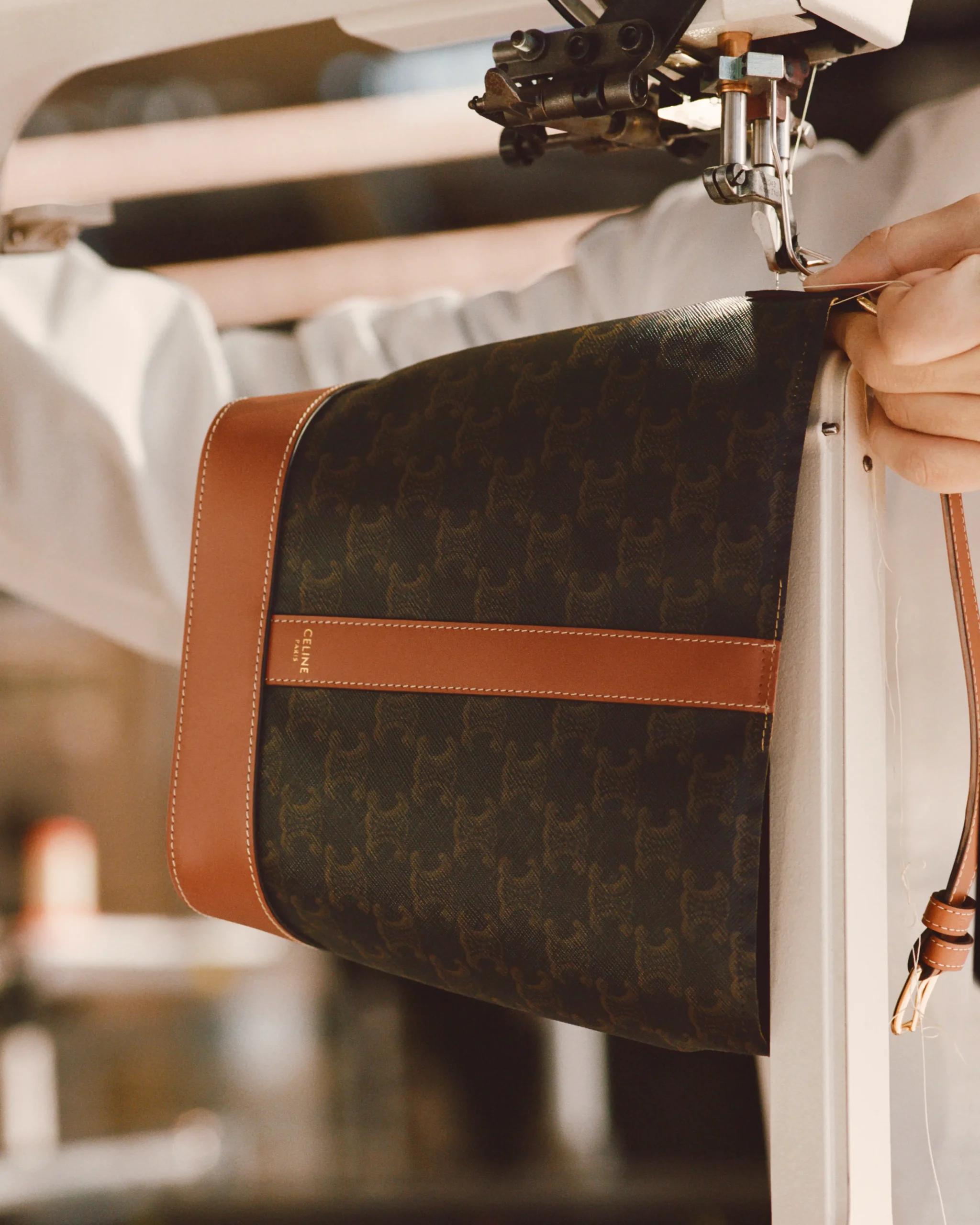
That kind of intuition takes time to cultivate. Artisans spend at least five years training before they assemble a complete house bag. Much of this craft is passed down at CELINE’s dedicated leatherworking school in Strada in Chianti, nestled in the Tuscan hills. For a brand that built its identity on fine leatherwork in the 1960s, keeping these traditional techniques alive preserves founder Céline Vipiana’s original standard of quality.
Inside the Making of the CELINE Triomphe
RELATED: CELINE Has a New Way With the Triomphe
Watching a Triomphe come together piece by piece shows why the process takes up to a full month. Instead of a single craftsperson building a bag from start to finish, the work travels through a series of specialized stations, each expert adding their own refined touch to the object.
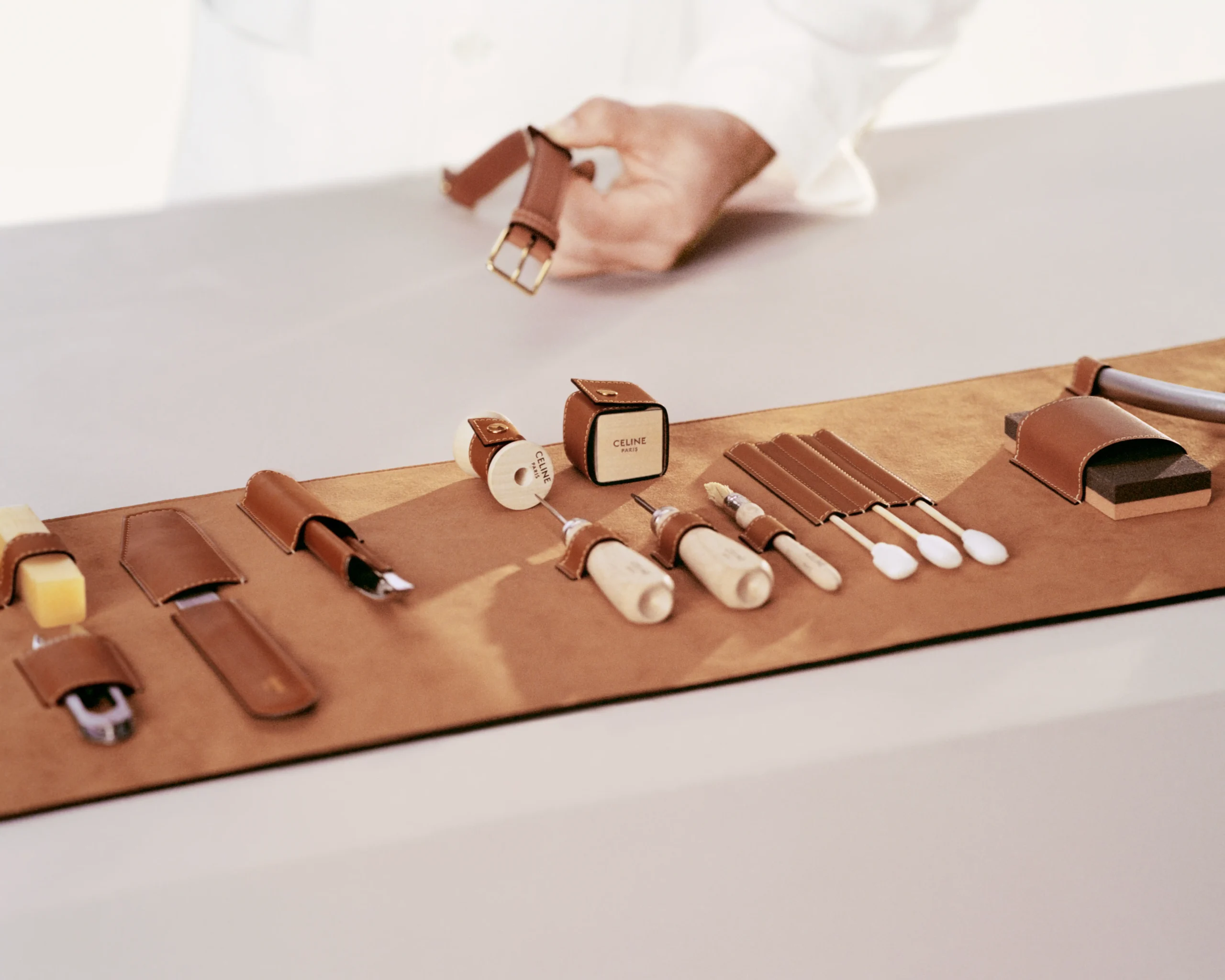
The process begins with shaving the hide down to exact fractions of a millimeter—known as skiving—so the leather folds effortlessly without adding bulk. From there, the raw edges enter a rhythmic cycle of hand-painting, drying, and gentle sanding, repeated until the border becomes entirely smooth to the touch.
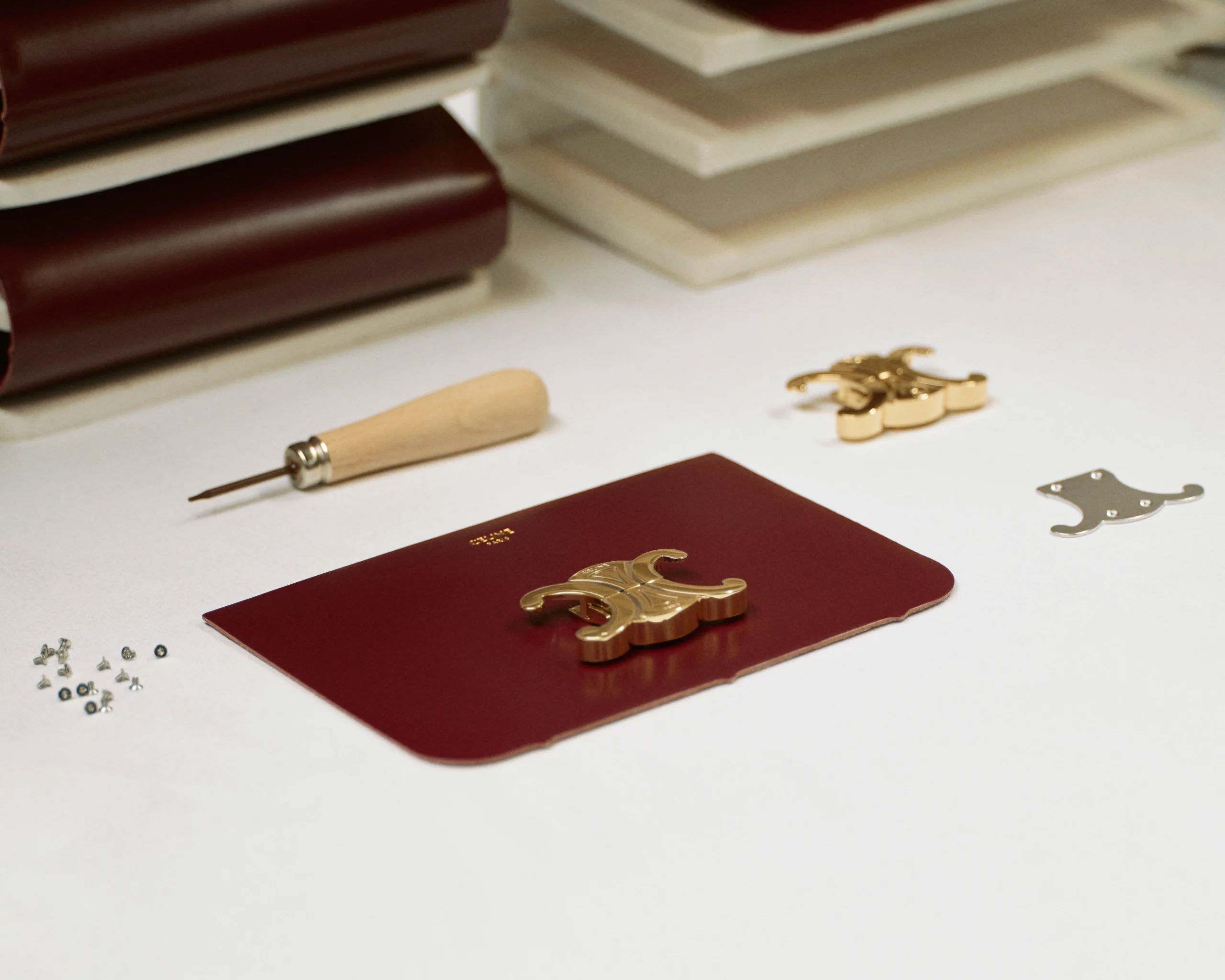
Even the signature Triomphe hardware, with its interlocking-C motif, is put together by hand using 20 separate brass pieces. Looking closely at the final piece reveals that every square inch was shaped, guided, and cared for by human hands—leaving behind an inheritance passed along to the next artisan who sits at the bench.
Photos: CELINE
Frequently Asked Questions
Producing a CELINE Triomphe takes up to a full month, as the bag moves through a series of specialized stations, with each artisan contributing a distinct step, including skiving, hand-painting, and hardware assembly.
CELINE artisans train at the brand’s dedicated leatherworking school in Strada in Chianti, in the Tuscan hills. Artisans typically train for at least five years before assembling a complete house bag.
Savoir-faire refers to more than technical skill; it describes an artisan’s tactile, intuitive understanding of leather, developed through years of hands-on practice rather than simply following a fixed pattern.
The Triomphe bag’s signature interlocking-C hardware is assembled entirely by hand using 20 separate brass pieces, reflecting the same manual craftsmanship applied throughout the rest of the bag’s construction.
CELINE hosted a savoir-faire presentation at its Greenbelt 3 boutique in Manila, where a visiting master artisan demonstrated the techniques behind constructing the Triomphe bag.
Recommended Video
Latest Posts



Latest Issue