



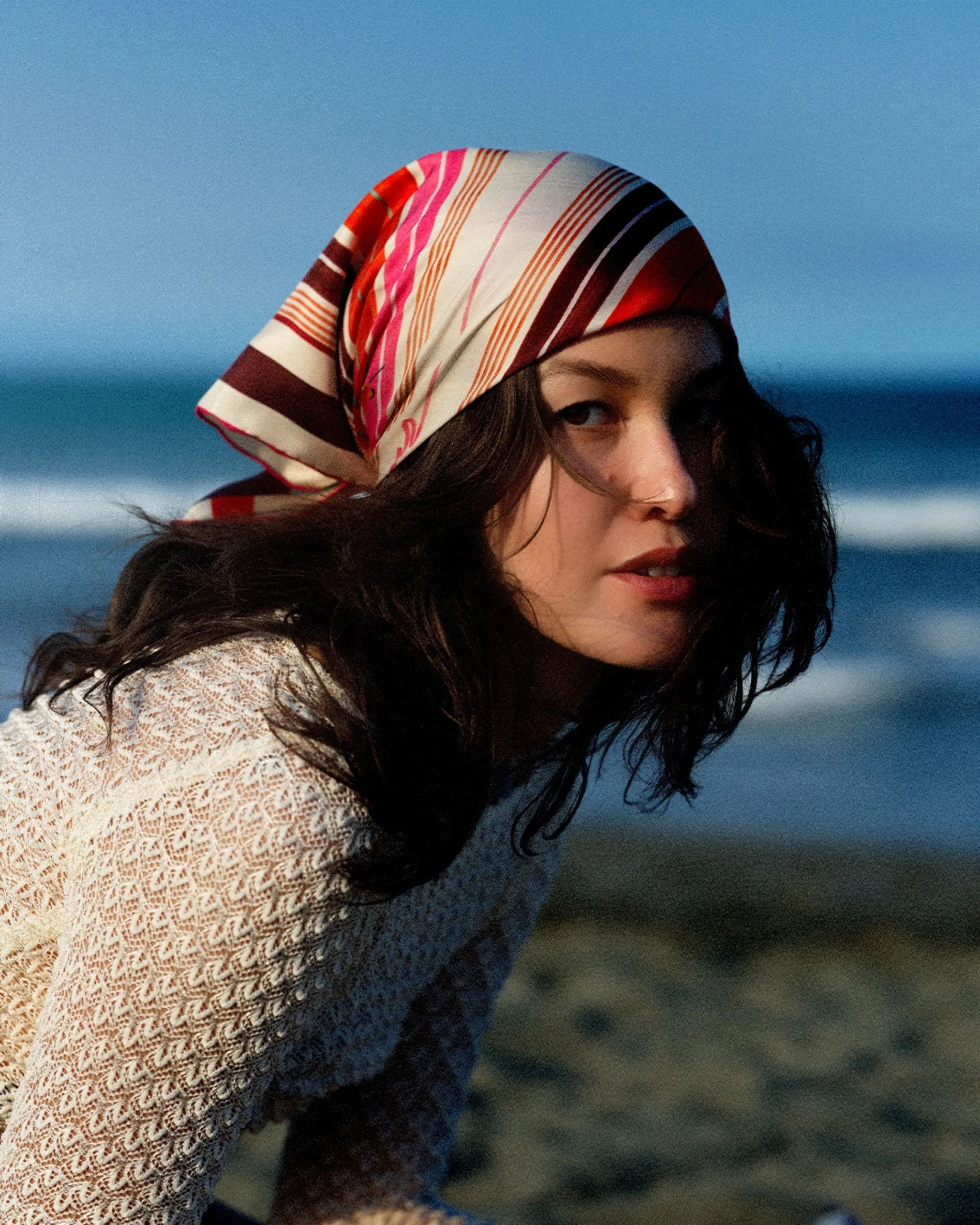
What does it take for a scarf to hold its ground? Martina Lebron seems to have an answer. Her silk pieces are part of the outfit, then become the point of it. Calling them accessories feels insufficient. The artist’s practice begins with a simple premise: culture should not sit in archives or wait for ceremony. It should live in the everyday, pressed against the skin, moving through heat and wind and the ordinary choreography of getting dressed. In the Philippines, that idea finds its most natural form.
RELATED: Laufey Assembles the Waisan Avengers for Her “Madwoman” Music Video
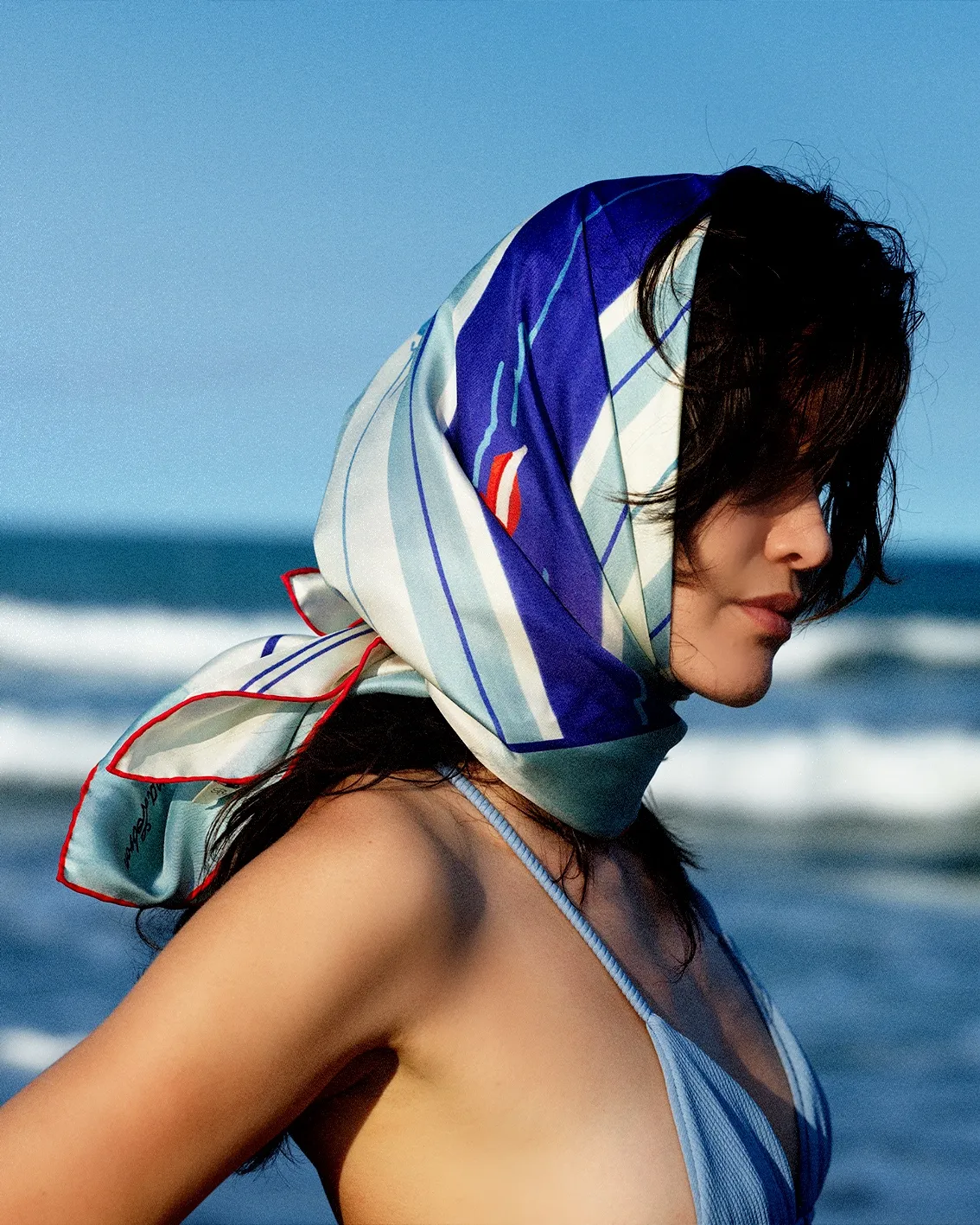
The Colors of the Wind
For Summer 2026, Lebron draws from two winds that move across the country: “Habagat” and “Amihan”. They set the pace of the season, arriving as part of daily life
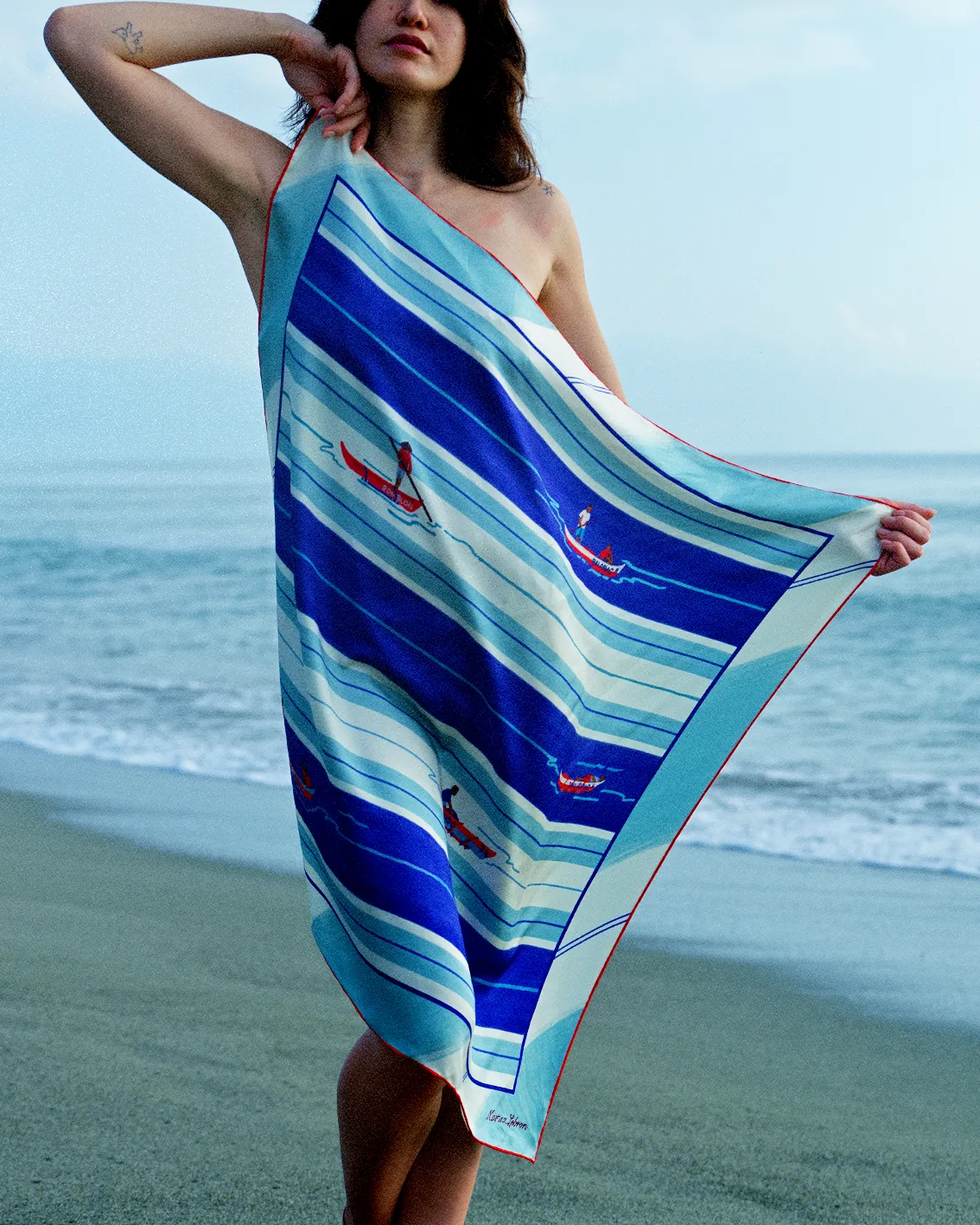
“Habagat” arrives first. The Southwest monsoon, dense with rain and movement, is rendered in layered blues that echo tide and sky in conversation. There is motion in the print—small vessels cutting through bands of color, lines that suggest both current and direction. It holds the mood just before a downpour.
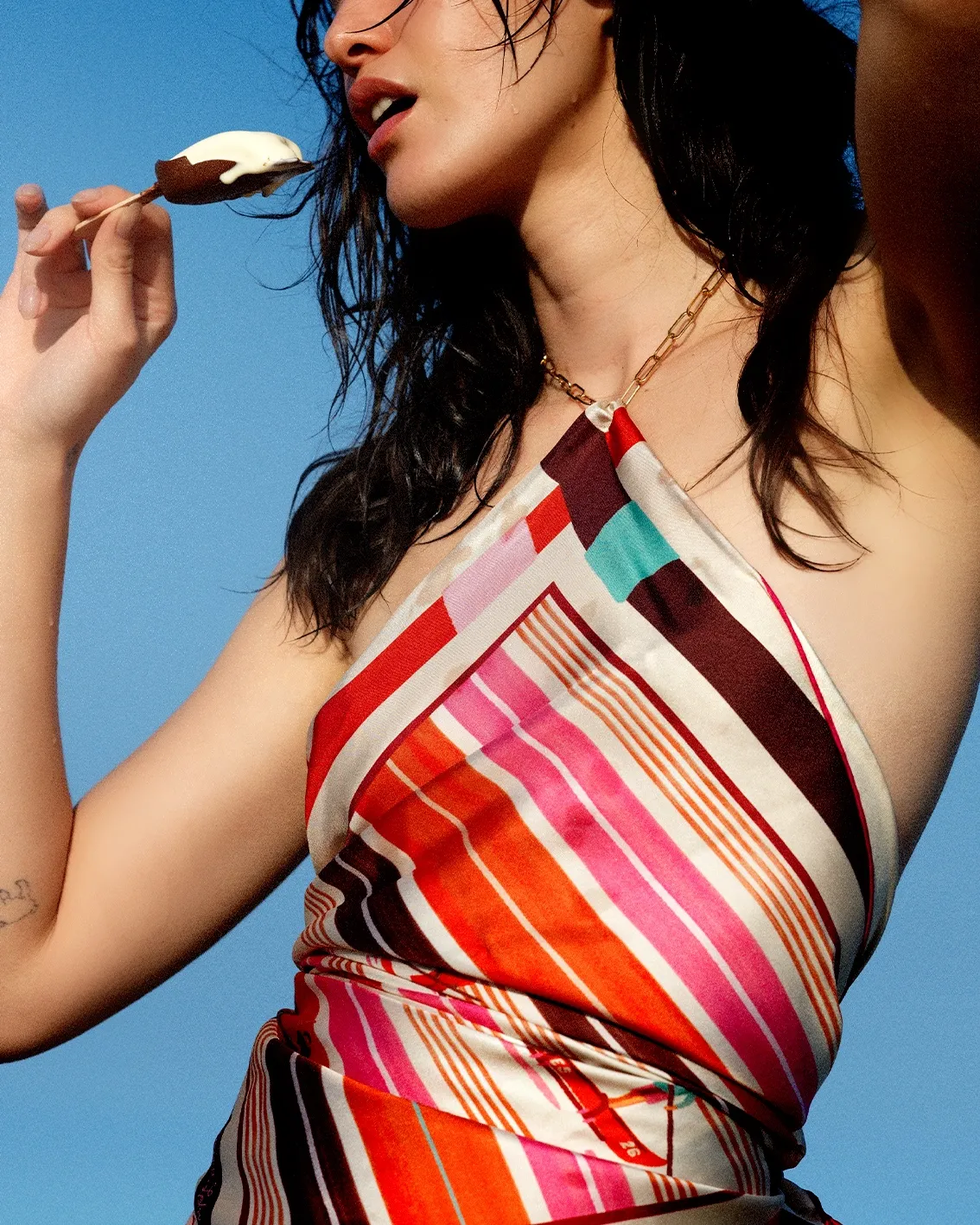
“Amihan” follows with a different temperament. The Northeast monsoon carries drier air, longer light, a certain breeziness that settles over the islands. Lebron translates this into warmer tones, where reds and ambers stretch across the silk like a late afternoon that refuses to end. The same motifs appear, but softened, as if the wind itself had slowed to a steady breath.
A Material That Listens
Silk, in this context, is a deliberate choice: low-maintenance in theory, high-impact in practice. It moves, it holds, it delivers. It also carries a certain reputation—one long associated with European houses and inherited codes of luxuryLuxuryrefers to a state of exceptional comfort, elegance, and quality, often characterized by premium craftsmanship, exclusivity, and superior experiences.Go to Luxury Glossary.
Lebron embraces that territory with adjustment. She does not mimic its language; she redirects it. Filipino narratives, placed on silk, allow the material to do what it should: showcase our identity, signal value, hold attention.
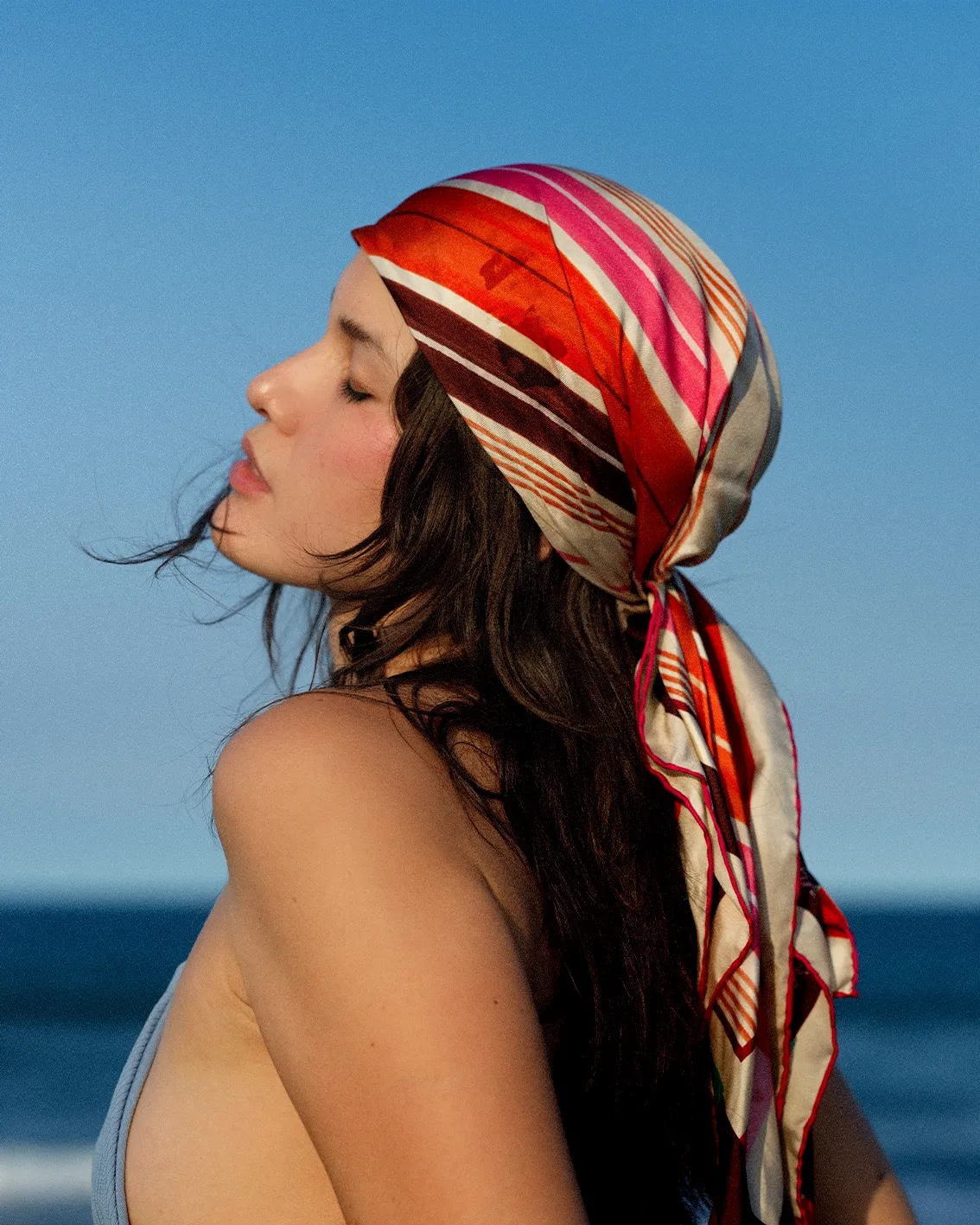
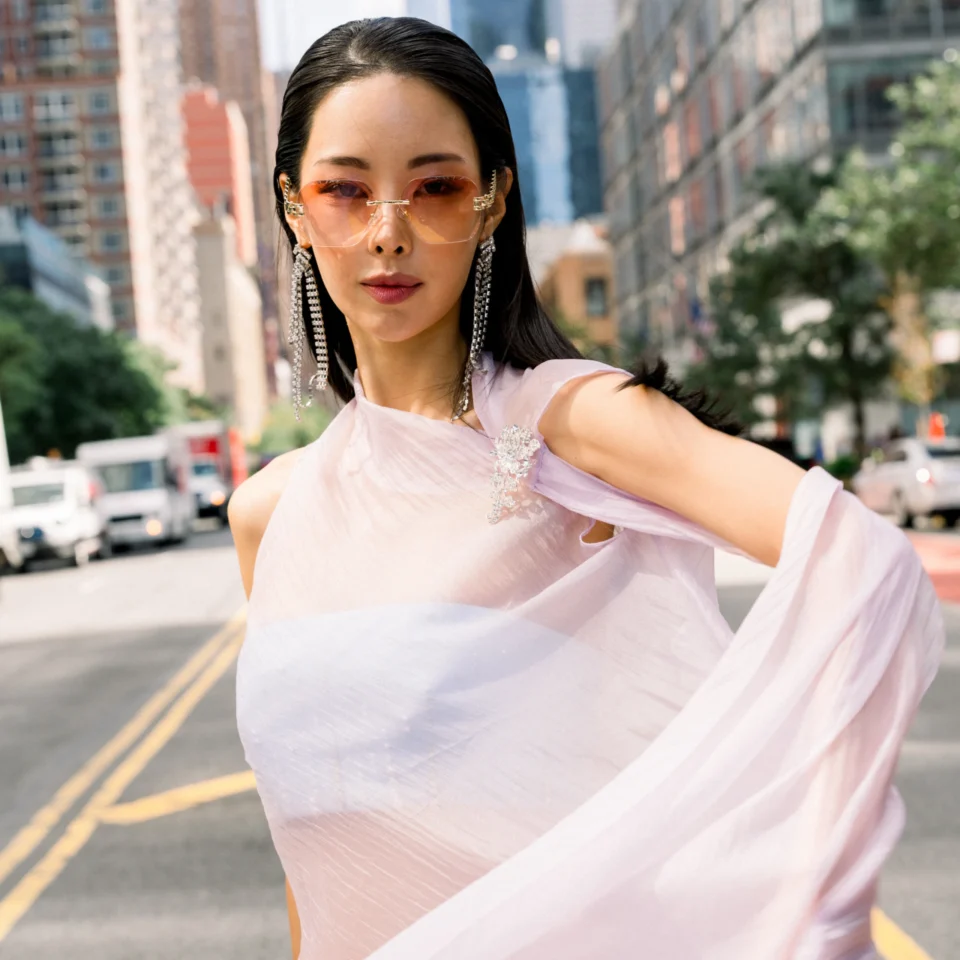
Her scarves wear well in a tropical wardrobe. A halter, a bandeau, a wrap, a layer that answers to heat rather than fights it. They do not impose shape; they negotiate with the body. They move when you move. They rest when you do.
It is fashion that understands climate, rather than pretending it doesn’t exist. In that understanding, these scarves are living textiles, shaped by how they are worn and where they travel. A small square of silk, perhaps. But never a small idea.
Photos courtesy of MARTINA LEBRON
Frequently Asked Questions
The collection is inspired by the Philippine climate, specifically the “Habagat” and “Amihan” winds that shape the country’s seasons, capturing their unique temperaments through color and movement.
“Habagat” is rendered in layered blues to evoke rain and tides, while “Amihan” uses warm ambers and reds, suggesting the soft, steady breeziness of the Northeast monsoon.
Silk was chosen for its versatility in a tropical climate; it moves with the body, functions as an adaptable layer, and offers a luxurious, high-impact finish for everyday wear.
She views her scarves as living textiles that should be worn daily, allowing Filipino narratives to reach beyond archives and integrate into the choreography of everyday life.
The scarves are designed to be multifunctional, easily styled as a halter, bandeau, or wrap, ensuring comfort in the heat while offering a sophisticated, identity-driven fashion statement.
Recommended Video
Latest Posts


Latest Issue