



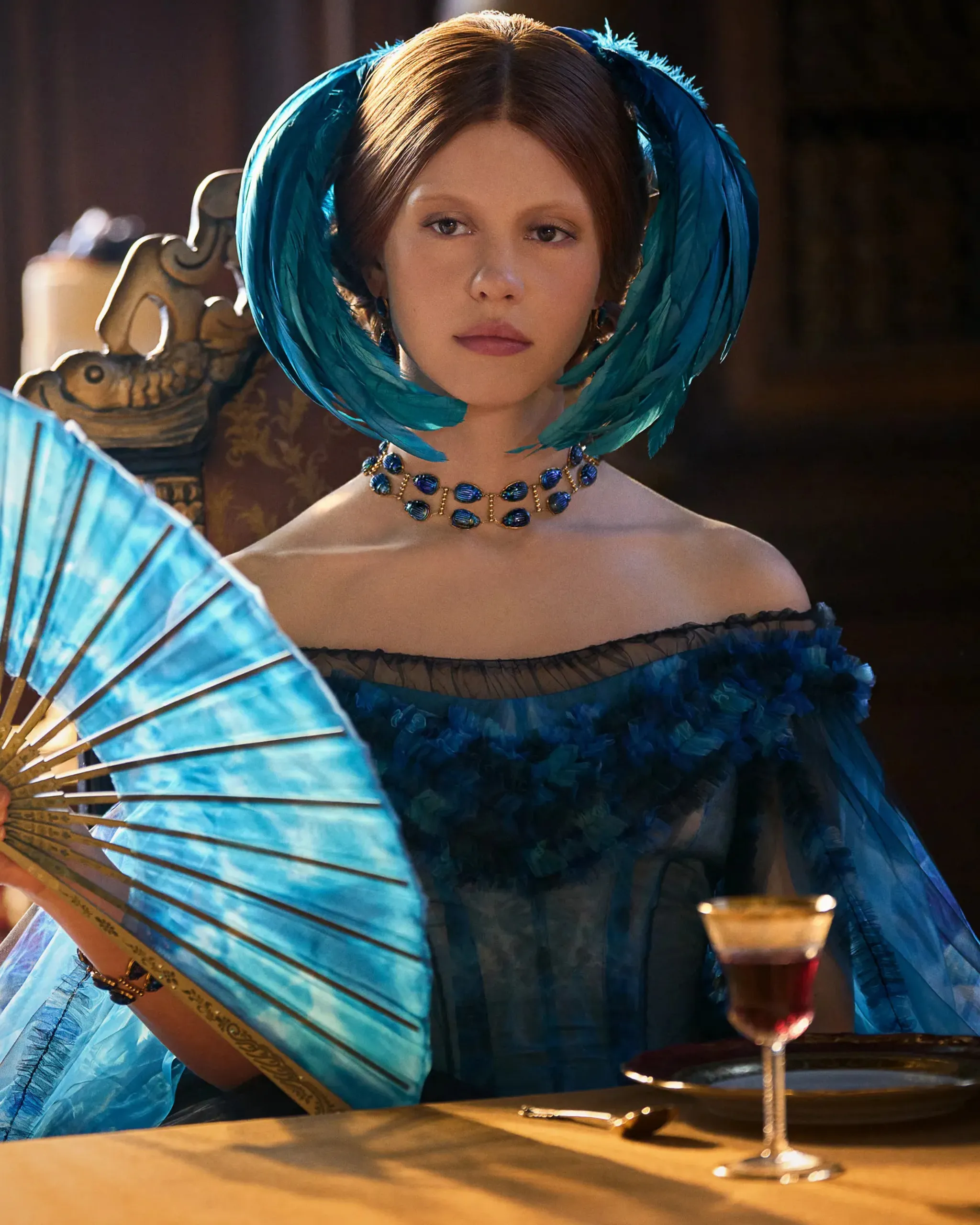
Evidently in Gothic literature, the most devastating form of beauty is always the kind steeped in foreboding tragedy: an innocent being that gently illuminates the darkness, only to be consumed by it entirely. It’s a concept best seen in Guillermo del Toro’s recent adaptation of Mary Shelley’s novel, especially through British actress Mia Goth’s dual roles of Baroness Claire Frankenstein and Elizabeth Harlander.
RELATED: How Does Horror Bring Fashion and Film Together?
Goth is no stranger to embodying multiple figures in a single film, having famously played both the young protagonist and the elderly antagonist in X with the aid of prosthetics. Yet in Frankenstein, the women she gives life to are best distinguished by their elaborate choice of fashion, a visual language masterfully conceived by costume designer Kate Hawley. Hawley, whose work in Crimson Peak already cemented her as a master of Gothic romanticism, creates two hauntingly distinct aesthetics for the women at the story’s heart.
Warning: Major spoilers ahead.
The Mother & Muse
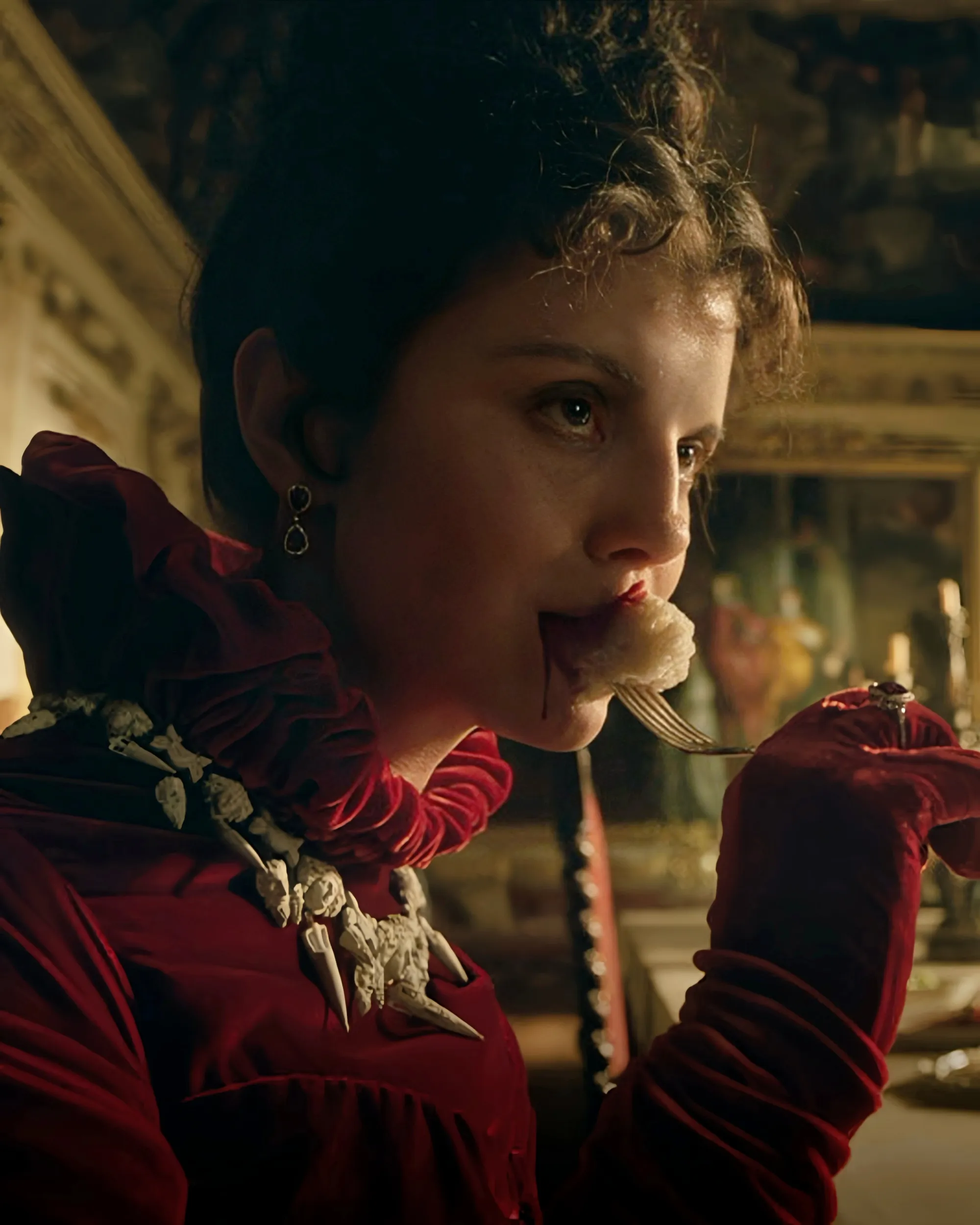
Before the terror and the lightning strike, there is grief. Baroness Claire Frankenstein, Victor’s (Oscar Isaac) mother, exists as the foundational trauma that drives his god complex. Having died while giving birth to her second son, William (Felix Kammerer), she becomes the idealized memory Victor is obsessively trying to retrieve or recreate: pure, unreachable maternal warmth.

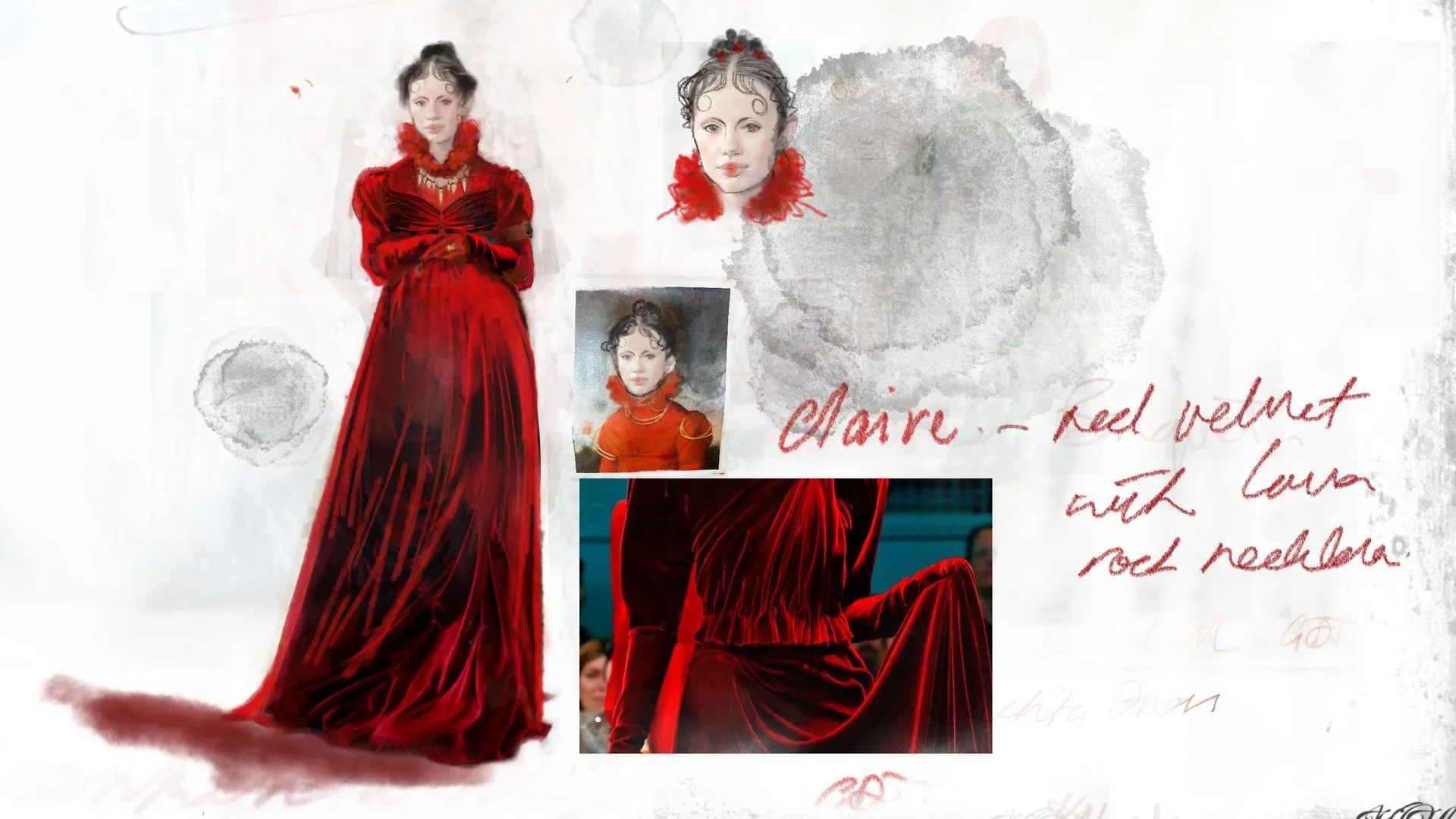
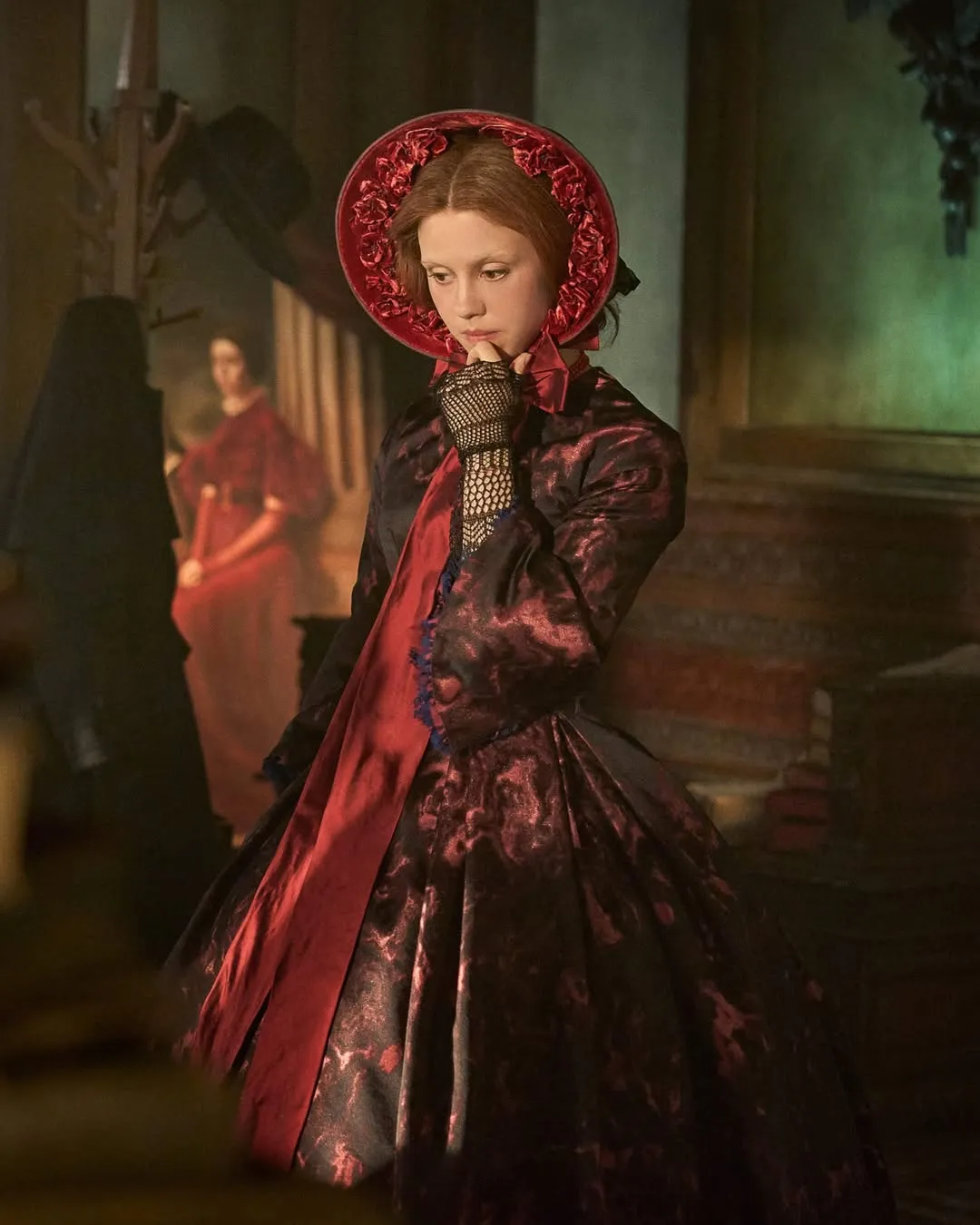
Hawley designs Claire’s garments to reflect this ethereal status, referencing the Romantic Period with dramatic silhouettes softened by transparent layering. As Claire first appears wearing a sheer, flowing red veil, she’s presented as perpetually just out of focus or half-hidden, mirroring the ephemeral nature of Victor’s memory. That distinct crimson immediately establishes the emotional hue of the film—a foreshadowing of the blood and sacrifice to come.
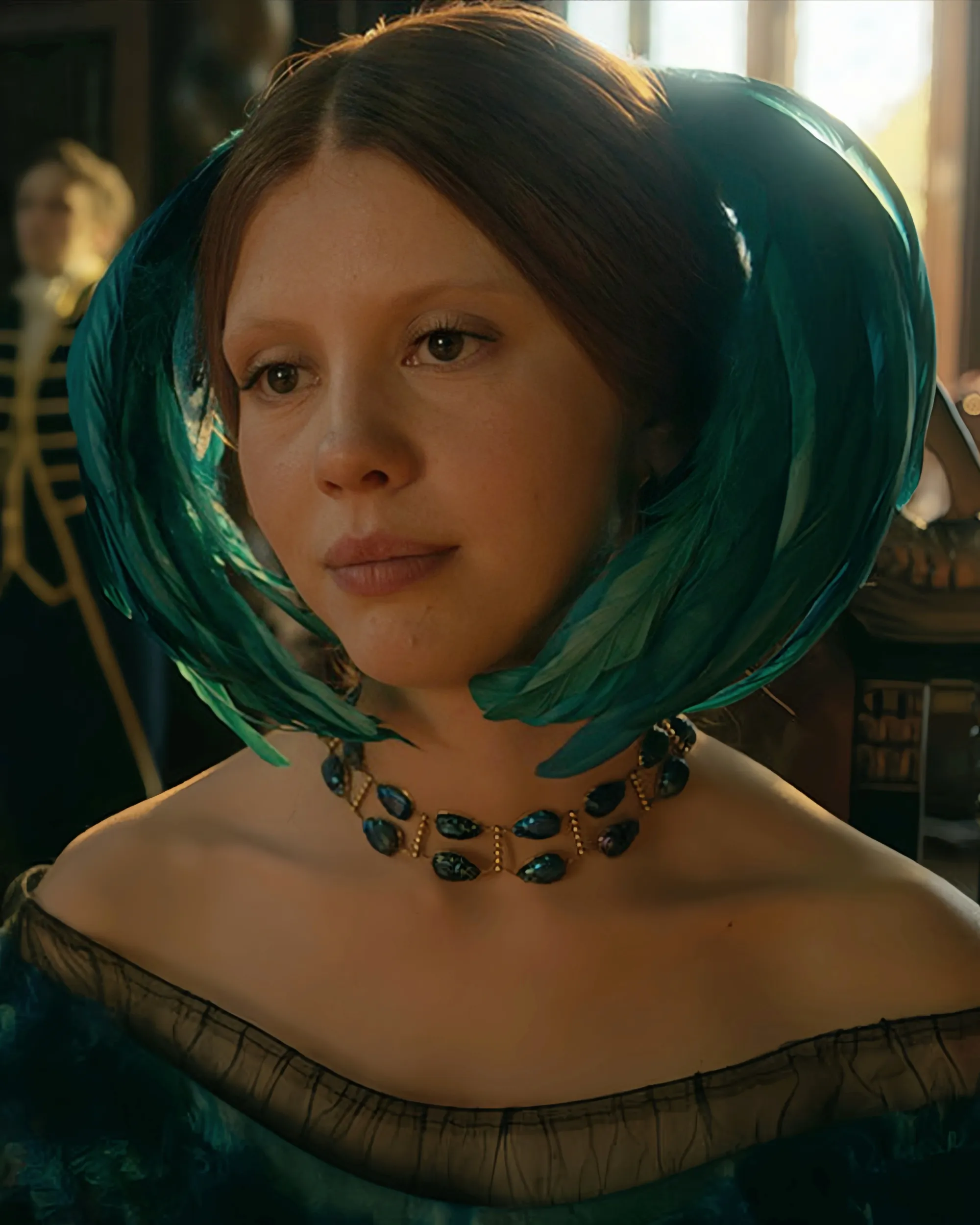
The fiercely intelligent and deeply compassionate Elizabeth Harlander, on the other hand, is a true source of empathy in a narrative saturated with ego. Like Claire, there’s an air of maternal softness in her. It draws Victor in as he begins to fixate on her despite being his brother’s fiancee. She’s also the first person who extends unconditional kindness to the Creature (Jacob Elordi), marking her as the essential opposite of Victor’s monstrous treatment and subsequent abandonment.
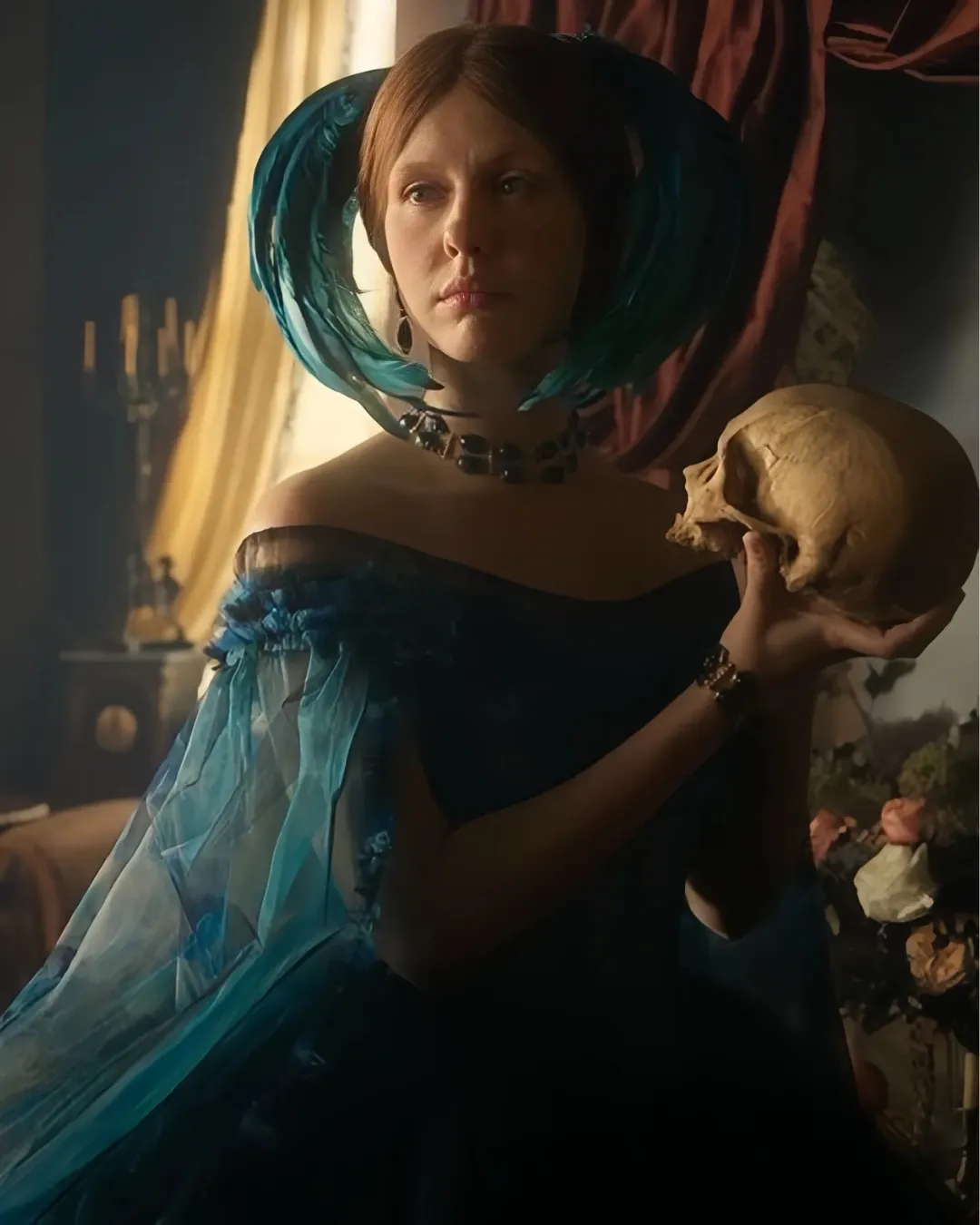
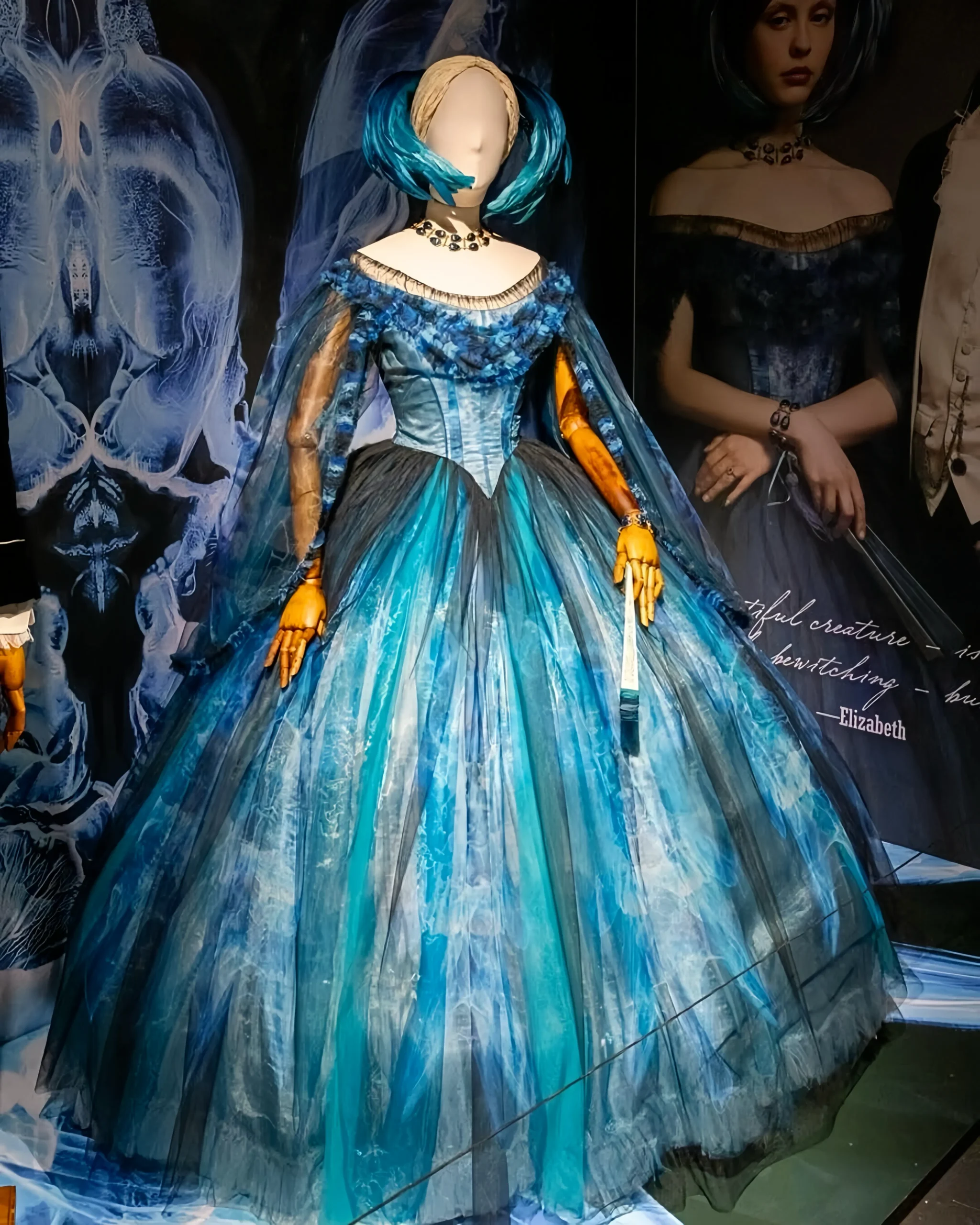
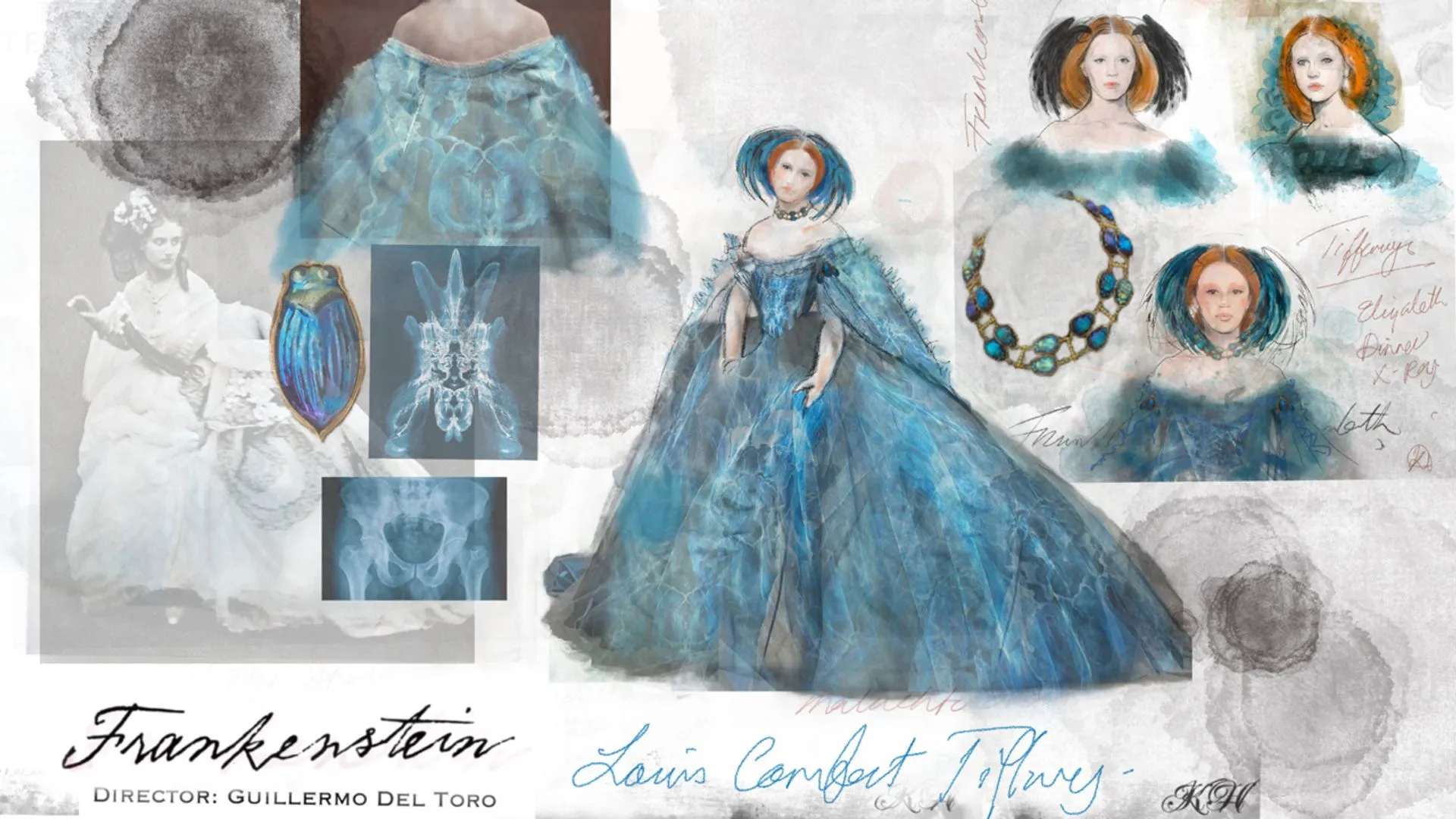
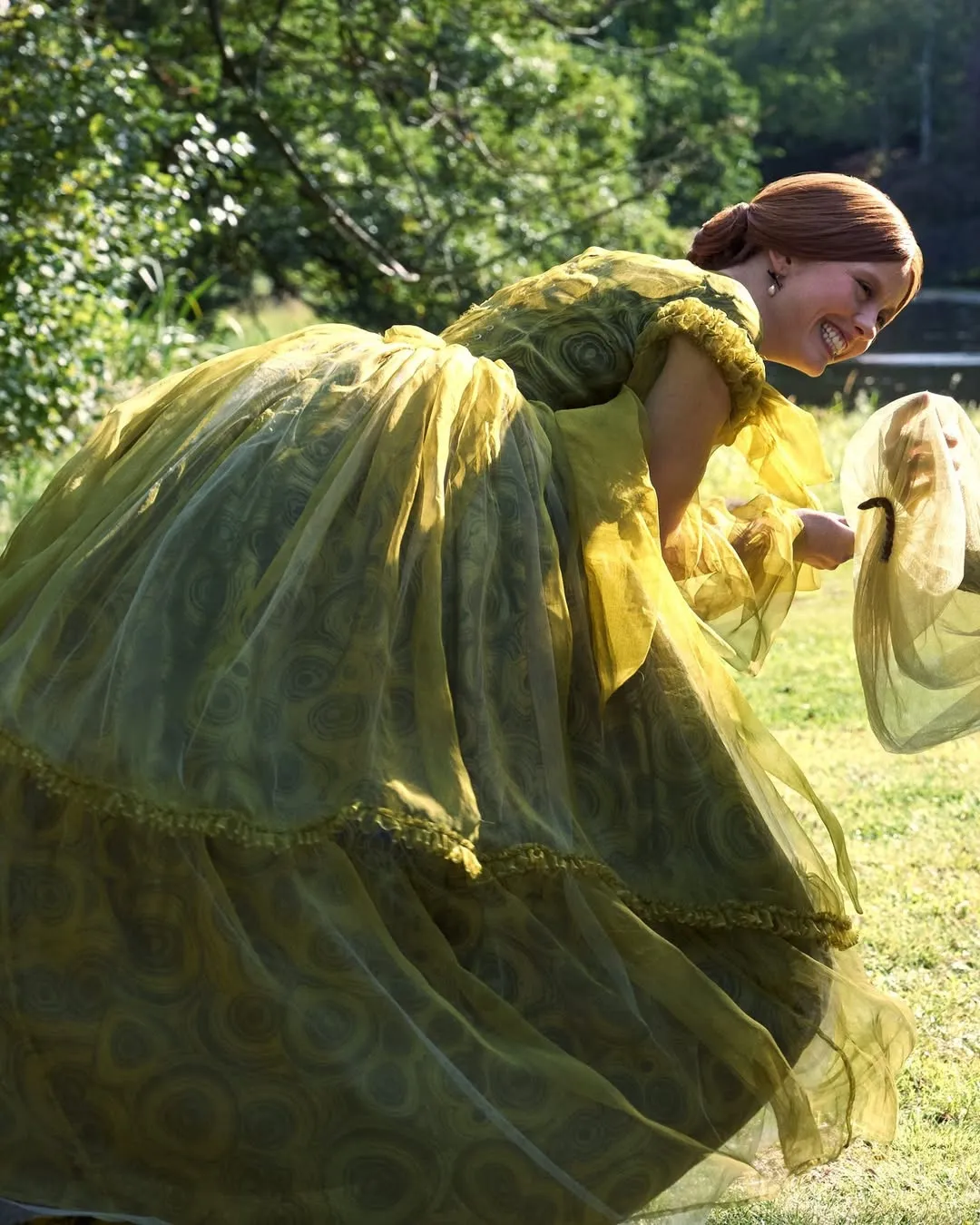
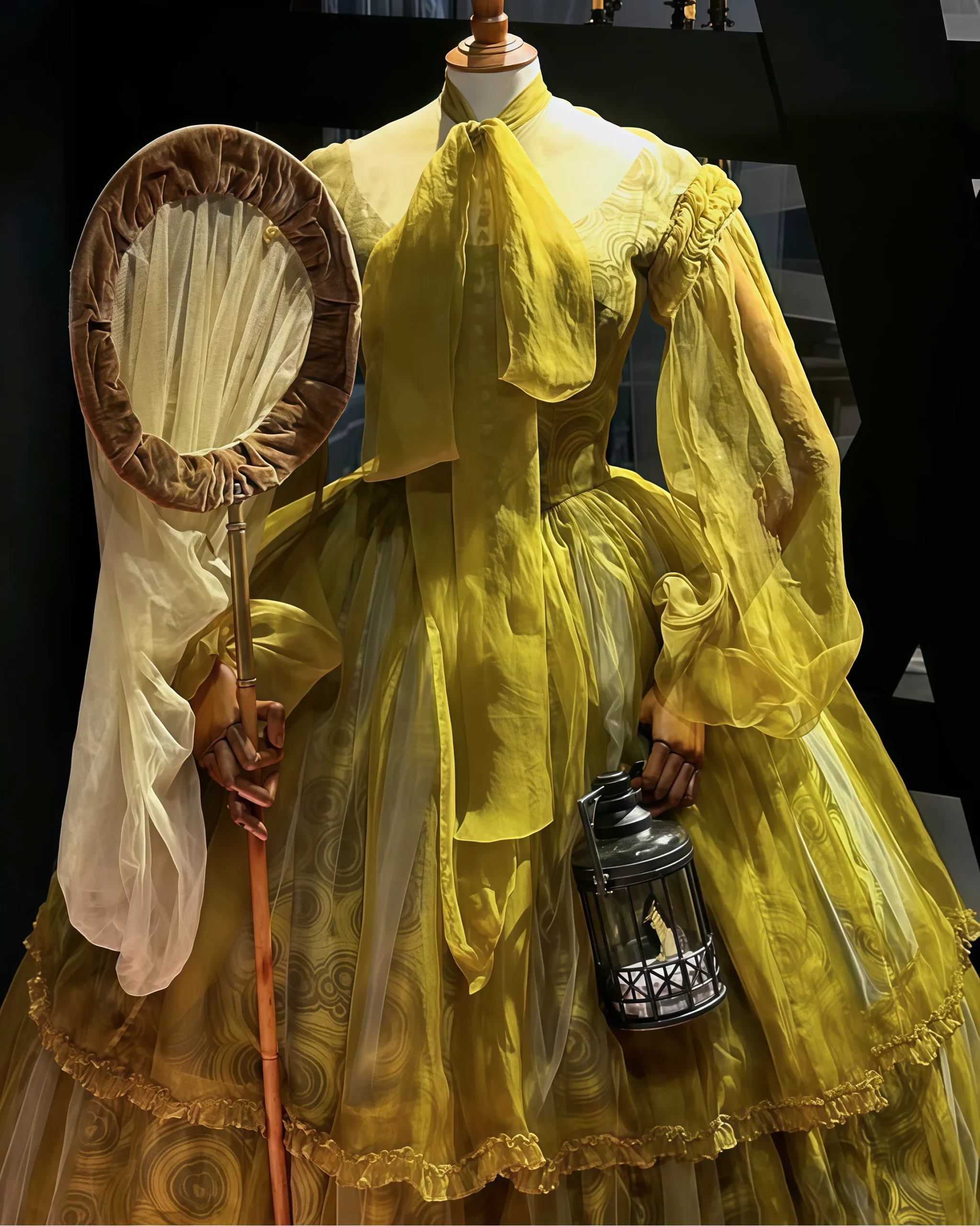
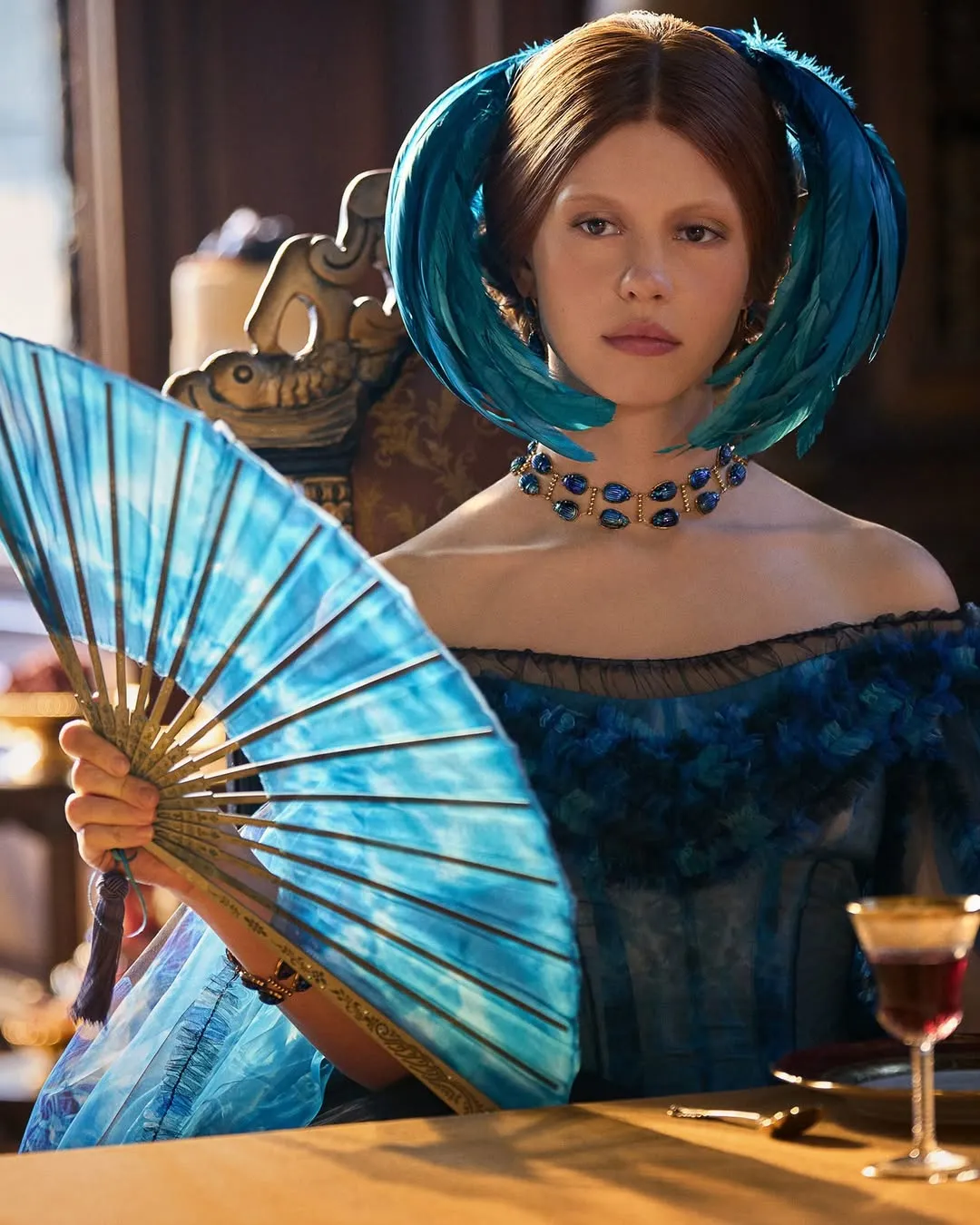
Hawley’s vision transforms Elizabeth’s clothing into a study of entomology and philosophy. She herself is dressed as a prized specimen from the natural world—a rare insect whose delicate beauty contains a powerful life force. Elizabeth’s gowns favor a specific palette of aniline greens and magentas, chosen to mimic the iridescence of beetle wings and the fractal patterns of cellular anatomy.


The Jewels
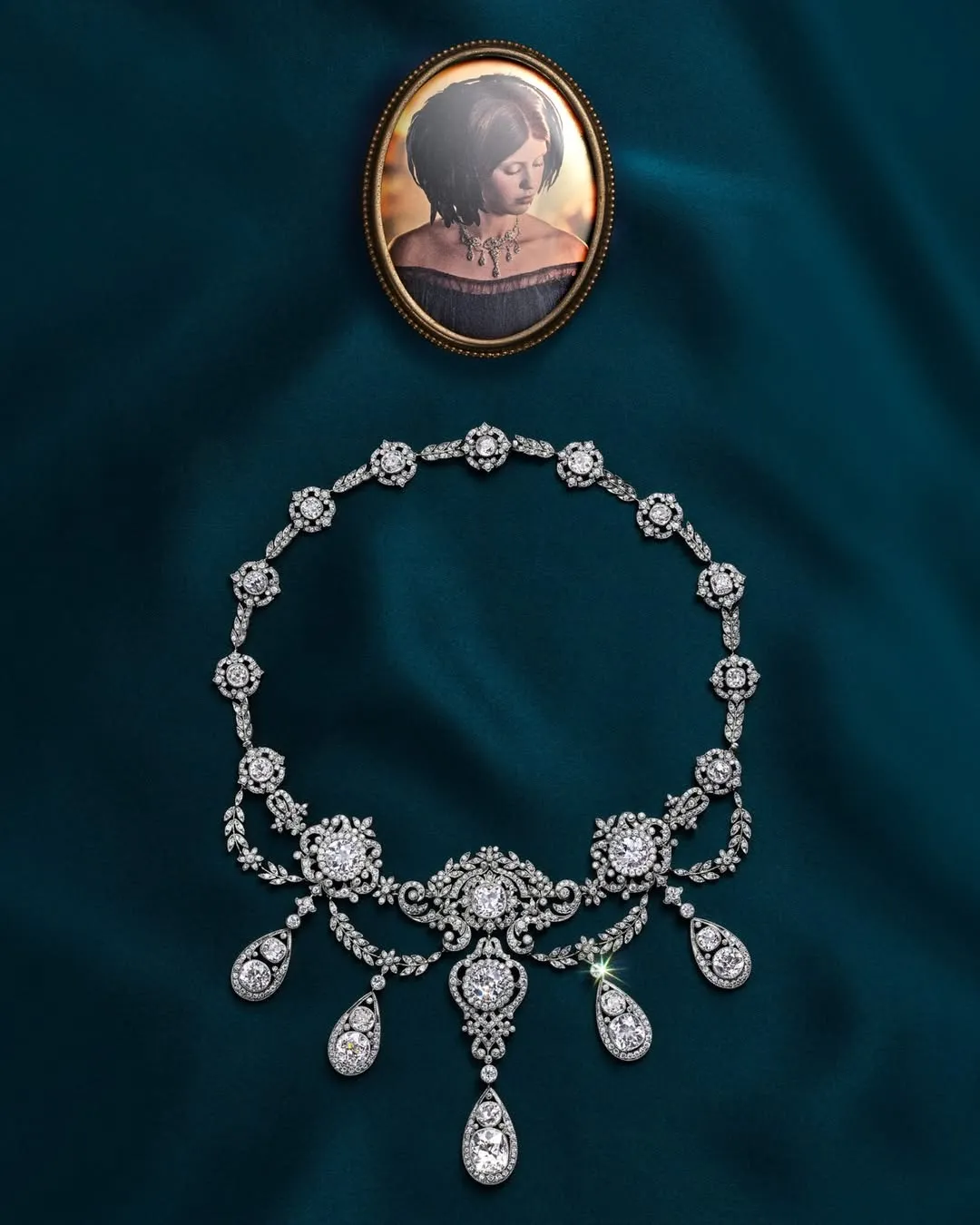
The magnitude of Elizabeth’s status is physically represented by the authentic jewelry provided by Tiffany & Co. The breathtaking Wade Necklace, a garland-style piece featuring over 40 carats of European-cut diamonds, literally adorns Elizabeth with the full, glittering burden of her class and expectations. It’s an object of great beauty, but one that constricts as much as it celebrates.
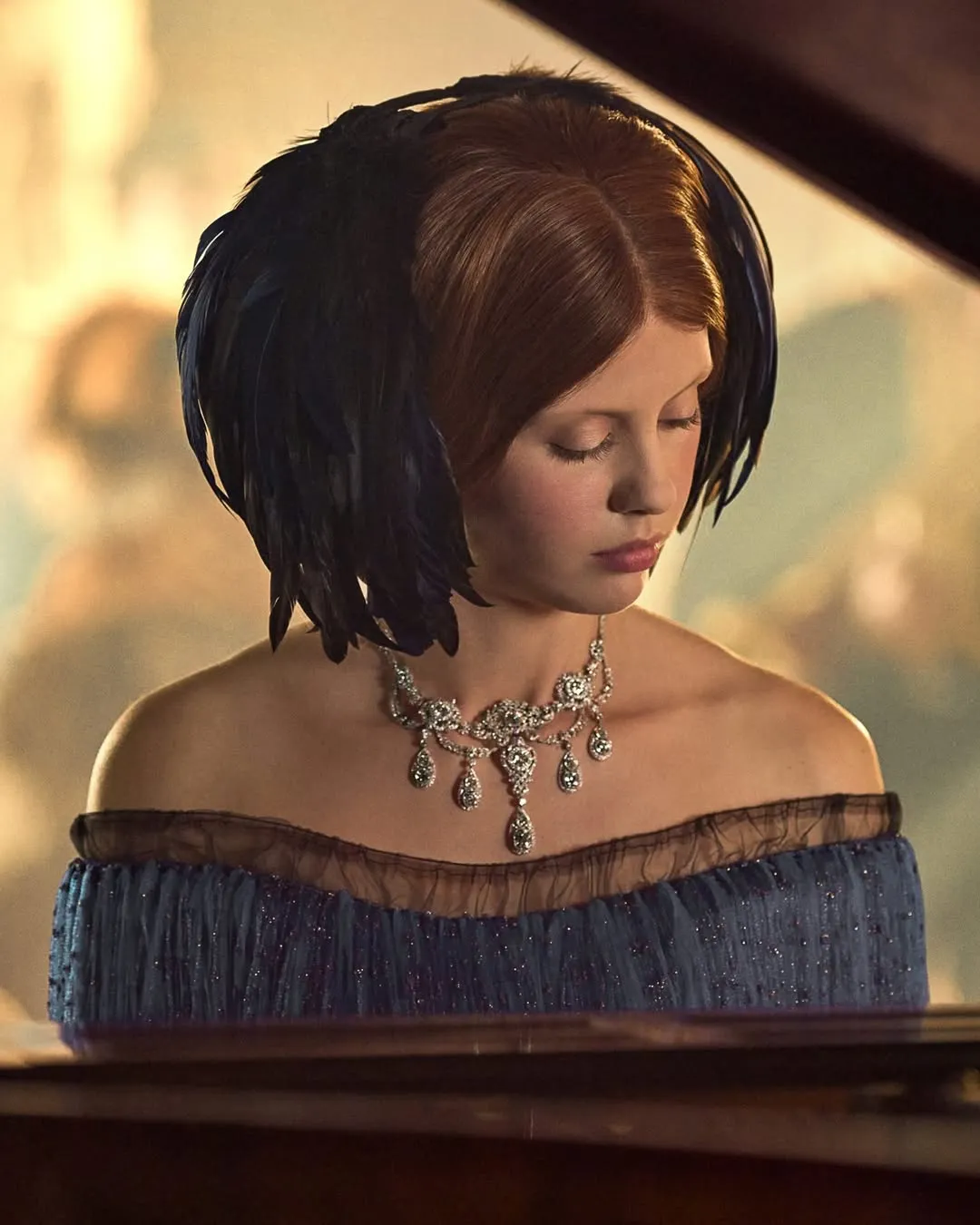
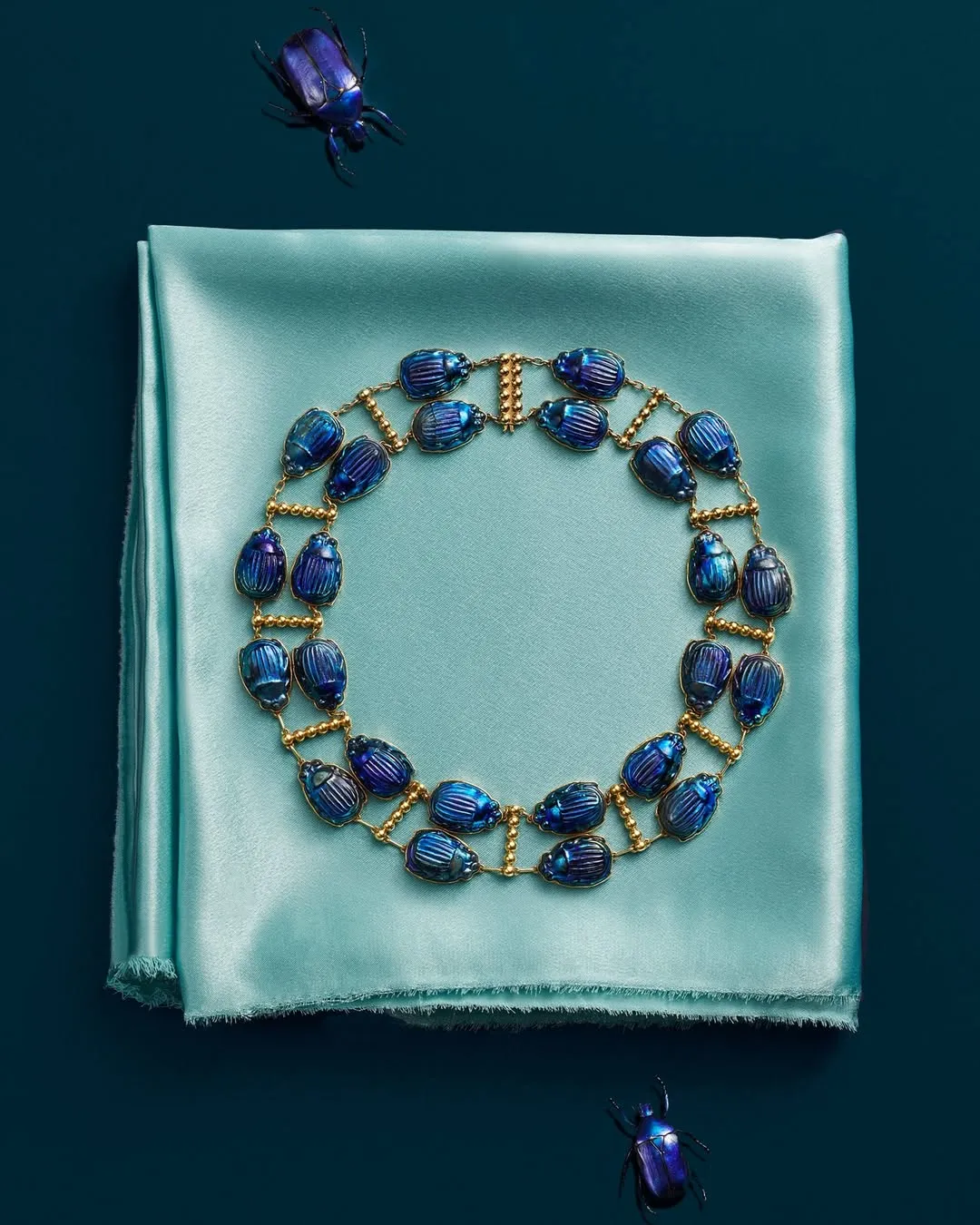
Complementing this is the beguiling Favrile beetle necklace, whose iridescent glass explicitly ties her back to the insect motif. It’s a deliberate, small piece of subversion, symbolizing a profound empathy that favors the smallest of living things—including those that many might find repulsive—over the immense weight of her own station.
The Bride
Elizabeth’s final act of love occurs in her magnificent bridal garb. She’s fatally wounded shielding the Creature during his standoff with Victor. Hawley reveals that Elizabeth’s bridal look is deliberately constructed to mirror the exposed ribcage and the bandages of Jacob Elordi’s unforgettable character.
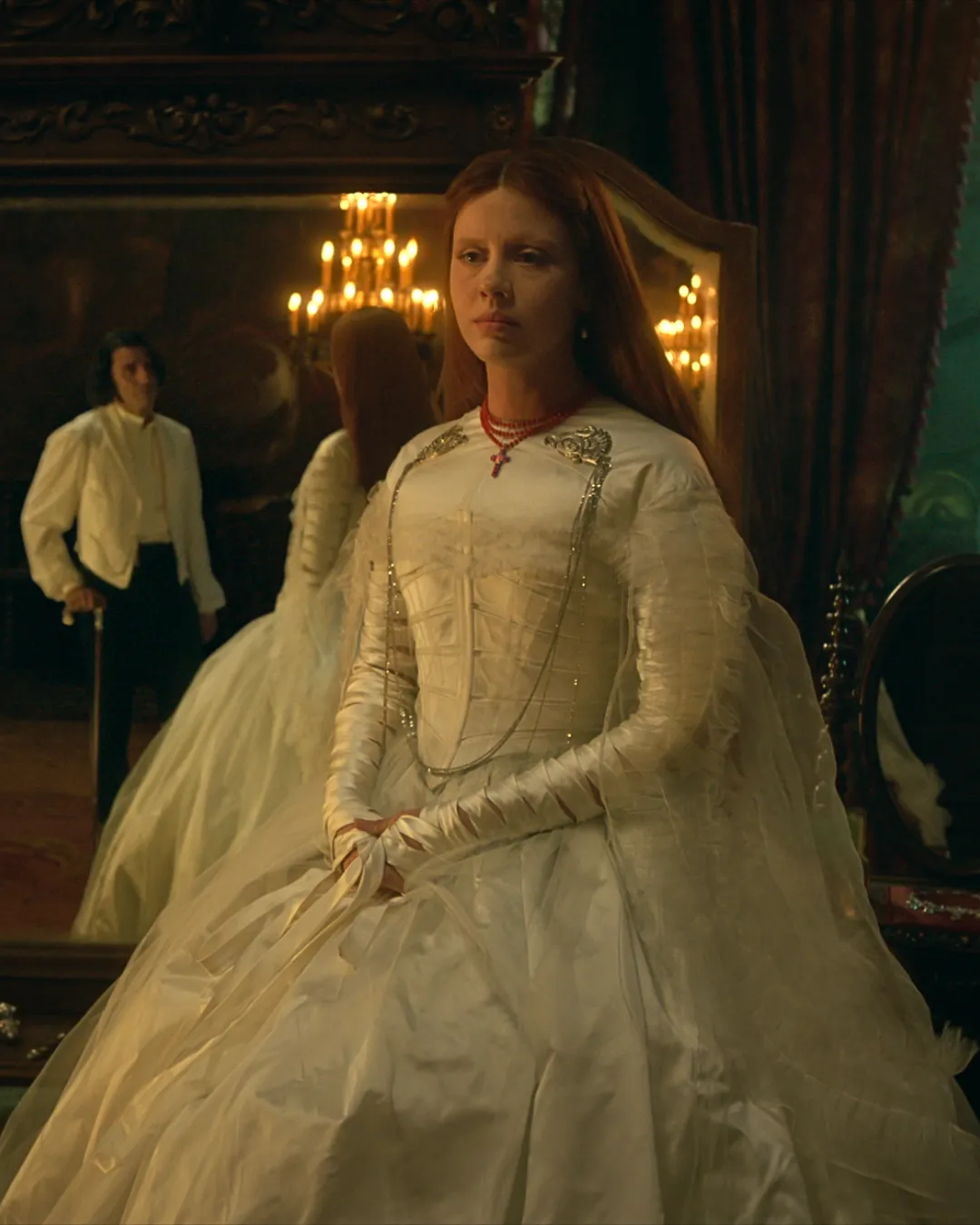
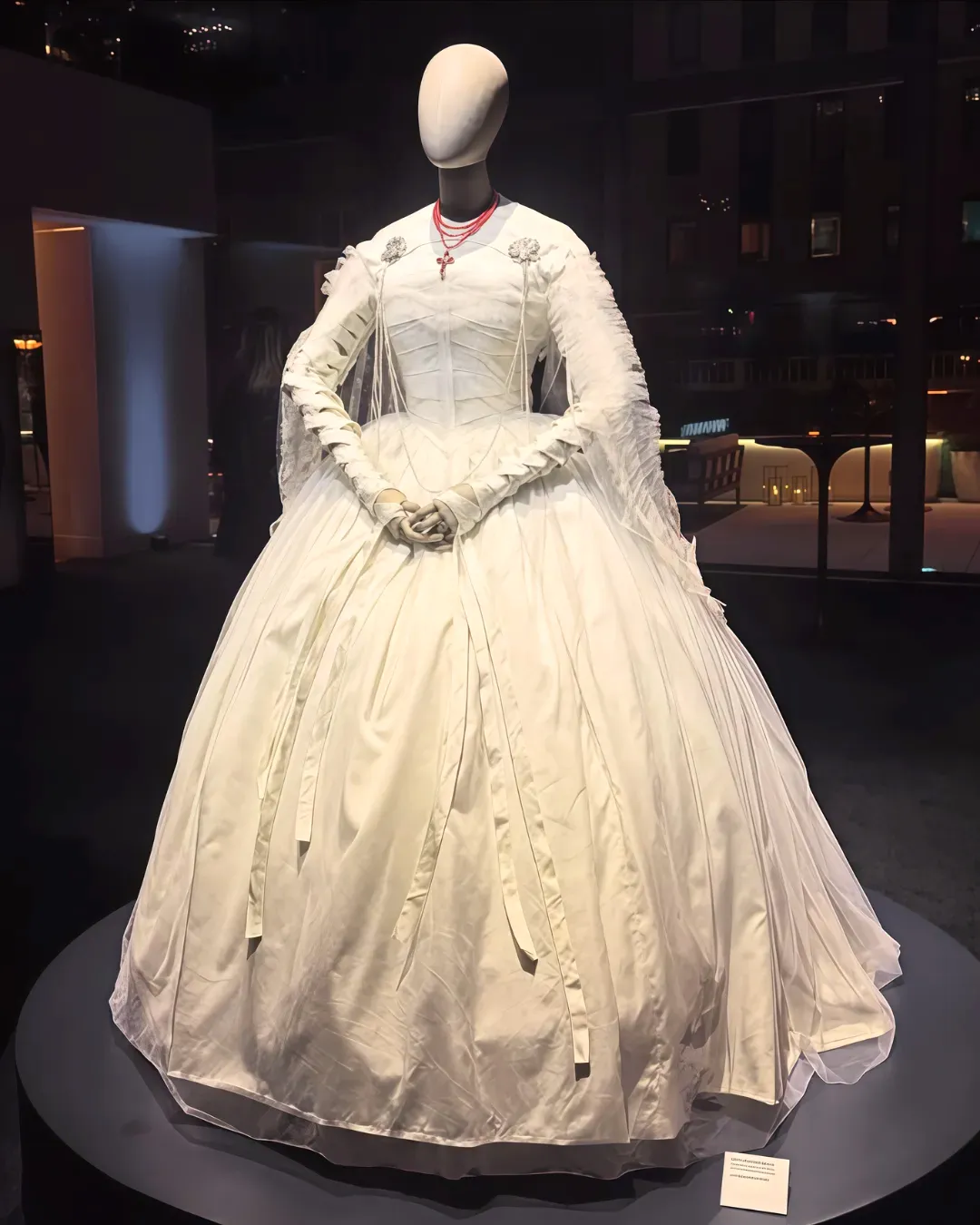
At the cusp of her death, Elizabeth and the Creature are united. She musters the strength to validate his tormented existence with their unique connection, thus showing that while they are the victims of Victor’s self-serving ambition and inhumanity of the world, there’s a rare goodness in them. Her wedding dress becomes a garment of sacrifice that confirms her identity as a martyr whose selfless act eventually, tragically, grants the afflicted son and the monstrous father a moment of shared, devastating understanding.
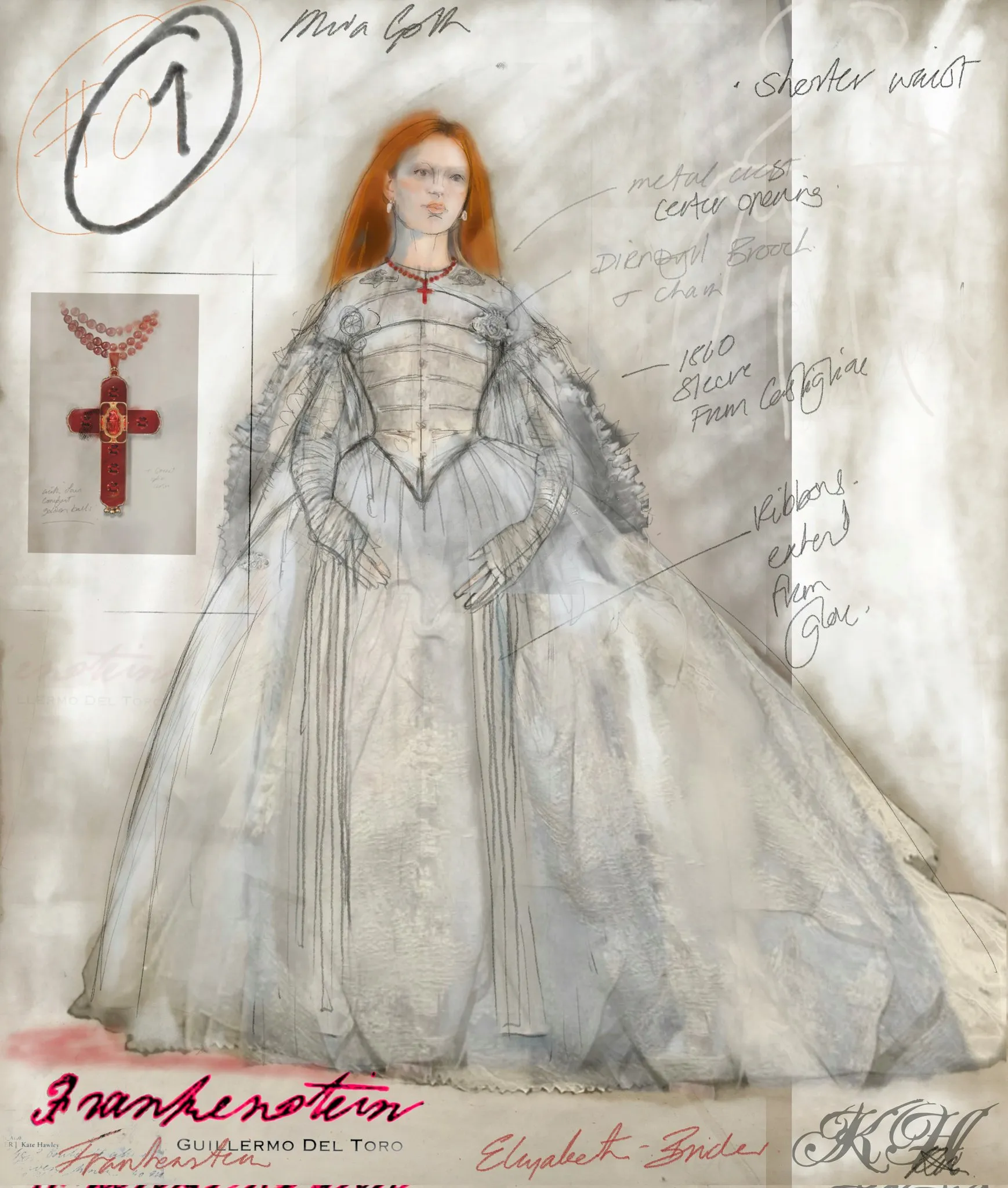
Though straying from strict period accuracy, Kate Hawley’s otherworldly wardrobe achieves the greatest feat of costume design by telling a story without a single word. Mia Goth’s Claire and Elizabeth are cemented as spectacular Gothic figures through symbolic fabrics and heavy diamonds. And long after the credits roll, they remain as the film’s moral compass, forever reminding us that even the gentlest of souls can shape the destinies of others—be it life or death.
Photos: NETFLIX (via Instagram), KATE HAWLEY (via Instagram), THE OLD SELFRIDGES HOTEL (via Instagram), TIFFANY & CO. (via Instagram) & TENISHA BILLINGTON (via Instagram)
Recommended Video
Latest Posts


Latest Issue