



This is an excerpt from the June 2026 Special Issue. Subscribe to MEGA Digital All-Access to read the full story.
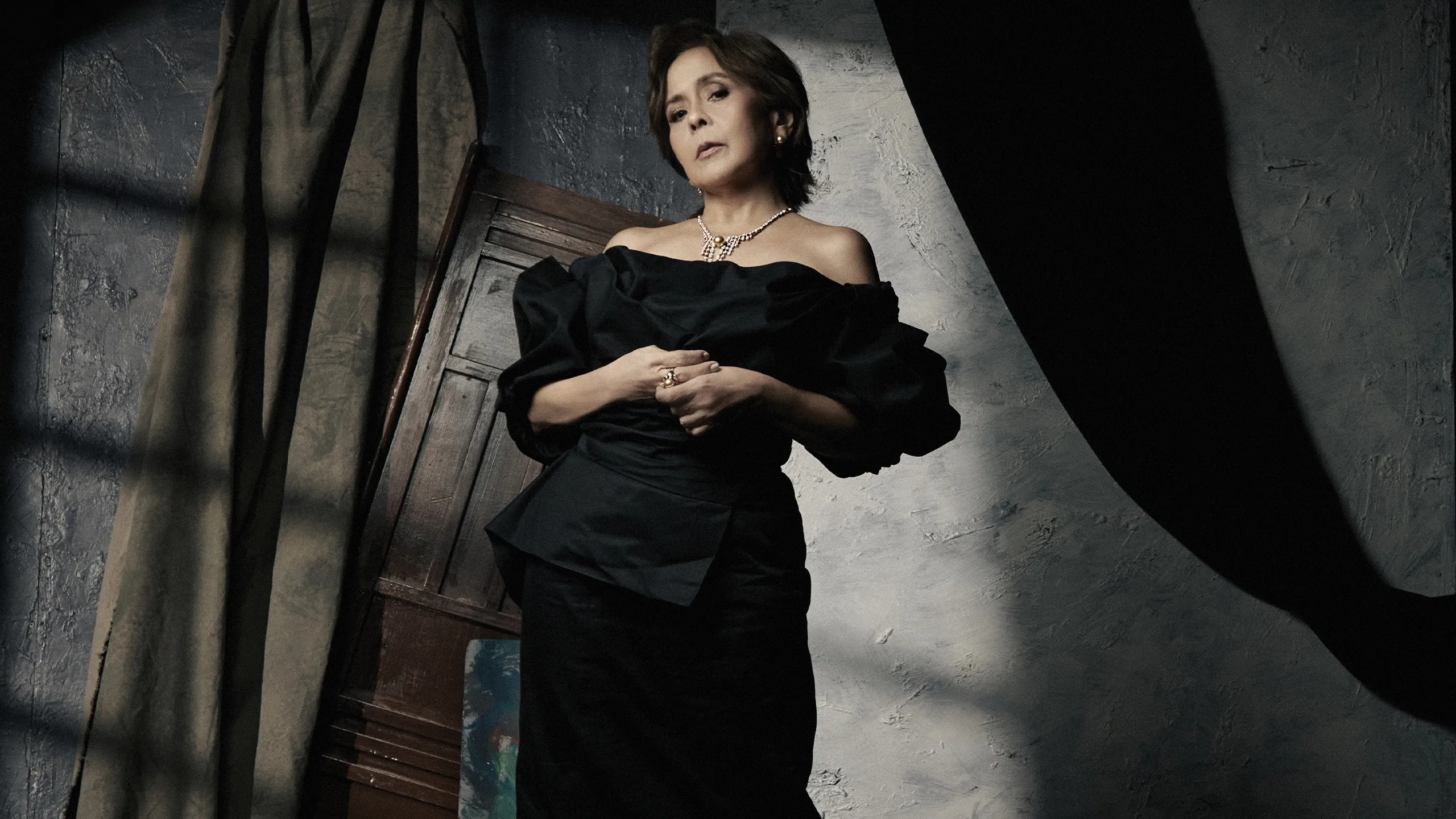
Success stories are often written backward. The breakthrough comes first; everything else is treated as prologue. In Dolly de Leon’s case, that breakthrough happened with Triangle of Sadness (2022), Ruben Östlund’s Palme d’Or-winning satire that earned her Golden Globe and British Academy of Film and Television Arts (BAFTA) nominations for Best Supporting Actress and introduced her to international audiences. But reducing her story to one film would miss the point entirely. By the time audiences looked her way, De Leon had already done the years—the training, the work, the discipline that recognition rarely pauses to account for.
RELATED: For Mylene Dizon, Every Role Left a Mark
Today, her career continues to expand through Nine Perfect Strangers on Prime Video, Avatar: The Last Airbender on Netflix, and Maximum Pleasure Guaranteed on Apple TV+. But when asked about the defining milestone of her career, the actress does not immediately speak about acclaim or visibility. Rather, she looks to the environment.
De Leon returns to her first experiences working abroad and how they changed her understanding of herself and work. “It’s very eye-opening,” she says. “I learned that there’s really no limit to myself as an artist.” The revelation had less to do with performance than with personhood. The lesson was straightforward, almost ordinary in its simplicity yet disruptive in practice: boundaries existed, people listened, and limitations were respected.
“The way we work here, we’re very tolerant. We’re very game,” she says. “But there, it’s different. They really listen to you if you have limitations and if you want your boundaries respected.”
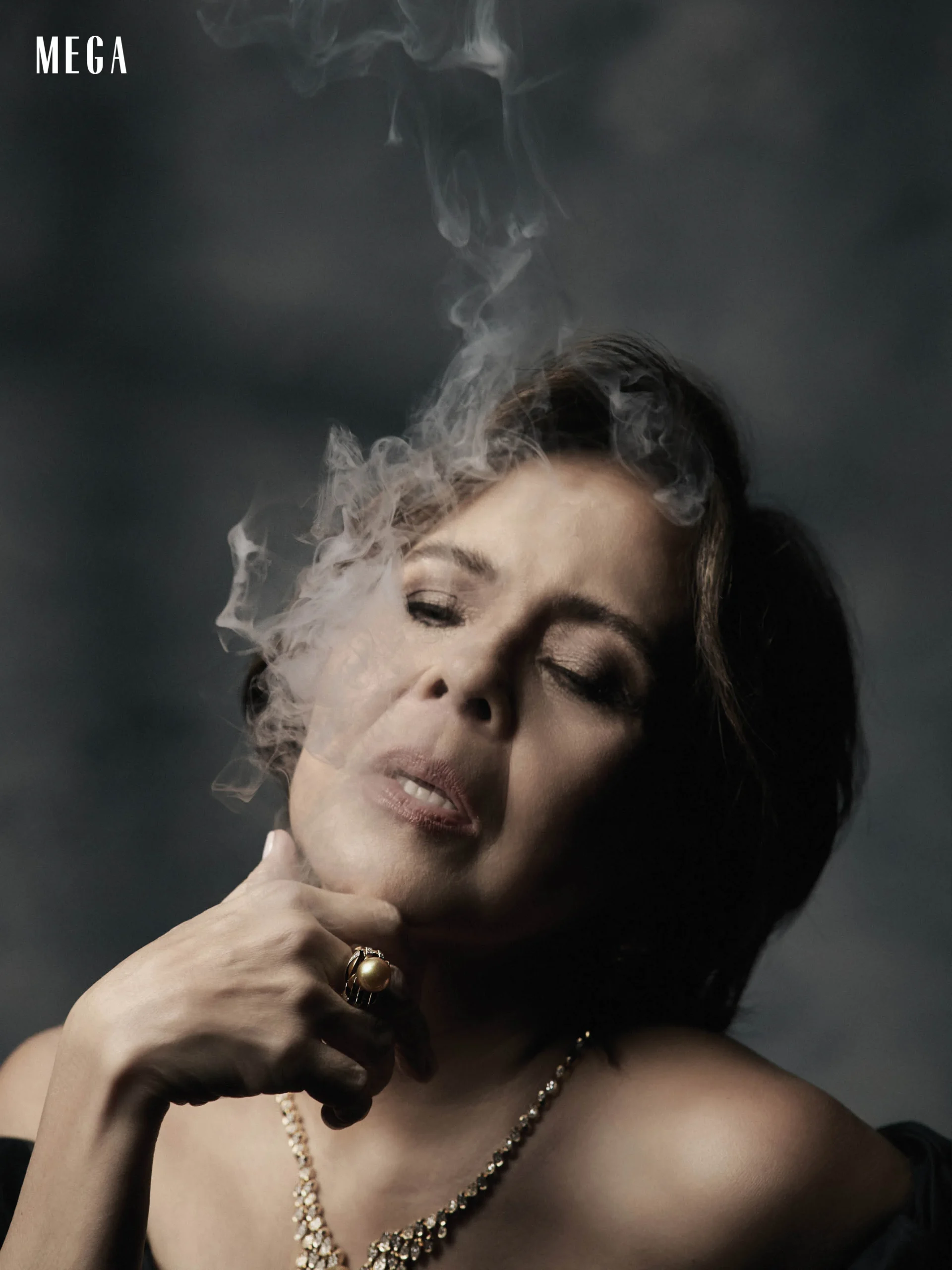
International productions introduced her to a culture where running yourself into the ground was not considered an admirable work ethic. De Leon encountered another possibility: that respect could coexist with excellence, and that limits did not weaken the work. They protected the people making it.
Discipline, after all, remains non-negotiable for De Leon. When asked how she approaches acting through both discipline and vulnerability, she returns to structure. “Discipline plays a very big part in my craft because that’s really the foundation of everything that I do,” she says. “Everything that I learned in school, how I was trained as an actor and as a professional.”
“Discipline is everything to me,” she continues. “The vulnerability just comes into play on the artistic side. The professional side is the discipline, and the vulnerability is the practical application.”
Vulnerability may animate the work, but discipline sustains it. Respecting limits was never the opposite of professionalism. In her view, it simply allowed professionalism to exist without self-erasure.
De Leon understands the responsibility that comes with visibility. Asked what empowerment means now as a Filipina working on a global stage, she answers immediately: “Everything. It’s a way of telling the world that we’re here and we have a voice and we’re seen and we matter.”
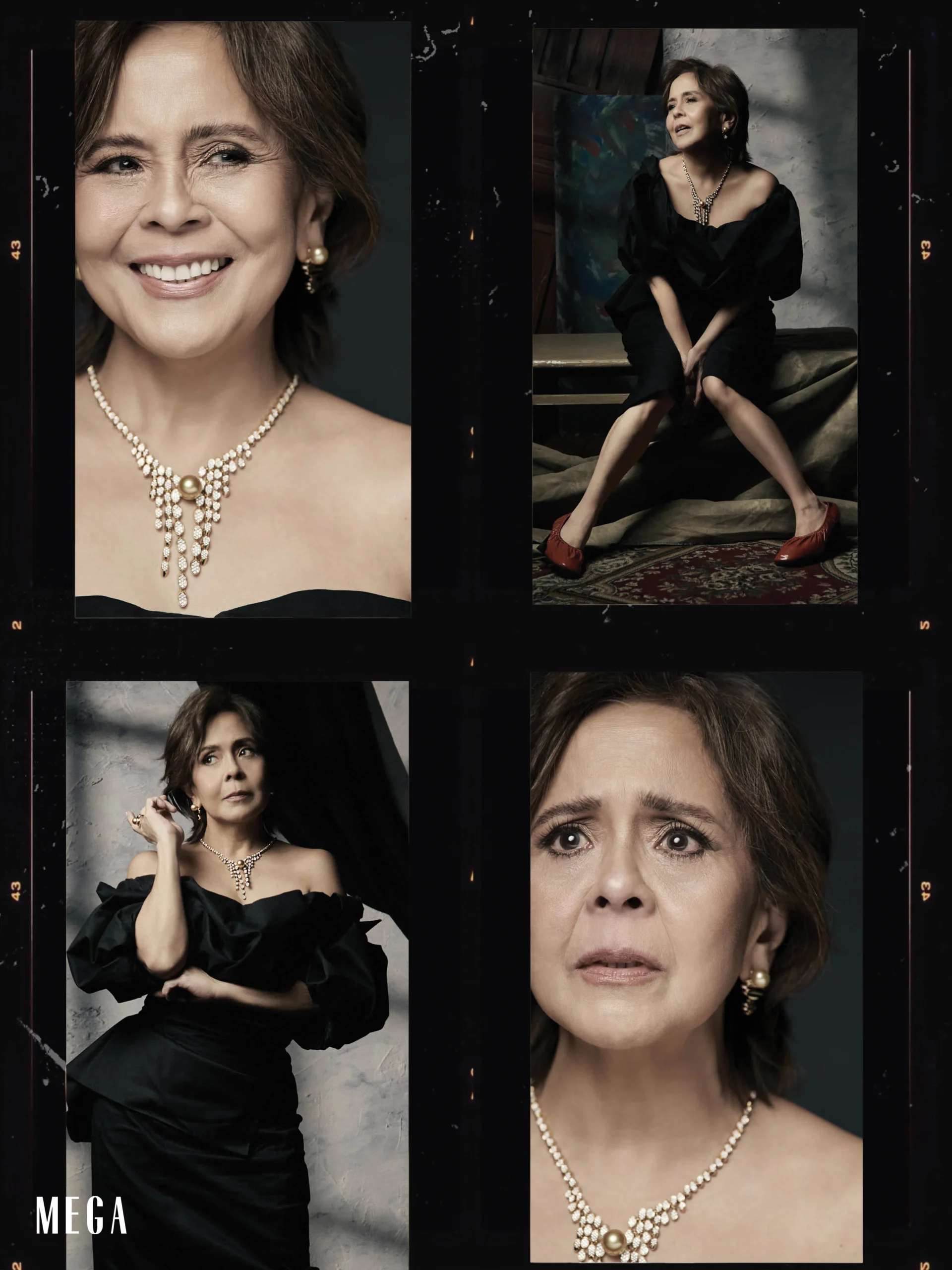
This is why these stories must be told repeatedly. Repetition becomes remembrance. It insists that women were always here, always creating, surviving, leading, dreaming. Their lives did not suddenly become inspiring. Of course Filipino women belong here. The surprise is that this still needs saying.
“We are no longer these damsels in distress,” she says. “We have a voice and we’re strong.” Representation matters because visibility is not about singular moments. It is repetition. Presence. Returning often enough that women stop being treated as exceptions and start being understood as reality. De Leon understands this because the arc of her own career mirrors the argument itself. She worked for decades before international recognition. The acclaim did not create the actor; it brought in the audience.
For women whose work is often acknowledged late—or overlooked entirely—that distinction matters. Abigail in Triangle of Sadness embodied that contradiction. She existed at the margins until power shifted and the woman everyone overlooked suddenly became indispensable. Abigail was never powerless, only overlooked. The film merely asked what happens when recognition arrives after years of invisibility. There is violence in that delay.
The frustration extends beyond fiction. How many women still wait to be seen beyond the roles assigned to them? How many lives still sit at the edges of the frame? How long do we wait?
“Hopefully this is just the beginning,” she says. “So many of our stories need to be told.”
Representation, the actress insists, matters because stories matter. Visibility matters because people do. There are still Filipino stories waiting their turn. Dolly De Leon won’t leave them behind.
Frequently Asked Questions
Dolly de Leon is a Filipino actress who gained international recognition for her role as Abigail in Ruben Östlund’s Palme d’Or-winning film Triangle of Sadness in 2022, which earned her Golden Globe and BAFTA nominations for Best Supporting Actress. She has since appeared in Nine Perfect Strangers on Prime Video, Avatar: The Last Airbender on Netflix, and Maximum Pleasure Guaranteed on Apple TV+.
Working abroad introduced Dolly de Leon to a professional culture where personal boundaries were respected and limitations were listened to rather than pushed past. She described it as eye-opening — a realization that excellence and respect could coexist, and that running oneself into the ground was not the mark of dedication she had been conditioned to believe it was in the Philippine industry.
De Leon describes discipline as the foundation of everything she does — rooted in her formal training as an actor and professional. Vulnerability, she says, lives on the artistic side: it is what animates a performance. The two are not in conflict but in sequence — discipline sustains the work; vulnerability is its practical, creative expression on screen.
For De Leon, representation means telling the world that Filipino women are here, that they have a voice, and that they matter. She frames visibility not as a singular breakthrough moment but as a practice of repetition — returning often enough that Filipino women stop being treated as exceptions and start being understood as a given presence in global storytelling.
Beyond her breakthrough in Triangle of Sadness, Dolly de Leon’s current projects include Nine Perfect Strangers on Prime Video, Avatar: The Last Airbender on Netflix, and Maximum Pleasure Guaranteed on Apple TV+. As of MEGA’s June 2026 Special Issue, she continues to expand her international career while speaking openly about the importance of Filipino stories being told on a global scale.
Photographed by JERICK SANCHEZ. Creative Direction by PATRICK TY. Art Direction by CLARE MAGNO and BRIE VENTURA. Beauty Direction by AGOO AZCUNA-BENGZON assisted by MARA GO. Sittings Editor PEEWEE REYES-ISIDRO and TREISHA ROVERO. Produced by THESSMAR LECTURA. Image Retouching by JONES PALTENG. Hair by RAVEN DIZON. Makeup by MAYESA DELOS SANTOS. Nail Grooming by CRISTINE S. CRISTOBAL, ROWENA D. AYALA, RONA T. SALAZAR, and ANGELYN D. ALVERIO of THE GETAWAY BODY & NAILS SPA. Styled by STEVEN CORALDE, JERMAINNE LAGURA, and NIÑA CUYANA of QURATOR INC. Production Design by ARJ MADARANG of JAGGER STUDIOS. Photography Assistants KARL RIMANDO, BUDDY REYES, DAVE ORPILLA, and RYAN ALBANO