



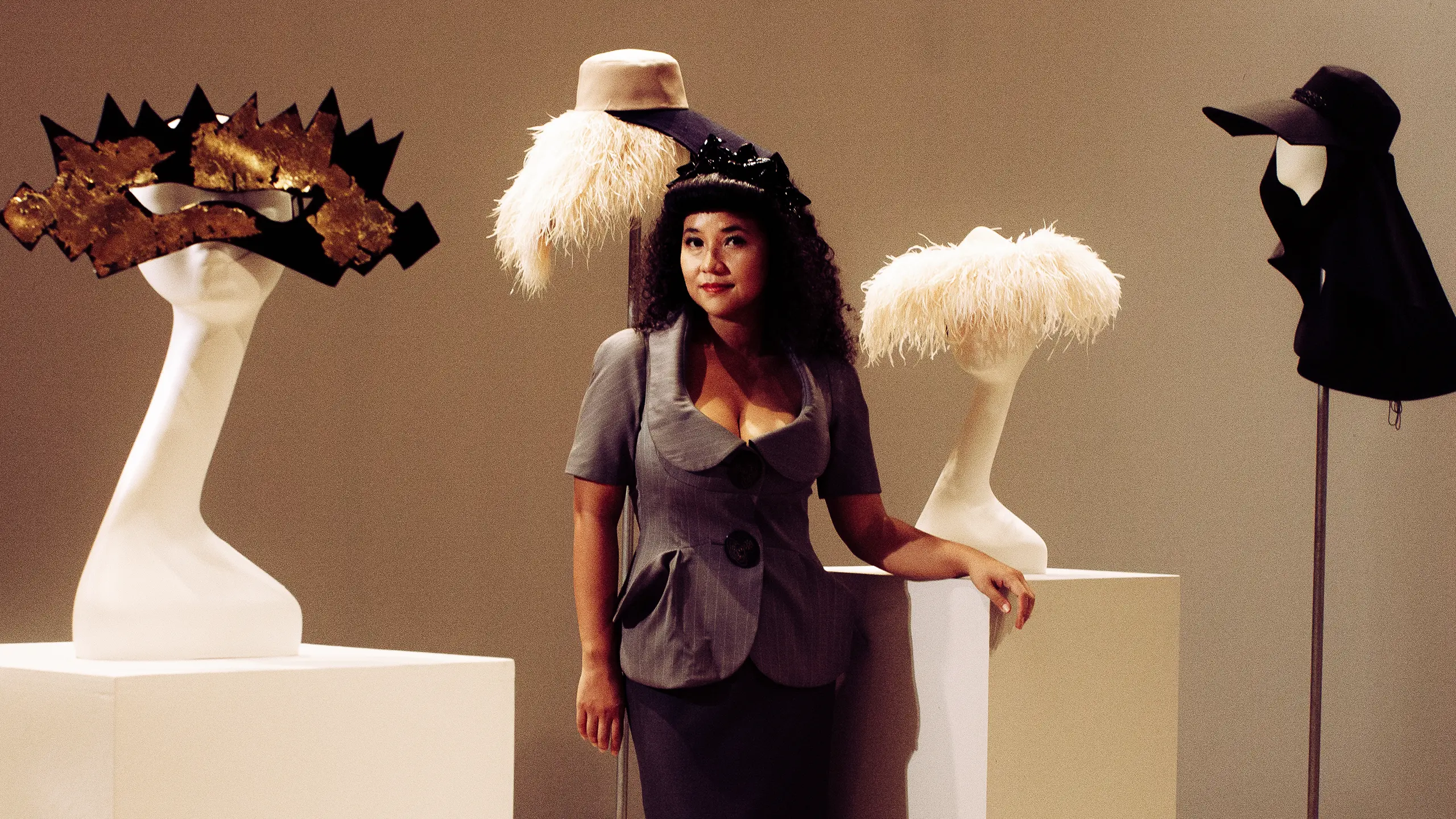
Twenty hats murmur, laugh, and remember in the Finale Art File’s gallery. In Mich Dulce’s solo exhibition, Nagsasalitang Ulo, millinery becomes a medium for narrative as her headpieces turn into counter-archives of memory and tradition. The gallery’s white expanse further amplifies the presence of the hats for each one is a storyteller, and each one is asking what it means for Filipino identity to claim its place in a craft long dominated by the West.
RELATED: Millinery Maven Mich Dulce and Her Future Fashion Feats
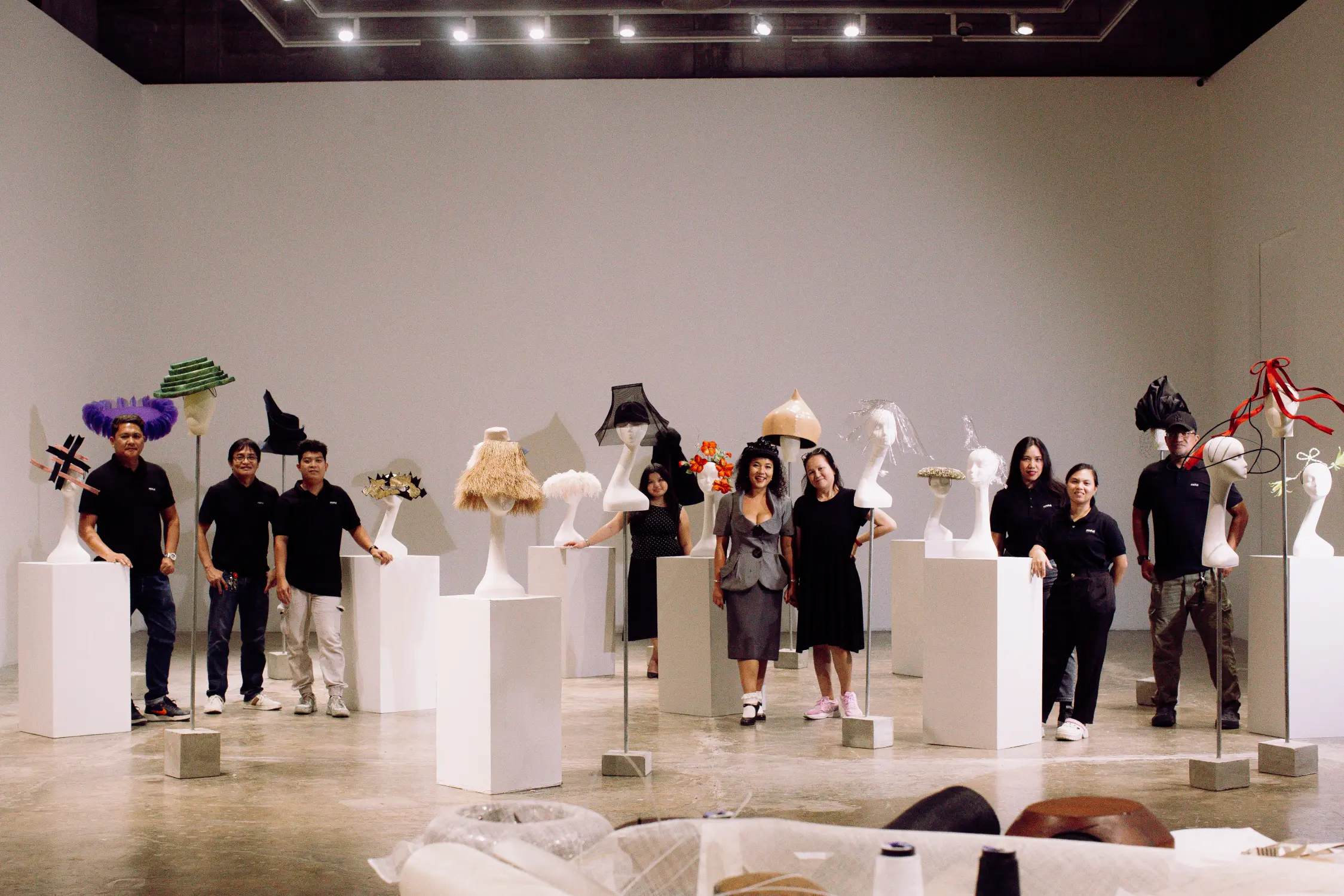
Beyond The Known
“I’ve been making hats for fifteen years, and the shapes are always the same—the beret, the boater, the fedora,” Dulce tells MEGA. “Everyone is doing the same thing. I wanted to create my own shapes, based on our geography and our traditions. It’s about formulating what a Filipino hat could be, without just borrowing what history has already given us.”
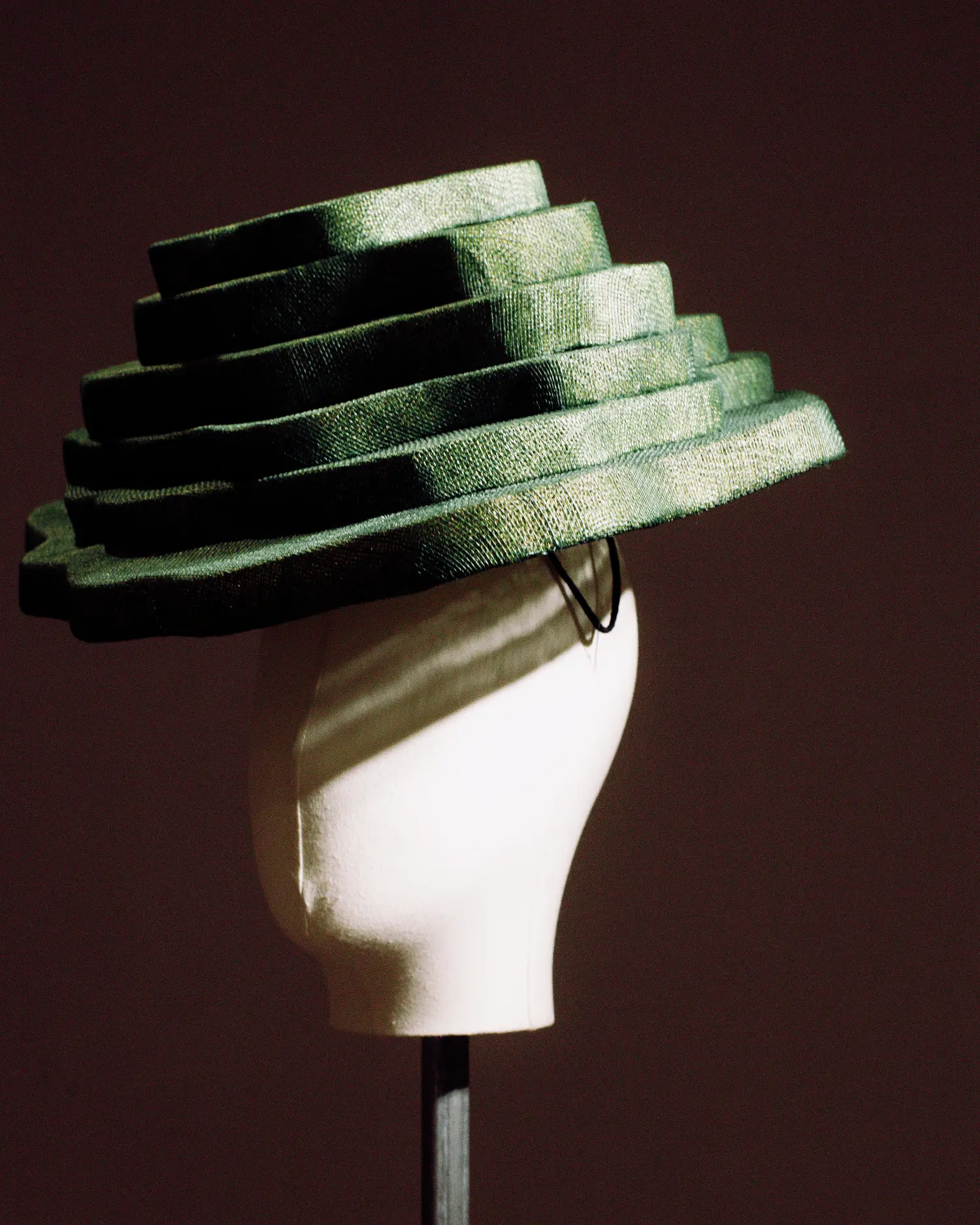
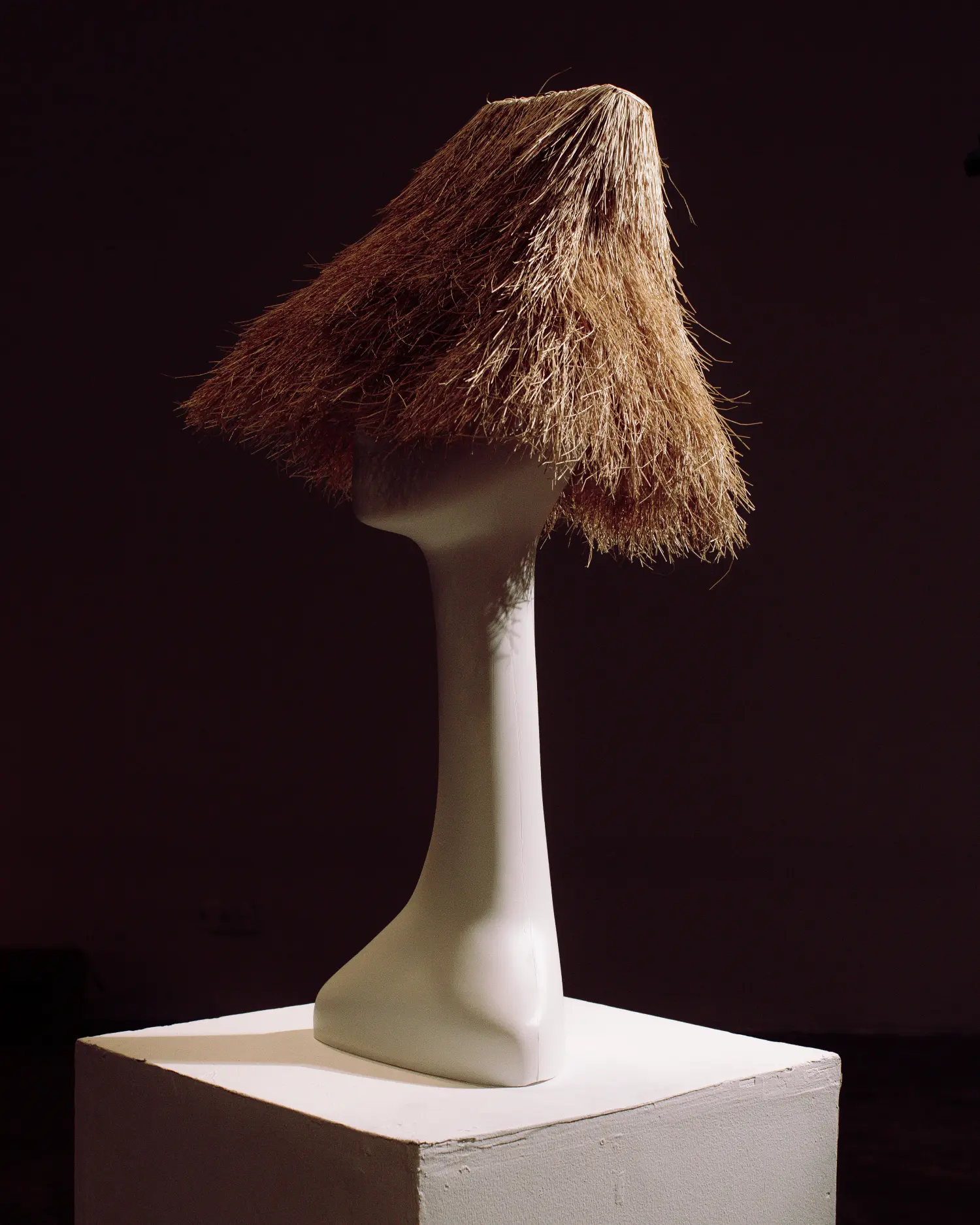
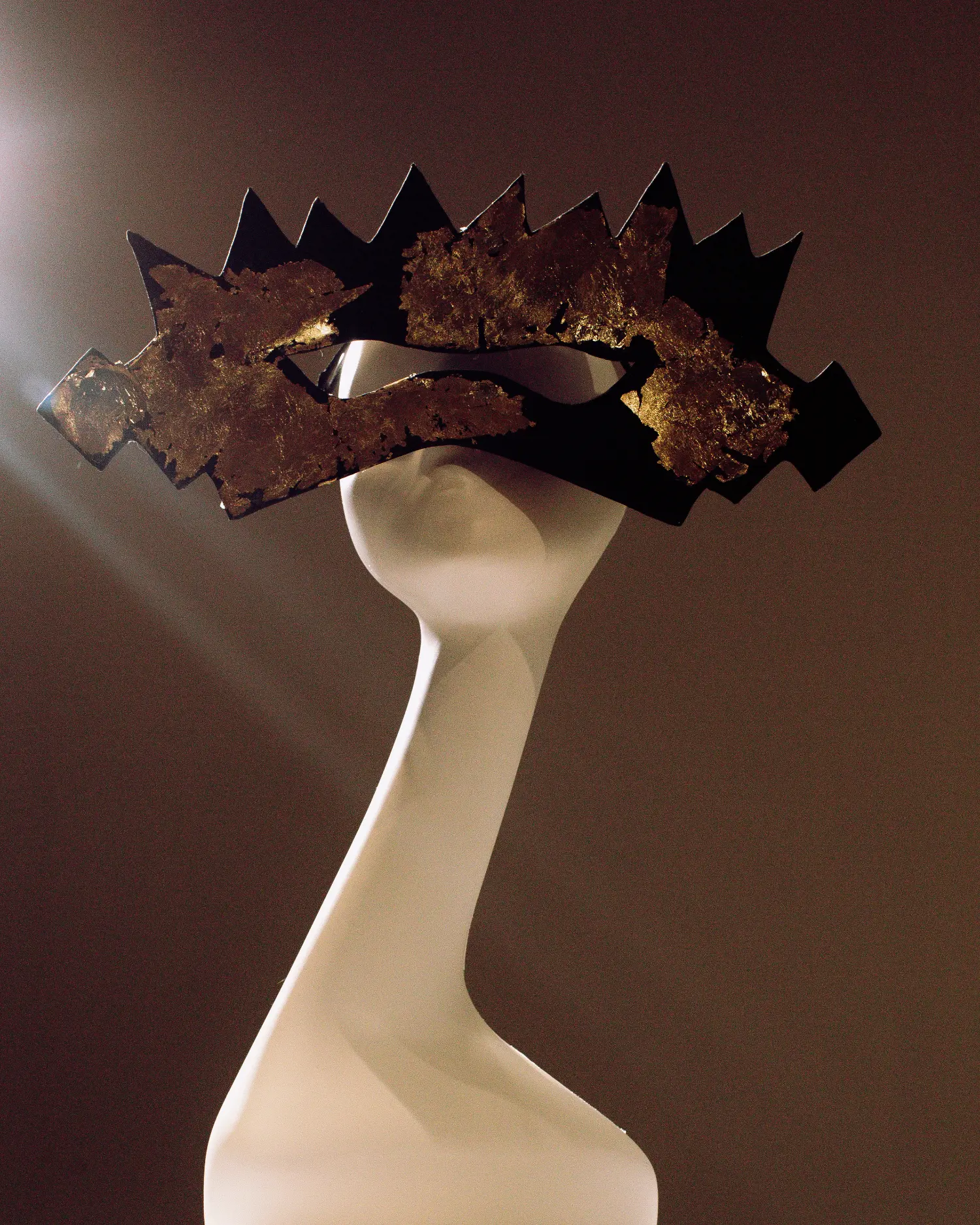
This shift reverses Dulce’s past approach. Where she once worked with Filipino materials on Western silhouettes, Nagsasalitang Ulo flips the equation by using Western millinery techniques to sculpt Filipino forms. “I wanted each hat to represent a different part of my craft,” she explains. “It’s everything I’ve learned over the years, but expressed through our own histories.”
Among the pieces, some carry fragments of her personal memory. “The Gumamela Bubbles is from my childhood,” Dulce shares. “I remember crushing gumamelas in the garden to make bubbles.”
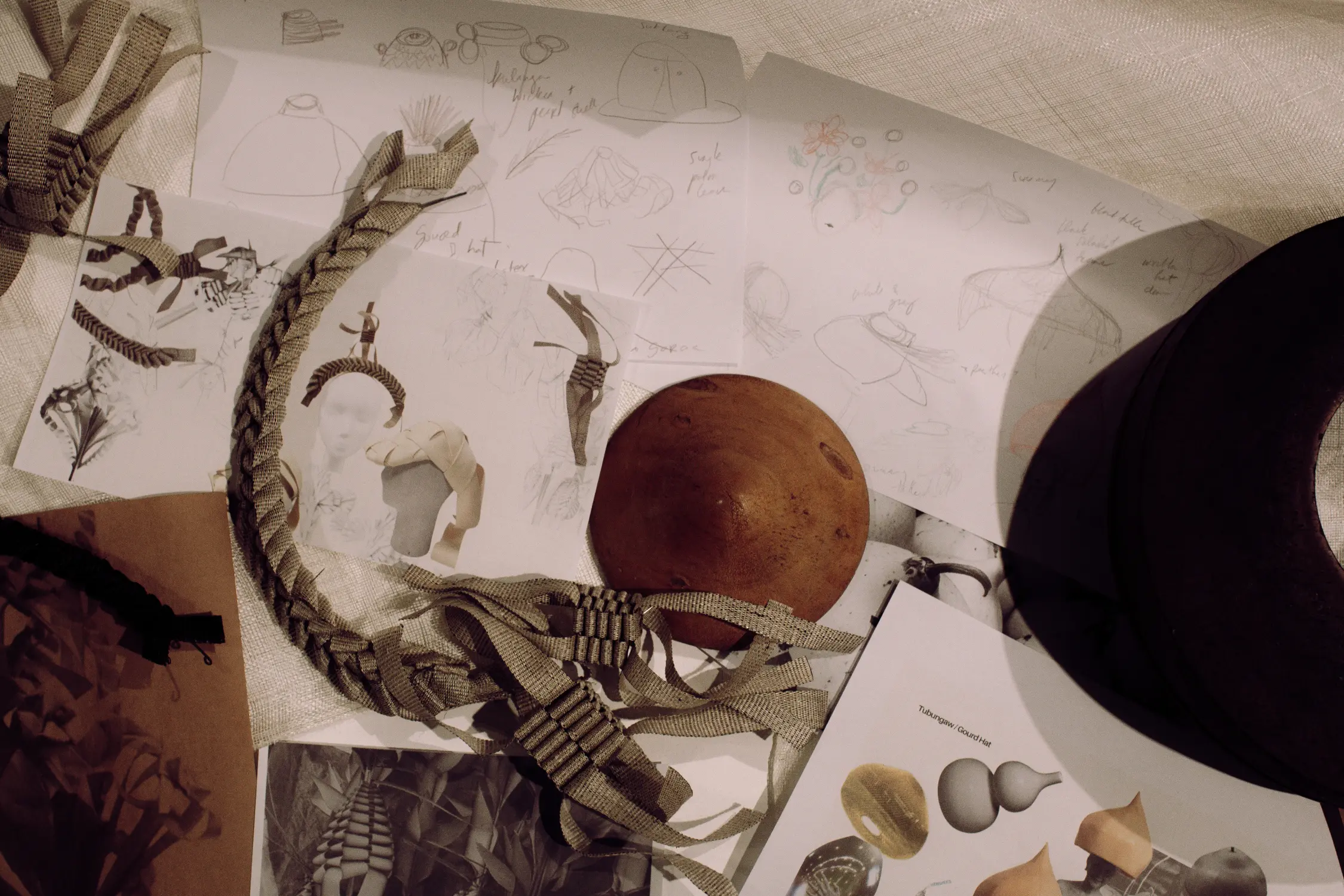
But the heart of the project lies in research. During the conceptualization process that happened about a year ago, Dulce immersed herself in pre-colonial history and ethnographic archives such as Marian Pastor Roces’ studies on Filipino headwear. “I learned red was a symbol of power when worn on the head, that gold masks in Cebu kept the soul in the body, and that the palaspas we wave on Palm Sunday carries deeper ritual meaning,” the milliner says. “This gave me such pride. It deepened my craft, because now it’s truly informed by our own history.”
The Intimacy of a Tactile Experience
To make the experience even more intimate, Dulce collaborated with chef Jen Gerodias of Casa Luisa to design dishes and cocktails inspired by places in the Philippines the hats are based on. It was deliberately planned as part of Dulce’s intention to create a multi-sensory exhibition where Filipino identity and memory can be vividly tasted, thus deepening the audience’s connection to her craft. “Usually when people come to me, they’re able to touch the hats and try them on,” Dulce says. “In a gallery, they can’t. So food and drink became another way for people to connect, to really feel the work.”
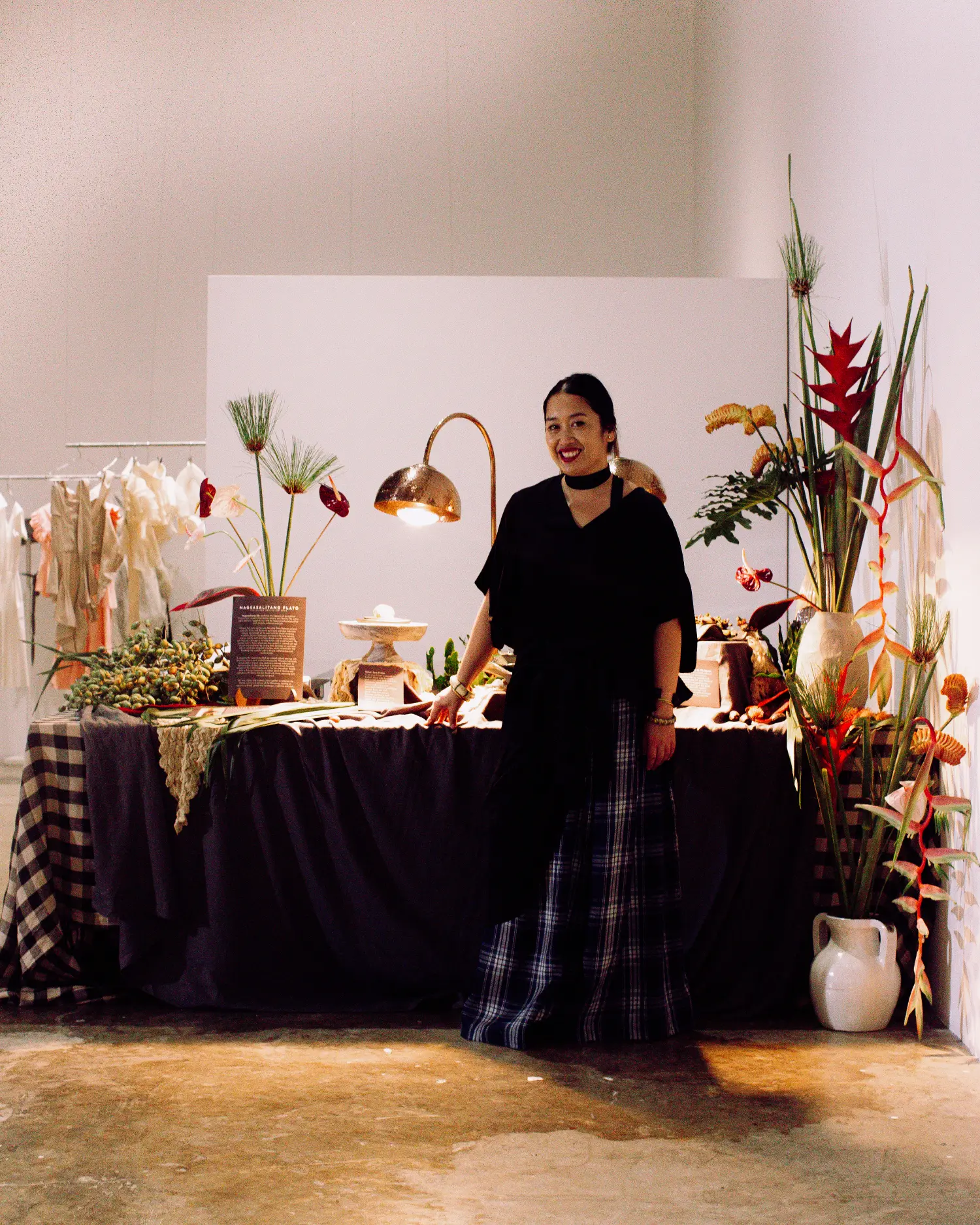
The result is a manifesto that is as scholarly as it is sensorial. Hats become not just accessories but insurgent forms, destabilizing the illusion that millinery belongs only to the West.
“This show made me fall in love with millinery again,” Dulce smiles. “It reminded me that hats can be sculptural and driven by a narrative that seeks to push boundaries.”
Based in London, she continues her role as an industry mentor for the Chanel & King’s Foundation Métiers d’Art Millinery Fellowship while expanding her own creative practice. “What’s next? Going deeper. Pushing further into craft. And clothing, too. There’s a new direction coming next year.”
In twenty distinct forms, Mich Dulce lets Filipino heritage interrupt the Western canon by creating an identity through remembrance. Nagsasalitang Ulo is proof that when millinery speaks in a Filipino voice, it’s worth listening to.
Photography GAB VILLAREAL