



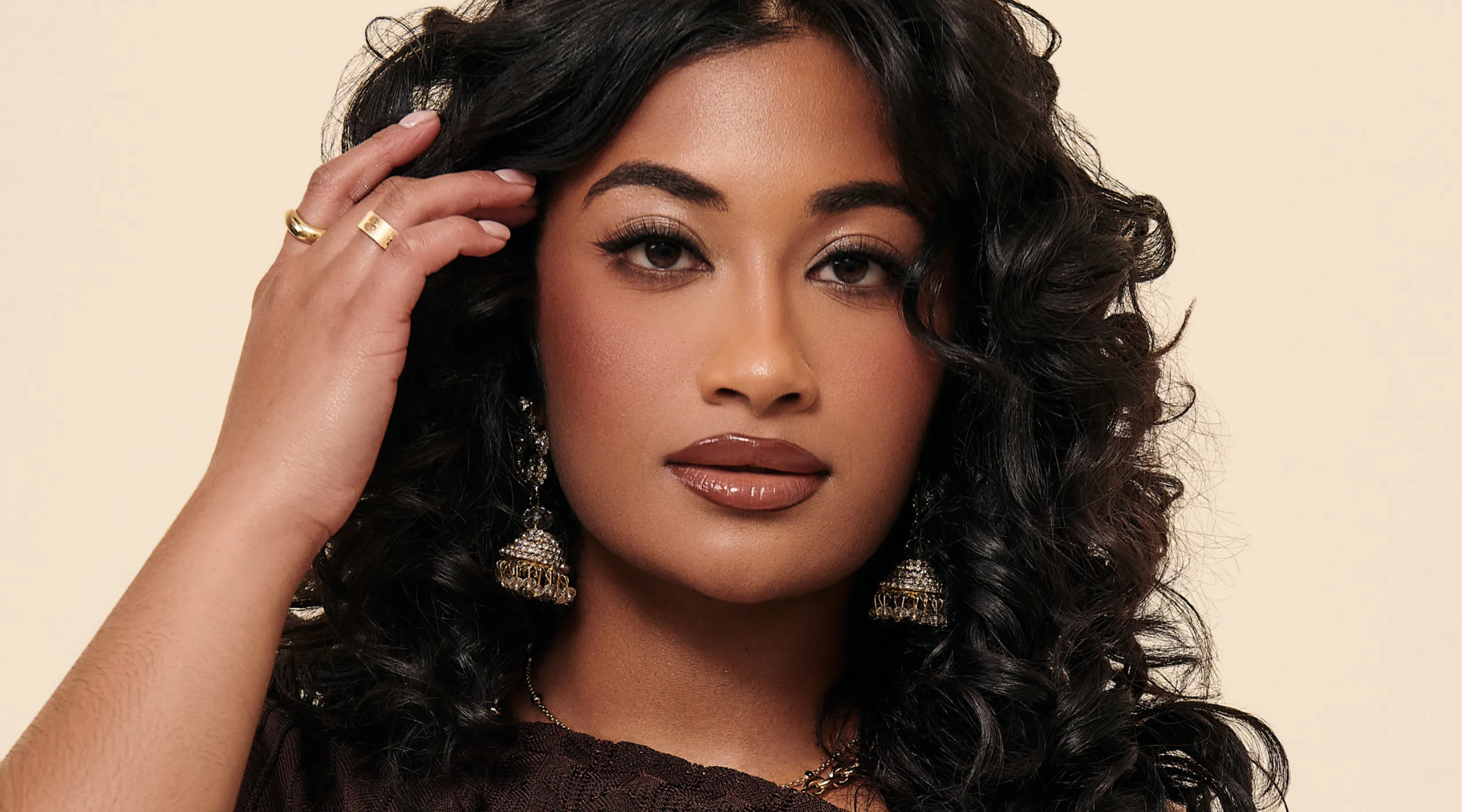
In 2026, you would think expansive and inclusive shade ranges would be the bare minimum for beauty brands—but that’s still not always the case. Growing up, Indian-American beauty creator Monica Ravi-Conway believed there was something wrong with her skin tone. In reality, it was the beauty industry that had yet to address a glaring gap.
RELATED: EXCLUSIVE: How Mei Pang’s Avant-Garde Artistry Is Rooted in Her Malaysian Heritage
South Asian Presence
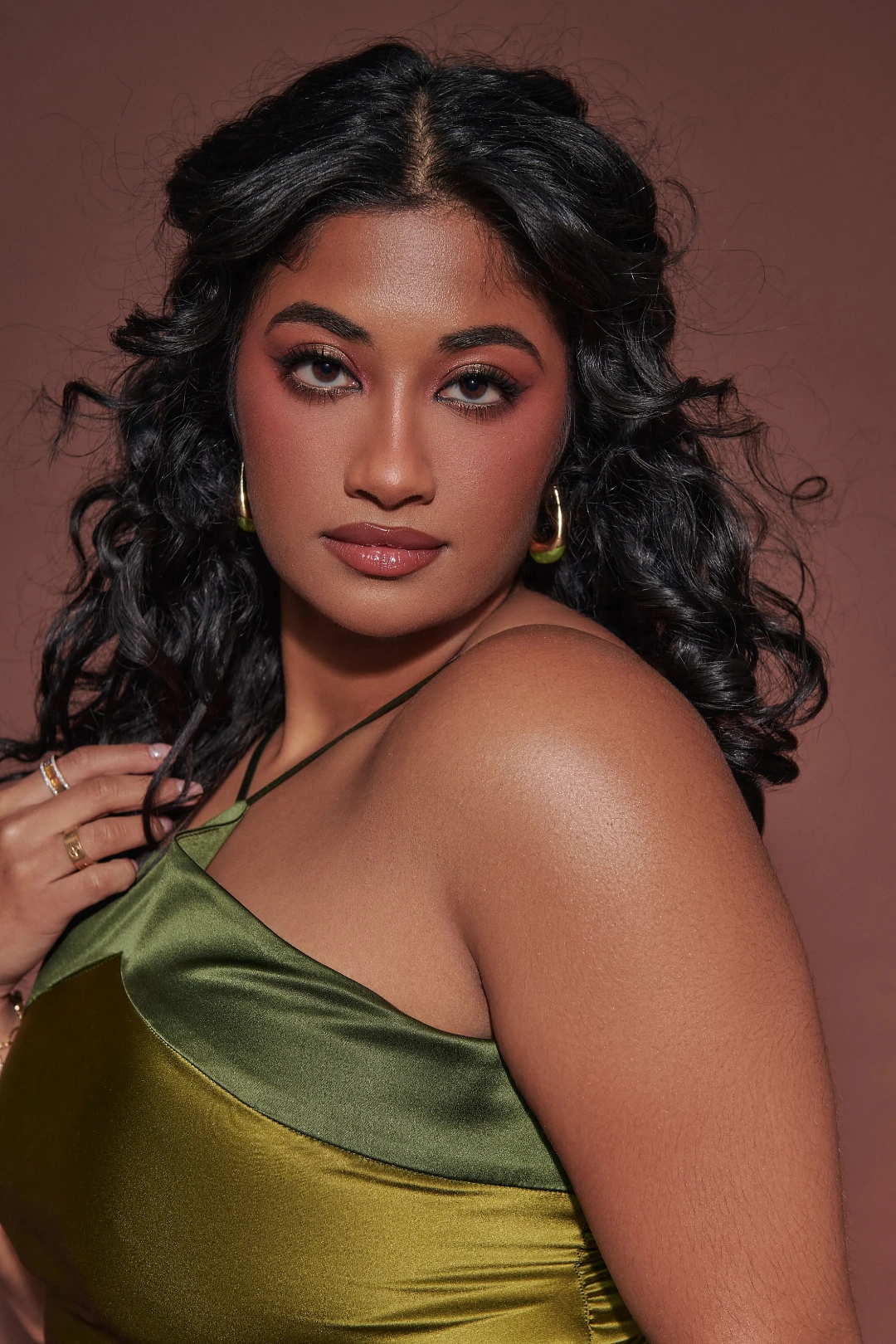
Growing up in America while rooted in her Indian heritage shaped the way Monica views beauty today. “Everything has that layer of being a brown girl and growing up in America,” she reflected, recalling how her skin and ethnicity were rarely celebrated.
Still, that hasn’t stopped her from embracing bold shades and vivid colors. Because for Monica, that’s what making space looks like.
“Being South Asian and an Indian-American woman, I feel like it’s made me want to share my experiences more to try to find a group of people who resonate with my voice,” Monica shared. In the vast landscape of social media, she has fostered a community of women who not only look like her, but also see her as a role model—someone who encourages them to take up space and advocate for inclusivity.
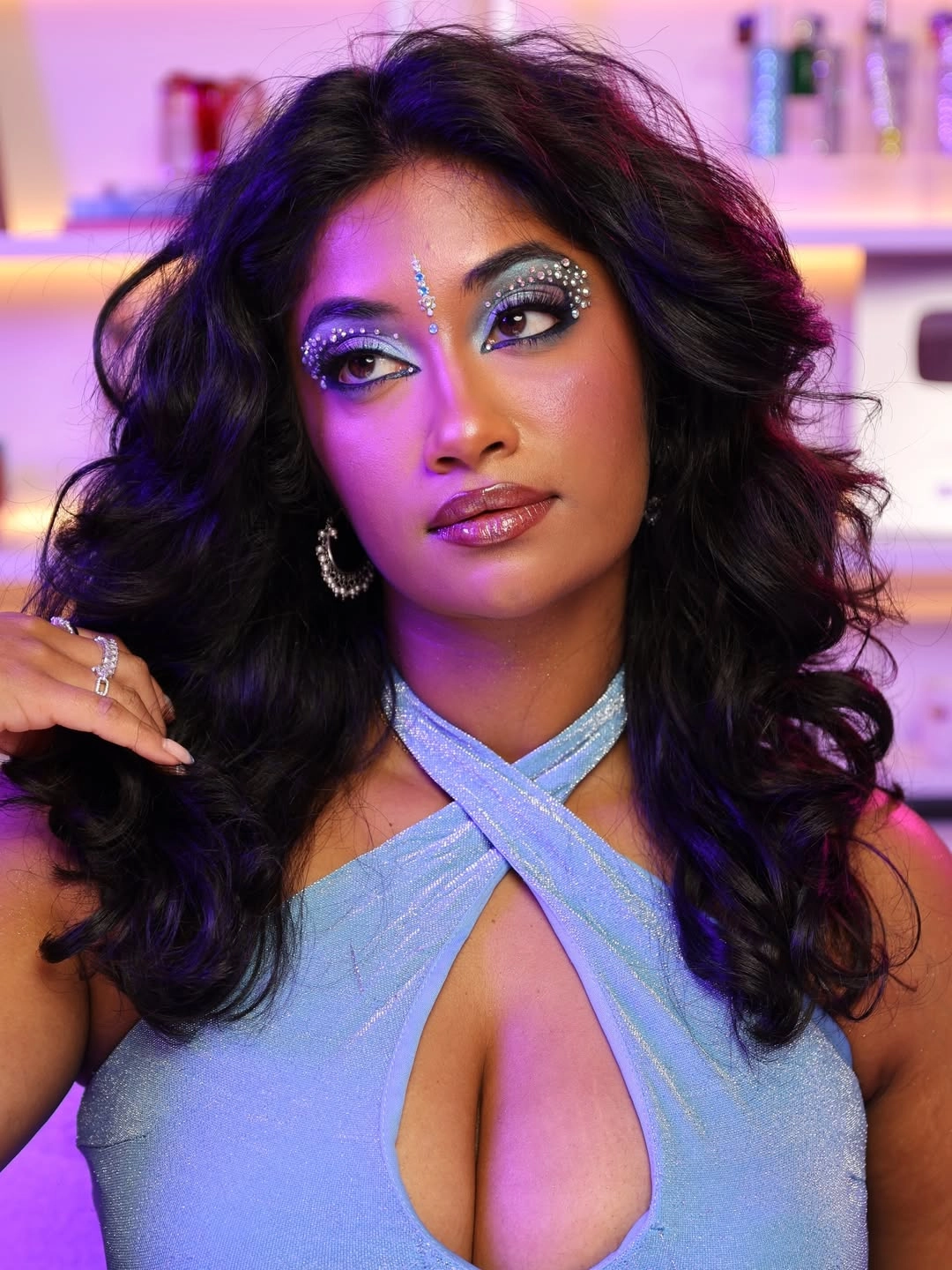
Through storytelling and creating looks for brown skin, her content quickly expanded beyond its original audience. What began as makeup content for South Asian women soon resonated globally. “Originally, when I was making brown girl makeup content, I wanted it to reach the South Asian woman. But I realized there were a lot of Black women and Filipino women following me from it,” she shared.
That’s the beauty of sharing your culture and stories—you never know who’s listening, and you just might reach communities that truly resonate with you.
The Life of a Brown Creator
All her life, Monica struggled to find her shade in the makeup aisle—not only in complexion products, but even in colored cosmetics that complemented her olive undertones. “There are still brands missing the mark in undertones for darker skin tones,” she shared. A problem she encountered in 2016 still persists nearly a decade later.
But the obstacles of creating beauty content don’t stop at product limitations. “I think the biggest challenge that I faced was dealing with the comments,” Monica admitted. “I delusionally thought everyone would agree with what I was saying—because to me, it was obvious.”
As a content creator, she is subject to all kinds of opinions online, but she quickly realized that not everyone approaches conversations with empathy. For her, representation in beauty isn’t just about business—it’s about how people see themselves.
“Beauty is more than business. It’s how it makes you feel.”
– Monica Ravi-Conway
Asia and Colorism
Colorism, in Monica’s experience, remains a prevailing issue—particularly across Asian countries. “I went to India last year to get outfits for my wedding, and I picked up a few products. I did a full face review on TikTok, and there wasn’t enough shade range for darker skin tones,” she shared. In a country where brown skin is prevalent, she found that brands still fail to cater to a full spectrum of tones—often prioritizing whitening products instead.
Despite society’s long-standing preference for lighter skin tones, Monica found that Filipino beauty brands were doing even better than some Western brands when it came to shade ranges—not only for foundations, but powders as well. Issy, in particular, stood out for its extensive shade range—where Monica found an exact match with the right olive undertone, something she rarely experiences.
“A lot of Asians in general have olive skin and undertones, and Filipino beauty really nailed it,” Monica noted. “They had a range for lighter and darker olive, blushes that suited the greenish hue in our skin. It’s so rare.”
Truly, Filipino beauty has come a long way, from limited orange-toned shades to hues that better reflect morena and deeper complexions. Her video on Filipino beauty was met with overwhelmingly positive responses—not only as exposure to a global audience, but as recognition of Filipino artistry.
“My favorite part about being a global beauty creator is being able to celebrate these wonderful cultures and uplift an audience that wasn’t necessarily seen as much in the American media.”
– Monica on attracting a Filipino audience
Celebrating Asian Beauty
While inclusivity remains a work in progress, Monica’s hopes for the beauty industry remain steadfast.“I hope beauty looks like something that everyone can see themselves in, and that it uplifts underrepresented audiences,” she shared.
As a woman of color in the digital space, she also recognizes the challenges of algorithmic bias. “Human beings prefer to watch people who look like them. When you’re the minority in a country full of non-POC people, it makes it harder to get more eyes on you,” she expressed.
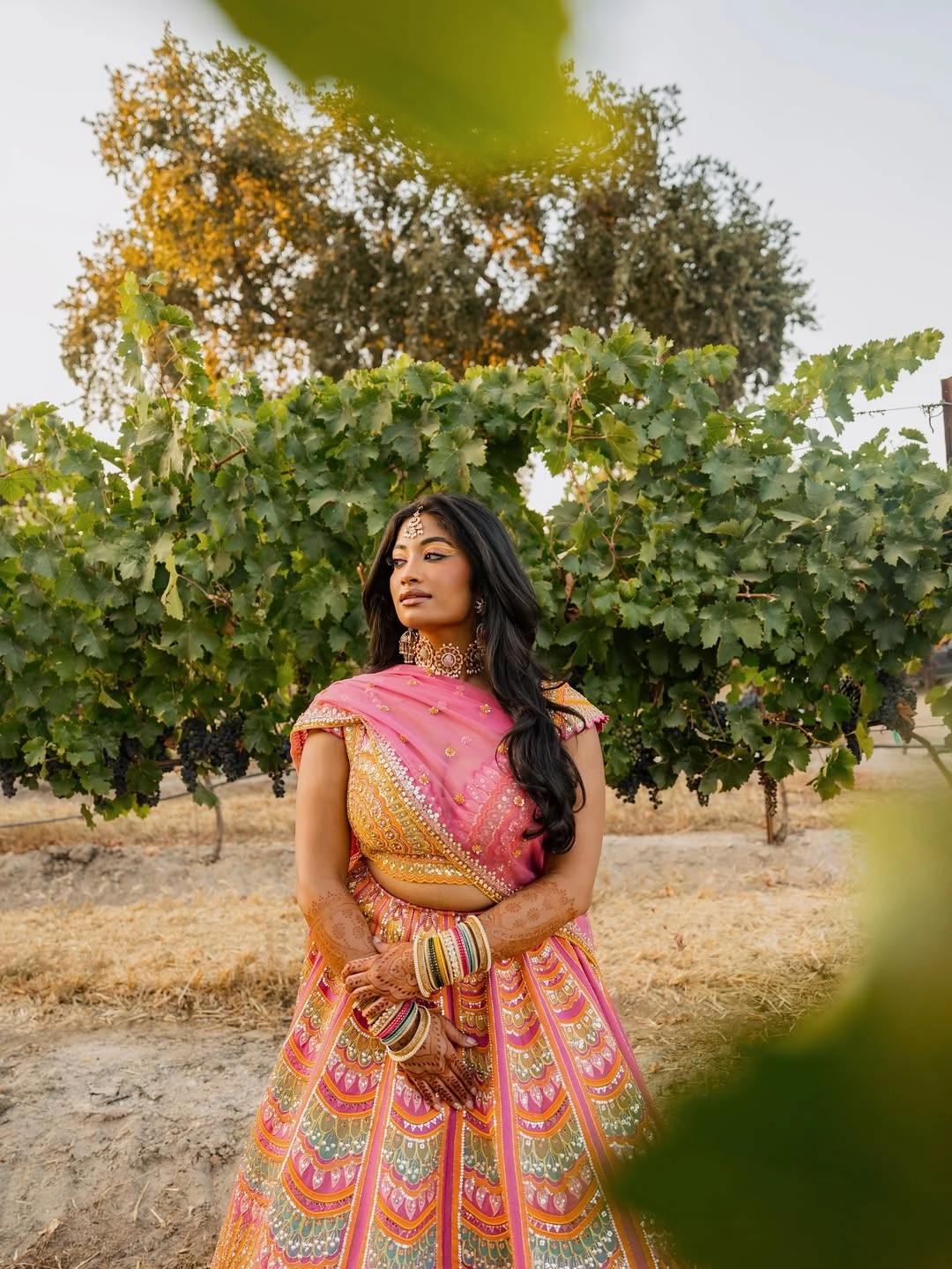
Still, she hopes to see creators of color—and POC-owned brands—reach the same level of success. “Beauty in America is getting outrageously expensive. Some don’t even have a wide shade range, and some also aren’t of quality,” she shared. “That’s where these underrepresented communities come in—to bring their own unique lens and understanding of their own audiences.”
At its core, beauty should belong to everyone—not just a single audience, tone, or identity. Above all, it isn’t about fitting in, but about making space.
“Celebrating Asian beauty means celebrating all our skin tones, our differences, and our ethnic features.”
– Monica on what celebrating Asian beauty means to her
Featured Image Photographed by Kimberly Tran.
Additional Photos: MONICA RAVI-CONWAY
Frequently Asked Questions
Monica Ravi-Conway is an Indian-American beauty creator who advocates for South Asian representation by sharing makeup looks and storytelling specifically tailored for brown skin tones globally.
She struggles with the industry’s persistent lack of inclusive shade ranges and accurate olive undertones for darker skin, while also navigating harsh online criticism and algorithmic bias.
Monica notes that colorism remains a prevailing issue in India, where brands often prioritize whitening products over catering to the diverse spectrum of darker, natural skin tones.
She praises Filipino beauty brands, specifically Issy, for successfully nailing inclusive shade ranges and blushes that perfectly complement the natural olive undertones found in many Asian complexions.
She hopes for an inclusive industry where everyone can see themselves represented, encouraging more creators of color and POC-owned brands to flourish and achieve global success.