



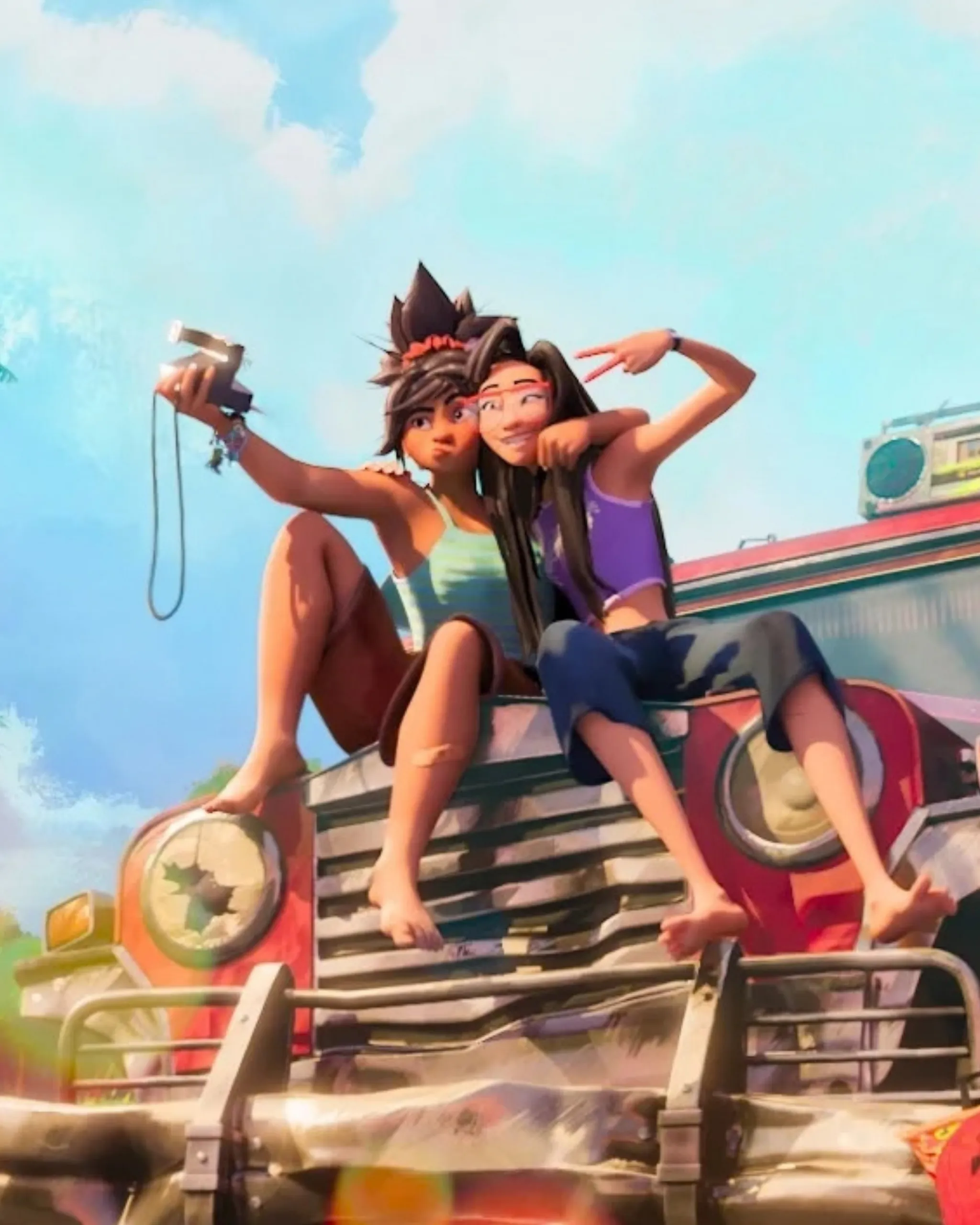
As Forgotten Island continues to drum up excitement ahead of its September 23 release, I can’t help but notice the amount of criticism it’s drawing. Of course, it’s completely normal to have our own thoughts on Filipino media. But at some point, the discourse starts to feel less like critique and more like nitpicking.
From the “tayo na” versus “tara na” debate to the Filipino accents, it makes me wonder: why are we so quick to scrutinize films that are meant to represent us and our culture?
RELATED: Liza Soberano and H.E.R. Know That Forgotten Island Is Unlike Anything They’ve Done Before
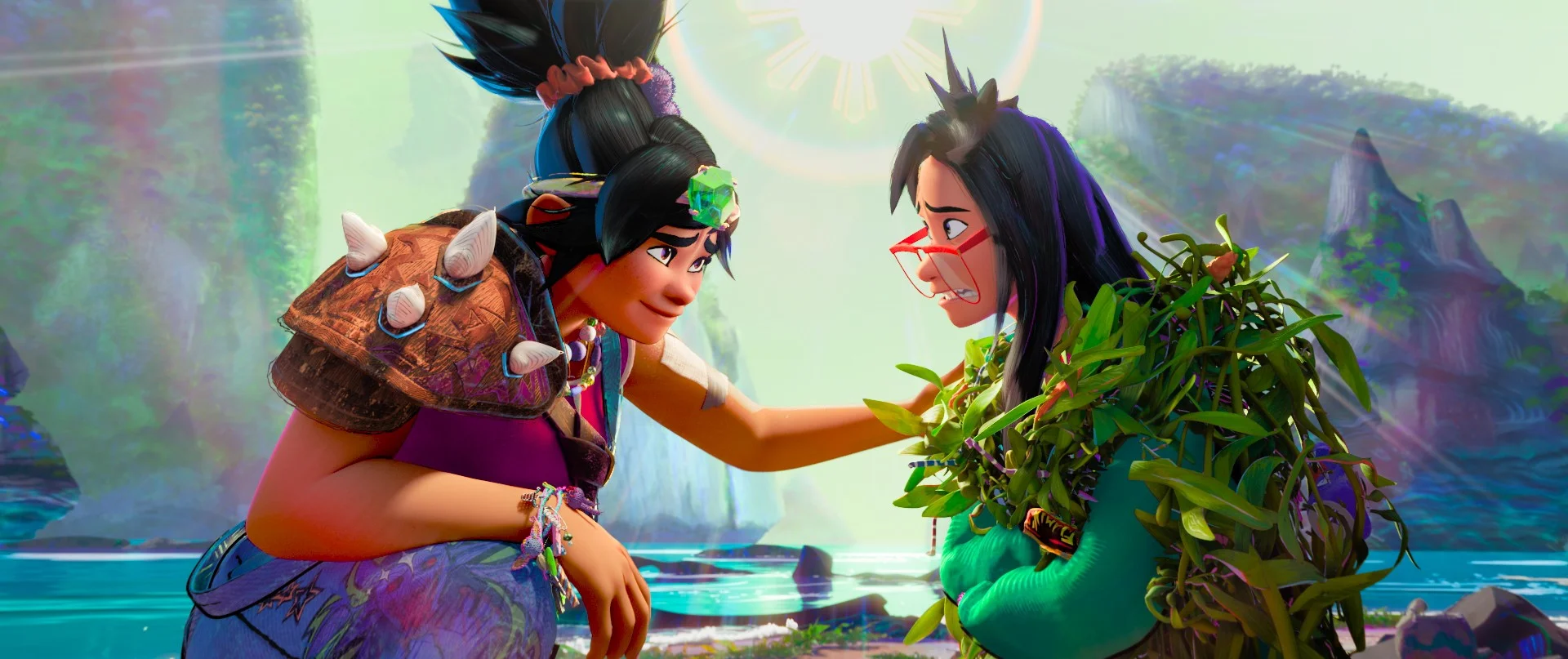
When Every Detail Becomes a Debate
Let’s be real: We’ve spent years—decades, even—consuming media and waiting for any mention of the Philippines. When international media gives us a Filipino character, someone speaking Tagalog, or even just a passing reference to our country, we’re quick to celebrate it. We post about it, share clips, make memes, and proudly point out the representation.
But now that there’s a film putting Filipino culture and stories front and center, we’re excited—but we’re also suddenly film critics, overanalyzing every line and detail in the trailer.
While it’s nice to see people take Filipino representation seriously, some netizens have begun to notice just how particularly “nitpicky” we can be.
There’s nothing wrong sa “Tayo na” at all being used by Forgotten Island. It’s just that it’s more proper than “Tara na.”
— Olly (@otakoyakisoba) September 13, 2026
Wika natin yan. Just because you don’t use it doesn’t mean it’s not right. That’s why our language is dying. Nakakalimutan na natin.
Take the film’s tagline, “Tayo na!” or “Let’s go!” in English. A “tayo na” versus “tara na” discourse started online, with some arguing that the latter is more commonly used in casual conversation.
Not to put my centavo into the discourse, but Forgotten Island is set in the ’90s. Language changes, and the way people spoke then may not always mirror how we speak now. Perhaps “tayo na” fits the world the film is trying to recreate.
Even the accents have been put on trial, with netizens pointing out how the Tagalog dialogue sounds “forced” or “Fil-Am.” Jo’s use of “Aunt Manang” in a short clip was also dissected, with some pointing out that “Manang” was clearly being used as a nickname in place of “Manananggal“, rather than as a term for an older sister or woman, as some had interpreted it.
I'm not watching Forgotten Island for representation. I'm just going in because I heard it's a good story. Learning that Jo and Raissa are 18 in the movie just further confirmed my suspicion that the research isn't up to par. 💀
— P.ᜃᜒ.B 🔻 (@redbtkn) September 14, 2026
Even the characters’ ages weren’t spared. Some questioned whether being 18 and already in college was believable, seemingly forgetting that before the implementation of Senior High School, Filipino students could enter university at 16 or 17.
And all of this makes me wonder: Why can’t we simply let Filipino films be Filipino films?
Why does Forgotten Island have to be the perfect representation of the Philippines when the Philippines itself—with its thousands of islands, languages, traditions, histories, and experiences—is far too varied and nuanced to be perfectly captured in a barely two-hour film?
The Need for Cultural Accuracy
And this isn’t the first time we’ve done this.
Earlier, when the Filipino-made short film The Lovers was released, it received an overwhelming amount of attention—mostly positive, of course, which makes sense for a short film that took three years to create.
shoutout to the lovers' filipino representation for showing both the heavy and toxic pressures but also the love in pinoy families pic.twitter.com/dq27KvefMV
— eiiko (@eiikomae) August 30, 2026
And yet, even as audiences celebrated another win for Filipino art, some couldn’t help but scrutinize Sirena’s diction and language. It sounded otherworldly, even ancient—but that arguably makes sense when the character herself is an otherworldly being.
Others questioned the story, pointing out the lack of resolution for its side conflicts, saying that it wasn’t “representative of Filipino culture,” or expressing disappointment that it didn’t tackle heavier themes, especially after being marketed as psychological horror.
I know the discourse about Filipino animation is all fake because y'all didn't fund Sunchaser when the entire studio is in the Philippines. And you're mad at The Lovers when the creators are from the Philippines. And Zsa Zsa Zaturnnah, FULLY LOCAL, barely gets support.
— Motzie🎄 Dapul NOW ON BSKY | ᜋᜓᜆ᜔ᜐᜒ | ᜇᜉᜓᜎ᜔ | (@MotzieD) September 1, 2026
Perhaps we’ve forgotten that behind this 15-minute animation is a group of college students who simply wanted to make a sapphic story set in the Philippines.
And perhaps we can allow fiction to be fiction. We don’t question why Leviathans are served as sushi in the ficitional Binondo. So why should every fictional detail in a Filipino story have to pass a cultural accuracy test?
The Filipino Diaspora Is Filipino, Too
Then there’s another question that often comes up: Why does it matter if a Filipino story is made by Filipino-Americans?
Look through social media long enough and you’ll see the growing conversation around the gap between Filipinos in the Philippines and the Filipino diaspora. With Forgotten Island centering on Raissa’s migration to the United States for university, some netizens have suggested that the Philippines portrayed in the film is the country preserved in the memories of Filipinos who grew up abroad—which may also explain why the story takes place in the ’90s.
as a Filipino, I'll just say that "we are always the noisiest critic of our own culture"
— zzzz (@zzzzoeyyyy3) September 16, 2026
the fact that the trailer already connects to the LATAM community while some Filipinos will find ways to criticize the movie is noteworthy🙃🙃🙃
anyways, support Forgotten Island with love https://t.co/gZDqpcH8wW
It’s a fair point to consider. But does it make the story any less Filipino?
Does being created by Filipino-Americans make a Filipino story less Filipino?
I don’t think so.
If anything, Forgotten Island seems to understand something important about Filipino identity: It doesn’t belong exclusively to those who stayed.
The Filipino experience can look different depending on where you grew up, what language you speak, what generation you belong to, or how often you’ve been to the Philippines. A Filipino-American may have a different relationship with the country than someone who has lived here their entire life. But difference doesn’t necessarily mean disconnection.
And perhaps that’s what we should allow Filipino stories to be: different. Not every Filipino film has to speak for every Filipino. Not every character has to embody the entire country. Not every detail has to be universally recognizable to be Filipino.
Maybe Forgotten Island is simply one Filipino story among thousands—told through the perspective of people whose relationship with the Philippines is shaped by distance, memory, migration, and longing.
And if you’re a Filipino-American who sees a little of yourself in Raissa, perhaps that’s enough. Because wherever we come from, however different our experiences may be, Filipino identity doesn’t have to be proven through perfect accents, exact slang, or flawless cultural references. Sometimes, it can simply be a story that reminds us that the Philippines—and the people who call it home—are worth remembering.
Featured Image and Photo: UNIVERSAL PICTURES
Frequently Asked Questions
Forgotten Island is set to release on September 23, and online discourse ahead of its premiere has focused heavily on criticizing details like its Tagalog dialogue, accents, and slang choices.
Some viewers criticized Forgotten Island’s tagline “Tayo na!” as less commonly used than “Tara na” in casual Filipino speech, though the film is set in the 1990s, when language use may have differed from today’s.
Despite mostly positive reception, The Lovers faced criticism over its lead character Sirena’s otherworldly diction, unresolved side conflicts, and claims it wasn’t fully “representative of Filipino culture.”
The article argues no, framing Filipino identity as varied across diaspora and homeland experiences, and noting that Forgotten Island’s focus on migration reflects one valid version of a Filipino story, not a diminished one.
The article argues that heightened scrutiny comes from years of craving international representation, which has led some audiences to treat Filipino-led films and shows, like Forgotten Island and The Lovers, as needing to be flawless or fully representative.
Recommended Video
Latest Posts

Latest Issue