



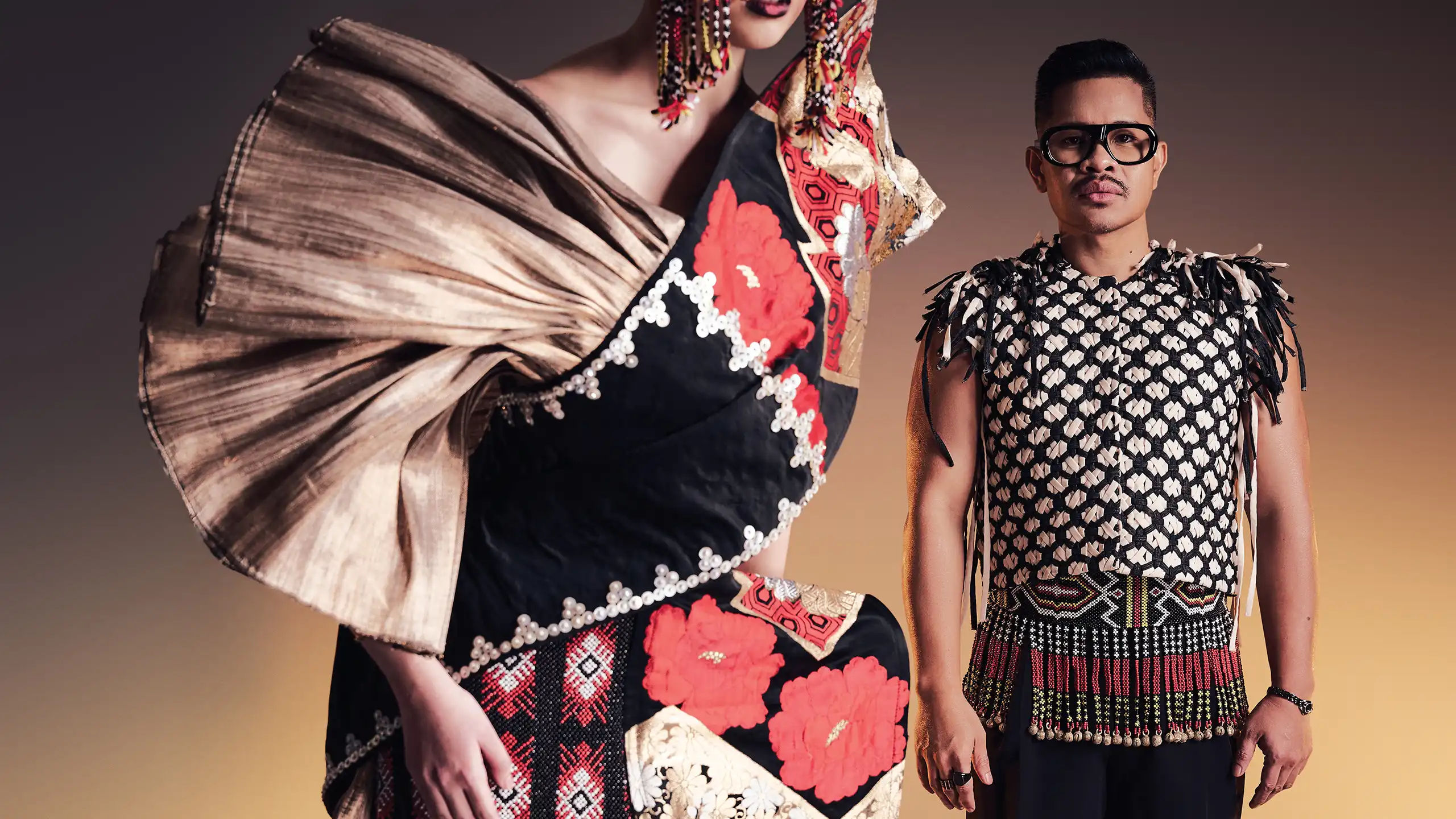
This is an excerpt from September 2026 Designer Profile
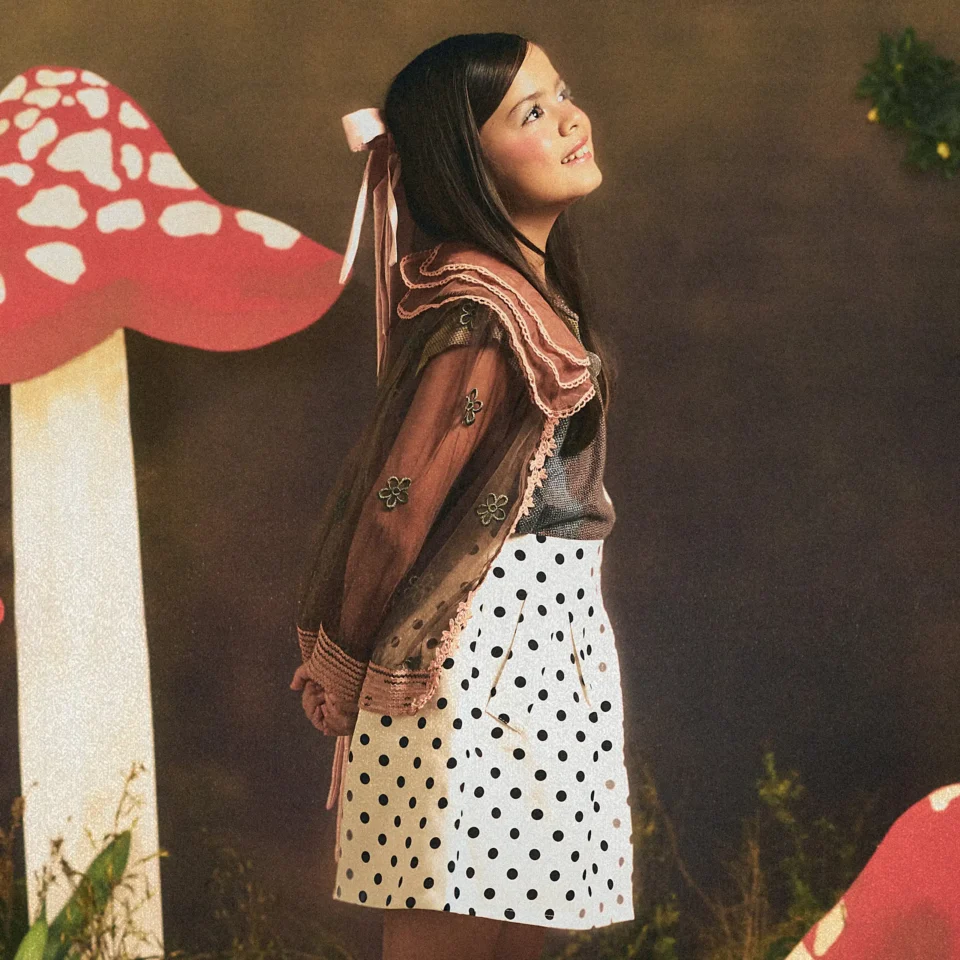
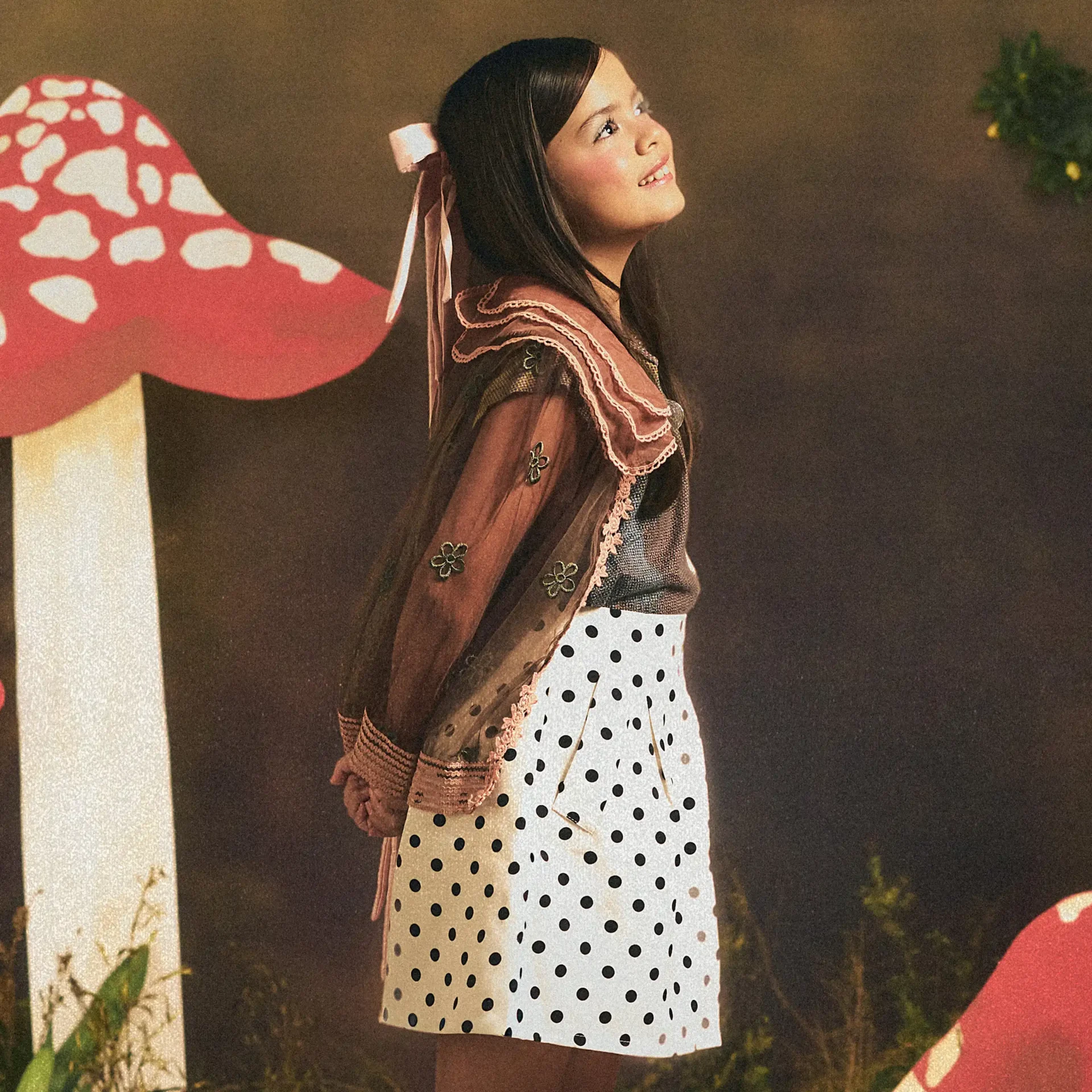
There is beauty in looking twice. The first glance sees what has always been there: the materials, gestures, textures, objects, and everyday details made invisible by familiarity. The second asks what happens when those things are given another life. For Jaggy Glarino, that second look became the starting point for IMIN, a collection born from an investigation into Mindanao’s histories of migration and cultural exchange, and the Japanese presence that shaped some of its encounters.
The Space Between Them
The collection began with a question of proximity. When the Embassy of Japan in the Philippines and Bench presented Glarino with the collaboration, he resisted the easy temptation to treat history as something to be researched from a comfortable distance. As a designer raised in General Santos City, Mindanao was already part of him. The challenge was to understand where he stood within that history—and what could happen when personal memory met historical inquiry.
RELATED: Jaggy Glarino, Rhett Eala, and Joey Samson Stitch Shared Histories in Threads of Dreams
“I wanted to understand where I stood within that history, and how I could translate it into something truthful to me as a designer,” he says. “The turning point was discovering that Japanese history in the Philippines was deeply connected to Mindanao, particularly to Davao and, by extension, to the landscape and visual language I grew up around.”
What interested Glarino was not simply the presence of Japan in Mindanao, but the encounter itself: what happens when two communities meet and neither walks away entirely unchanged. “I did not want the collection to come purely from research or from looking at history from a distance,” he points out. Glarino approached the research with what he calls a “wide-eyed view,” deliberately resisting the familiar visual shorthand that can make cultural references feel instantly legible—and therefore instantly exhausted.
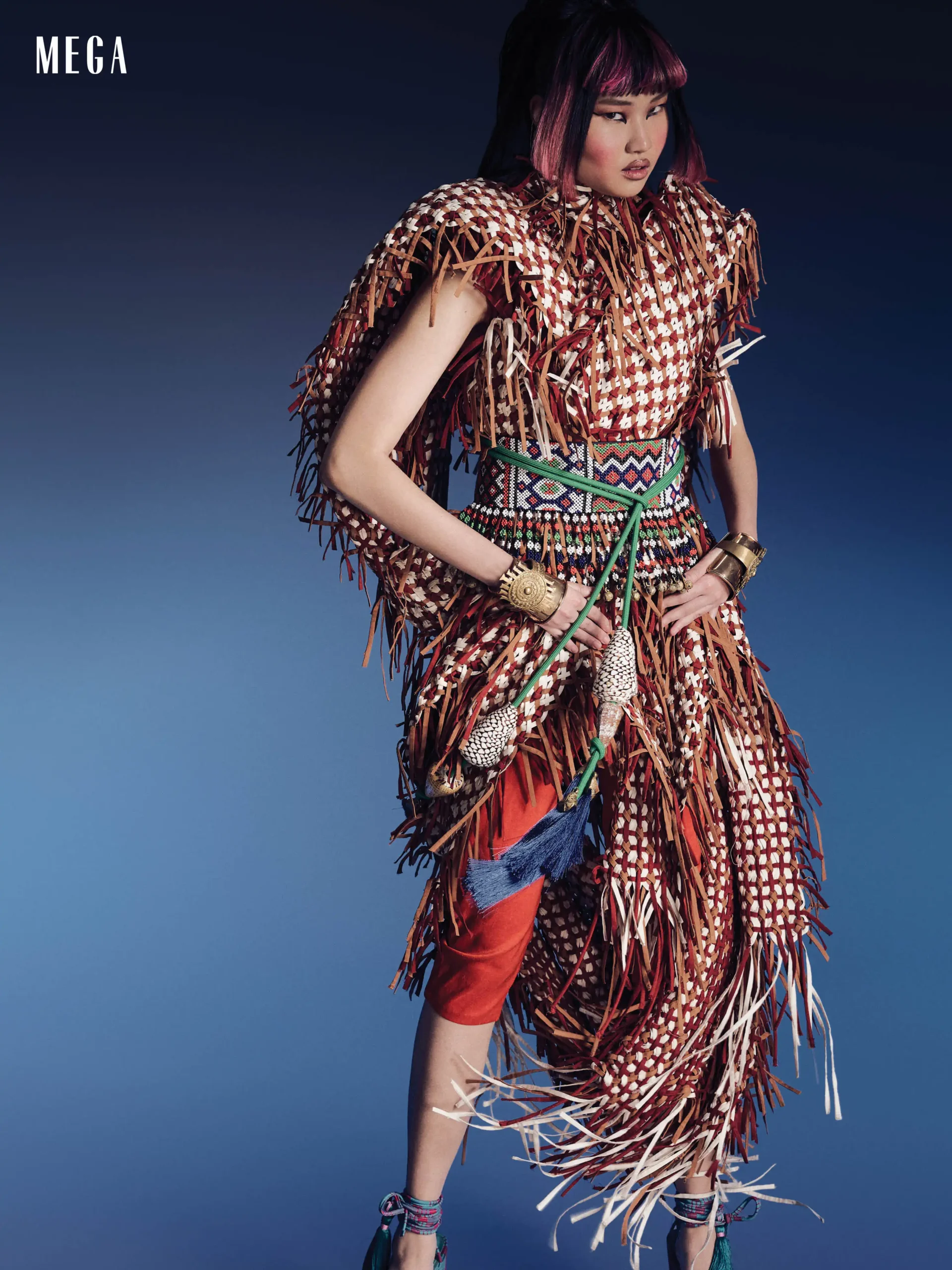
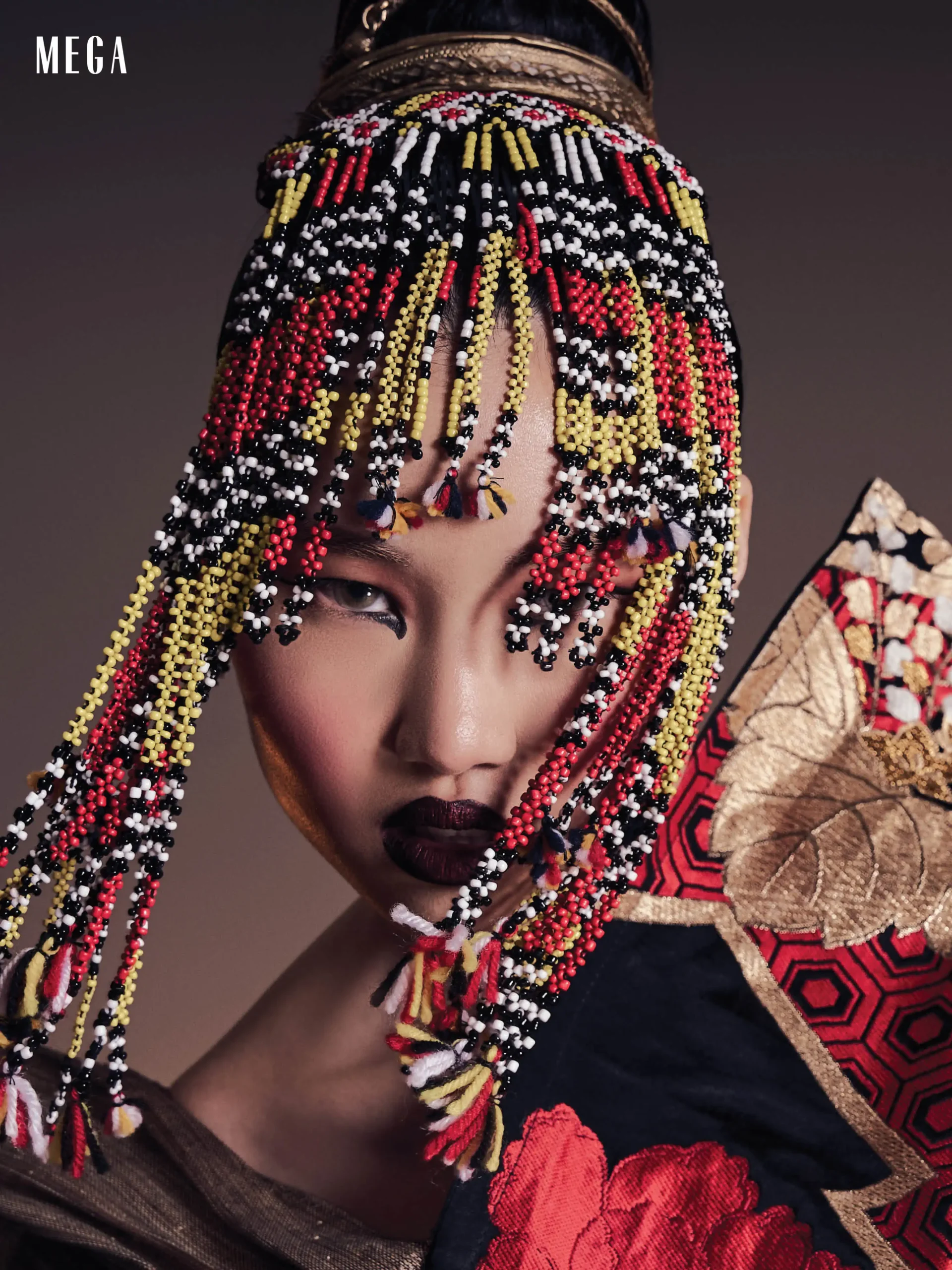
He follows cues: fabric, scarcity of material, music, objects, gestures, feelings. One reference leads to another, until research becomes a trail of breadcrumbs; the clothes are where those breadcrumbs accumulate. “The history became the anchor, while the design became the space to imagine the possibilities.”
Imperfect Dressing
Craftsmanship is not a decorative afterthought but the argument itself. Glarino’s work is exacting in its construction, yet he is equally interested in the moment when perfection becomes too perfect.
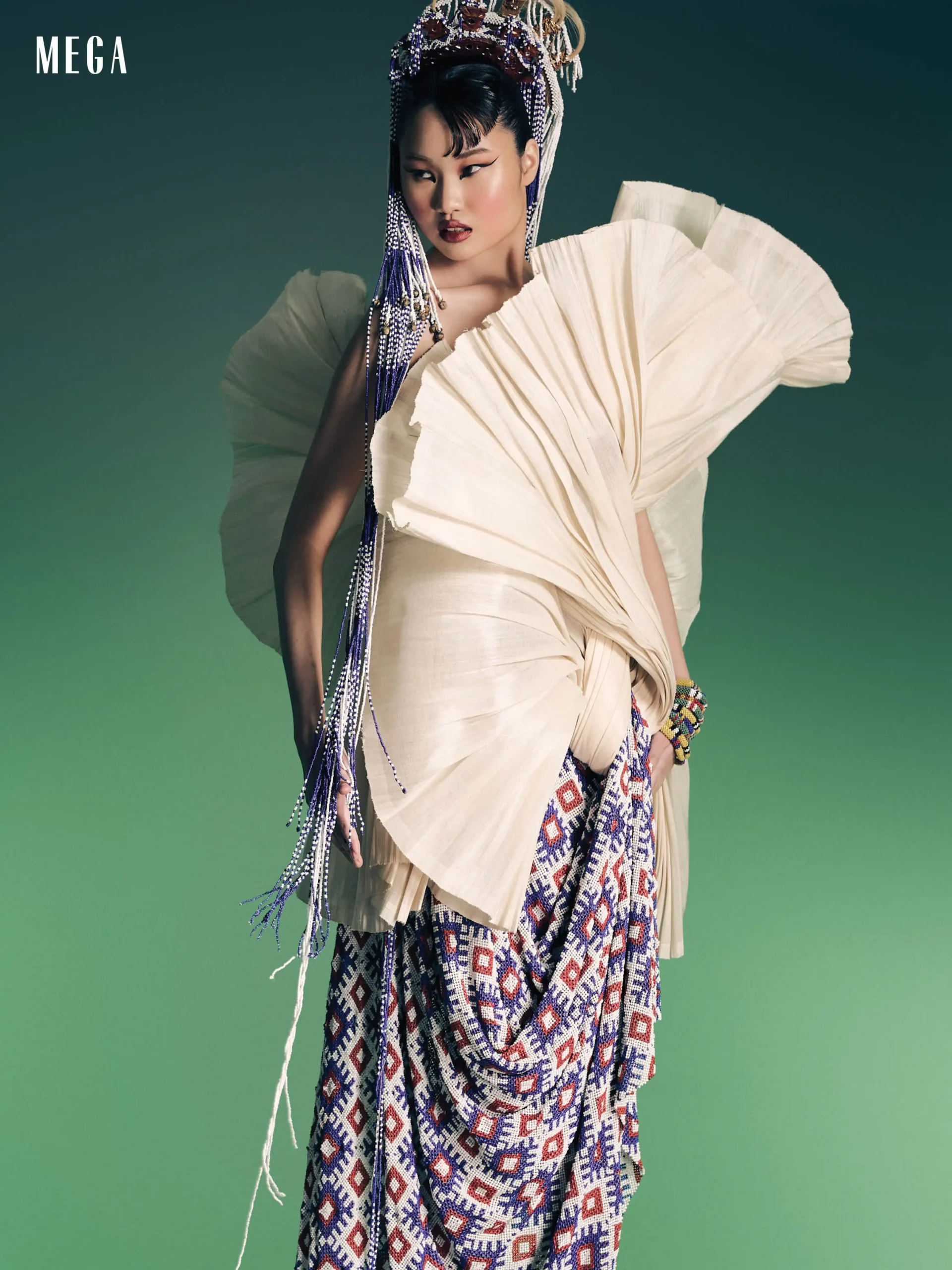
A raw edge can have character. An uneven surface can create tension. A visible hand stitch can remind the wearer that a garment was made by someone, rather than simply produced. The distinction, he says, is intention. “There is a difference between something being unfinished because it lacks technique and something feeling alive because you consciously chose not to over-polish it. Sometimes perfection can remove the humanity from a piece. The challenge is knowing when to stop.”
He learned this in part from his mentors, Joie Lloren and Ivar Aseron. He admires their technical mastery, clarity of visual language, and ability to make a garment feel resolved without burdening it with unnecessary detail. Their influence, however, did not turn Glarino into a minimalist. “What I learned from them was not to imitate that restraint, but to understand the value of precision, taste, and proper technique,” he emphasizes. “My own instinct is quite different. I tend to do more, to build, layer, and push things toward something more maximal.”
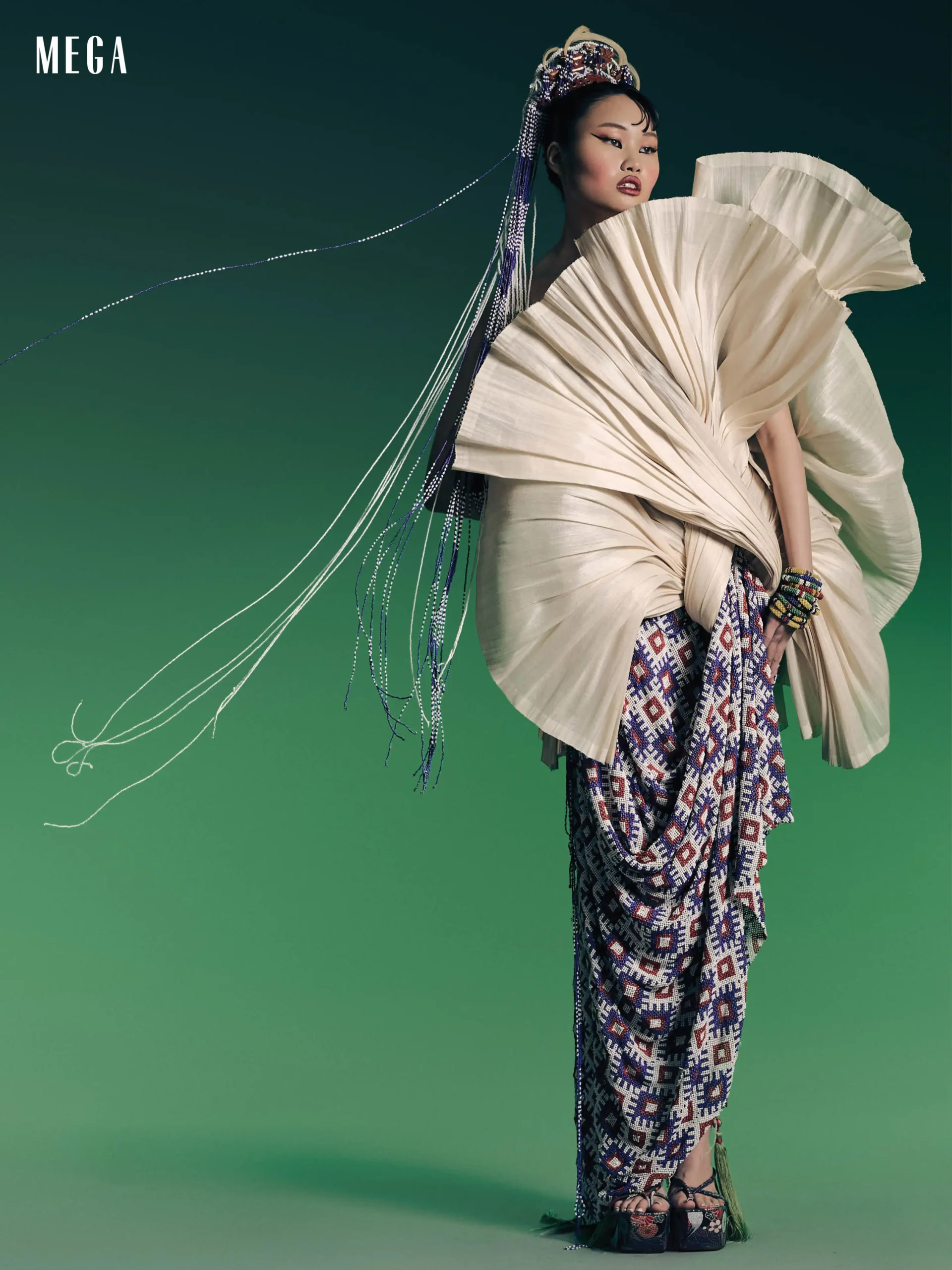
There is a revelation in that distinction. Precision does not have to produce restraint. Sometimes it gives maximalism its backbone.
Why Does Jaggy Glarino Unlearned Guarding His Ideas Too Tightly?
As Glarino’s practice has expanded from personal experimentation into collaborations with artisans and international fashion communities, another lesson has become equally important: knowing when an idea no longer needs to belong entirely to its creator.
Glarino has had to unlearn that instinct. “I think the biggest thing I have had to unlearn is the instinct to guard an idea too tightly.” Collaboration, he discovered, does not necessarily make a story less personal. It can make it more complicated, and therefore more interesting. Other people’s perspectives introduce friction, contrast, and unexpected connections, the very qualities at the heart of IMIN itself.
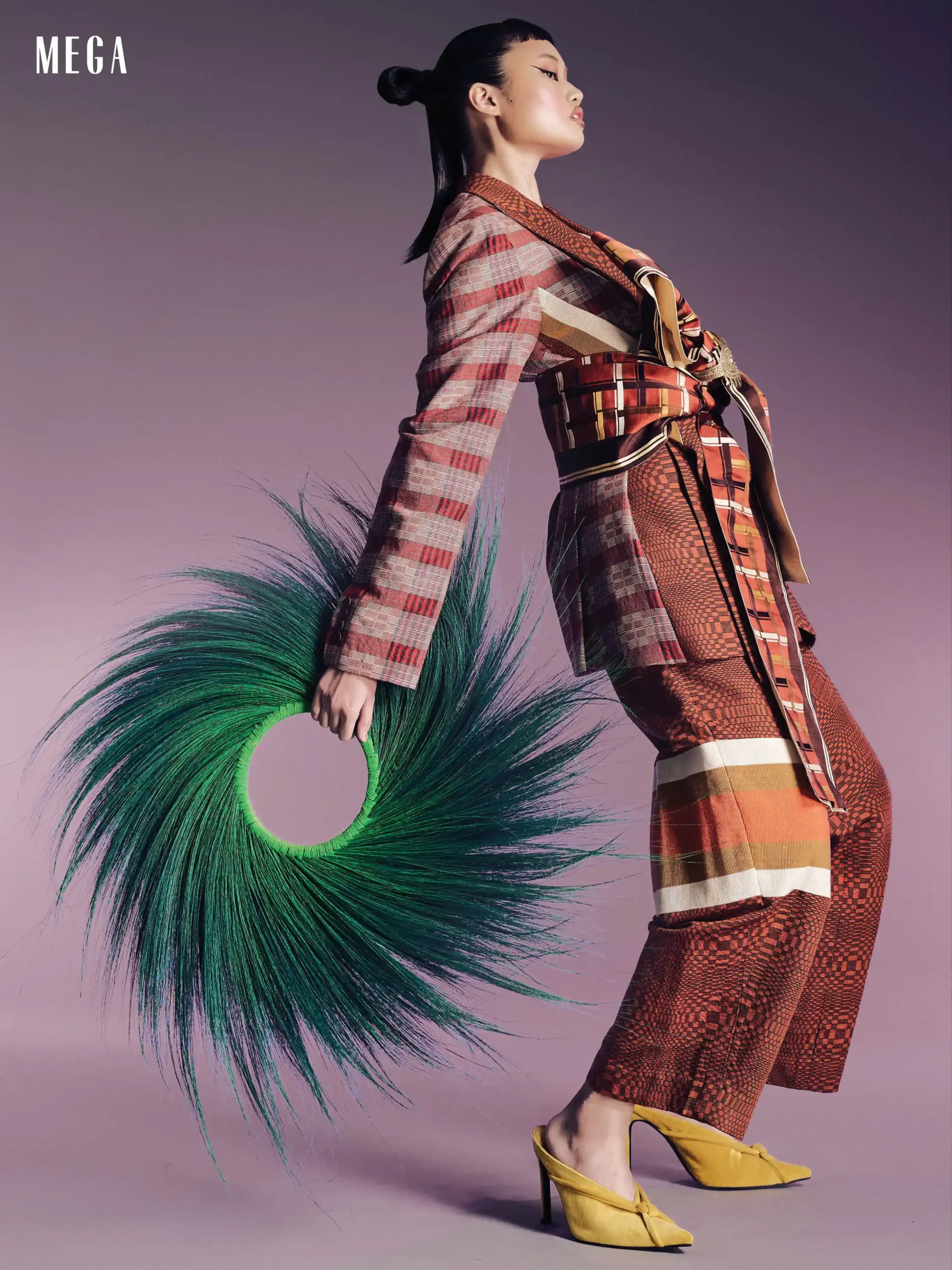
IMIN is not merely about encounters between cultures; it is itself the product of encounters between people, techniques, histories, and ways of seeing. He says, “That is the beauty of collaboration.”
This becomes particularly meaningful when considering Mindanao. Glarino hopes someone from the region will recognize something familiar in IMIN, but see it differently. “Our mundane is not necessarily someone else’s mundane, and sometimes the things we grow up seeing every day become so familiar that we stop noticing their value.”

“I hope someone from Mindanao sees something familiar in the collection, but sees it differently too,” he says. Glarino wants the collection to return those details to view, not as exotic artifacts, but as references with enough depth and cultural weight to become part of a new design language.
That is a particularly generous way of thinking about fashion. It does not ask the ordinary to become exotic before it can become beautiful. It asks us to look harder. The history is there. The materials are there. The hands are there. Jaggy Glarino looks again—and what he finds is worth making.
Photographed by YEL DELA PAZ. Art Direction by TROY NONATO. Fashion Assistant KRISSIE TERUEL. Produced by THESSMAR LECTURA. Hair by BRYAN EUSEBIO. Makeup by BOOYA. Photography Assistants EMELITO LANSANGAN and KURT VILLAGRACIA. Model NING of IM Agency.
Frequently Asked Questions
IMIN is a collection by designer Jaggy Glarino investigating Mindanao’s histories of migration and cultural exchange, particularly the Japanese presence that shaped Davao, commissioned through a collaboration with the Embassy of Japan in the Philippines and Bench.
As a designer raised in General Santos City, Glarino discovered that Japanese history in the Philippines was deeply connected to Davao and the visual language he grew up around, making the research personal rather than distant.
Glarino cites Joie Lloren and Ivar Aseron as mentors, admiring their technical mastery and clarity of visual language, though he describes his own instinct as more maximal, building and layering rather than practicing restraint.
Glarino intentionally leaves raw edges, uneven surfaces, and visible hand stitching to remind wearers a garment was made by someone, believing that over-polishing a piece can remove its humanity.
Glarino says he had to unlearn guarding his ideas too tightly, discovering that collaboration with artisans and international fashion communities makes a story more complicated and interesting rather than less personal.