



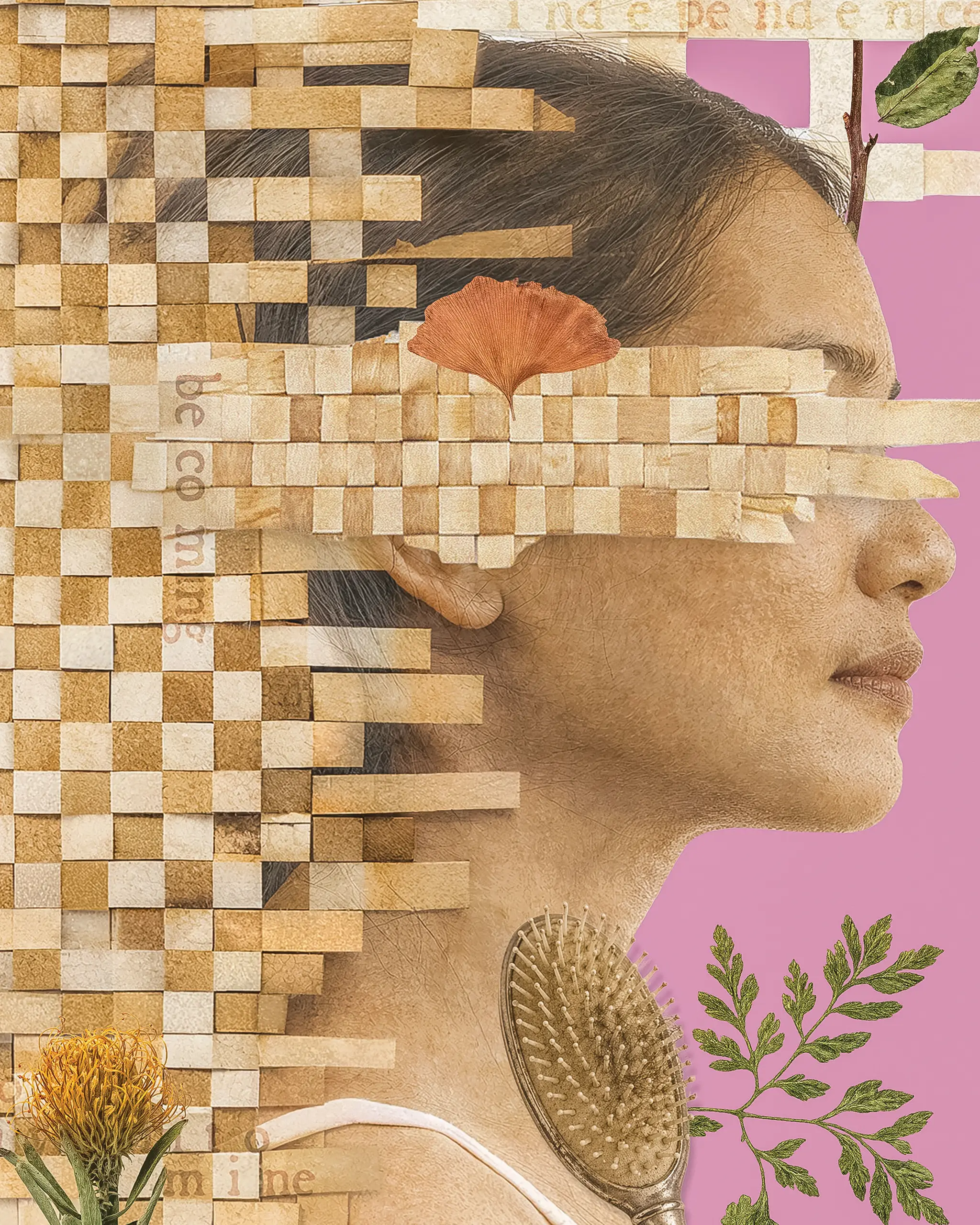
“You look exactly like your father,” my mother says. Almond eyes. Button nose. Full lips. That my face is all of his and none of hers. That I am more his daughter than hers. “You look exactly like your father,” my mother says again. It became a punchline. It became a catchphrase. It became second nature. Until this silly resemblance became the only thing we have of him. Until I became nothing more than a remaining collection of him.
RELATED: Body Politics: The Cost of Chasing the Perfect Body
I started to become more conscious of how my mother sees me. Does she look at me with grief? Or with anger? I cannot erase the features I inherited from him. I also cannot undo the pain he caused. What defense does a teenager even have? Do I assume the liability? Do I carry it until it satisfies the emotional debt he left?
It is an unfair thought that I can’t seem to shake, that I am unable to recognize a version of our relationship that is stable. It is as if it wears its self-contradictions, almost knowingly so. Fascinating as it is frightening. Warm as it is clinical. A constant negotiation between opposing truths.
My stomach aches—from laughter or anxiety.
My heart races—out of anticipation or fear.
My tears fall—from hurt or happiness.
We fight. We laugh. We argue. We make amends.
It’s a cycle.
Anything repeated often enough becomes automatic, to a point where the brain no longer has to spend energy thinking about it. We have orbited both sides of polarizing opposites so often that the inconsistency feels like muscle memory, and in time, it became exactly that. My nervous system has finally learned to accept that this is the baseline of our maternal bond.
I have always struggled to name big feelings. My therapist pointed that out. But what I felt was not hate. No—not at all. I never hated my mother. I love her. I do. But why do I have such an insatiable appetite to be liked by her? Is it right for me to ask to be liked?
To love someone is different from being liked. You can like someone and not love them. You can love someone and not like them. It brings to mind a scene from Greta Gerwig’s Lady Bird, when Christine, a strong-willed high school senior, tells her mother, “I just… I wish that you liked me.” Her mother replies, “Of course I love you.” But Christine asks again, “But do you like me?”
Parents and children fight because of power conflicts and differences in perspective, yes. But it is seldom unpacked how some arguments are rooted in intense distaste and a deep yearning for acceptance—two ambivalent feelings that exist because of each other. This, as many believe, is present in any mother-daughter conflict. Including mine.
That realization has bled into our relationship.
Does my mother like me? I ask myself.
Almond eyes. Button nose. Full lips. A face that is entirely my father’s and none of hers. The more I sit with it, the smaller I feel.
Does my mother like me? Or do I remind her of him—so much of him that I become the ghost of her hurt?
It becomes easier, then, to ration myself. To offer only the parts that feel safest to reveal. And I am rewarded. I feel seen. I feel held. But I do not feel known. I do not feel met.
And somewhere along the way, I begin to grow bitter toward that.
Our paradoxical push and pull only seemed to drive us further apart. My nonchalance was met with anger. My silence, with disappointment. My distance, with resentment. I don’t want to be like my mother, I muttered to myself, rejecting any resemblance we shared.
It hurts to admit. Because daughters are meant to want to become their mothers. But I didn’t. I didn’t want to be like her. And I carried that guilt along throughout my teen years.
Then it happened. The inevitable happened. I grew up.
Womanhood, as many say, is the process of understanding our mothers.
I learned how harsh the world can be—how unforgiving it is, especially for a woman. How unforgiving it must have been for her. And still, she tried. She tried for me. I don’t know how she did it.
My inability to understand my mother beyond my own feelings now feels, in retrospect, selfish in its taking.
Adulthood allowed me to see her differently—not just as my mother, but as a woman. And with that came clarity: it was her first time becoming a mother. She had no reference for it within her own family. She navigated loss and grief as she went. And still, she showed up.
She walked long hours in search of stability. She made sure we had a roof over our heads, warm meals on our plates, and enough to meet our needs. She did all of this on her own, while still making sure she remained a mother to us.
Talking to my mother now about her memories of my childhood, I realize how differently we remember it. Mine orbits around the bitterness I carried. Hers, around joy.
She remembers how we built pillow forts and camped in the living room. How we spent afternoons in bookstores, reading through every open book. How we took my stuffed animals out to restaurants to celebrate their birthdays. She gave everything despite having nothing. My mother did that, as do many mother figures in our lives. They love so deeply, even when they feel empty inside. That is an unmatched superpower.
I kept track of her setbacks. She held on to her wins. And her greatest win was simply this: that I was okay. That I was happy.
I have always felt that my mother was my harshest critic. I failed to realize that, in many ways, I was hers; that my distance, my resistance, made her feel as though she had failed.
She was not distant because I resembled my father. She was distant because I did not know how to receive her efforts. And God, a woman already endures enough criticism from the world for trying. She did not need that from me.
It is humbling to look at old photos of us. At 27, she was attending my quarterly class recognition. At 27, I am writing our story for a fashion magazine. I once asked her if she was proud of me. She told me that she could only dream of the life I am living now. I hope she knows that everything I have become is for us.
My face, as my mother describes it, is an archive of my father’s features. Almond eyes. Button nose. Full lips. All of his. None of hers.
And yet, I still search for a piece of her in me when I look in the mirror. Is it my smile? My skin? The way my brows meet in the middle when I am upset?
Carl Jung once wrote, “Every Mother contains her daughter in herself and every daughter her mother and every mother extends backwards into her mother and forwards into her daughter.”
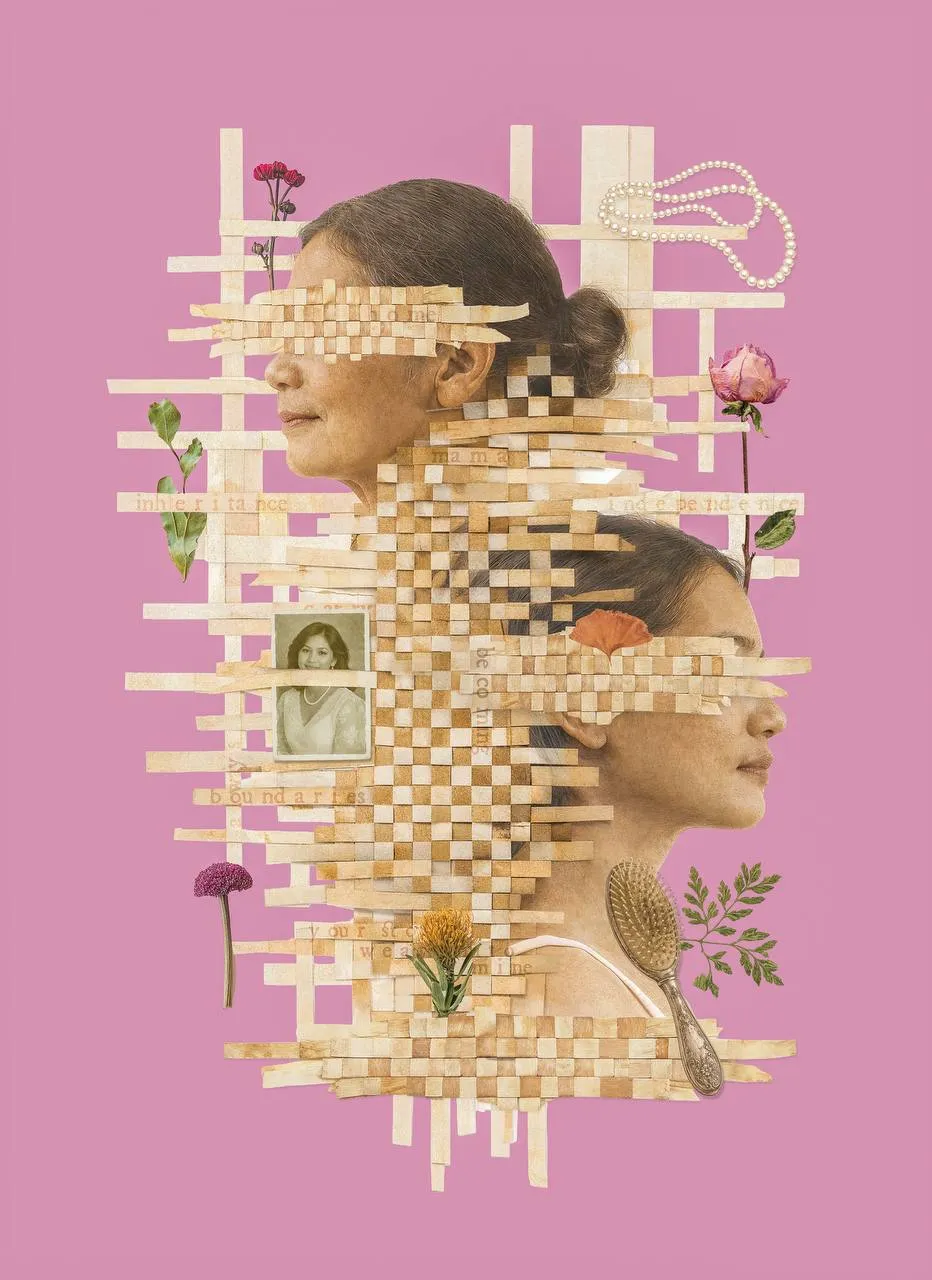
After years of searching for resemblance, I have come to understand that my mother gave me a different kind of inheritance—one that cannot be seen, but felt in who I have become. Everything I have learned, and unlearned, from her.
Her patience. Her wit. Her curiosity. Her creativity. The way she connects with people without needing to please them. The way she shows up for those around her.
And all I can think is how lucky I am to inherit something so sentimental—something that cannot be measured in value.
Art By SOFIA COPE
Frequently Asked Questions
Daughters often criticize their mothers due to intense desires for maternal validation combined with developmental power conflicts, making the relationship highly vulnerable to projection and emotional ambivalence.
Maternal projection can create deep emotional cycles of hyper-vigilance and resentment in children, especially when a child physically reminds the parent of past emotional trauma or unresolved grief.
Adulthood shifts the dynamic by allowing mature children to view their mothers as complex individuals who navigated systemic expectations and personal hardships rather than flawless, perfect caregivers.
Carl Jung emphasizes that the maternal bond is a multi-generational continuum where mothers and daughters psychologically contain, mirror, and extend one another across generations continuously.
An invisible inheritance consists of emotional resilience, behavioral traits, and psychological strategies passed down through upbringing that shape a child’s character far more deeply than physical resemblances.