



This is an excerpt from MEGA May 2026 Fashion Feature
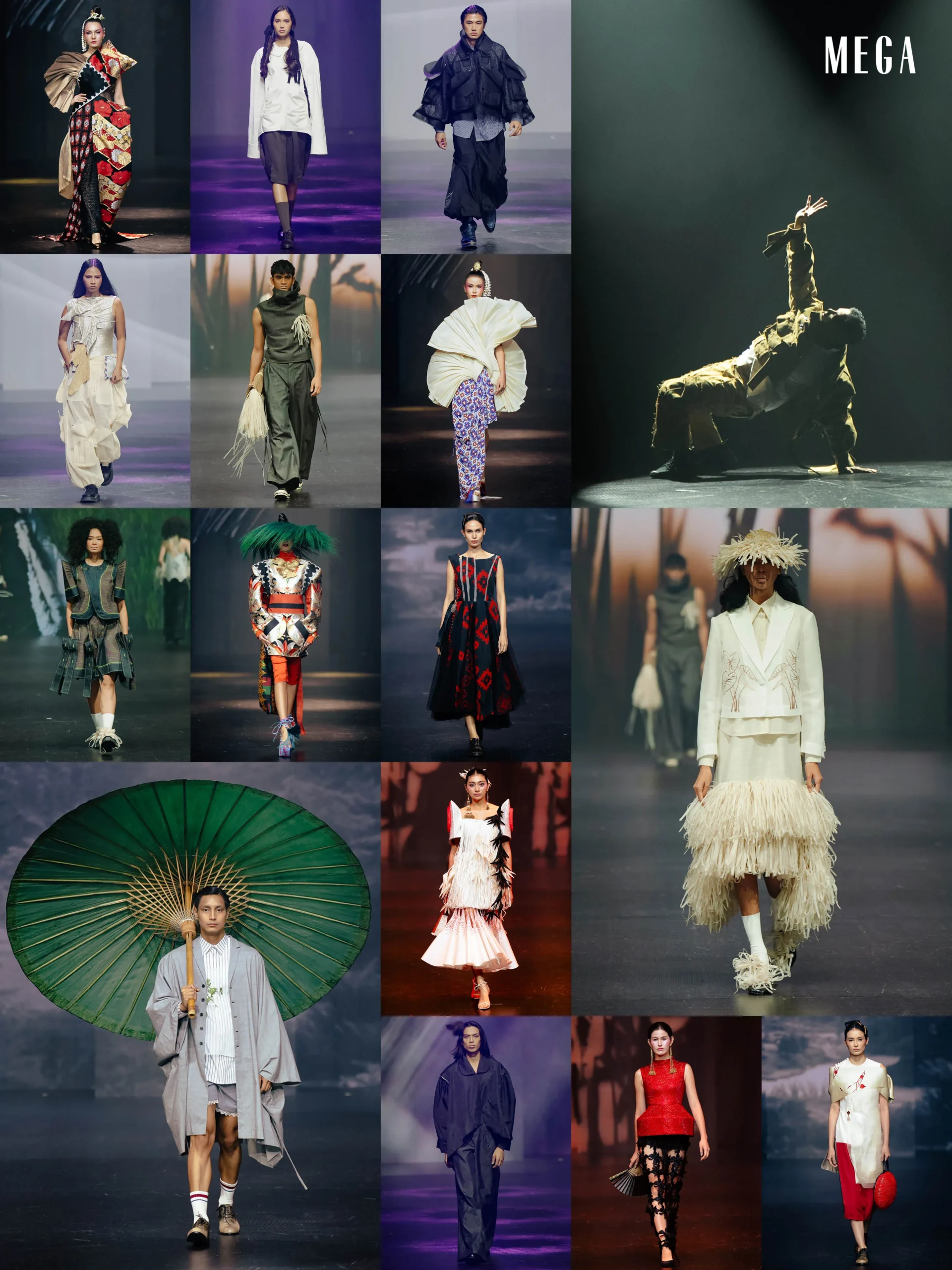
For some designers, the Philippines and Japan form an axis; an exchange shaped by history, travel, and friendship. For others, the work turns inward, grounded in personal landscapes or imagined trajectories. Together, they resist a neat thesis.
RELATED: Carmina & Cassy: Becoming, Together and Apart
What connects them instead is movement. Ideas pass through time, carried by people, objects, and encounters that don’t always announce their significance at first. A trip becomes a reference point. A fragment stays. A figure returns in another form. What begins as contact between places, between individuals, settles into something quieter, then surfaces again, altered but intact.
This is where generations enter as a series of transmissions. Some are direct, handed down with clarity. Others arrive sideways, through memory, repetition, or reinterpretation. Across these works, what persists is not a single narrative, but a set of continuities.
RHETT EALA REWORKS A PERSONAL ARCHIVE
For Rhett Eala, Japan appears through a domestic archive assembled over time.
His mother, Roceli “Baby” Valencia, gathered objects and textiles during her travels, filling their Manila home and her Hong Kong antique shop with a steady stream of material references. A stay in Osaka in 1970 left a lasting imprint, carried through what she chose to keep and display. Eala pulls from that accumulation. He filters it, edits it, and brings it forward with restraint. The result feels considered—shaped by proximity, then sharpened by distance.
JAGGY GLARINO EXAMINES ONGOING CONTACT
Jaggy Glarino approaches the Philippines–Japan relationship as something built through repetition.
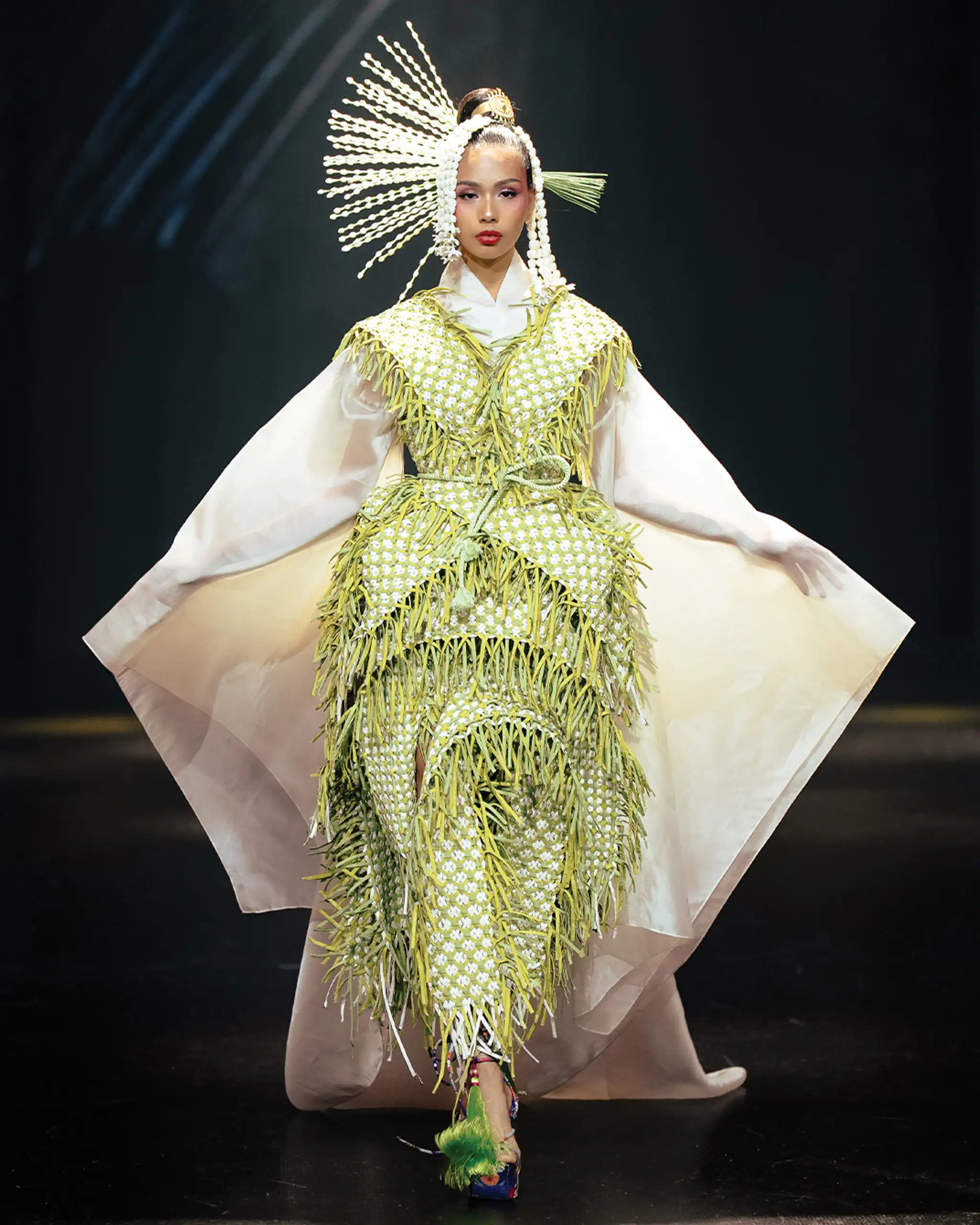
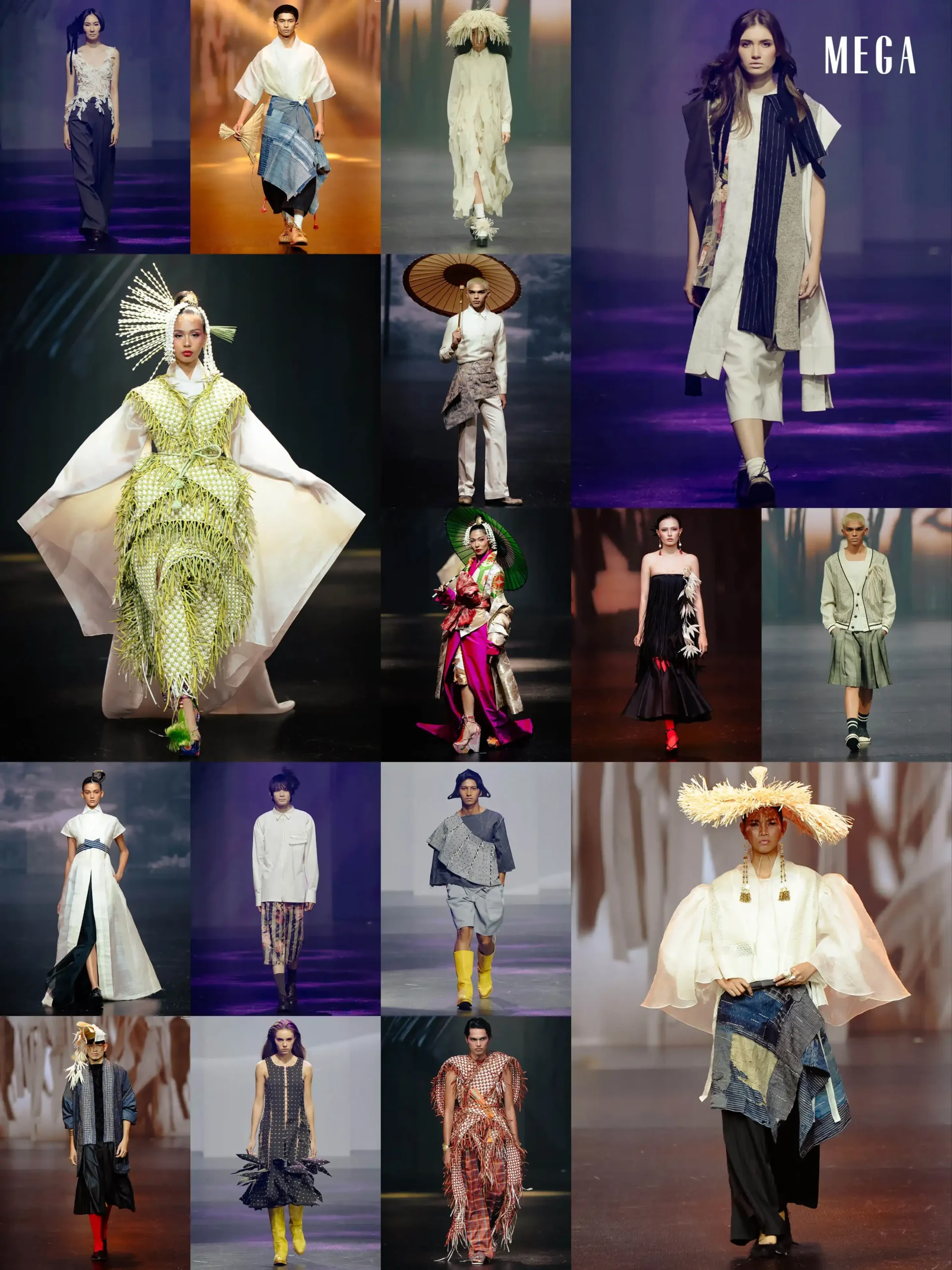
“IMIN” studies encounters between Mindanao communities and the Japanese presence as an active condition. Indigenous dress systems meet Japanese construction without hierarchy. Garments prioritize function—cut and layered with precision, adjusted through use.
The work holds tension without resolving it. Form follows necessity, and the exchange remains open-ended.
JOEY SAMSON CONSTRUCTS A DIALOGUE ACROSS FIGURES
Joey Samson crafts his collection through a deliberate pairing.
He places Juan Luna’s Una Bulaqueña alongside O Sei San, connected through the orbit of José Rizal. The exchange unfolds between a painted subject and a historical figure, brought into conversation through design.
Garments act as translation—bridging context, shifting meaning, and allowing both figures to occupy the same frame without collapsing their differences.
NEW AND NEXT GENERATIONS
Generations move through these works in different registers—sometimes carried intact, sometimes reworked, sometimes left behind altogether. What persists isn’t uniform. It shifts, depending on what is held onto and what is allowed to fall away.
The throughline isn’t continuity for its own sake, but decision. Each gesture— whether drawn from history, place, or motion—marks a choice about what to keep in circulation. References don’t sit untouched; they are cut, adjusted, and set into new conditions, where their meaning can hold or change.
Each designer moves with intent—across water, across land, or into open air— advancing what remains and clearing space for what follows.
Images courtesy of BENCH
Frequently Asked Questions
To preserve the sharp tailoring of pieces like those in Joey Samson’s collection, always use padded hangers to maintain shoulder structure and prevent fabric distortion. Store these garments in breathable cotton garment bags to protect against dust while allowing air circulation, which prevents moisture buildup and fabric brittleing. Avoid plastic covers, as they trap gasses that can yellow delicate historical-inspired textiles over time.
Achieving the perfect texture requires balancing the rugged, functional weight of Mindanaoan textiles with the precise, clean lines of Japanese tailoring. Layer varying fabric weights—such as heavy hand-woven cottons under crisp, lightweight technical fabrics—to create a visual depth that feels intentional rather than cluttered. This contrast highlights the “ongoing contact” between the two cultures while maintaining a modern, sophisticated silhouette.
A frequent mistake is over-styling archival pieces with modern accessories that compete with the garment’s domestic history and textile narrative. Instead, follow Eala’s lead of restraint by choosing minimalist pairings that allow the “filtered and edited” textures of the archive to remain the focal point. Focus on one statement archival element per look to ensure the memory and meaning of the piece aren’t lost in visual noise.
For functional pieces like Jaggy Glarino’s “IMIN” collection, maintain their shape by following specific care labels, often requiring professional dry cleaning to protect layered internal structures. If the garment features heavy topstitching or reinforced panels, avoid high-heat ironing which can flatten the intended architectural volume. Use a handheld steamer to gently release wrinkles while preserving the garment’s precise, functional “cut and layered” integrity.
Protect the “translation” of historical subjects like O Sei San or Una Bulaqueña by keeping garments away from UV light, which causes rapid pigment degradation. When displaying or storing items with intricate references or painted-subject inspirations, ensure the environment is climate-controlled with low humidity to prevent fiber breakdown. Rotating your wardrobe seasonally also prevents “fold-line” fading, ensuring the cultural continuity of the design remains vibrant for years.
Recommended Video
Latest Posts



Latest Issue