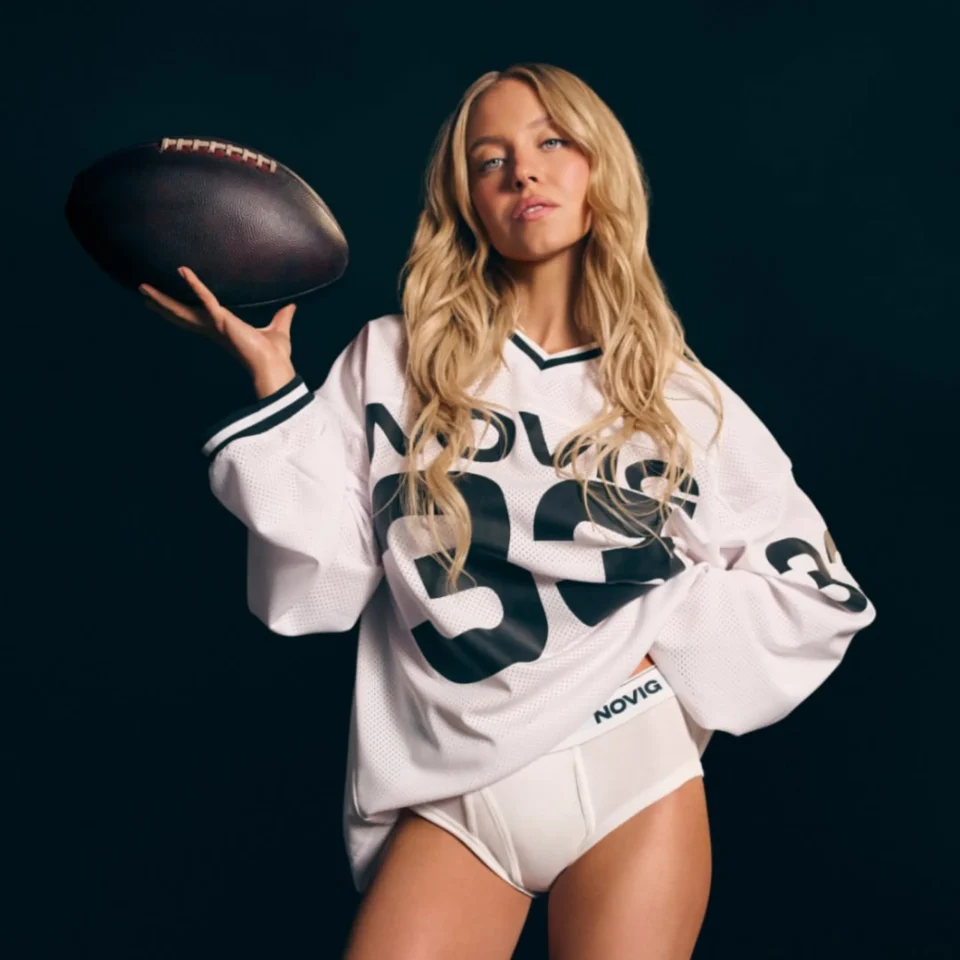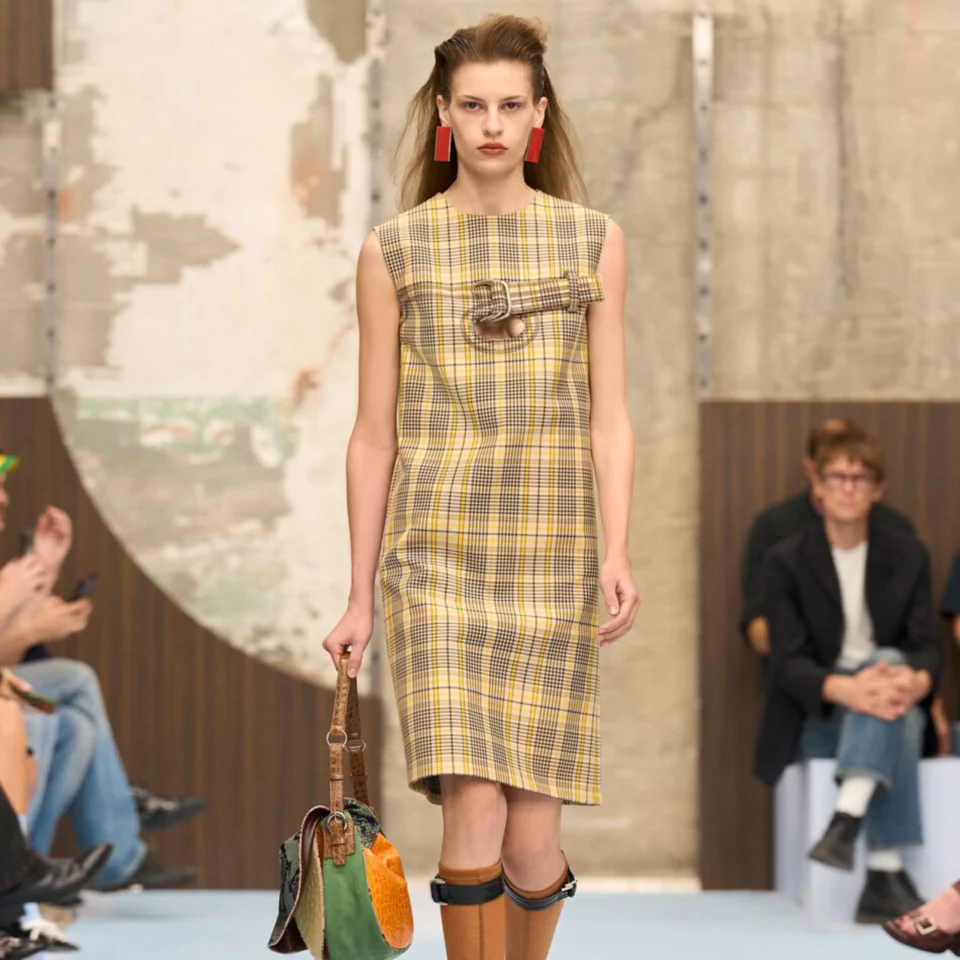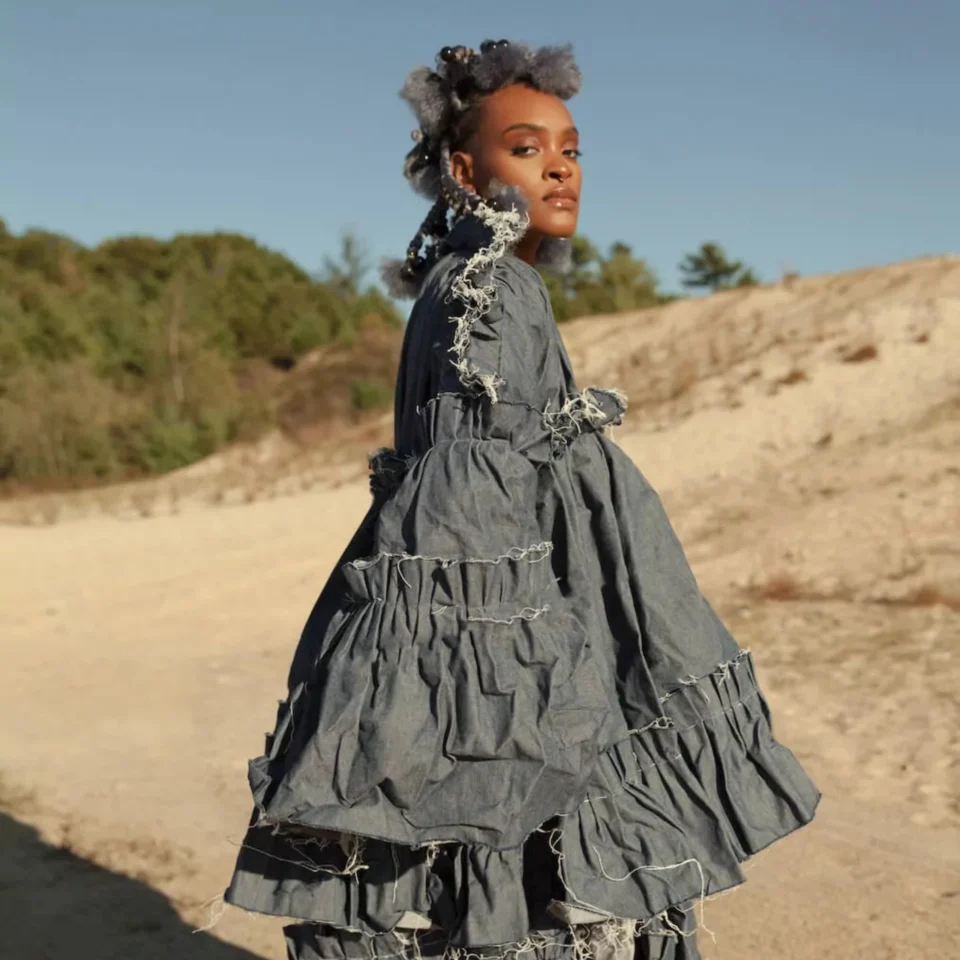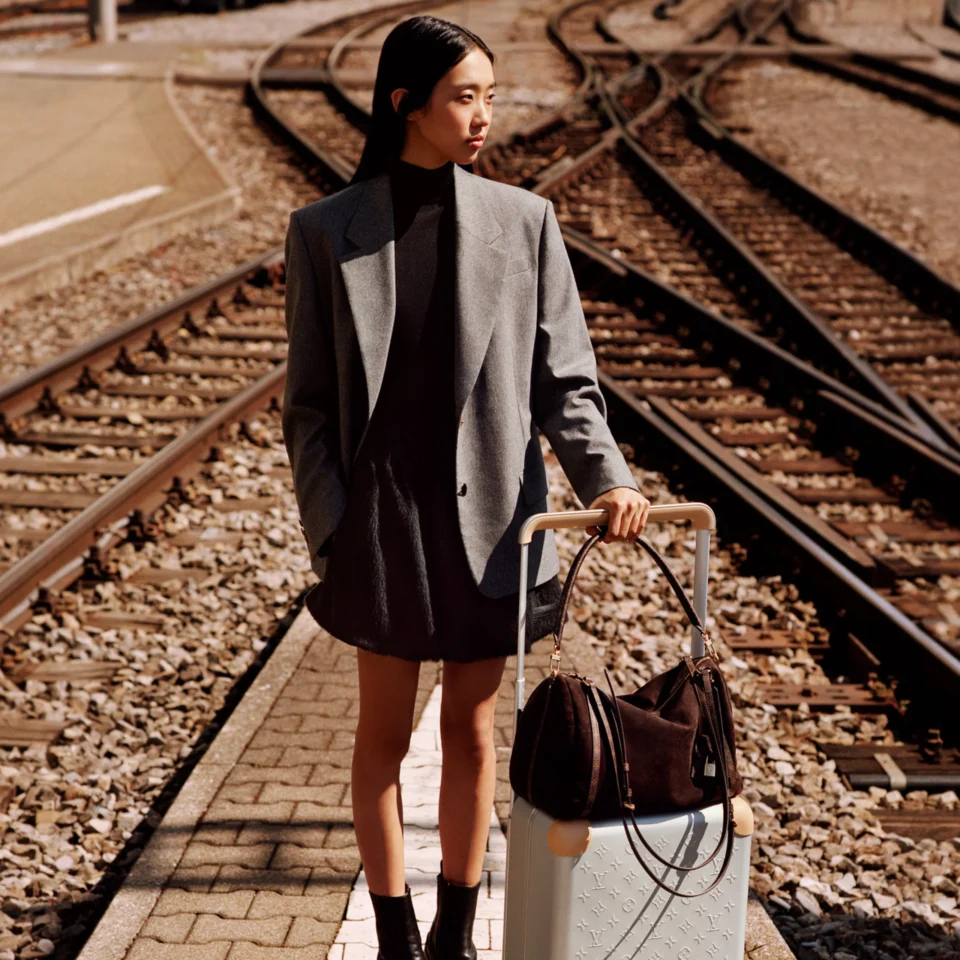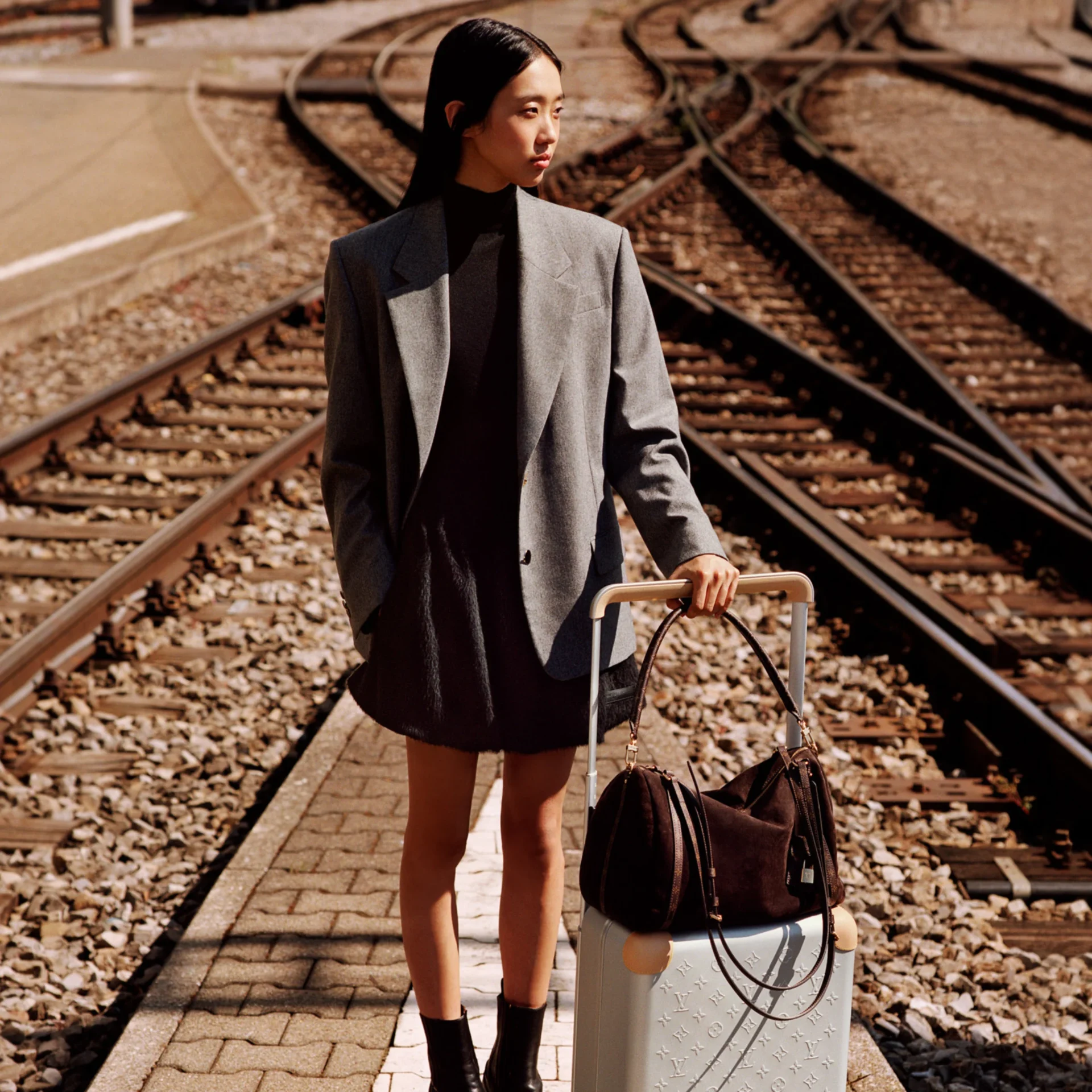




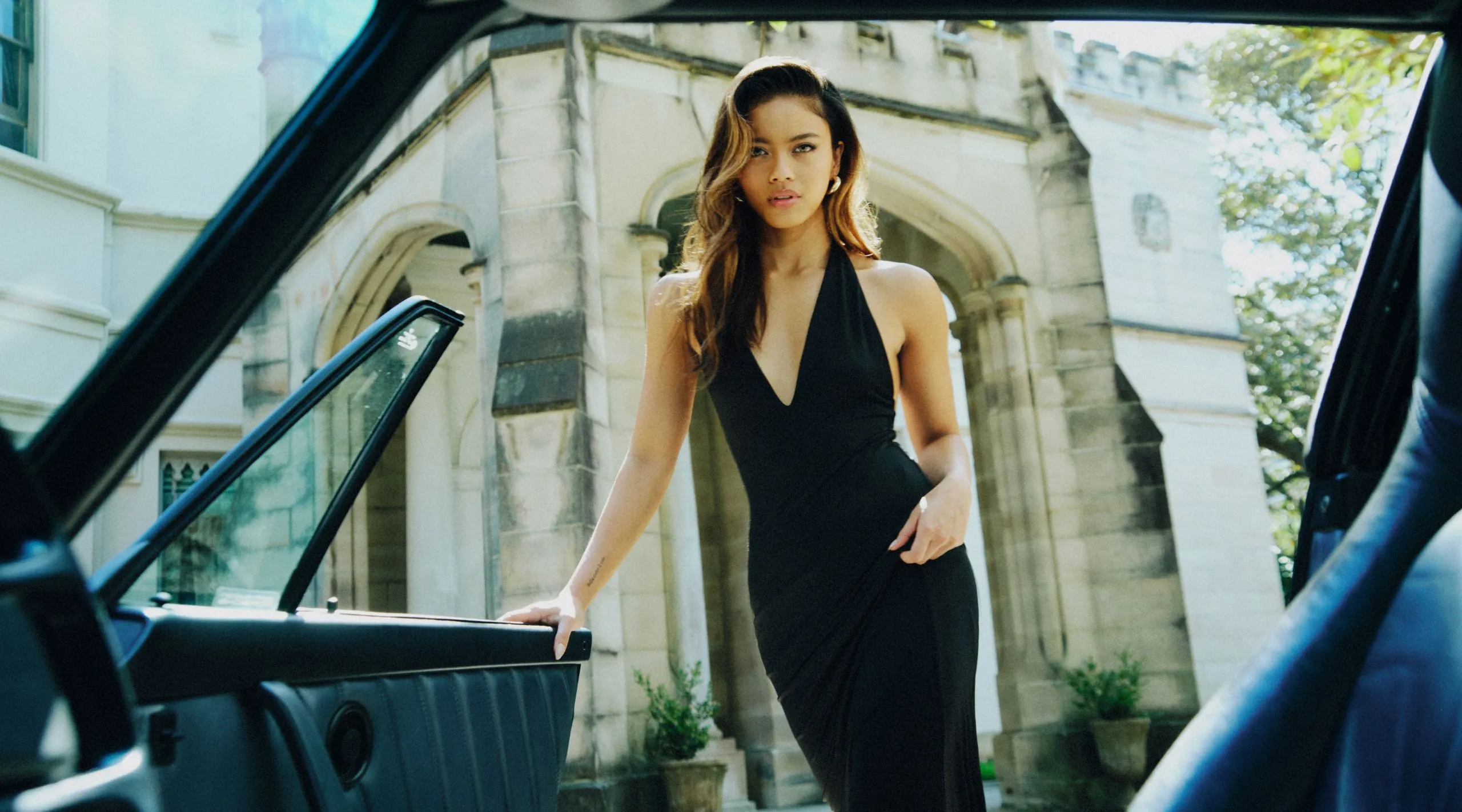
There’s a particular kind of woman who doesn’t wait for the green light—she becomes it. Bianca Bustamante has made a career out of accelerating past expectation, leaving polite doubt somewhere in the rearview mirror. Fronting a campaign from Australian fashion label MESHKI, the sportstar trades the racetrack for another lane entirely.
RELATED: Women Behind the Glam: The Hands Behind the Look

Bustamante, a graduate of F1 Academy and now a EuroCup driver, is used to speed. In a sport that still tries to keep women in the backseat, she holds her line.
“For me, today means representation. Not just empowerment, but celebrating differences we have.”
Representation isn’t abstract in her world. It’s a position she’s claimed and maintained.
Fast Lanes, Narrow Margins
Racing is unforgiving. Blink, and you’re overtaken. Hesitate, and you’re out. For Bustamante, the pressure is in the glances, the assumptions, the split-second shift when they realize she’s not here to pose next to the car, but to drive it.

“Being a woman in this sport means that you’re constantly underestimated for how you drive, how you look, the things you say and the clothes you wear.”
Even what she wears becomes part of the judgment. In a system that wasn’t built for her, every detail is examined. Still, she shows up with a fearless consistency.
The Discipline of Losing
If ambition is the engine, then loss is the mechanic no one wants, but everyone needs. Bustamante doesn’t romanticize it; she respects it.

“I gave everything to my sport, the hours, the hard days and the loss of not always winning. What I got in return is the fact that I’ll always be able to face any defeat I encounter in my life.”
In racing, defeat isn’t abstract; it’s timed to the millisecond. You know exactly how far you fell short. That level of detail leaves no room for doubt. Just data, and the decision to come back stronger.
The New Power of Pace
MESHKI positions itself around movement—clothing that keeps pace with a woman’s life rather than slowing her down. Bustamante embodies that idea without trying. She is, quite literally, in motion.
But what’s interesting is how the campaign reframes power—not as volume or dominance, but as direction. When nothing is diluted, distinction follows.

“It’s not about how well you blend in, but how you stand out. Empowerment, to me, means championing your own story.”
Power dressingPower DressingA style of professional clothing, popularized in the 1980s, that uses strong tailoring, structured shoulders, and bold colors to project authority and confidence. Modern power dressing is more relaxed andGo to Power Dressing Glossary has long been tied to imitation. Bianca Bustamante offers a different model. She doesn’t prove she belongs in the driver’s seat—she takes the lead.
Photos courtesy of MESHKI
Frequently Asked Questions
Bianca Bustamante is a Filipino racing driver and graduate of the F1 Academy who currently competes as a EuroCup driver. Known for breaking barriers in a male-dominated sport, she has become one of the most visible advocates for women’s representation in motorsport, both on the track and through high-profile brand campaigns.
Bianca Bustamante fronts a campaign for Australian fashion label MESHKI, a brand that positions itself around clothing designed to keep pace with a woman’s life. The campaign reframes power not as volume or dominance but as direction and self-authorship — with Bustamante embodying that idea as a working racing driver rather than a figurehead.
Bustamante has spoken openly about the constant underestimation women face in motorsport — in how they drive, how they look, and what they say. She describes representation not as abstract empowerment but as a position actively claimed and maintained, stating that today means celebrating the differences women bring to the sport rather than minimizing them.
Bustamante approaches defeat as a formative discipline rather than a setback. She has said that the hard days and losses in racing gave her the ability to face any defeat she encounters in life. In a sport where failure is measured to the millisecond, she treats loss as data and uses it as a foundation for returning stronger.
For Bustamante, empowerment means championing your own story rather than conforming to expectations. She distinguishes it from blending in, framing standing out — in a sport and industry that scrutinizes women at every level — as the truest expression of power. Her approach rejects imitation in favor of distinction rooted in identity and conviction.