


LuxuryLuxuryrefers to a state of exceptional comfort, elegance, and quality, often characterized by premium craftsmanship, exclusivity, and superior experiences.Go to Luxury Glossary used to play hard to get. Louis Vuitton Men’s F/W26 played hard to ignore. At first look, it made one thing clear: the future isn’t waiting to be interpreted—it has arrived knowing exactly how it wanted to be seen. Futurism not as fantasy, but in real-time circulation.
RELATED: Equine Elegance: The Best Lunar New Year Collections of 2026

At the helm, Pharrell Williams continues to treat menswear like infrastructure: something built to move culture at scale, multisensory even. His self-designed DROPHAUS—part garden, part modernist shelter—set the tone. A utopian rest stop where craft, design, and ambition coexist. If the future is supposed to be cold, Pharrell warmed it up with texture, utility, and a sense of Black excellence that doesn’t posture or plead, but exists as proof.
New Classics
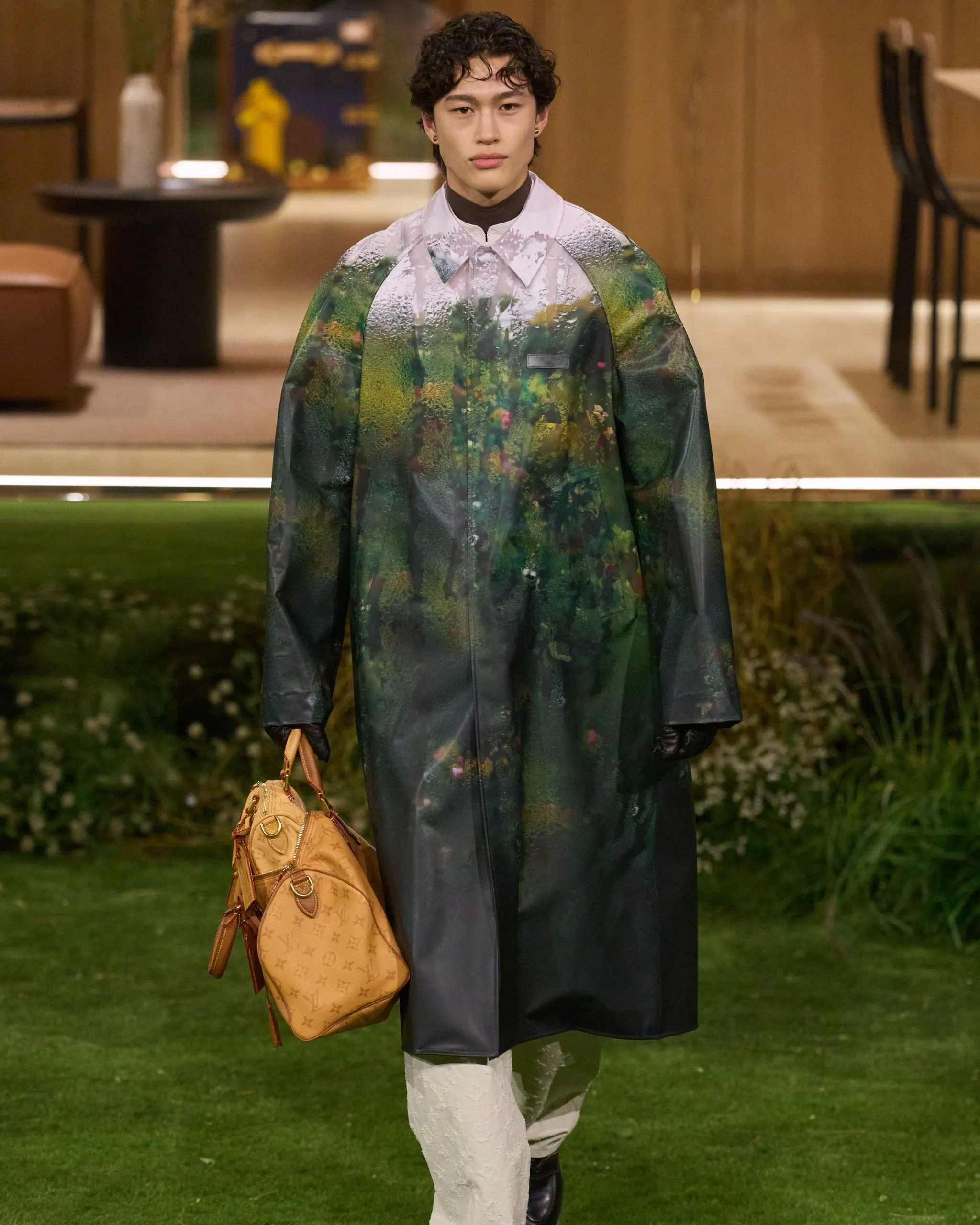
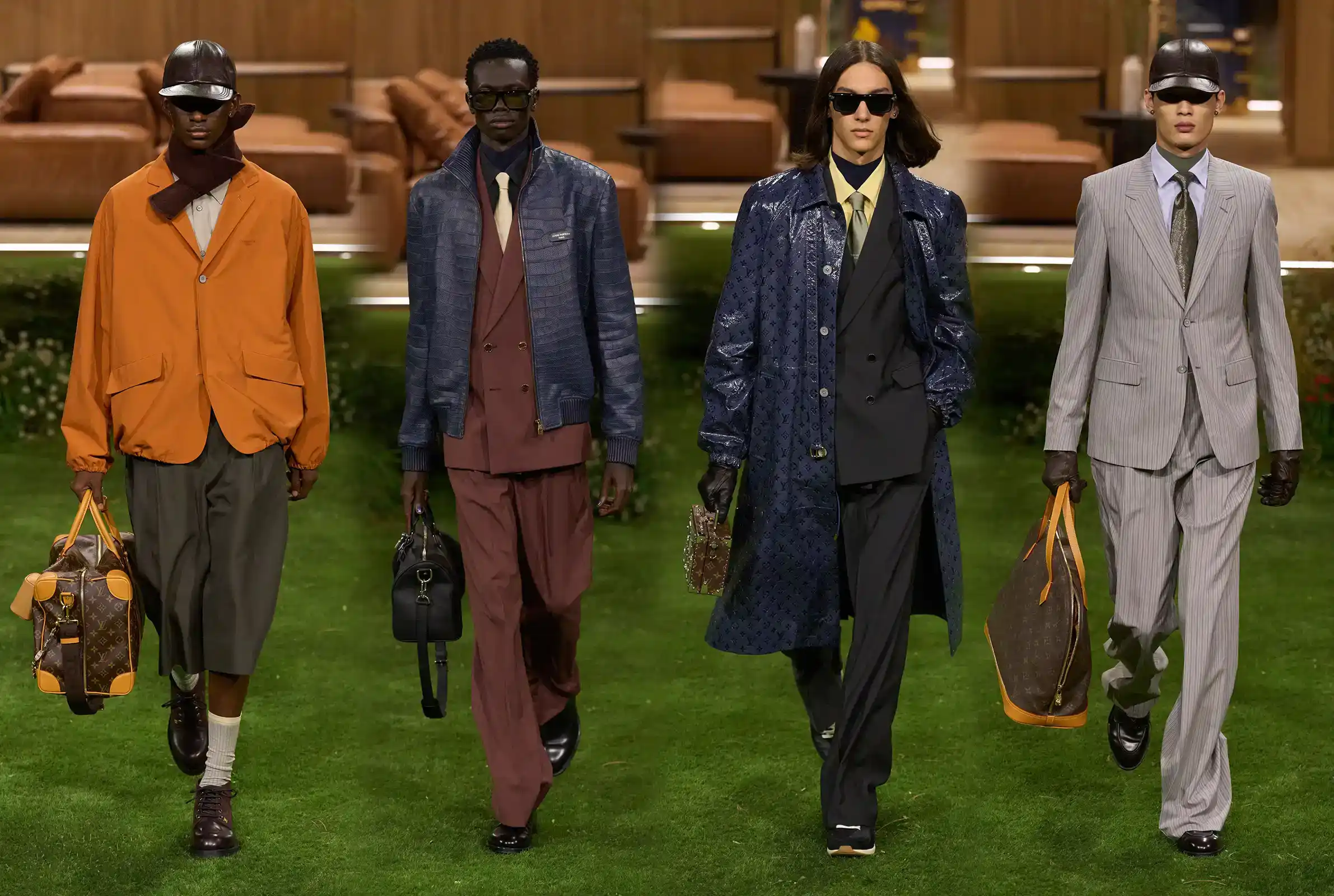
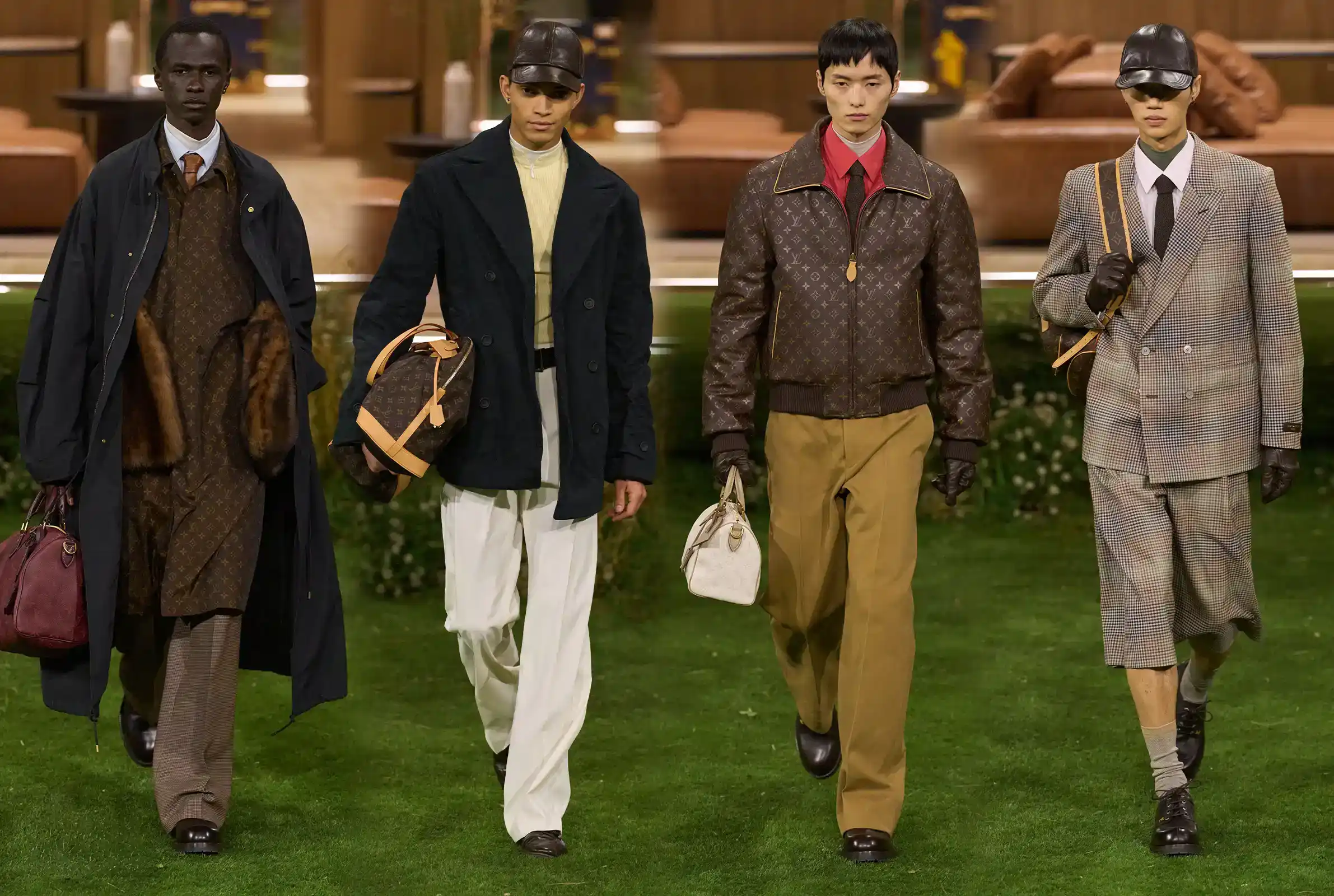
This is Louis Vuitton built for images, not explanations. Pharrell understands how luxury travels now: through feeds, repetition, and instant recognition. Logos weren’t shy. Shapes didn’t whisper. In a moment where fashion discourse loves to reward obscurity, this collection doubled down on clarity. Tailoring was assertive, sometimes blunt, always sure of itself. Double-breasted suits and leather blazers came cut for daily life rather than ceremony—formal enough to command respect, relaxed enough to breathe. Earth tones ruled: khaki, deep greens, tans, creams.
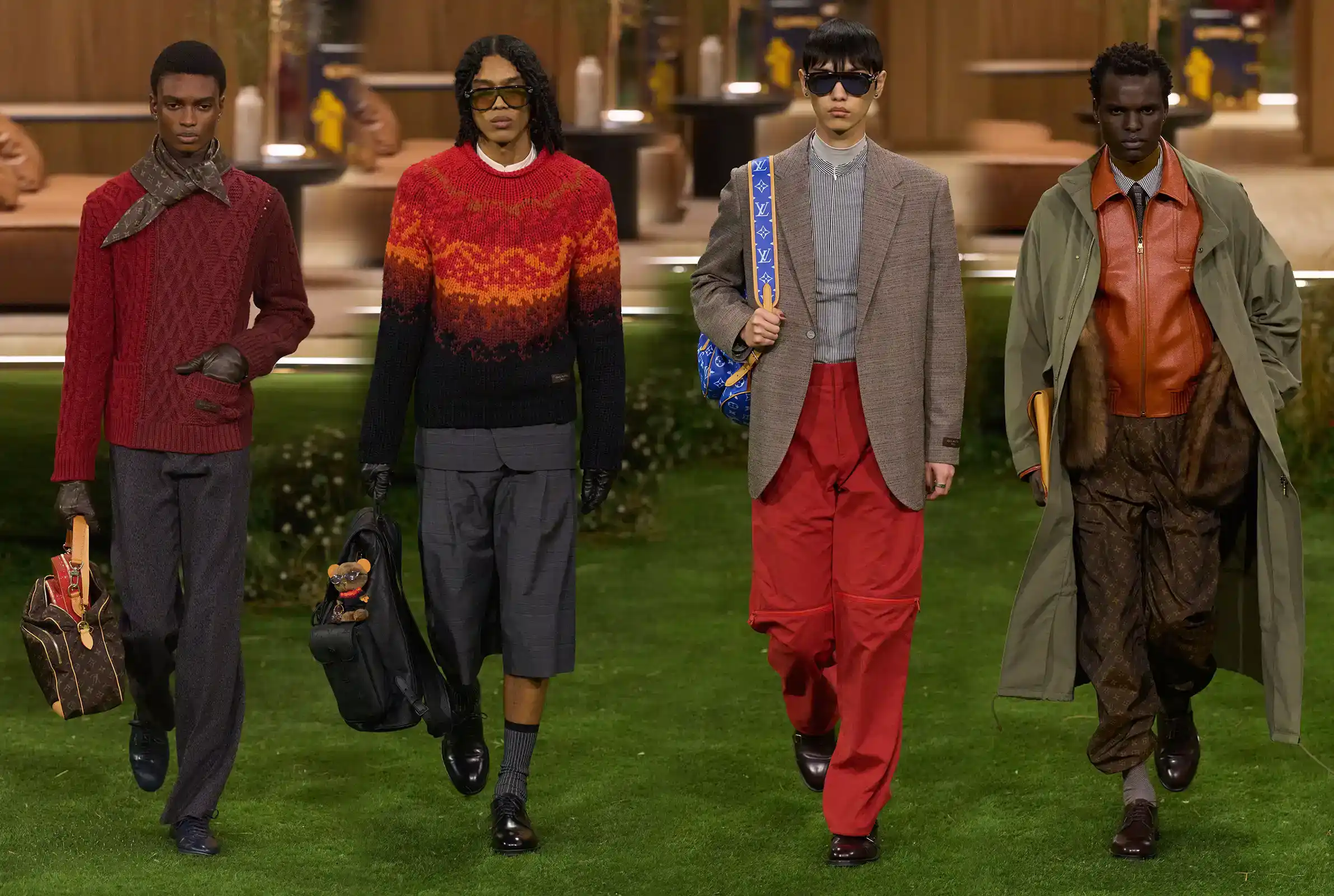
Calling this Pharrell’s most “classic” Vuitton season misses the point—unless we agree that classic doesn’t mean conservative. There was an ’80s hum beneath the surface: sharp suits flirting with sport, tailored coats brushing up against athletic layers. Utility wasn’t dressed down; it was dressed right. Precision-cut trousers replaced heavy denim. Outerwear did the heavy lifting—crocodile leather bombers, hand-painted jackets, fur-trimmed shells, wool coats punctuated by plaid, and those structured bow ties that felt like punctuation marks rather than nostalgia.
Retro-futurist accessories modeled after televisions, alarm clocks, and boomboxes. Transparent trunks on wheels, painted with Parisian cityscapes, rolling by like movable postcards. The Speedy P9 showed up reimagined as backpacks and compact crossbodies, even glow-in-the-dark.
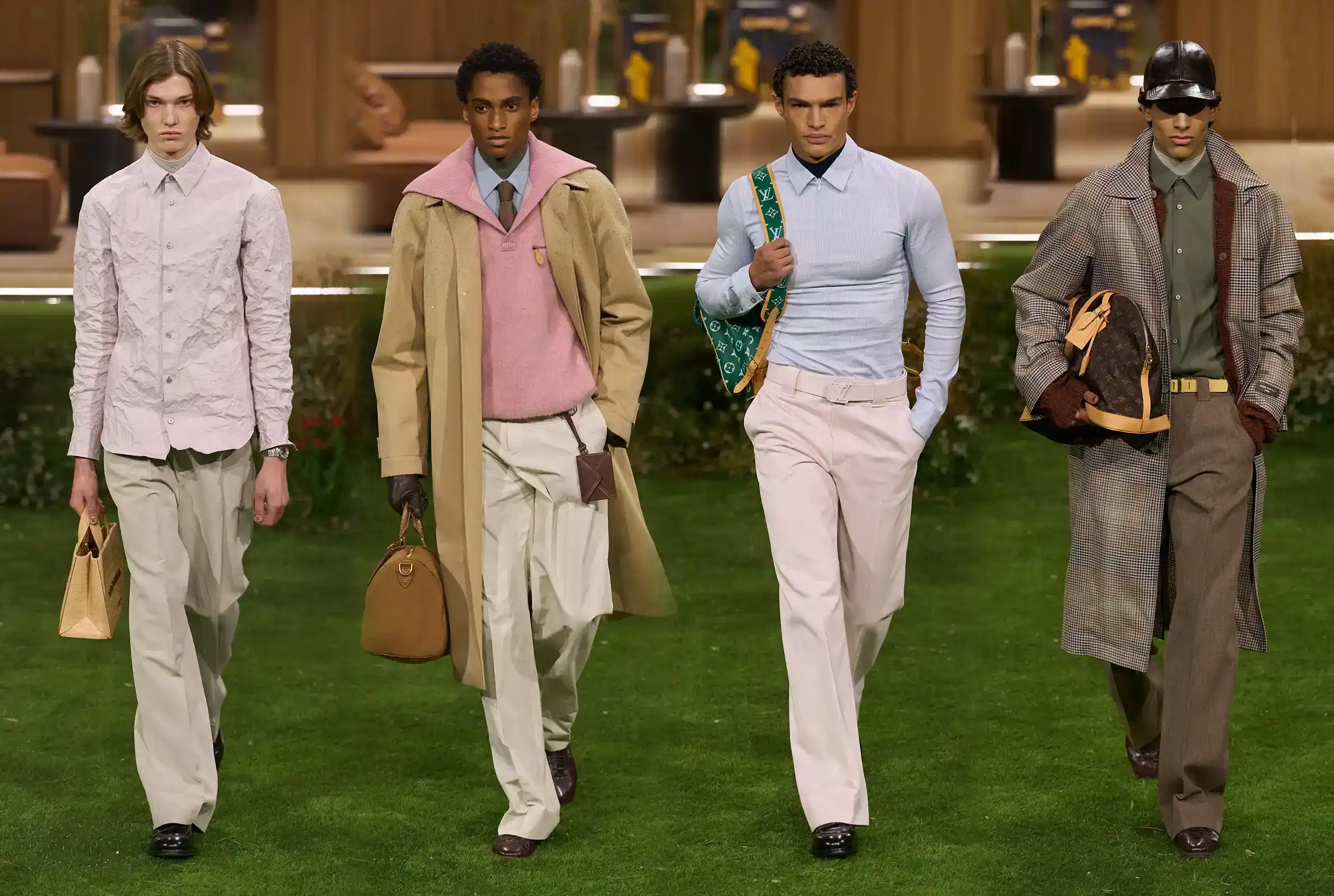
There was a running joke in the styling, too: bags inside bags. Miniature Speedys tucked into larger ones, luxuryLuxuryrefers to a state of exceptional comfort, elegance, and quality, often characterized by premium craftsmanship, exclusivity, and superior experiences.Go to Luxury Glossary nesting dolls that felt both absurd and sharp. Pharrell knows that sometimes wit is the point.
Infrastructure, Not Ego
Authorship here doesn’t behave like a singular signature. The collection felt expansive, collaborative, almost infrastructural—Louis Vuitton as a system large enough to absorb culture instead of declaring ownership over it. Under Pharrell, the house doesn’t pretend to be small or precious. It operates like a superpower, and this season made that scale visible.
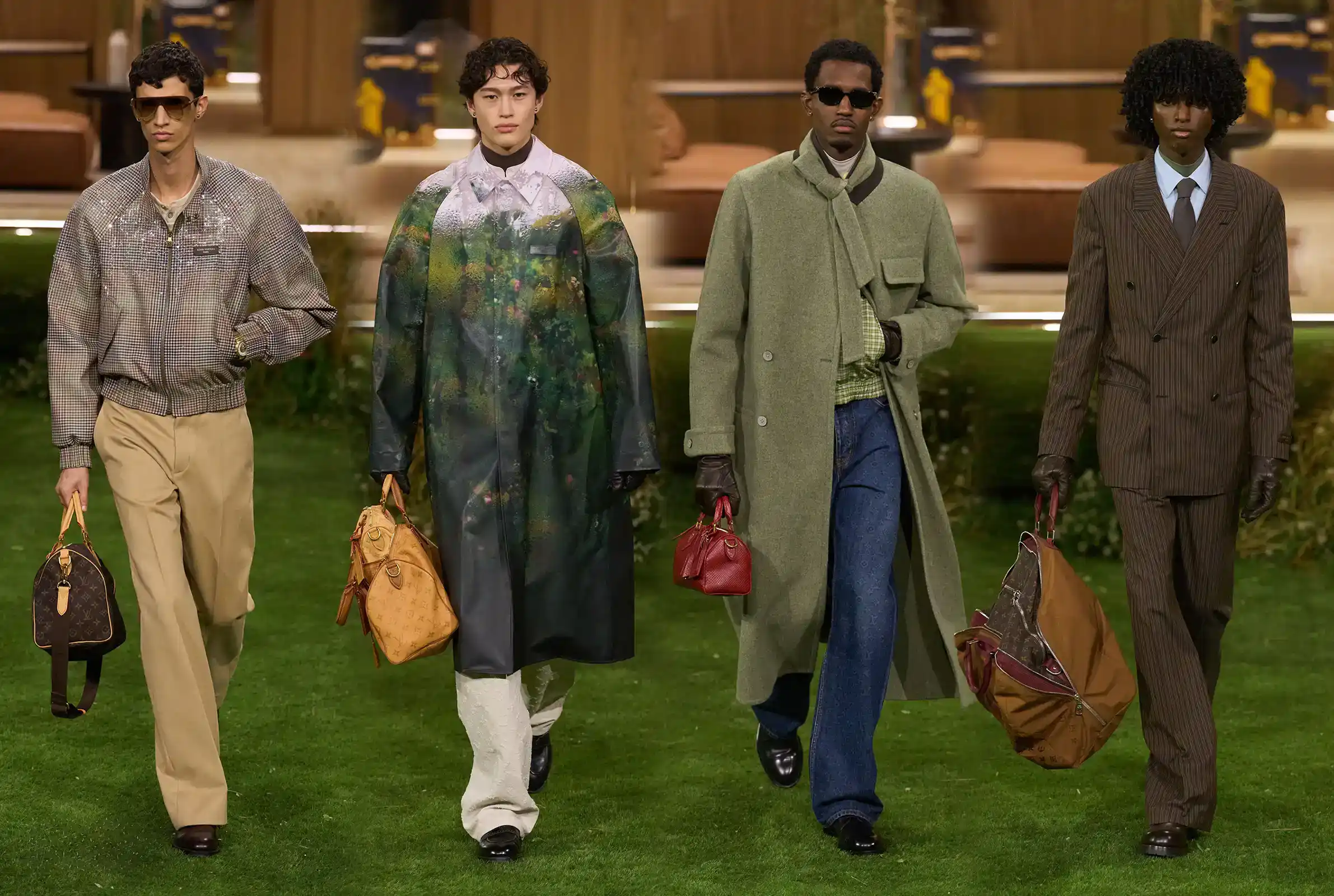
Maybe that’s the future being proposed: not mystery, not minimalism, not a return to silence—but presence. Clothing that doesn’t shrink itself to seem intelligent. Louis Vuitton Men’s F/W26 didn’t predict what comes next. Luxury understands its own reach.
Photos courtesy of LOUIS VUITTON
Recommended Video
Latest Posts
Latest Issue