




There’s a familiar command women hear all their lives: put on a show. It sounds effortless, almost playful, but beneath it lies an expectation: to hold it together, to perform strength even when it wavers. Yet in the hands of women who embrace their work fully, putting on a show becomes something else entirely. It becomes a celebration of skill, artistry, talent, the camaraderie and tenacity that come from creating something good together.
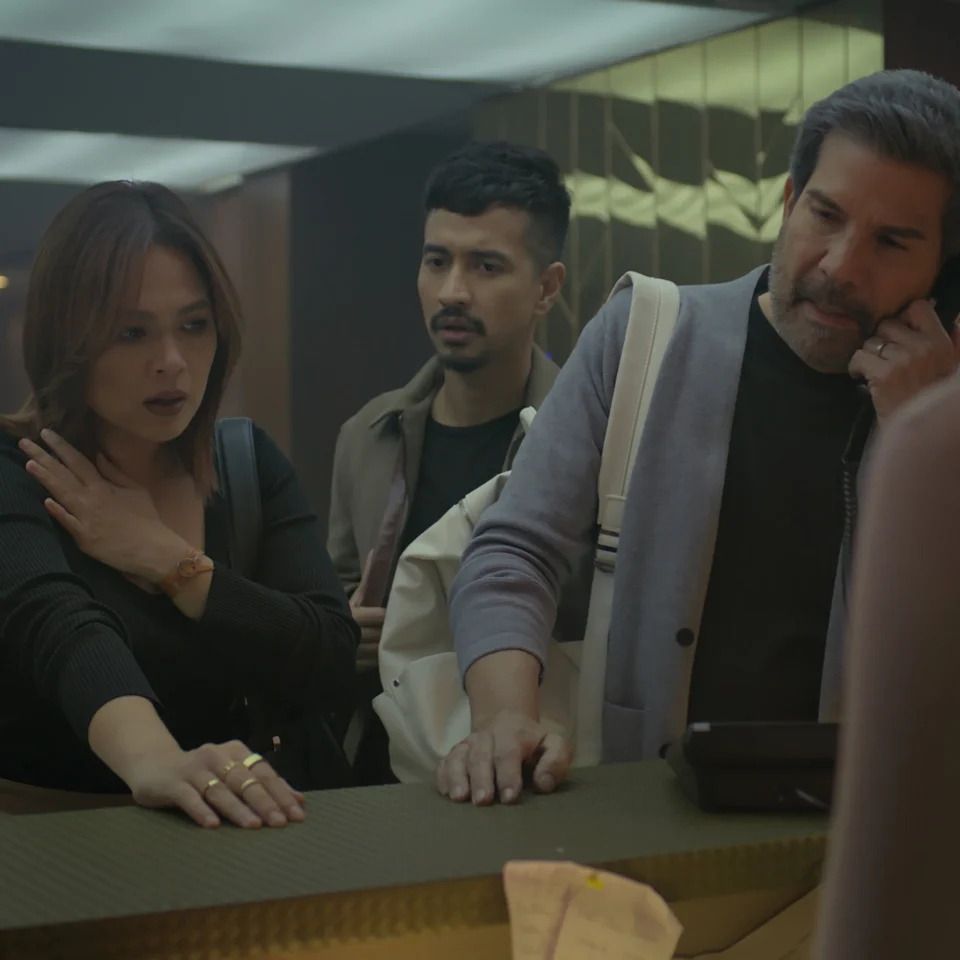
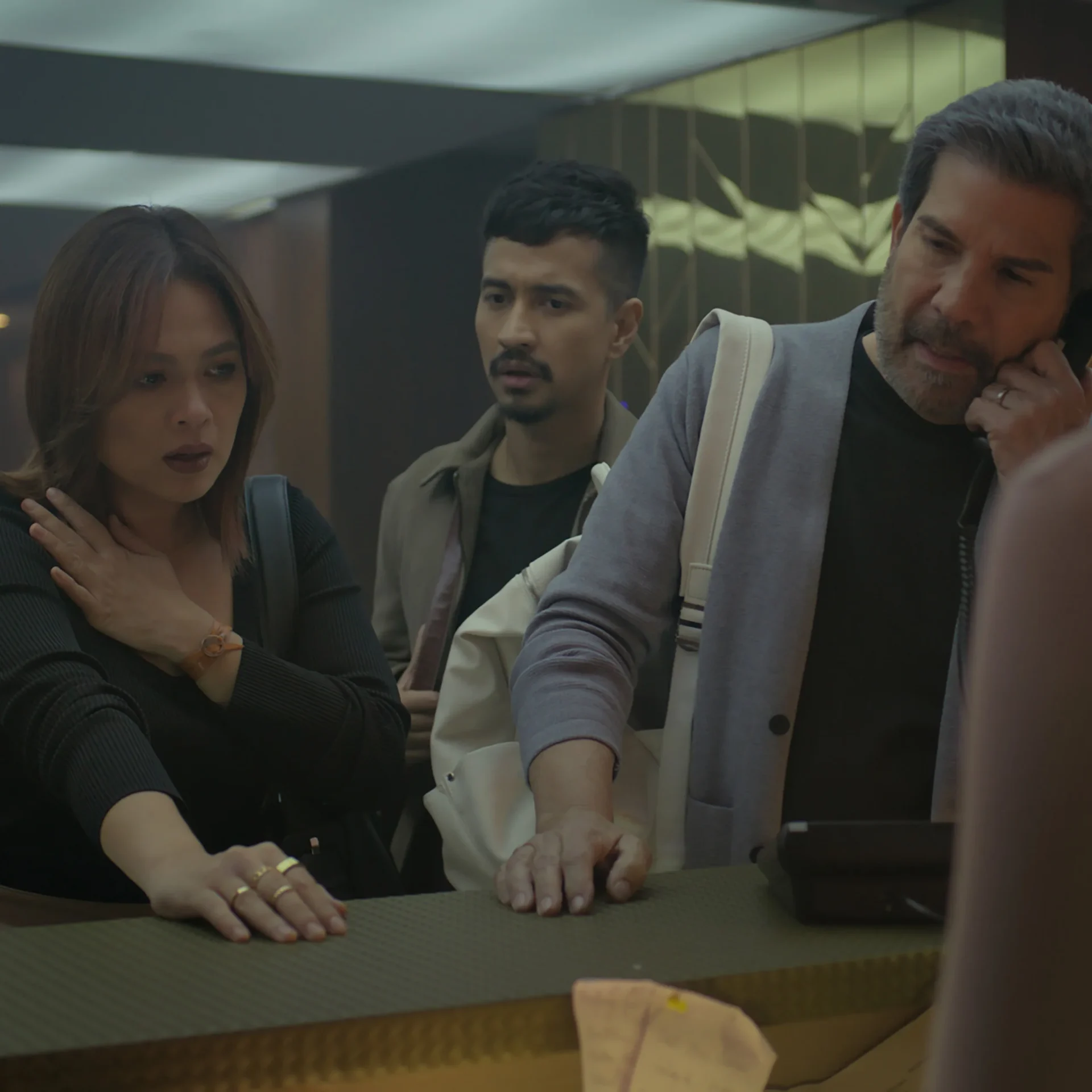
In What Lies Beneath, that celebration becomes the very heartbeat of the story. Four women stand in the aftermath of a tragedy, each carrying secrets, each negotiating the thin divide between what they reveal and what they must conceal. The narrative presses against their façades, revealing that survival is not just about endurance, it is about claiming one’s voice, one’s choices, and, ultimately, one’s truth.
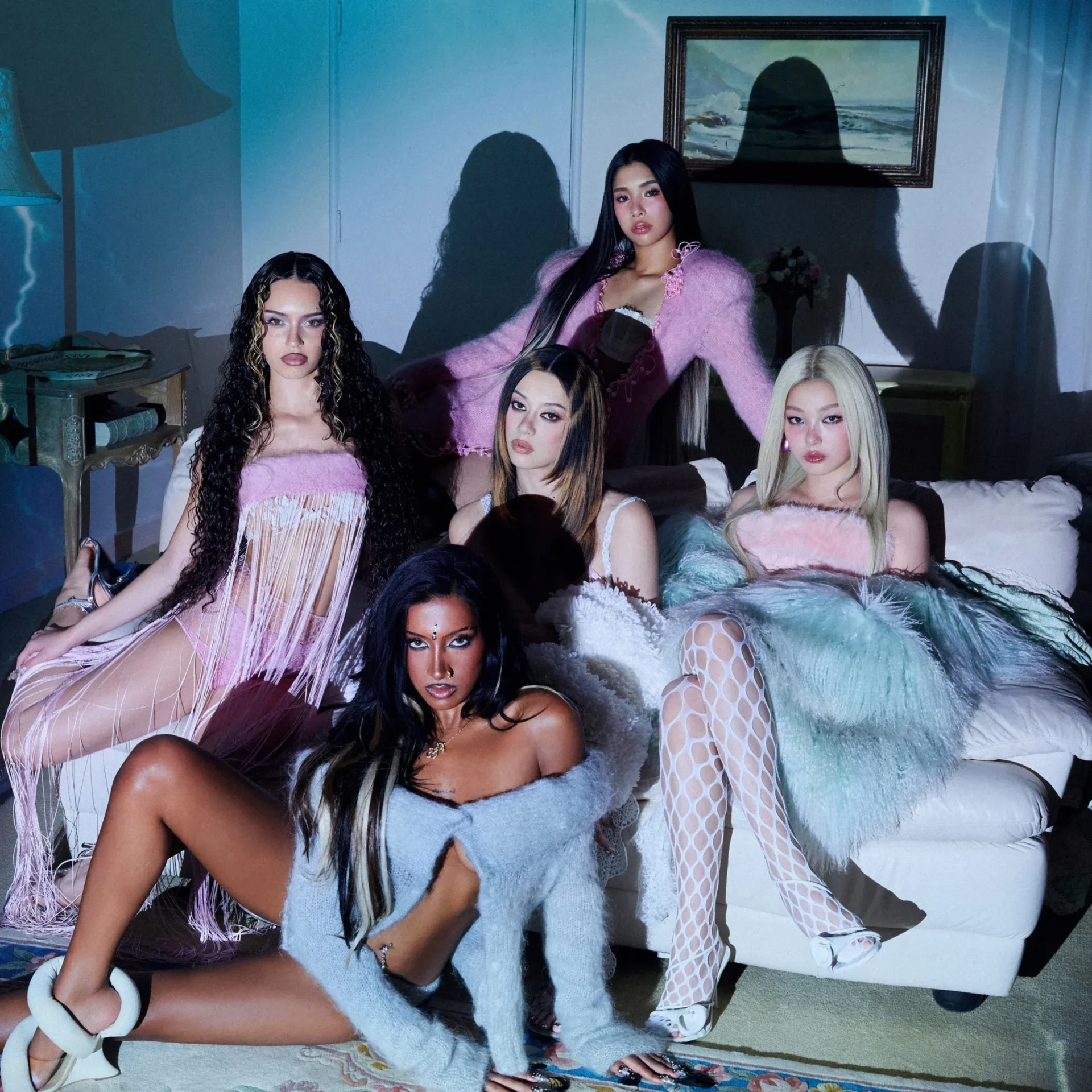
Janella Salvador, Sue Ramirez, Kaila Estrada, and Charlie Dizon step into these roles with a clarity and honesty that turns every scene into a tribute, to the characters they inhabit, to each other, and to the women whose lives echo on screen. They signed on because the material demands emotional rigor, instinct, and a readiness no workshop can teach. And in meeting that challenge, they do more than perform, they celebrate their craft.
The MEGA cover shoot becomes an extension of that celebration. The studio hums like a backstage in motion, mirrors glowing, fabrics shifting as the team moves around them. Yet it’s the four women who quietly anchor the space. They move not as performers hiding behind characters, but as artists honoring one another, elevating the story, and embracing the joy of creating something larger than themselves. The camaraderie is palpable, a reminder that women, when given space to collaborate without competition, turn even a routine day into a shared triumph.
Here, they become women who understand how to carry a story, how to steady one another, and how to transform every challenge into a moment of recognition.
Because in the hands of women like these, a show isn’t pretense. It is a culmination of artistry, of sisterhood, and of the truths women bring to life when they step into their power together.
JANELLA SALVADOR
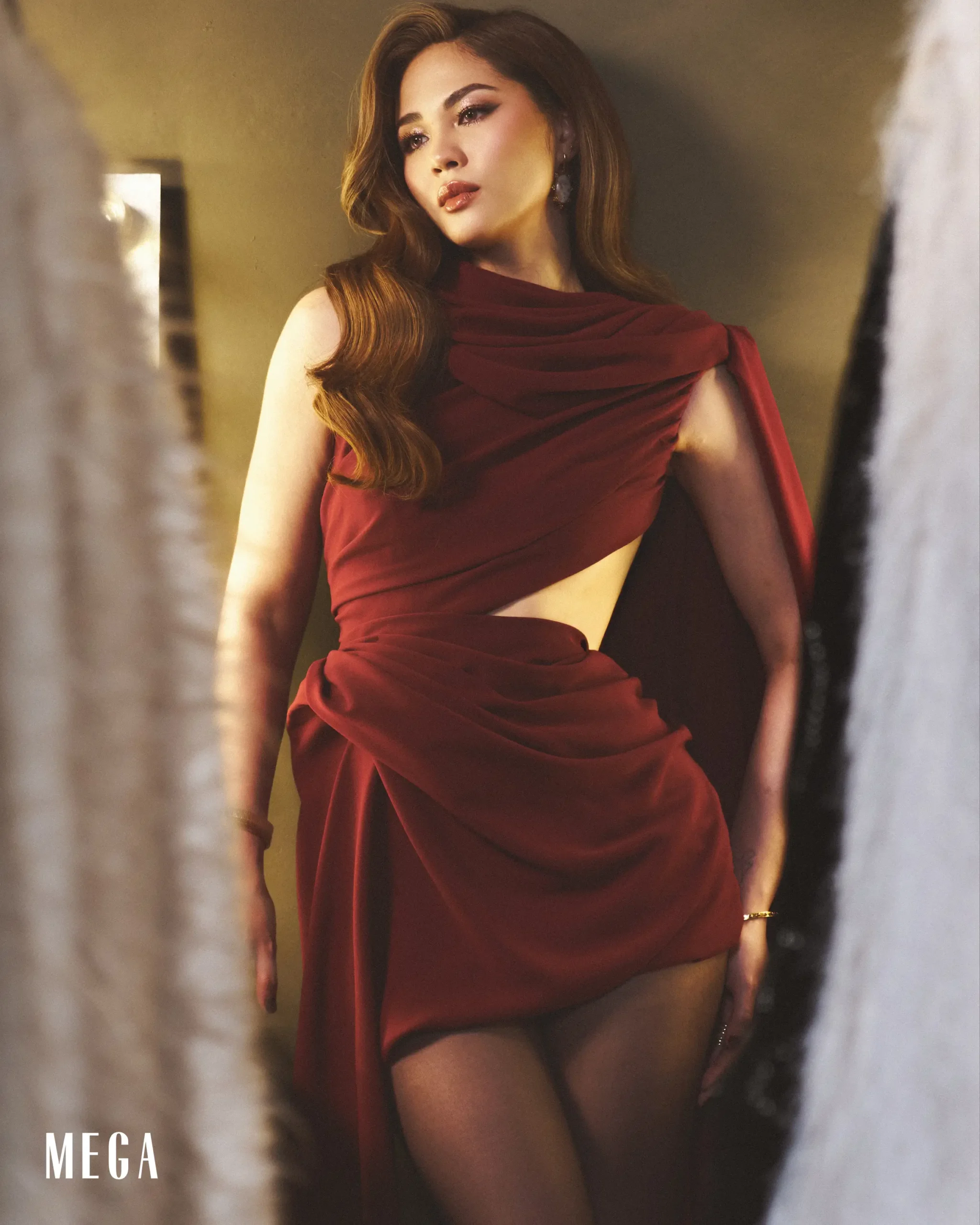
Janella Salvador approaches as though she’s measuring the air before she steps into it. She walks toward me with careful, deliberate strides. There is grace in that softness, but also something unreadable, an energy that I can’t quite pin down until she sits, exhales, and I realize: she wants to do well. This matters to her.
I reassure her that this won’t be an interrogation, just two people catching up on a long afternoon. Something in her shoulders loosens, she laughs, a small sound, but a real one. And then she begins.
When she talks about Alice, her character in What Lies Beneath, the air changes. Janella’s voice lowers, becomes more deliberate, more certain. “Alice, I would say, is a deeply disturbed individual who deals with a lot of trauma and the dark past,” she tells MEGA. “this is one of the heaviest characters and shows I’ve ever had to take on.”
There’s no dramatics in her tone, no performer embellishing the weight of a role. If anything, she almost understates it. But the more she continues, the more the scale of what she carries becomes clear. “Every time I go to work, I really have to prepare myself, because the emotions for this show are always up there. It never goes down.”
For Janella, Alice is not merely emotionally demanding, she is relentless. “Especially with Alice, she has a lot of trauma, anxiety… I would say it’s draining, but it’s fulfilling, because she’s super complex.” Janella pauses, as though turning the thought over in her mind. “And that’s what I really want to take on now. I want to take on more challenging, complex characters. I want to deepen my acting experience. This is exactly what I needed.”
Then, in a shift that feels surprisingly gentle, she points out the personal side she finally gets to explore through the role. “I’m happy that this is also my first mother role after giving birth,” she says. “So I finally get to put something personal, like, put that side of me on screen.”
If Alice carries trauma, she also carries responsibility. Within the show’s tight-knit quartet of friends, Janella describes her as a keeper of peace. “Alice, I think everyone would agree naman when I say that she’s kind of the glue of the friendship,” she explains. “When things are blowing up, siya yung parang nasa neutral end.”
That desire, Janella points out, is rooted in her fear of losing people. “I think she’s scared to lose people because she lost her father…she just doesn’t want to lose anyone anymore. So as much as possible, she tries to keep the peace.”
This is where Janella reveals a parallel. “I think I really— always as much as possible—I like to give people the benefit of the doubt. I like to put myself in other people’s shoes. Even when I get hurt by their actions, I try to think rationally… try to understand.” A beat, then honesty: “But if I decide that I think I need to cut you off, final na yun.”
Her craft also met a new edge through Alice. The emotional demands, she says, pushed her into places she hadn’t visited before. “Sometimes you’re really tired, but you just have to dive. Don’t hesitate. Sometimes kasi parang our body doesn’t want to go there.”
She taps her fingers lightly on her thigh, recalling the difficulty of pushing through exhaustion. “The mind as well. The mind resists. But I learned with this project… you don’t have to overthink everything. Just get yourself there. Just do the scene.”
There were moments when the acting became so embodied, so deep, it verged on dangerous. “There are times when I would do scenes and I feel like nagba-blackout ako, nag-hyperventilate ako.”
Yet despite the emotional labor, Janella keeps returning to one thing: the women around her.
“Recently, my projects have been women-centered,” she says, thinking about Open Endings and now this series. “The energy on set is different when you’re working with a women-centered production. Iba talaga [It’s really different]. When it’s focused on women empowerment, it’s more of just uplifting each other—ganoon yung energy.”
This naturally leads to who Alice represents beyond fiction. “I think Alice represents the mothers in the society,” Janella says. “You don’t have just yourself to protect anymore… you’re trying to protect your family, your son. And I think Alice tries to protect so many people—her sanity, her son, her friends, their feelings, everybody.”
Perhaps this is why Janella’s conception of empowerment has evolved over time. “In this day and age,” she says, “women empowerment is just women not being afraid to exist in this society… We’re taught that we have to be strong, we have to be able to assert our boundaries—it’s sad that it has to be taught pa.”
And for a woman who now finds herself representing both mothers and sapphic viewers, Janella meets the responsibility without pretending she has everything figured out. “I know it’s a big responsibility,” she admits. “But I try to educate myself every day. I’m also just learning. We all have to unlearn some things. I’m just trying to learn and unlearn a lot of things that have been taught by society.”
By the time she finishes, the unsure energy she walked in with has changed shape. It is no longer fear of failing—it is a subtle, grounded understanding that she is still evolving, still unfolding, and still learning how to carry both the weight of her roles and the women who see themselves in her.
And as she stands for her solo layout, the softness returns, but this time, you know exactly what it’s made of.
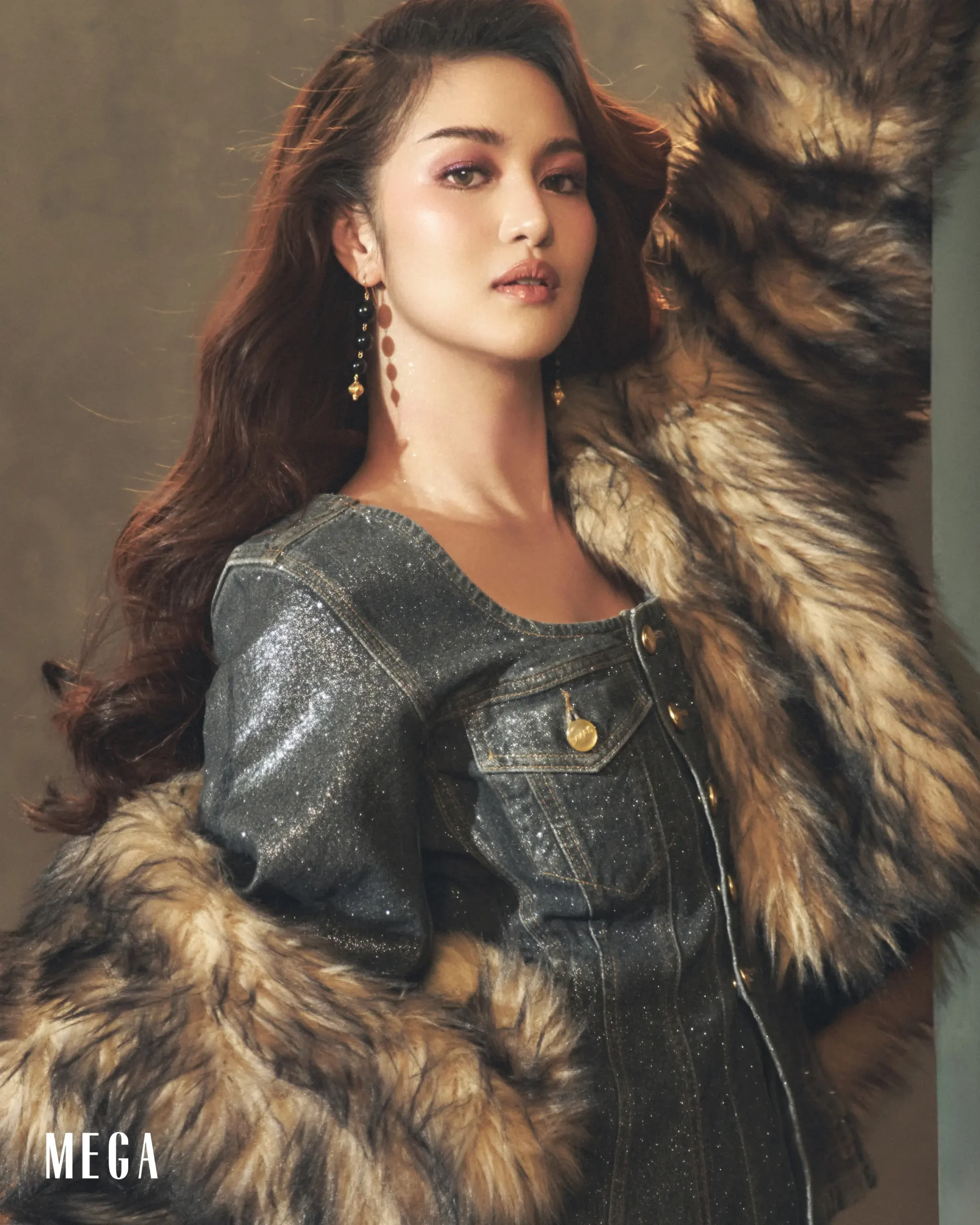
CHARLIE DIZON
There are people who enter a conversation like a gradual warmth, and then there are those who arrive as sunlight: quick, bright, and impossibly easy to be around. Charlie Dizon is the latter. The 29-year-old actress slips into the chair with coffee in her right hand, and within seconds the interview feels less like work and more like catching up with a friend you’ve known longer than you actually have.
Beth, in What Lies Beneath, is loud in ways Charlie rarely is in real life.
“Si Beth, noong mga bata sila, siya yung aggressive sa kanila. Siya yung pinakamatapang. Siya din kasi yung pinaka-brainy. I think doon galing yung confidence niya mag-lead [When Beth was a kid, she was the aggressive one. She was the most fearless. She was also the smartest. I think that’s where her confidence to lead comes from],” Charlie tells MEGA.
The role demanded that Charlie turn up a dial she usually keeps low. “In real life hindi naman ako ganun ka-aggressive. Alam ko at some point na may quality si Beth na meron sa akin pero hindi ko naman siya napapakita in everyday life. Mas controlled, syempre [I’m not as aggressive as Beth in real life. I know that at some point, we share some qualities, but I’m not like that in everyday life. I’m more controlled of course].” That control, she says, is part of the craft.
That negotiation—how to give Beth her full, bruising life on screen without losing herself—becomes the story’s spine.
Charlie is astute about the moral weight of Beth’s choices. Beth’s arc, ambitious, sometimes cruel, eventually hollowed out by consequence, asks the audience to hold judgment lightly and to watch empathetically.
Her approach to performance is practical, almost architectural: map every trait, test every limit, then let the chaos happen inside those boundaries. She argues for realism when she sees it missing. “Minsan sinasabi ko talaga sa mga writers, if I feel like hindi realistic… I voice it out. [Sometimes I really tell the writers that it’s not realistic anymore].” She is not shy about intervening, a collaborator, not a wallflower.
But if there is one thing that made the emotional toll of portraying Beth lighter, it was the sisterhood she found on set. “Actually, kasi parang mag-babarkada kami agad [We’re like really good friends],” she says, laughing. “Ang mahirap lang yung lagi kaming tumatawa. As in, minsan ang hirap maging seryoso. [The tough part is that we’re always laughing and it’s hard to be serious]” The warmth was instant and disarming, just one glance exchanged and someone would already break into kalokohan [mischief]. Yet beneath the giggles was something sturdier: trust. “Yung pinakamadaling part is comfortable ako sa kanila. Alam mo na susuportahan ka nila sa gagawin mo [The easiest part is that I’m comfortable around them. I know that they would support me in what I need to do.” They held each other through creative blocks, character struggles, moments of doubt. In a story where tension is constant and choices are messy, the off-screen camaraderie became its own quiet anchor.
Her work has also shifted with life’s seasons. Marriage, she admits, layered her with a newfound maturity: “Parang nakakadagdag siya sa maturity siguro. Lalo na ngayon, yung pino-portray ko may asawa na din. At tsaka may anak. Wala pa naman akong anak sa totoong buhay. Pero… nakatulong yung alam ko yung dynamics na may asawa, kung gaano ka-deep yung love sa family. [I think marriage adds to my maturity. Especially since my character is married too. And she has a kid. Even if I don’t have a child yet in real life, it still helps that I know the dynamics of being married to somebody, how deep the love for family could get].” The empathy for Beth’s later choices, the compromises, the pride, the desire to protect, feels tempered by this lived knowledge.
She’s evolved into someone who can play a woman who starts aggressive and ends up wounded, and in the process reminds us why representation matters: because women do not exist in archetypes. They are sharp and soft, loud and tender, culpable and deserving of mercy. Charlie’s Beth does not ask for absolution; she asks only to be understood.
By the time she signs off, phone finally silenced and coffee cooling, it’s hard not to feel that she’s the same friend she was at first glance—chatty, quick, humane—yet changed by the work she’s chosen. “It’s a different character for me. First time nga na parang ako yung nagbibigay ng negative energy. Parang medyo kontrabida siya. Kaya ako natuwa. Kasi alam ko na malalaro ko siya in a way na wala masyadong limits [Of course, Beth is a different character from what I usually play. It’s my first time to be the one bringing in the negative energy—I’m kinda like the bad guy. That’s why I like this role, because I know I can really play her in a way without the usual constraints].”
The dualities hold: Charlie the friend, Charlie the actor; Beth the aggressor, Beth the person who gets hurt. She leans into both, because in doing so, she lets the audience do something rarer than judgment: to witness, to feel, and maybe, eventually, to forgive.
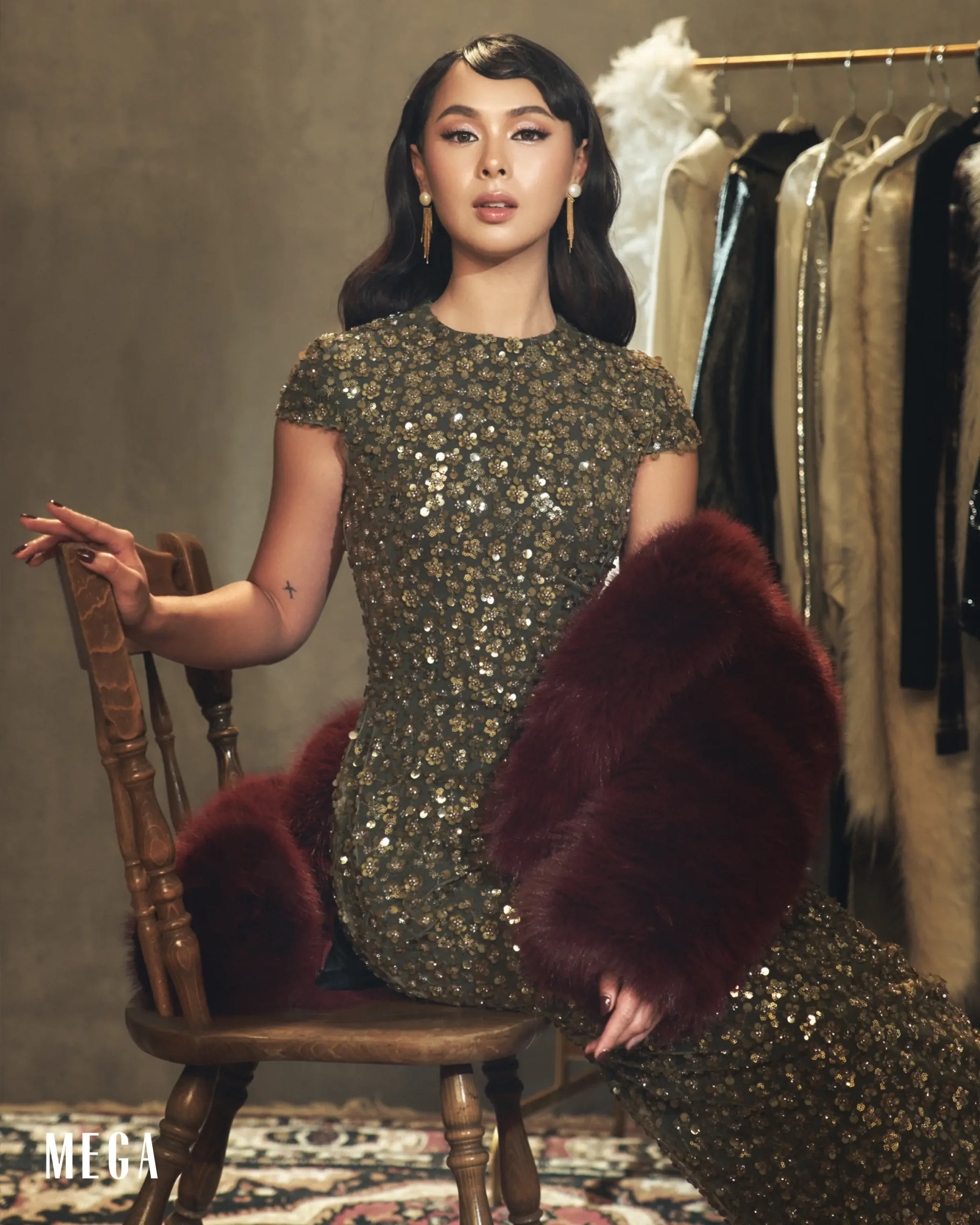
KAILA ESTRADA
There was no warm-up waiting for Kaila Estrada on What Lies Beneath. The moment she stepped in, the story was already pulsing; dark, tense, unflinching. She arrived last, stepping into an ensemble mid-stride, and the show greeted her not with welcome scenes, but with some of its most emotionally punishing: grief that sits in the throat, guilt that stains the spine, conviction that refuses to break even when the character does.
It was trial by immersion. Yet in that plunge, Kaila found clarity. What Lies Beneath was already shaping into a labyrinth of trauma and reckoning when Kaila entered as Erica—a woman whose life had calcified around a single mission. “What Lies Beneath the story involves a group of friends that experienced a traumatic incident that led to one of their friends getting murdered,” she begins, drawing the map of Erica’s world. A wrongful accusation sent an innocent man to prison for fourteen years, a mistake that Erica never stopped carrying. “Si Erica—she had always known that he was not the person… basically, it’s like she never moved on. She just grew up and decided to become a lawyer so she would have enough power and resources to be able to make things happen.”
It’s a heavy psychology, the kind that requires an actor to pour herself into the role slowly, intentionally. But Kaila didn’t have that luxuryLuxuryrefers to a state of exceptional comfort, elegance, and quality, often characterized by premium craftsmanship, exclusivity, and superior experiences.Go to Luxury Glossary. Coming straight off Incognito, still shedding the echoes of her previous character, she found herself thrown into Erica without transition. “I immediately hopped on the project right after my other show… the first two weeks of taping, nahirapan ako [I had a hard time] because it’s not that easy for me to shake off the character…It’s like putting on a new suit.”
And she was doing it while catching up socially, too. Everyone else had already built familiarity, inside jokes, shared beats, a rhythm. “They were already able to build rapport with each other habang ako mag-start pa lang [while I’m only just starting].”
But the cast welcomed her warmly, and the production team, her very first one in the industry, gave her a sense of home.
What could’ve felt like a disadvantage revealed itself as an unlikely gift. Because she was catching up, her early days on set were almost entirely solo sequences: thirty scenes of Erica’s internal battles, one after the other. “It was exhausting but it helped me break in… Shooting so many sequences, mas naintindihan ko na ‘yung journey nya [I understood her journey more].”
She dove deeper when she watched scenes of Erica’s younger version, played by Krystal Mejes. “I had a better idea of the younger Erica… Medyo na-pressure… so I feel like that also added a layer of motivation for me to do Erica’s character really well.”
Slowly, the character stopped being something she put on and became something she carried. Kaila resists the idea of ever feeling like she has “become” Erica—it feels too complacent—but there was a moment she couldn’t deny. “I had a scene with JM de Guzman… instinctively, bigla na lang ako naging [I suddenly became] emotional. I wasn’t preparing to be emotional… That’s when I was like, oh, okay… I have fully embraced this character for me to be affected.”
Yet the emotional weight of the show demands its own discipline. Kaila has learned, over time, that holding a character so tightly requires an equally deliberate act of letting go. “It’s important to decompress… Sometimes you feel things and you’re not sure if it’s baggage from the character or is this really yours.”
Her reset comes from solitude, then family, then friends, a return to her core, step by step.
With each project, Kaila feels a quiet sharpening in herself, the kind that comes not from confidence but from earned trust. “I definitely trust myself more now… I still get nervous. I feel like it’s good to be nervous, because that means you care.” Experience, she says, has been her greatest teacher. Her growth is steady, grounded, and never divorced from gratitude. “It’s not all me… God really blessed me in that way, and I’m very grateful.”
The work is intense, but the set is buoyed by a quartet of women who understand each other instinctively. “It’s a woman-centered show… the story showcases different types of representation of women and what women go through.” And behind the camera? Laughter. Constant laughter. “Pag-apat kaming nasa eksena may isa lang na matawa, lahat matatawa na… hindi kami nauubusan ng pagkkwentuhan [Whenever there’s four of us in the scene, if one of us cracks up, the rest of us laugh too…we don’t run out of things to talk about].”
Perhaps that is what anchors her most: the balance of heaviness and ease, of emotional rigor and strength. Her own philosophy of empowerment mirrors that duality. “I feel like there’s strength in being vocal, but it’s also necessary to choose your battles… quiet power can also be strength for as long as you’re staying true to yourself.”
In What Lies Beneath, Erica fights for truth at the cost of her own peace. Kaila fights differently; through craft, clarity, and a steady refusal to rush her own becoming. She may have entered the show mid-stride, thrown into the deep end without warning, but she emerged with one of her most resonant performances yet: instinctive, exacting, and irrevocably her own.
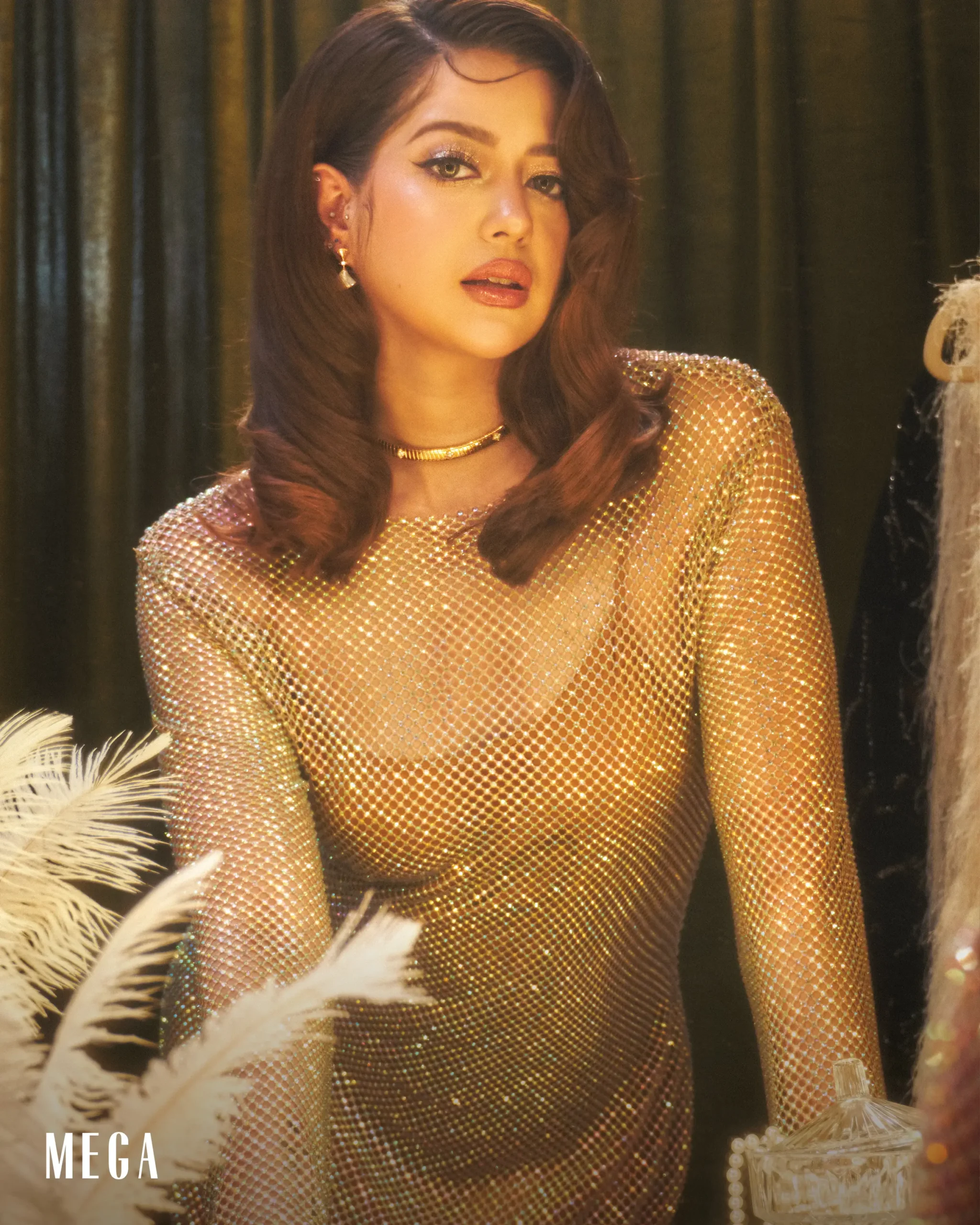
SUE RAMIREZ
You notice it before she even sits down: a softness, almost a quiet steadiness that doesn’t match the pace of a studio on a cover- shoot day. Sue Ramirez walks over with her hair still pinned back with a few leftover clips from glam, eyes a little glossy but no longer shaking.
She mentions—briefly, without drama—that she had been crying earlier because of something emotional that came up about her mom. She doesn’t elaborate. What stays is how composed she is in the aftermath, as if she’s already put herself back together before anyone even realized she’d fallen apart.
What’s striking about Sue is how deeply she wants to do well. It shows in the way she folds her hands on her lap, in how she listens to every question like it deserves her full attention, in the care she puts into every word. It makes you wonder why she carries that pressure so tightly, because from the outside, it seems impossible for her to mess anything up. Her presence alone feels like she’s already hitting the right notes.
But that’s the thing about Sue: she’s kind in a way that isn’t performative. She isn’t trying to charm anyone; she’s trying to connect.
When she begins speaking about Mel, her character in What Lies Beneath, something shifts in the air. “Si Mel… she’s the most complex. The hardest,” she tells MEGA, eyes soft but steady. “Since childhood, she always wants the approval of her dad. Pero hindi niya makuha [But she couldn’t get it]. Her dad wants her to be a doctor. And she wants to be a stylist. Passion niya talaga ever since she was young.”
There is no dramatic f lourish when she tells this story, just a quiet remembering, almost like she’s speaking about someone she once knew. “Palaging may patriarchal figure sa buhay niya na pinipigilan siya gawin yung gusto niya [She always has a patriarchal figure in her life who keeps her from doing what she really wants],” she adds. “So palagi niyang kailangan i-prove yung sarili niya na she’s worthy [So she always has to prove to herself that she’s worthy].”
Sue grew up with the opposite: a home built on support, affection, and presence. So to play Mel, she did something surprisingly delicate, she removed the softness from her own memories.
“I felt love growing up,” she says. “But what if that was taken away from me? What if wala akong support [What if I don’t have support?]? That’s when I can put myself in her shoes.”
This subtraction becomes even heavier when she talks about the scenes of violence, the ones that leave the kind of bruises you hide under clothing, the kind that fade but never truly leave.
“We have to be very, very sensitive telling these stories,” she says. “Kasi nangyayari ‘to sa totoong buhay, ayaw namin salaulahin [Because this happens in real life, we don’t want to mess it up].”
She smiles, but it’s the kind of smile that knows the responsibility of portraying suffering that isn’t yours. “Nawawala yung pasa [The bruises fade],” she murmurs. “Pero yung kwento [But the story]… when people who are going through the same struggles see it… maybe they’ll be inspired. Maybe they’ll find the strength someday to leave their f **ked up relationship.”
When asked about restraint, how she, someone naturally outspoken, plays a woman who swallows her truth every day. “Si Mel, outspoken din,” she says. “But she has walls. Because she has a secret life. Yung stylist career niya, siya lang talaga ‘yun [Her stylist career, that’s all hers]. She built herself from the dust. Kaya takot na takot siya na mawala ‘yun [That’s why she’s so scared of losing it].”
As she explains the facade Mel keeps up, Sue suddenly draws a breath, not dramatic, just real.
“It’s the same in real life,” she says quietly. “Today… my mom—my siblings are taking her to the hospital. I was crying this morning.”
Her voice doesn’t shake, but something inside the sentence does. And it clicks: the urgency, the wanting to do well, the soft apologetic glances she gives between answers. She is carrying something.
“But of course, we have to work,” she says. “And I’m lucky I have my siblings. After this, I’ll go straight to her.”
When the conversation shifts to the sisterhood on set, the heaviness lifts. Her whole face changes. “Oh my God, the set is a circus,” she laughs. “Funny, funny people doing serious roles.”
She talks about the contrast in women, the difference in acting techniques, the surprising harmony that forms when four strong creatives choose to help instead of compete. “We don’t do it half-heartedly,” she says. “We really make sure na nagtutulungan kami [that we help each other].”
Moments before action, she says, they’re still giggling. Not because they don’t honor the craft, but because the material is heavy, and laughter becomes their reset button. “It centers us,” she says. “We go back to who we are.”
Before she takes her turn in the solo shoot, she shares what she hopes for Mel and the women living her story.
“I hope magtagumpay siya [I hope she succeeds],” she whispers. “Na makawala na siya doon sa prison na binuo niya [That she gets free from the prison she built herself]. I hope she gets genuine support.”
And then she removes the last clip from her hair, stands up, and expressed her gratitude. A woman trying to do well, even on a day she’s breaking a little. A woman who understands, perhaps better than she lets on, what it means to hold everything together just long enough to tell someone else’s story.
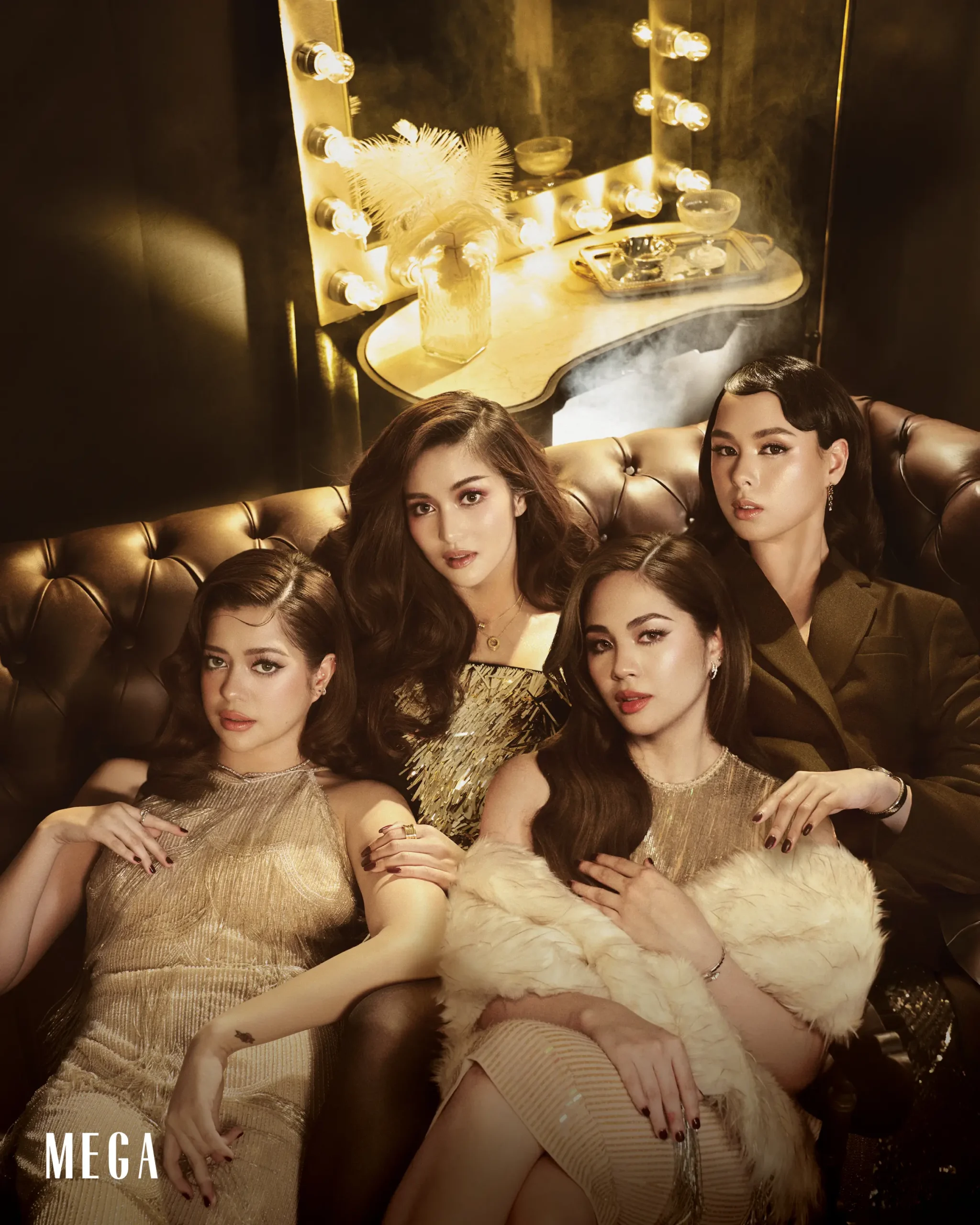
Photographed by JHARWIN CASTAÑEDA. Creative Direction by PATRICK TY. Art Direction by CLARE MAGNO. Sittings Editor PEEWEE REYES-ISIDRO. Beauty Direction by AGOO AZCUNA BENGZON and MARA GO. Produced by THESSMAR LECTURA. Styled by STEVEN CORALDE, NINA CUYANA, and CHARLOTTE SOMBILLO for QURATOR. Managing Editor STEF JUAN. Multimedia Artist TROY NONATO. Fashion Assistant KRISSIE TERUEL. Makeup JASON DELOS REYES (Janella Salvador), CARELL GARCIA (Charlie Dizon), PONG NIU (Kaila Estrada), and MARIAH SANTOS (Sue Ramirez). Hair RAY MARK IBARROLA (Kaila Estrada), ANGEL JAMELARIN (Charlie Dizon), JUSTINE OCAMPO (Janella Salvador), and ARVIN SANTOS (Sue Ramirez). Nails JENNIFER PASCUAL and ALMA TORNIADO of TRIPLE LUCK BROW AND NAIL SALON. Production Design LUCIA VILLALUZ, COLLEIN GONZALES, VERONICA CO, ISABLE MINA, and RONALD TRABALLO. Photography Assistants ALJON CELIS, JOSHUA NAVATO, ARNALDO CATALAN, and DOMINIC DIMAGMALIW. Makeup Artist Assistants MARK THANIE EDER, ALICE OSTERA, and JEN ARCIAGA. Hairstylist Assistants JUNE BALAGTAS and EDSEL BARTOLOME. Special Thanks to JOY LOMIBAO, APRIL DEL ROSARIO, ARLIE SALAGANTIN, GIDGET DELA CUESTA, FRANCES JOSON, and THESS GUBI of STAR MAGIC.