



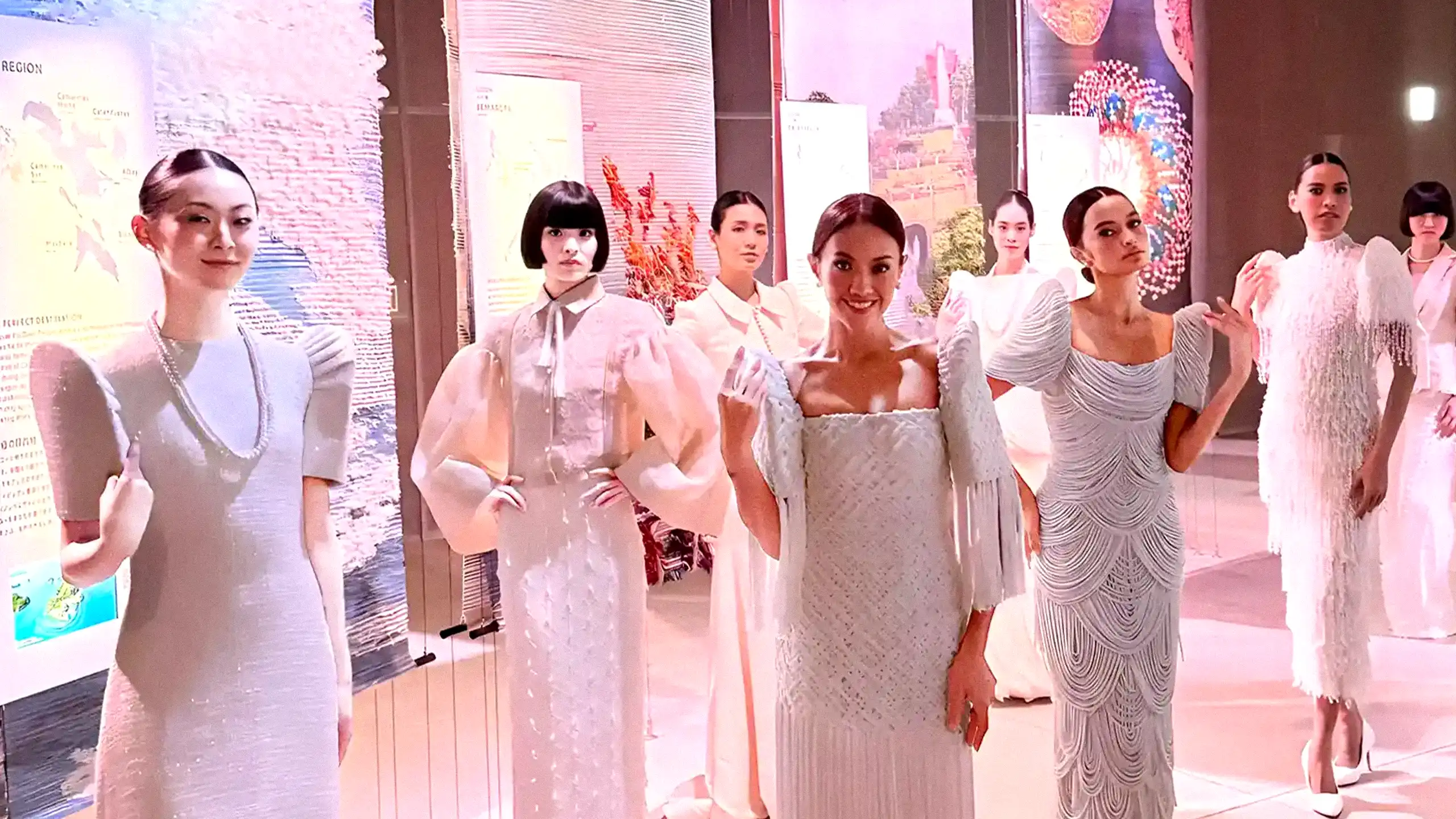
At the World Expo in Osaka, the Philippines arrived in white. Michael Leyva stepped into a new terrain with clarity. His collection, Perlas ng Silanganan, presented for the Philippine Pavilion, offered a crisp vision of Filipino identity: pared down, sharply cut, and rich with handwoven depth.
RELATED: EXCLUSIVE: Heart Evangelista Wore the Moonlight and Carried It Too at MEGA Ball: Fashion + Dance
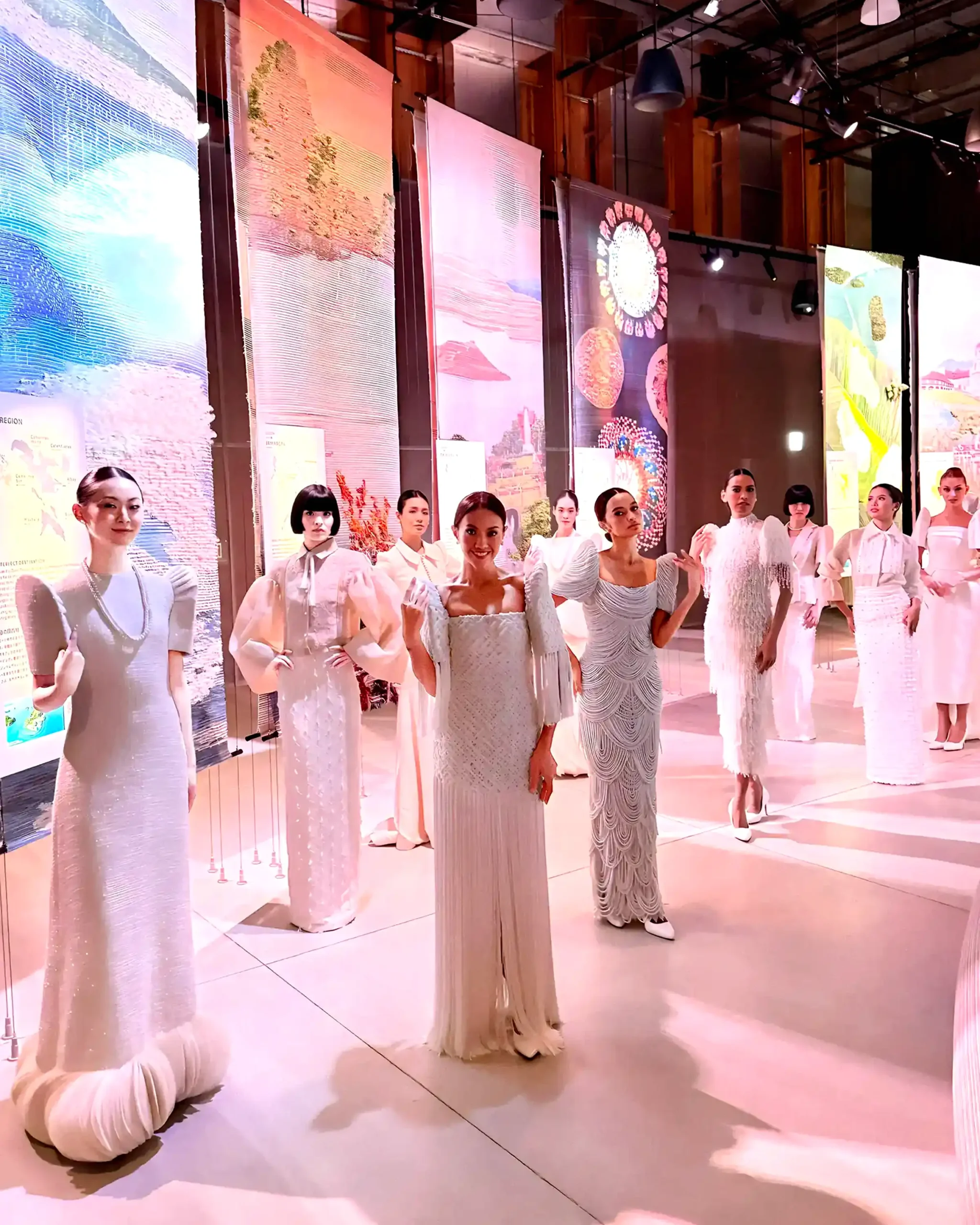
The collection used piña, callado, and inabel—textiles so rooted in place they carry their own memories. Instead of layering ornament, as his last collection, Leyva held the line. “I wanted to adapt to modernization and at the same time give tribute to the classic,” he said. His version of the barong was oversized and cropped; the inabel skirt hand-beaded, worn like a signature rephrased for a new sentence.
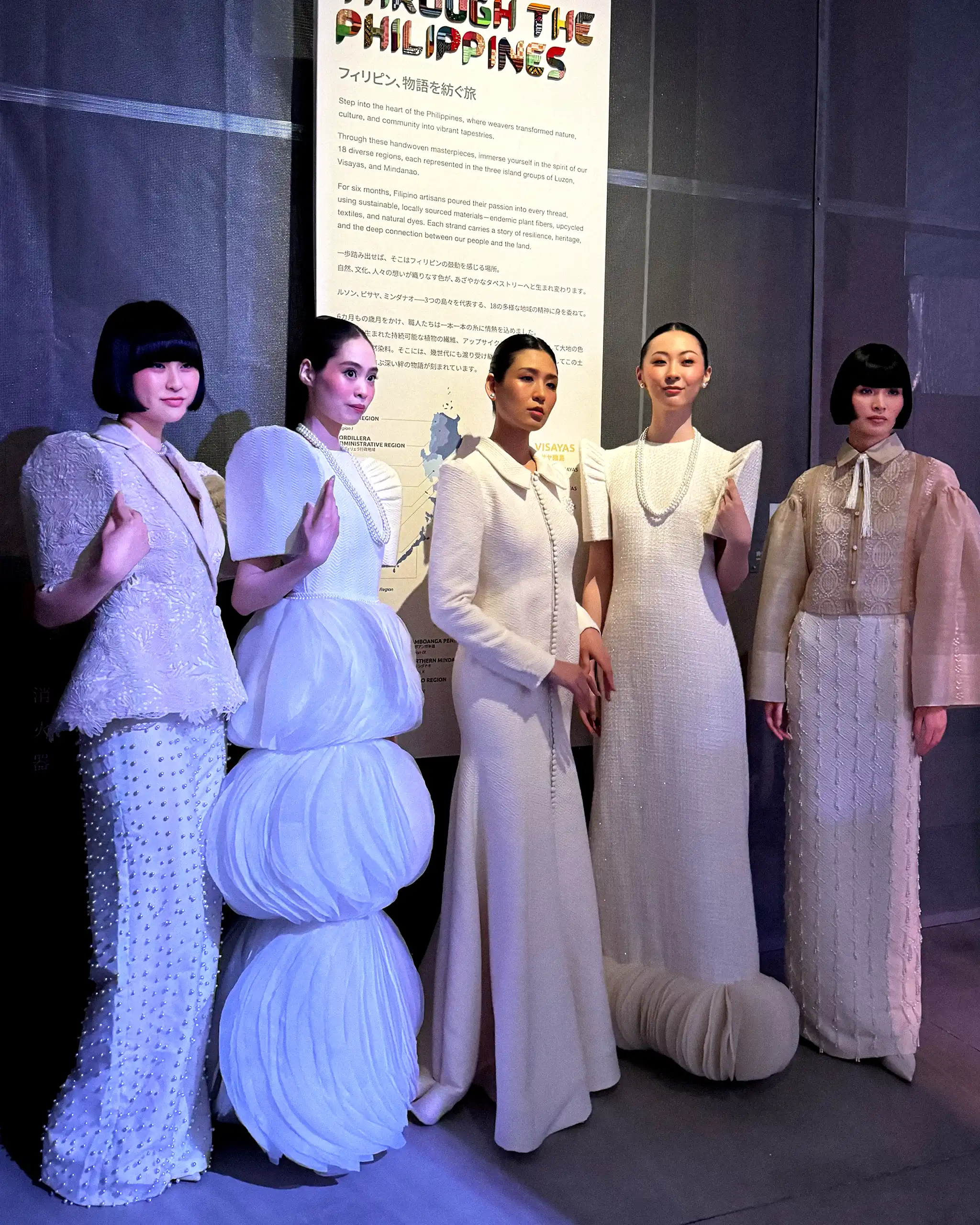
This wasn’t a rewrite, however, but a shift in volume. Leyva distilled the silhouettes we know—terno, barong, baro’t saya—and viewed them through a sharper lens. Clean but not blank, white became a canvas that captured history and current intention.
“Creating Perlas ng Silanganan for the Philippine Pavilion at World Expo 2025 in Osaka was a true honor,” Leyva shared. “The Expo is a global celebration of culture and innovation, and to represent the Philippines on such a stage was both a proud and humbling experience.”
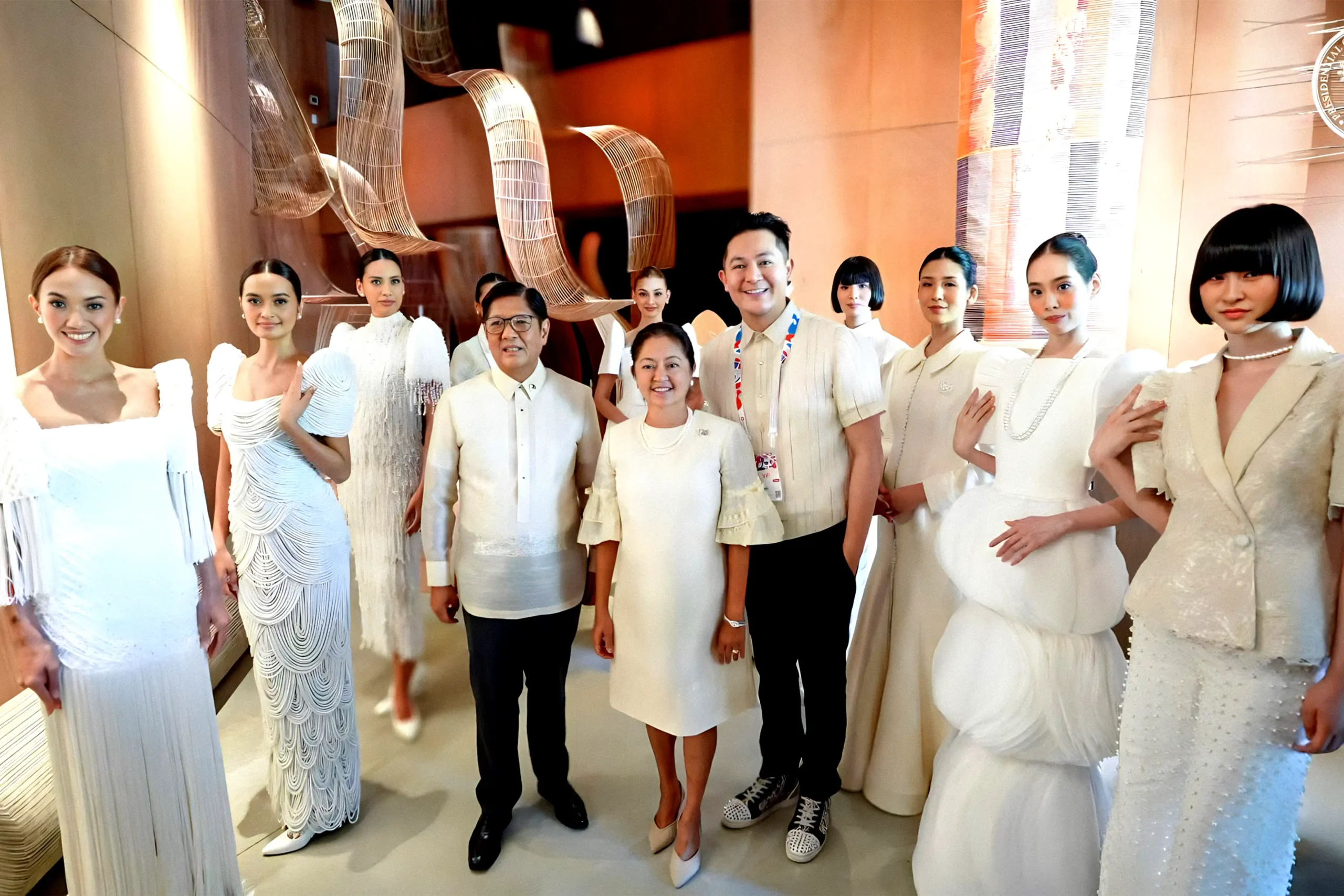
His work is part of a broader movement supported by the Office of the President and First Lady Liza Araneta Marcos, whose presence at the pavilion signaled a growing attention toward design as cultural infrastructure. “Their advocacy for Filipino craftsmanship and weaving communities deeply inspired us,” Leyva added.
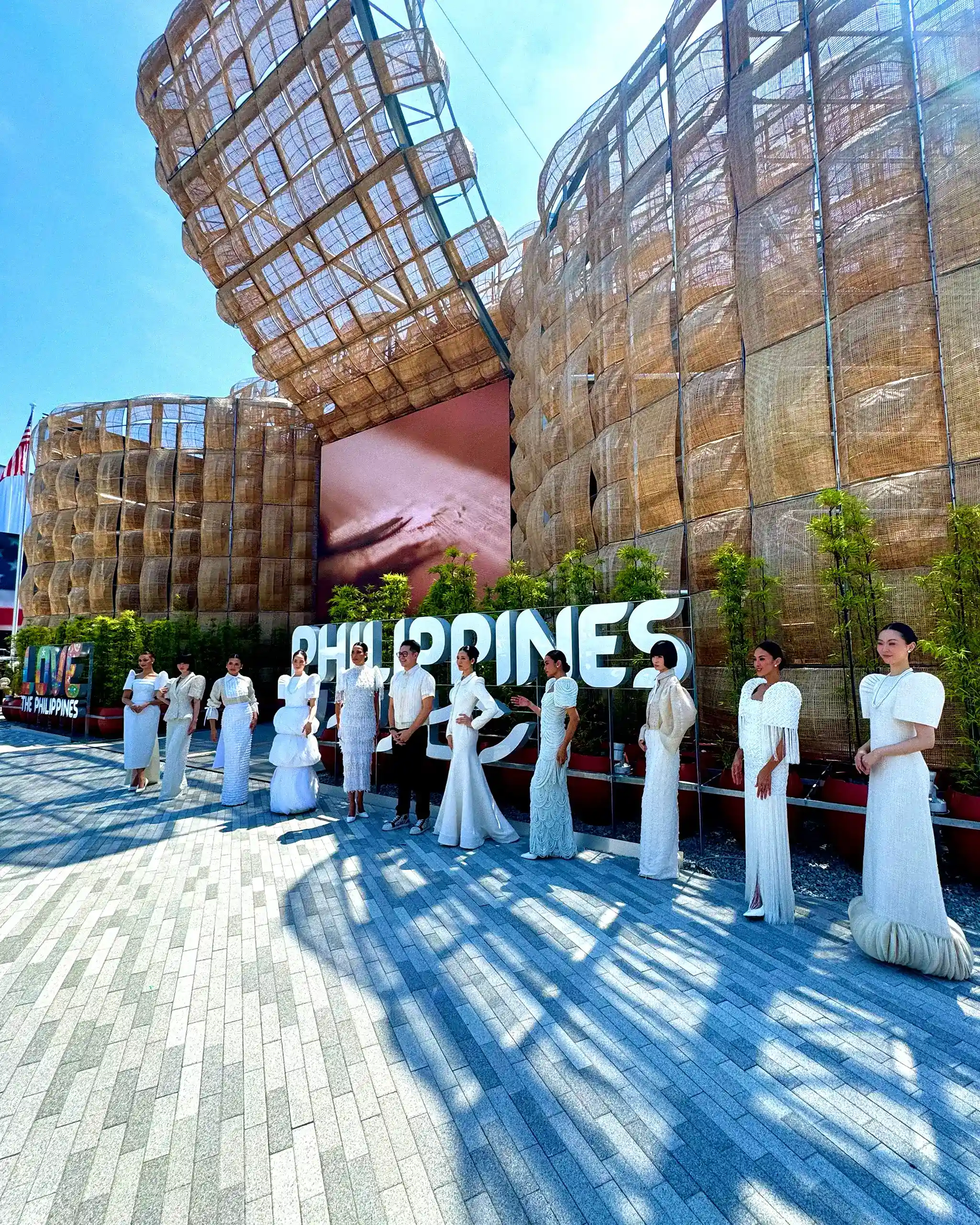
There’s power in dressing a country for the world stage, and Michael Leyva approached it with Filipino tone. The embroidery, the texture, the way light moved on piña, all spoke without embellishment. Not loud nor not light, this was design that held its ground.
Photos courtesy of MICHAEL LEYVA